

You step out of the shower with dripping hair and reach for the reflex you've had since childhood: rub away energetically, as if the towel were in a race. Except that wet hair is a stretched fibre, more fragile than it looks, and rubbing is precisely what it hates. The good news: the move that protects it is also the fastest one. And it costs less than a repairing treatment.
Press first, wrap second
Start by pressing, never rubbing: palm against palm, from root to tip, as if you were wringing out a very delicate sponge. That deals with the water that runs down and drips onto the tiles while you're hunting for a comb. Only then do you wrap: hair gathered on top of your head, towel knotted loosely, just long enough to brush your teeth and pick an outfit. Ten minutes is plenty — and honestly, that's already a lot.

The part you can't see in the mirror is the friction. Rubbing in every direction lifts the cuticle and encourages knots, which means breakage when you detangle. A turban lets the towel absorb by contact, with no movement at all. And if you're in the habit of leaving the towel on for an hour because "it'll dry eventually", take note: a scalp left sitting in damp has never come out ahead.
Microfibre, terry towelling or a cotton T-shirt
The classic terry towel has a design flaw: its cotton loops snag on hair. The fluffier and more "generous" the towel, the more uneven the surface, and the more it pulls. Hence microfibre — much finer fibres, a smooth surface, fast absorption and a towel that itself dries almost instantly. More absorbent and smoother, it limits friction and asks less of your arm.
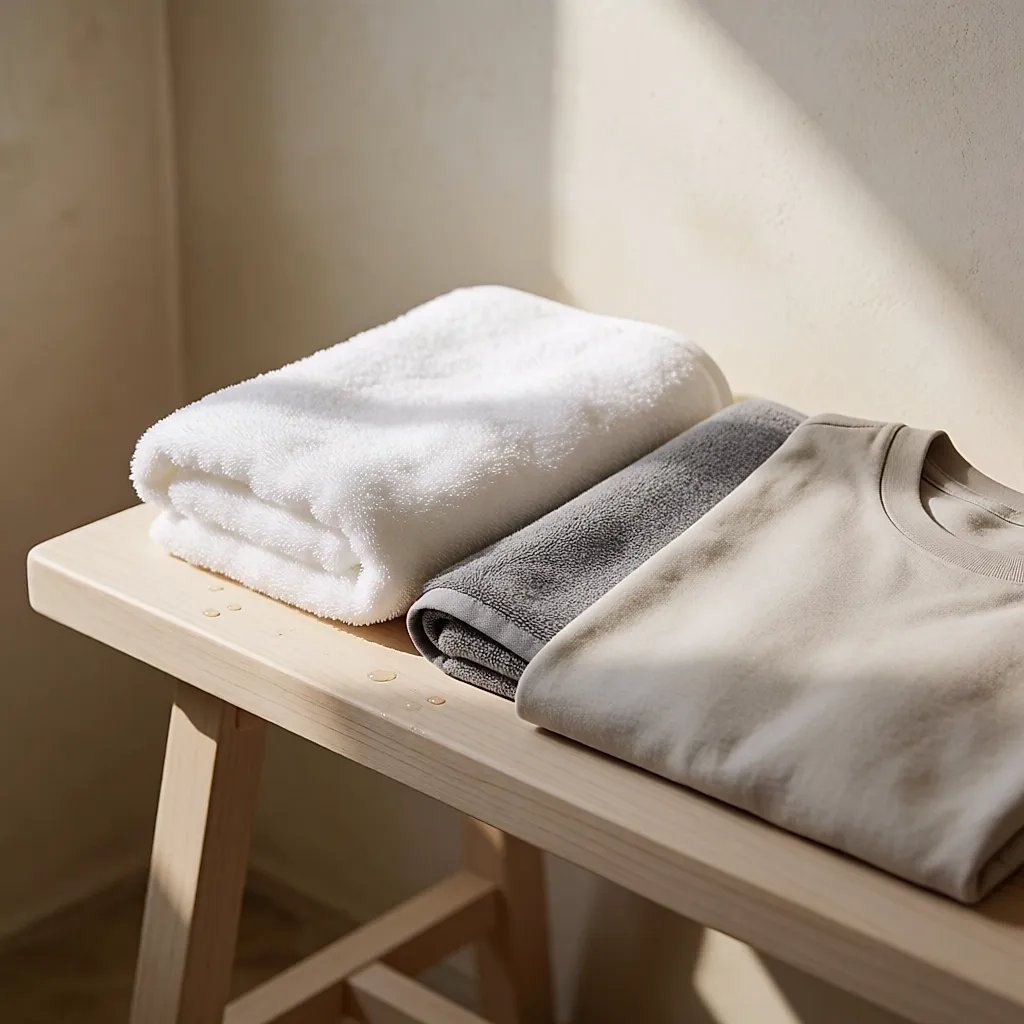
A cotton T-shirt does the job nicely in a pinch, and it has one clear advantage: it's already in your wardrobe. Its smooth jersey glides over hair, absorbs well enough and suits fine or short hair particularly well. It does dry more slowly than a technical towel, though, and needs changing often. As for the Sunday-night terry towel, keep it for your body: it's perfect there, just not on your head.
One caveat on materials: microfibre is usually synthetic. That's no reason to write it off — this is an accessory you'll keep for months, not a disposable T-shirt — but check the fibre content, and go for one thick, well-finished towel that will last rather than three thin ones that will pill. If synthetic puts you off, a large organic cotton T-shirt remains an honest, free alternative.
How long it lasts and how to wash it
In practice, allow three to four uses between washes if you let it air-dry in between — microfibre holds onto moisture, and a towel left in a ball at the bottom of the basket won't smell of roses. In the machine: 30 to 40°C, no fabric conditioner. Conditioner coats the fibres and strips their absorbency. Air-dry, and skip the conditioner sheet in the tumble dryer too.
Lifespan varies widely: a few months for a thin model that's been badly washed, several years for a good-quality towel looked after properly. A simple marker: once it feels slightly rough to the touch or stops absorbing, it has done its time.
Right before the first blast of heat
This is where towel-drying earns its keep. Hair that's still soaking when you go in with the hairdryer is hair that heats for ages for nothing. The towel stage saves precious minutes of dryer time — and therefore heat — across your whole head.
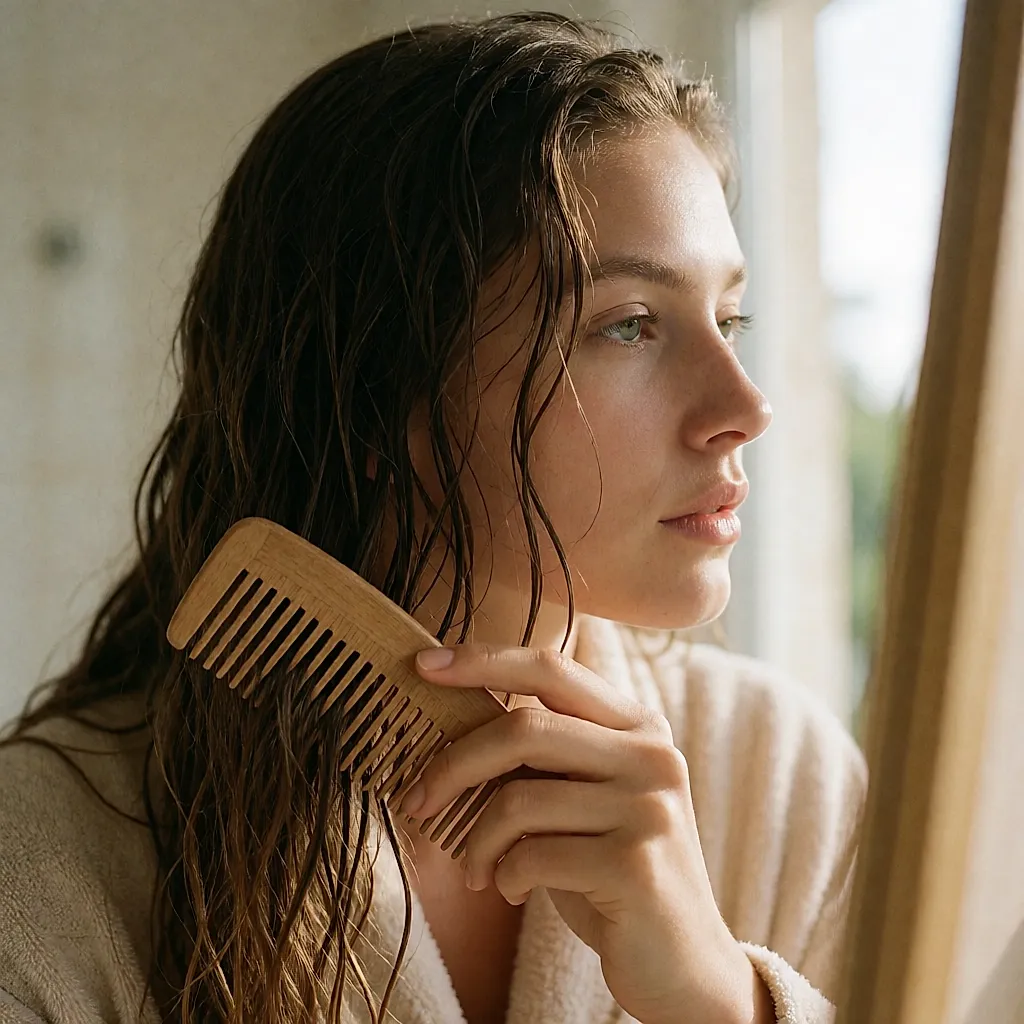
Once the turban comes off, detangle with your fingers or a wide-tooth comb, without pulling. Then work your heat protectant through hair that's still damp, rough-dry on a warm setting, and only then start brushing. And there you have it: the towel has just bought you the length of an episode.
The wardrobe test: before you buy anything, try a cotton T-shirt for a week. If the difference hits you at detangling time, invest in a microfibre towel. If not, keep the T-shirt: it does the job perfectly well — as long as you press instead of rub.
What to pay
Expect roughly £8 to £20 for a standard microfibre towel from a supermarket or a hair-care brand's own site, £10 to £25 for a turban with a button fastening, and £20 to £35 for the thicker "long hair" versions. Prices climb with size, fibre density and finish — not necessarily with effectiveness. The cotton T-shirt, meanwhile, costs £0 if there's one at the back of a drawer, and it's often the best first test.
One move you can't buy: not rubbing. So next time you step out of the shower, spare a thought for your hairdresser — they'll thank you, in their own quiet, slightly stern way.

Comments
Your opinion matters: rate the article, react and reply to comments.
Comments are moderated; AI-assisted comments are flagged. Text emoticons (8-), :-), <3…) are automatically shown as images.