
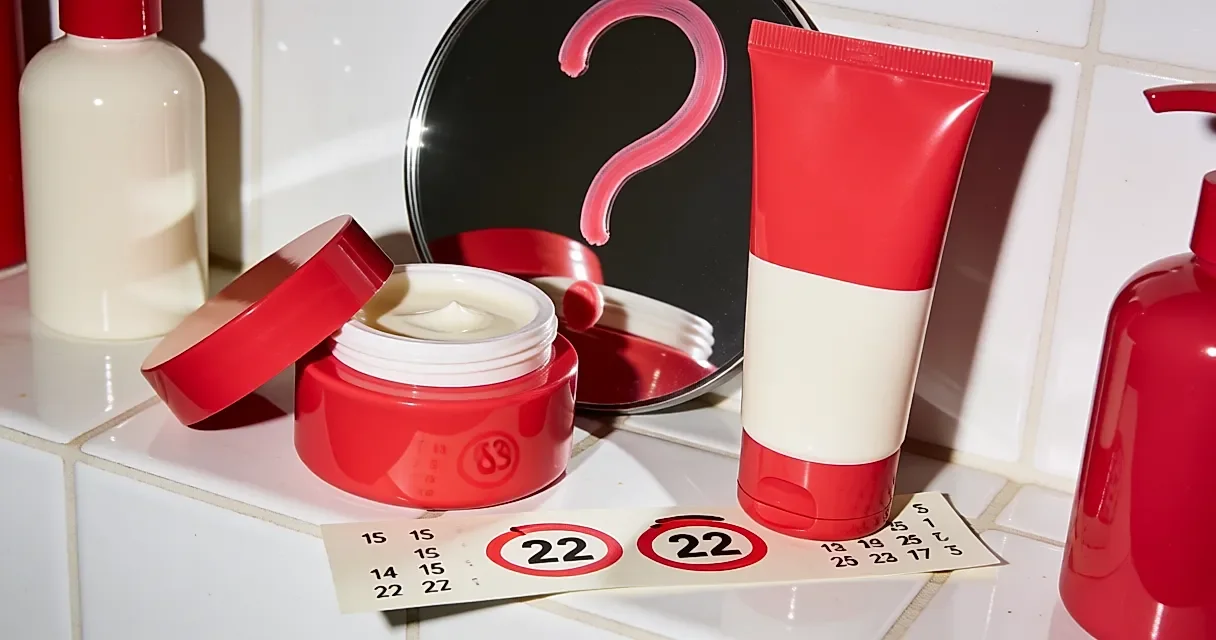
How long do you take to finish a moisturiser? Two months, six, longer? That is the first question to ask before choosing between a jar, a tube or an airless pump. Not to crown a packaging winner, but to work out whether your formula will last until the last drop. Three markers — PAO, texture and refills — plus one simple calculation, price per millilitre, are enough to choose without spending hours on it.
The decision checklist
First: how long will it take you to use up the product? The little open-jar symbol with a number inside is the PAO, or period after opening — 6M or 12M, for example. It tells you how long the product stays safe after opening. If you are the type to stretch a product over a year, a smaller size you can replace, or packaging that limits handling, is the better bet. Choose the format around your routine first, not the look of the bottle.
Second: what is in the formula. A balm, ointment or oil, with little water, is less vulnerable to microbial growth, so a jar is still a reasonable choice. A gel, fluid or emulsion contains water, so it needs a bit more care. For an active known to be fragile — vitamin C, retinol, ferments — look at how opaque and how well sealed the container is; some opaque airless pumps can be a sensible choice, but you pay for the mechanism and it is hard to recycle. An opaque jar you finish quickly can also work.
Two more checks: hygiene and refills. A supplied spatula, a lid that really closes and a realistic size are what matter day to day. And if you are considering a refillable format, check that the outer container can genuinely be washed and that the refill is sold on its own, without an unnecessary capsule. Price per millilitre should always be worked out before you pay: that is often where small sizes reveal their true cost.
Refillable? Yes, but on one condition
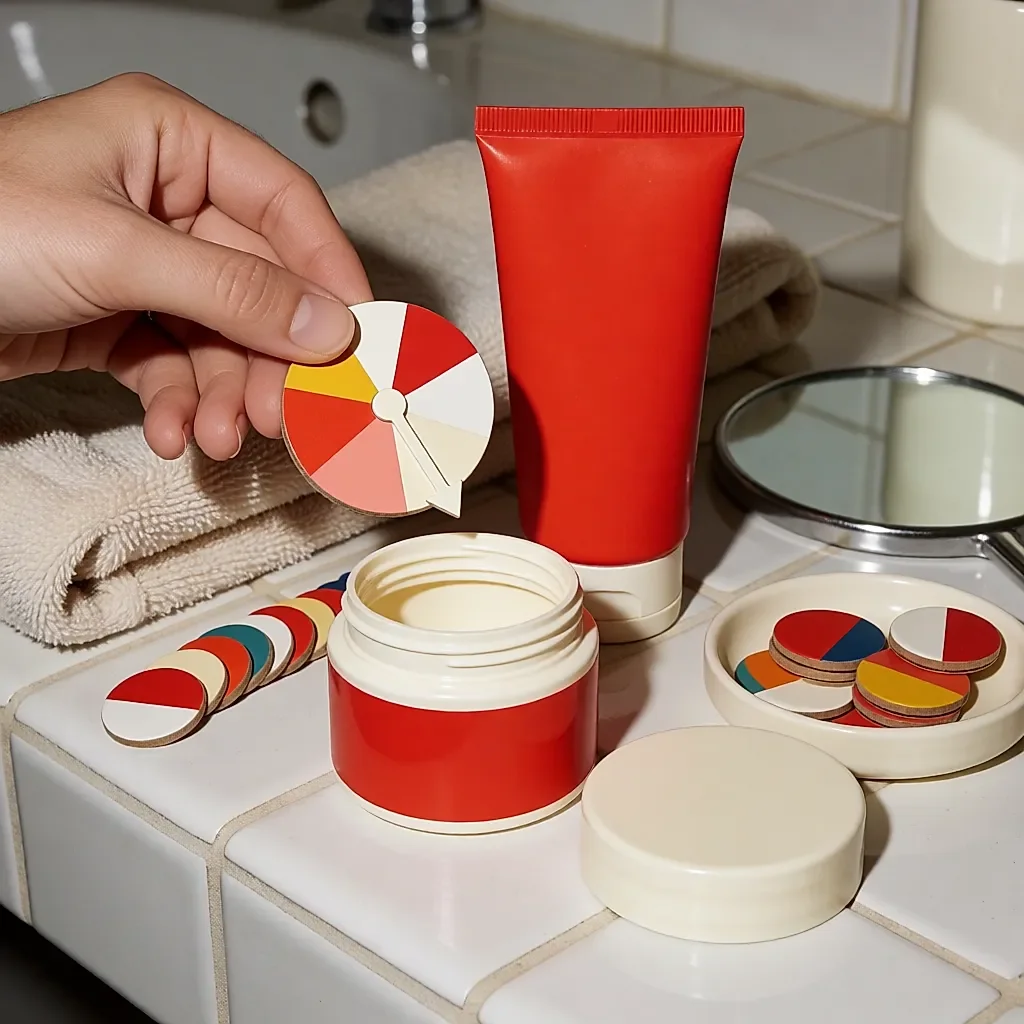
A container you cannot clean properly should not be refilled. Otherwise you are layering a new formula on top of an old residue, and nobody wins. Before paying more for a refillable format, check two things: can the outer container really be washed (glass, rigid plastic, a wide opening)? And is the refill sold on its own, without an unnecessary capsule?
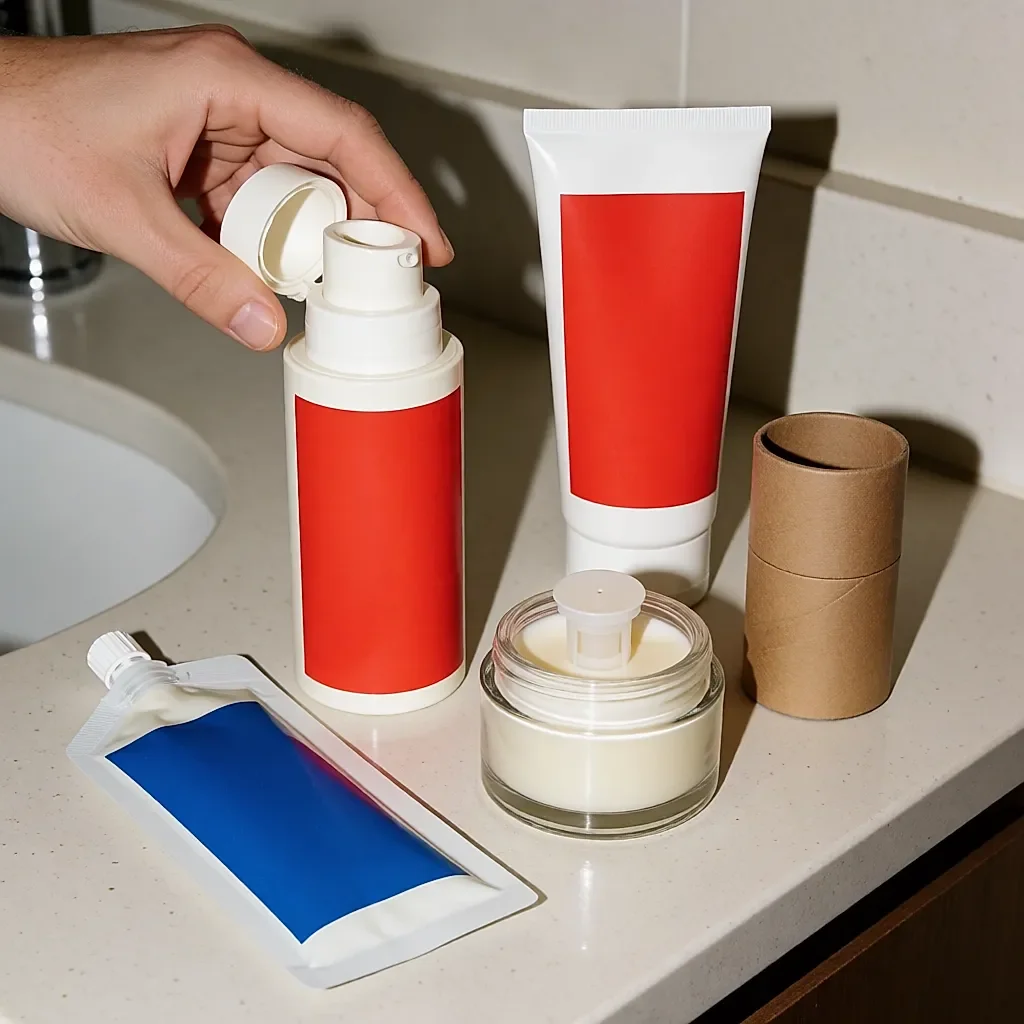
The neatest refills replace only what is needed: a flexible pouch for an airless pump, a capsule that clicks in. A glass jar supplied with a hard-plastic refill wrapped in cardboard is mostly cardboard. And if the brand offers no refill, it is not a disaster: choose a format you will finish. That is the first waste-saving step, before all the others.
Budget
As a rough guide, expect to pay around £15–£40 for a face cream from a pharmacy or beauty retailer, and £40–£90 for premium skincare. At a comparable formula, an airless pack often costs more than a jar: you are paying for the mechanism. A refill, where one exists, can save you money on the second purchase — provided the brand offers it when you actually need it.
Where to buy: classic jars and tubes are everywhere, including supermarkets. Airless pumps and refills turn up mainly at beauty retailers, pharmacies and brands' own websites. One tip while you are there: compare price per millilitre, not the headline price. A small size can cost more per millilitre than a large tube, even if its sticker price looks gentler.
In store, three seconds is enough: shake the jar (if there is a spatula inside, you will hear it), check that the lid does not rattle or click loosely, and look for the PAO on the back. No visible PAO? Check whether there is a minimum durability date or another required statement: PAO is not required for every cosmetic, and its absence is not an absolute reason to reject a product.
Packaging is not a shop-window detail: it is a calculation of how long the product will last, how you will use it day to day and its price per millilitre. So next time, before falling for a pretty jar, check the PAO, the price per millilitre and the refill — and ask yourself whether you will really finish it.



Comments
Your opinion matters: rate the article, react and reply to comments.
Comments are moderated; AI-assisted comments are flagged. Text emoticons (8-), :-), <3…) are automatically shown as images.