
Let’s be honest: after a week spent running between the shopping, the ever-growing to-do list and children who have decided 6.30am is a perfectly reasonable time to sing, the idea of a warm, steamy room suddenly becomes very appealing.
You know that moment when your body just wants to call a truce? Thick steam, dimmed light, and the feeling that the week is finally slipping off your shoulders. That’s exactly what a hammam offers — and it needs no complicated equipment or special skill.
How it works, in practice
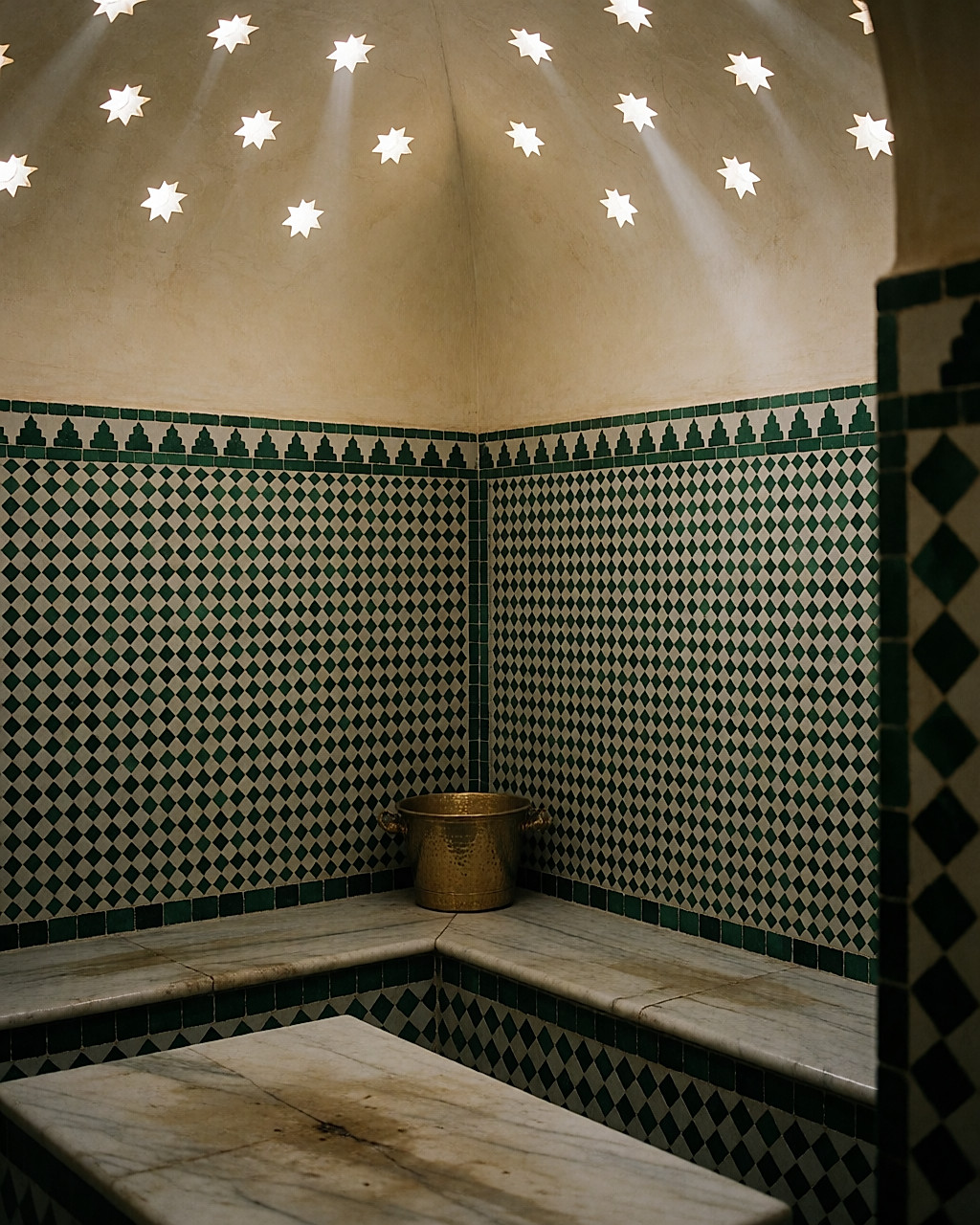
The idea is simple: steam at around 50°C in an atmosphere saturated with humidity. In practice, you push open a door, step into a tiled space, often decorated with zellige tiles and topped by a dome pierced with small openings that let in light, and you settle in to let the heat do its work.
Whether you’re used to Middle Eastern rituals or simply curious, you’ll find the same structure from one place to another. Several rooms, with the temperature rising gradually, then cold water pools for contrast, and finally the relaxation room where you sip mint tea while watching the steam settle. There’s nothing to get right, nothing to perform: it’s one of the few activities where you literally do nothing, and that’s the point.
The benefits, without magical promises
Let’s be clear: a hammam is not a treatment. No serious treatment comes down to sitting in a hot room, and if anyone promises you transformed skin, be wary.

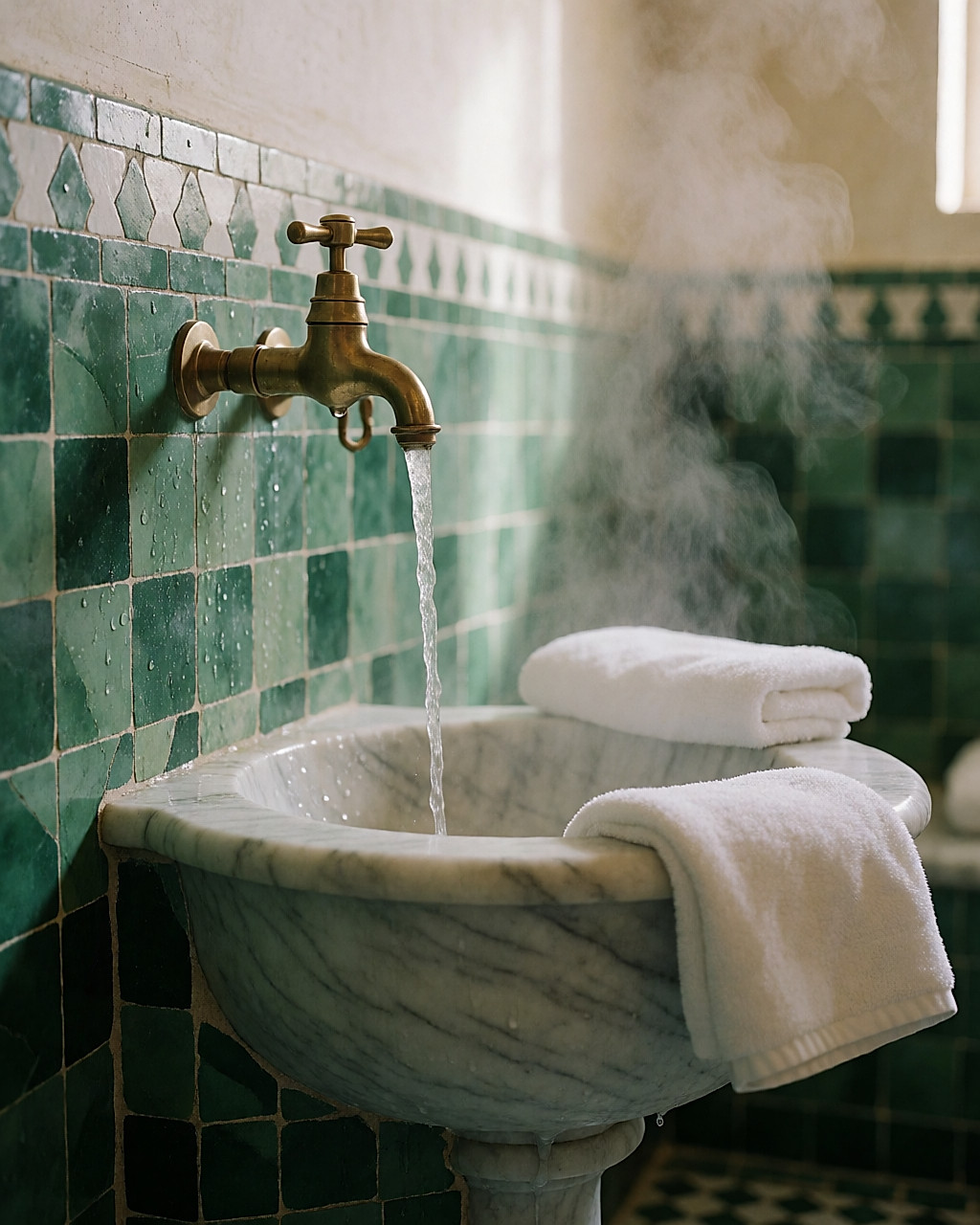
That said, in practice? Wet heat relaxes tight muscles, and many people find they breathe more easily during the session. Some places diffuse eucalyptus essences into the steam, which makes the experience more pleasant — it’s olfactory, not therapeutic.
For skin, the effect is more concrete: steam softens the layer of dead cells and makes the epidermis more receptive to exfoliation. Hence the benefit of following with a scrub while the skin is still warm: softer, it exfoliates more easily. The move that changes everything, in fact, is not skipping this step — otherwise you come out relaxed, but you miss the best moment.
How a session works
You start with a lukewarm shower, so you don’t enter the heat abruptly. Then you move from room to room, at your own pace, following no one. As soon as it becomes too much — dizziness, head spinning, urge to leave — you step out, cool down, drink a glass of water, and go back in if you feel like it. No one is forcing you to stay in the hottest room.

At the end of the session, two options depending on the venue: a facial, often a hydrating mask with a cool texture, or an oil massage. You often leave tired, but strangely light, with skin that feels soft to the touch. The little habit not to forget: drink water and apply cream within the hour, to extend the feeling of comfort and prevent your complexion from feeling tight.
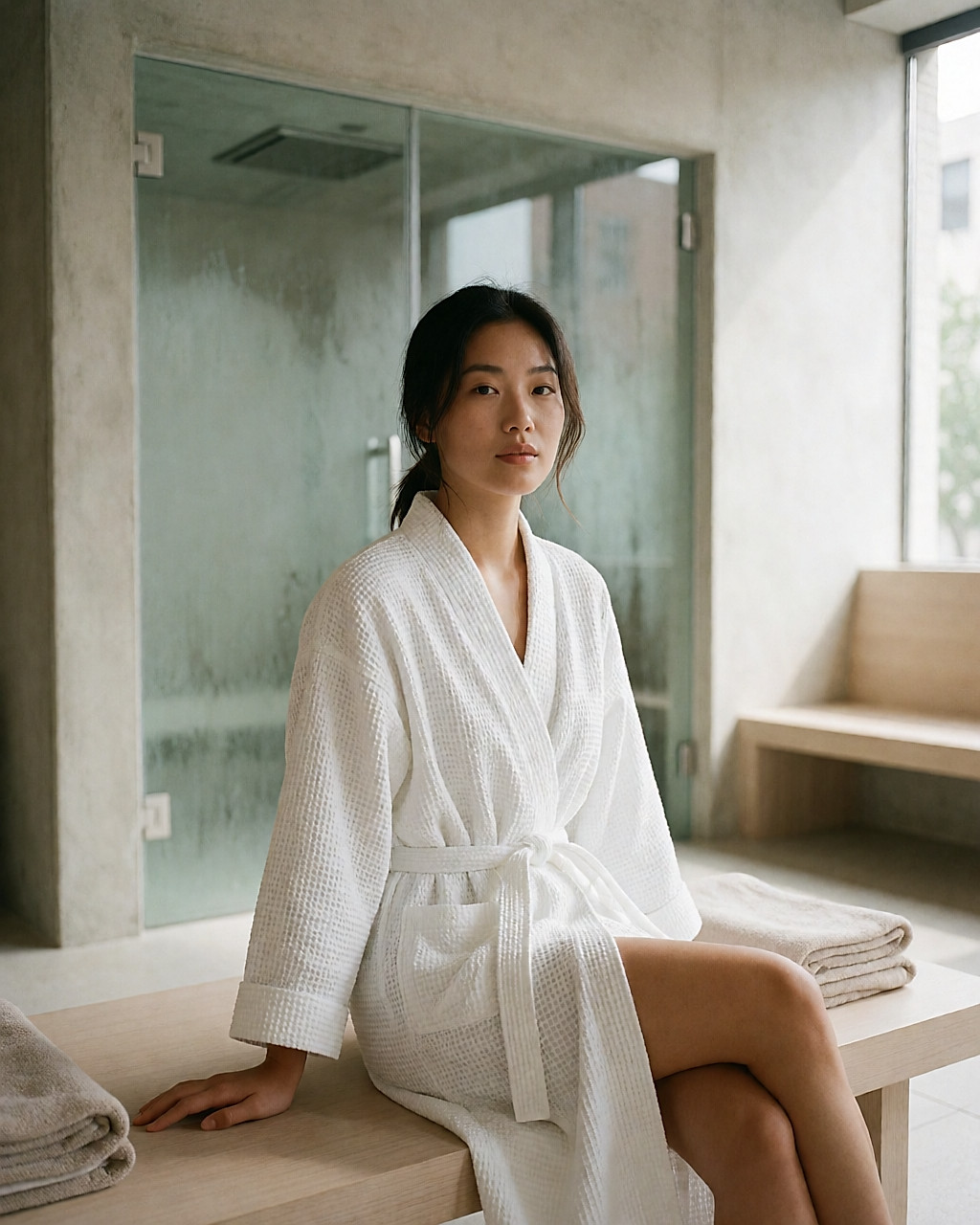
Good to know: book on a weekday or early in the morning. Hammams in big cities are packed on Saturday afternoons, and you lose all the calm you came for. Bring your own exfoliating glove and a swimming costume, as not all venues work the same way: a quick phone call avoids surprises.
Budget
On price, it all depends on the venue and the city. Expect around £10 to £25 for entry to a neighbourhood hammam, with higher prices in London and city centres. In a beauty salon or urban spa, entry with exfoliation is more like £30 to £65, and a full package with scrub, mask and massage can easily climb from £55 to £125. In a hotel spa or high-end address, expect £60 to £150, more for a long ritual — the price rises quickly depending on the city, neighbourhood, range, duration and time of week, with weekend slots often costing more.
You’ll find these treatments in traditional neighbourhood hammams, beauty salons, some gyms, wellness centres and hotels. If you prefer the ritual at home — and it’s a good compromise to try without spending £100 — you need very little: a kessa-style exfoliating glove (£3 to £15), a black soap (£5 to £15 per pot), a little rhassoul or clay (£5 to £20 per packet) and a plant oil (£10 to £25 for a small bottle). These products are available in Middle Eastern shops, grocers, beauty halls, supermarkets or online.
When choosing, look at the ingredients before the packaging: a black soap saponified with olive oil, with no added synthetic fragrance, does the job very well, and the solid format avoids a plastic bottle. Be careful, though: "black soap" is not a label — it’s a generic name, so read the ingredient list. For cosmetics, labels such as Cosmos Organic or Ecocert set standards for a proportion of naturally derived ingredients and a specific specification, but they don’t dictate how you’ll find the texture.
Who it’s for, and who it isn’t
The hammam is for anyone looking to decompress. That said, not all skin and not all temperaments react to heat in the same way. If you’re sensitive, start with short spells, stay near the exit, and see how you feel before extending your time.
In terms of access, everything has changed in twenty years. Traditional hammams in city centres have been joined by wellness spaces in beauty salons, gyms and some hotels. The atmosphere is more sanitised, more "spa", but the steam itself does the same work.
Léna’s verdict: yes, but only if you go without rushing, drink and moisturise straight afterwards. As for frequency, no set formula to sell you: a session now and then, without expecting wonders, just for the pleasure of the moment.


Comments
Your opinion matters: rate the article, react and reply to comments.
Comments are moderated; AI-assisted comments are flagged. Text emoticons (8-), :-), <3…) are automatically shown as images.