
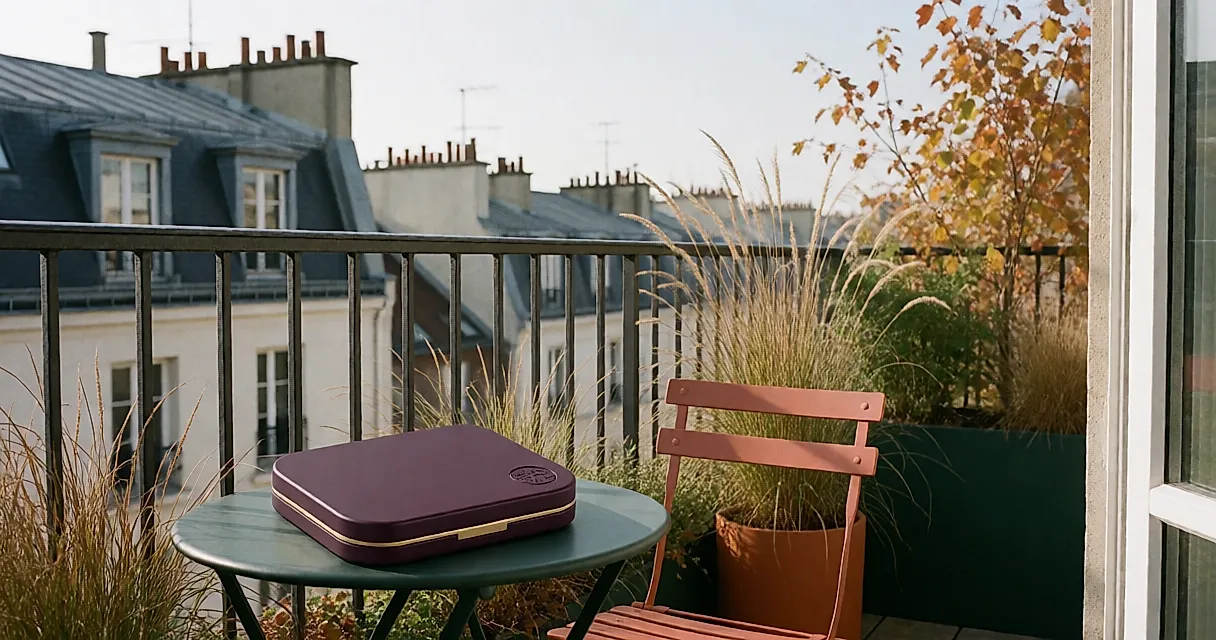
A palette case that barely opens beyond thirty degrees, a mirror that bounces the ceiling light back at you, a clasp that snaps too loudly — before the shades, it's the case you're holding. You lift it, give it a shake, then the real question appears: will it stay on the dressing table, or end up in a drawer?
Gift-set season is also when we choose a palette by its closed case. A case is as much about packaging design as make-up: protecting, opening, storing, carrying. That's where the object's life after the festivities is decided.
Size comes first
Festive palettes are often designed to be seen: wide, flat, with a lid that puts the shades on display. On a dressing table, that's charming. In a drawer, it's another story. A successful format fits in one hand, opens without having to move your jewellery case and closes in one movement. If you have to clear half your dressing table to use it, you won't.
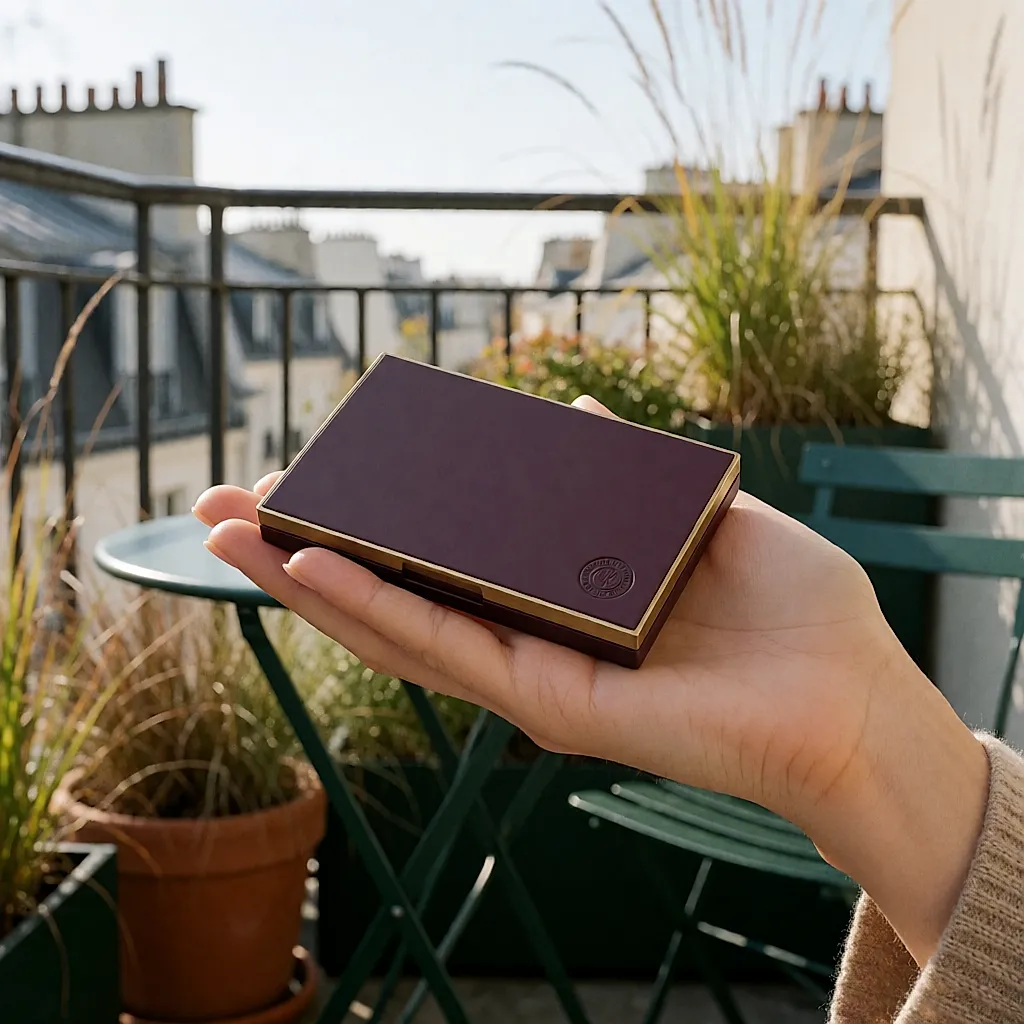
Open it flat, close it again, slip it into your bag: the lid shouldn't fall back on your fingers every time. This isn't a fussy detail; it's what separates an object you keep from one you put up with. Can a display-piece format become an everyday one?
The mirror, the quiet hero
The built-in mirror is one of the big promises of festive palettes, and sometimes the most disappointing. A full-width mirror that stays open at 90 degrees changes the way you apply your make-up: you settle in, see both eyes, correct without leaning in. A small pocket mirror glued to the lid, by contrast, is mainly there to check you've got make-up on your nose.
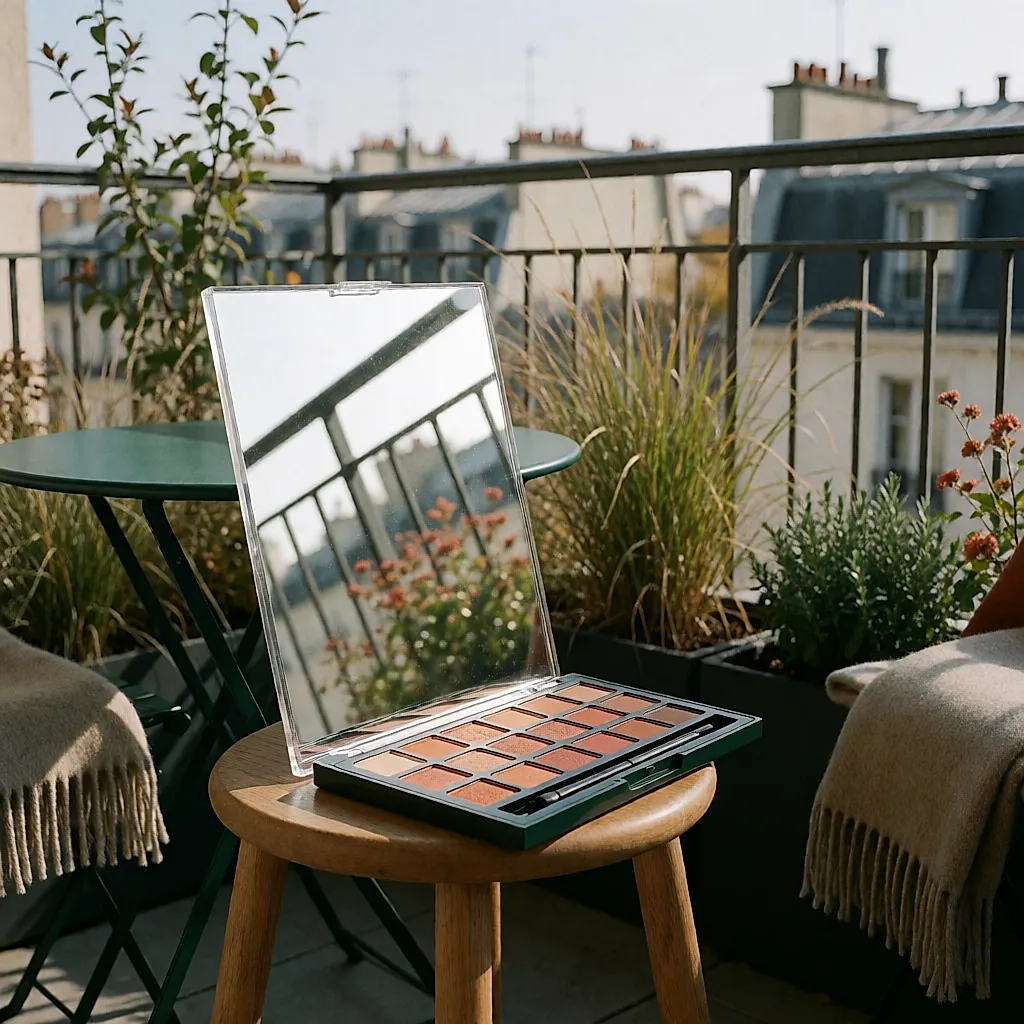
Look at the clarity, the thickness and the hinge. Does the mirror stay up on its own, or do you need to prop it with a tissue? Is it protected by a removable film, or stuck so close to the pans that it gets dirty within three strokes? A clear, stable mirror is worth more than a spectacular case whose mirror gives you a blurred version of your face.
The clasp and that telling little click
A soft magnetic closure, a firm clip, a hinge that doesn't creak: the fastening is the most tactile part of the case. It's the part you handle without thinking, often one-handed, sometimes with fingers covered in make-up. If it catches, if you have to force it, if it gapes, the object wears you out before you've even started your make-up.
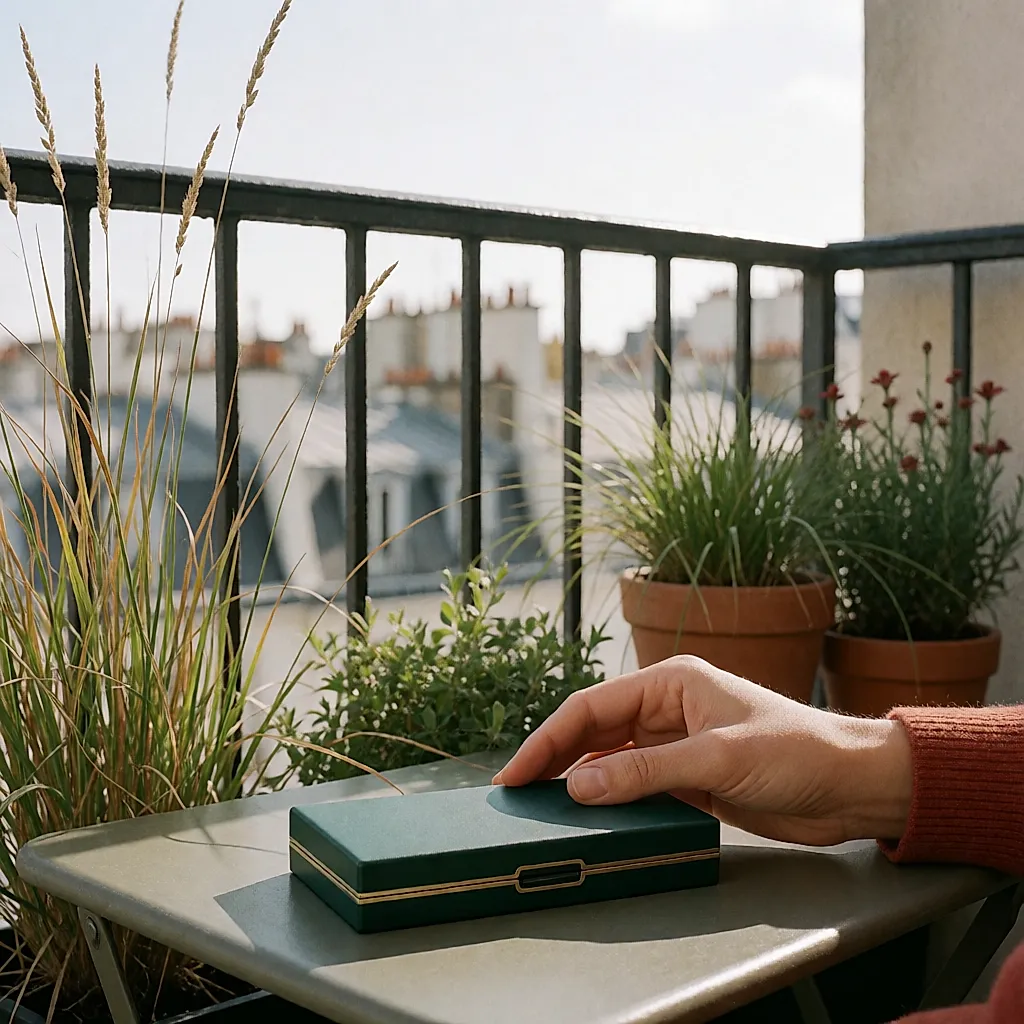
The real trap is a clasp that opens too easily in your bag. A palette that releases its powder into the lining of your bag is a scene you may know: the pencil that sticks, the tissue that glitters, the suitcase that sparkles. A good case protects as well as displays.
The mini case audit: open it, close it, turn the palette over. Does the lid hold? Is the mirror clear? Do the pans move? If the case fails these three actions, it's unlikely to stay on your dressing table.
The case after the shades
What if the case outlived the shades? A festive palette isn't just a collection of colours: it's a container. Ask yourself what's left when the shades are finished. A refillable case with replaceable pans has a chance of surviving; a sealed plastic block often ends up in the bin, however pretty it was. Card, metal and glue-free systems are easier to sort for recycling, provided the brand explains what to do.
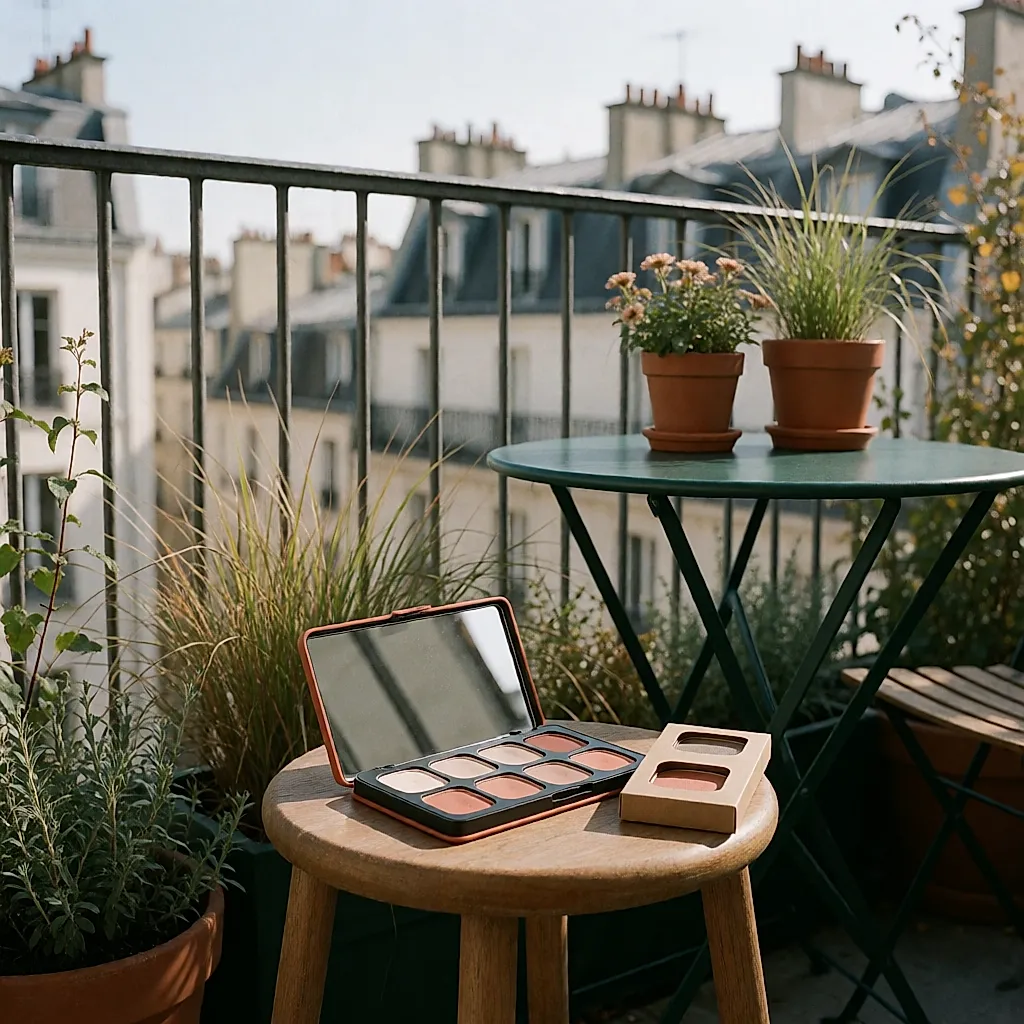
I don't have a reliable figure for how long the average palette lasts, and nobody should promise you that a case will last ten years. But a container you can empty, wipe and refill has a real chance of staying. Refills available over time are the best sign that a case was designed to live, not just to shine under the Christmas tree.

What to spend
In the UK, as a rough guide, expect to pay around £18–£40 for a festive palette in supermarkets, pharmacies or online; £35–£65 in department stores or beauty retailers for a mid-range palette; and £70–£140 for a premium beauty-house set. Prices vary with size, the number of shades, mirror quality and the finish of the case.
Budget doesn't tell the whole story. A £25 case with a full-width mirror and a solid clasp may live better than an £80 compact with a fragile coating. Before paying for a name, ask yourself whether you'll actually buy the refills, whether the size fits your space and whether the mirror genuinely helps. It's less glamorous than a pretty ribbon, but that's where the real purchase is decided.
The move that lasts
A successful festive case isn't just beautiful: it makes make-up simpler on a Tuesday morning when you have five minutes and a meeting. Size, mirror and clasp are the three things to check before you fall for it — the rest, the colours, the finish, the name, comes afterwards.
So next time you open a palette in a shop, take thirty seconds to close it one-handed. If the movement is smooth, if the mirror gives you your face back without blur, if the case doesn't take up all the space, you may have found something better than a seasonal gift: an object that will stay. And that's the prettiest packaging of all!
Comments
Your opinion matters: rate the article, react and reply to comments.
Comments are moderated; AI-assisted comments are flagged. Text emoticons (8-), :-), <3…) are automatically shown as images.