

A 'natural' cream given at Christmas can already smell of old yoghurt by the time the bottle you ordered arrives. That isn't bad luck: any formula containing water can play host to a little culture just waiting for its moment. So the question isn't 'free from what?' any more. It's 'preserved how?'
What does 'free from' actually mean?
For a decade, labels have been fighting it out with 'free from': no parabens, no phenoxyethanol, no silicones. In substance, that's good news. In form, it has stopped telling you very much — and a 'preservative-free' claim on a water-based cream is a bit like a swimming pool with no chlorine: you can do it, just not for long.
A family of ingredients has arrived to square that particular circle: ferment-derived preservatives. They don't do away with the preservation question. They shift it to origin, dose and testing. Three things, in other words, that don't fit on a sticker.
What does a ferment actually do in the jar?
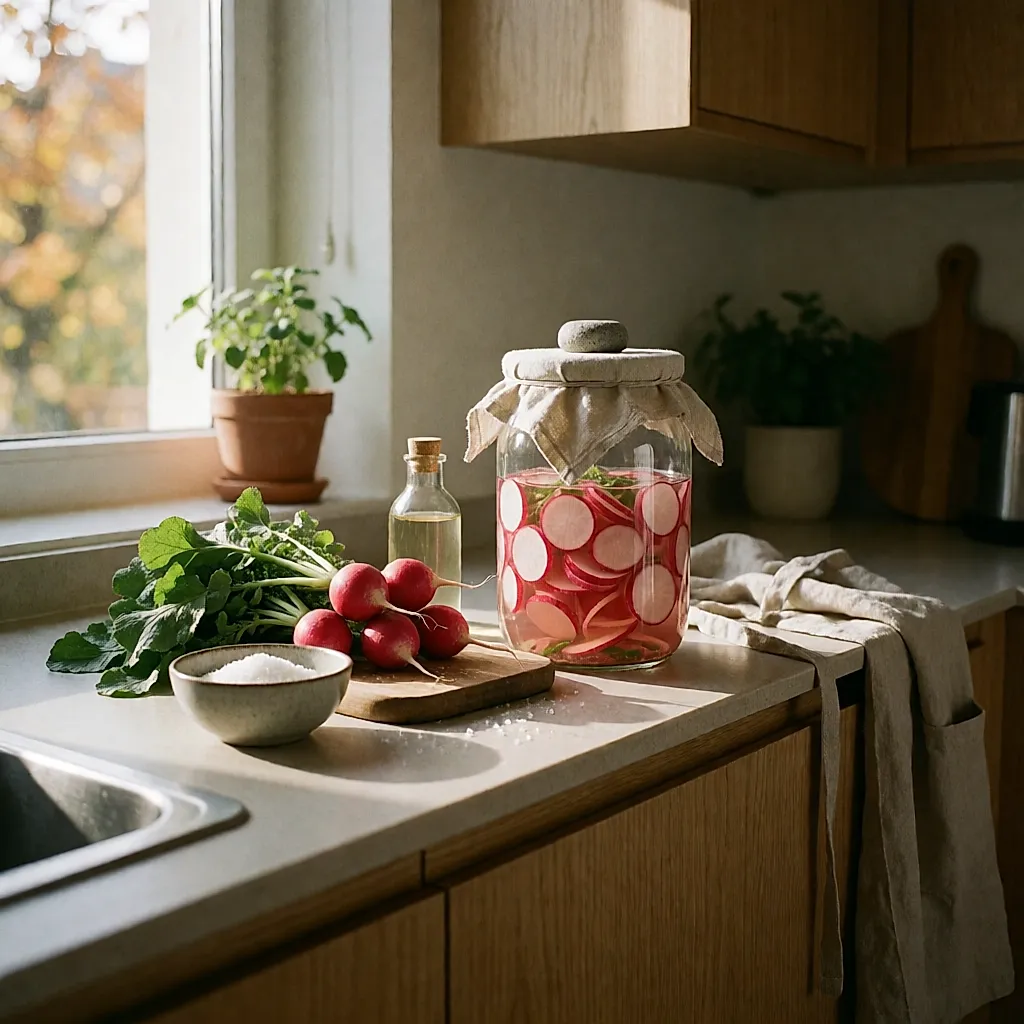
One of the most common has a name that runs away with itself: Leuconostoc/radish root ferment filtrate. The idea is simple enough. You ferment a plant material with bacteria, filter it, and the resulting liquid goes into the formula for its ability to limit microbial growth. It is sold as a technical ingredient, not a hero active — and quite right too.
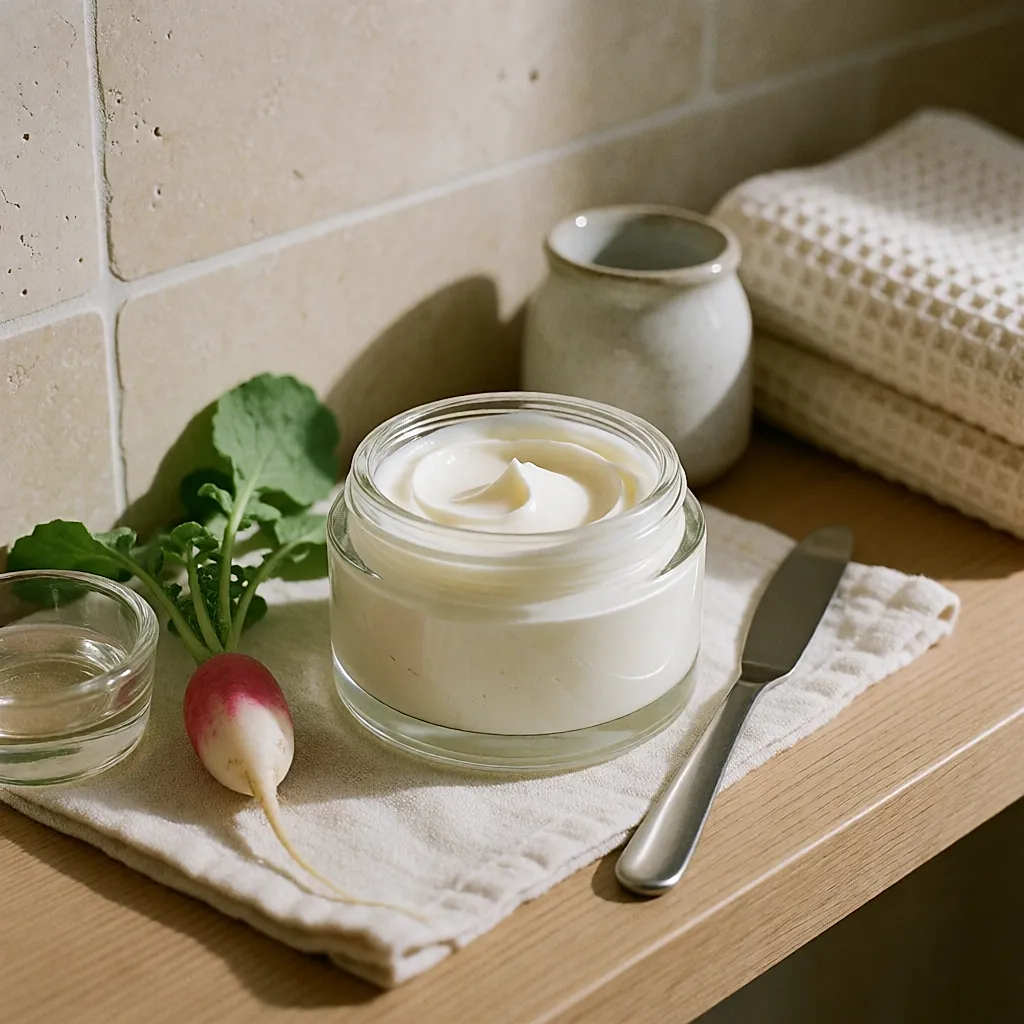
These systems are rarely the only thing on board, though: formulators often pair them with other ingredients to cover a broader spectrum. The real proof of the work isn't on the bottle. It's called the microbiological challenge test: microbes are deliberately introduced into the sample to see whether they thrive. Brands have it done; few publish the result.
Three families sidestep the preservative question altogether: 100% anhydrous oils and balms, solid soaps kept dry, and sterile single-dose formats. It isn't magic — it's formulation. No water, no place for microbes to set up home.
The dose first, then the pH
Your first instinct: turn the bottle around and read the bottom of the INCI list. Ingredients appear in descending order down to 1%, then in no particular order. A ferment sitting at number 30 is probably not the backbone of the preservation system — the brand may put it front and centre, but the formula is relying on something else. Asking what percentage is used isn't pedantic. It's the question that separates a real system from a marketing line.
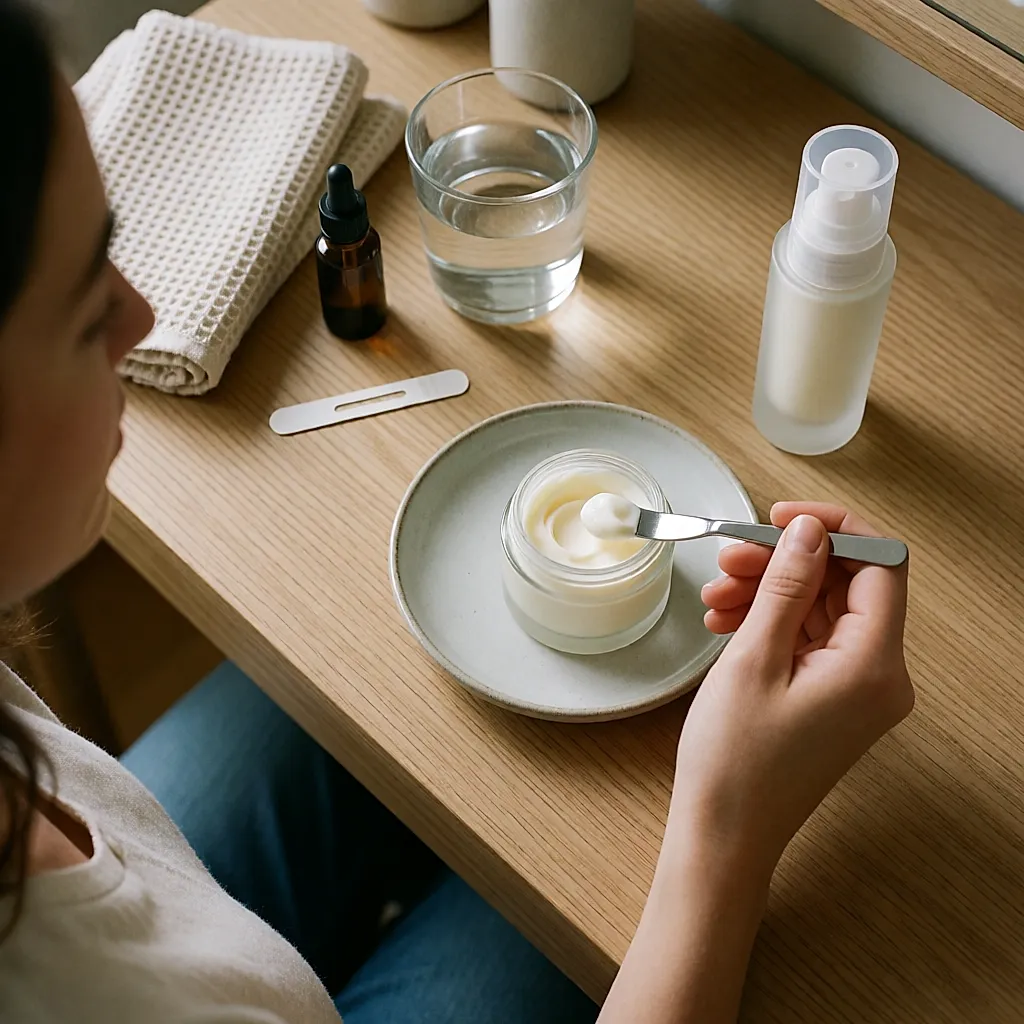
Second point, more technical and rarely highlighted: the pH window. A preservative's efficacy depends on how acidic the formula is, and a system tested close to neutral won't necessarily hold up in a cream with AHAs or vitamin C. Add the packaging — a jar you dip a finger into every morning doesn't live the same life as an airless pump — and you have three perfectly reasonable questions to email a brand before you buy.
Where does the ferment come from?
Third check, the fuzziest one: provenance. Who ferments what, where, in what kind of tank, from which raw material? The radish may come from far away, the ferment may be supplied as a diluted solution in a carrier, and the actual share of ferment in the ingredient bought from the supplier won't appear on the jar in your hand. A serious brand knows the answer; a brand that replies 'it's natural' to everything has already given you its answer.
Be wary, too, of the automatic equation 'fermented = eco-friendly'. A tank takes energy, and an ingredient that crosses the planet is still an ingredient that crosses the planet. The useful marker is the standard behind labels such as COSMOS, Ecocert and Cosmébio, which set out which preservatives are allowed. They won't tell you anything about how the cream feels, but they shrink the fog considerably.
What you'll pay
On price, these are ballpark figures: expect £15–50 depending on where you buy for a face cream with a fermented preservative — more like £15–25 at a high-street beauty retailer or on the brand's own site, £25–50 in a pharmacy or specialist beauty retailer, and more again for a serum in an airless pump. Anhydrous balms and solid formats often stay under £20.
None of which means you're paying for the ferment itself. It makes up little of the cost; packaging, the challenge test, certification and distribution are the bigger line items. In other words, a higher price doesn't mean better preservation, and the reverse is true too. The honest comparison is like-for-like on packaging and transparency.
The only move left when you've got five minutes and a bottle in your hands: read the last five lines of the INCI list, then ask the brand two questions — the use level and the pH. The ones who answer precisely deserve your money. The rest deserve your curiosity — not your debit card.


Comments
Your opinion matters: rate the article, react and reply to comments.
Comments are moderated; AI-assisted comments are flagged. Text emoticons (8-), :-), <3…) are automatically shown as images.