

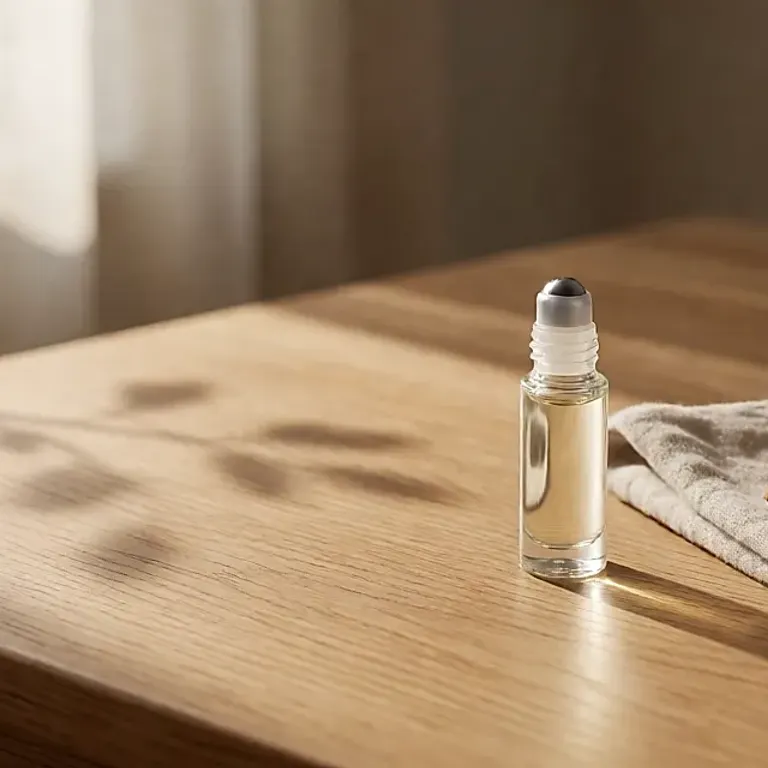
A roll-on rattling around the bottom of your bag, a rollerball that dumps three drops at once, a brush you keep forgetting to put back: cuticle oil is a small, very obliging object. The trick is reaching for it at the right moment. Apply it just before your polish and it works against you — and that, of course, is exactly when you think of it.
Oil and polish don't mix
Oil, even a light one, can leave a greasy film on the nail plate. Polish grips best on a clean, dry, degreased surface. On an oily base it can slip, sometimes blister, and wear off sooner: no point blaming the bottle; the surface is often the culprit. I don't have a numbers-based comparison to offer you here — but what is clear is that a greasy nail plate won't help a colour stay put.
Already oiled on autopilot with the brush out? Don't panic. Wash your hands with mild soap, dry them thoroughly, then give it a moment. You don't paint over a greasy surface, you clean it. A quick rinse under the tap doesn't always do the job; a little mild soap helps. Next time, the simplest thing is to oil at night and polish the following day: give it a night, or at least a few hours plus a careful degrease if you can't wait.
At night, because you're not touching anything
In the evening you're not doing much: no keyboard, no washing up, no bag zip yanked open every five minutes. The oil has time to sink in, you have time to massage, and nobody's asking you for one last job. It's the window where the gesture costs the least effort — which makes it the one that turns into a habit rather than a January resolution.
Watch out for the myth, though: night doesn't magically multiply the effect. In practice it's consistency that makes the difference, not a thick layer. The usual advice is a little oil in the evening: a light application beats drowning your nails on a Sunday. And if shiny hands keep you awake, blot the excess with a tissue — nobody needs to leave marks on the duvet.
The full routine, in order
Start by taking your polish off. A gentle remover is enough for regular polish; if you wear gel or semi-permanent polish, acetone does the work, which is all the more reason to nourish after removal, not before. With gel or semi-permanent polish, skip oil on the day of application: save the oil for after removal or for days when nothing is going on your nails. Then wash, dry — properly, including between the fingers.
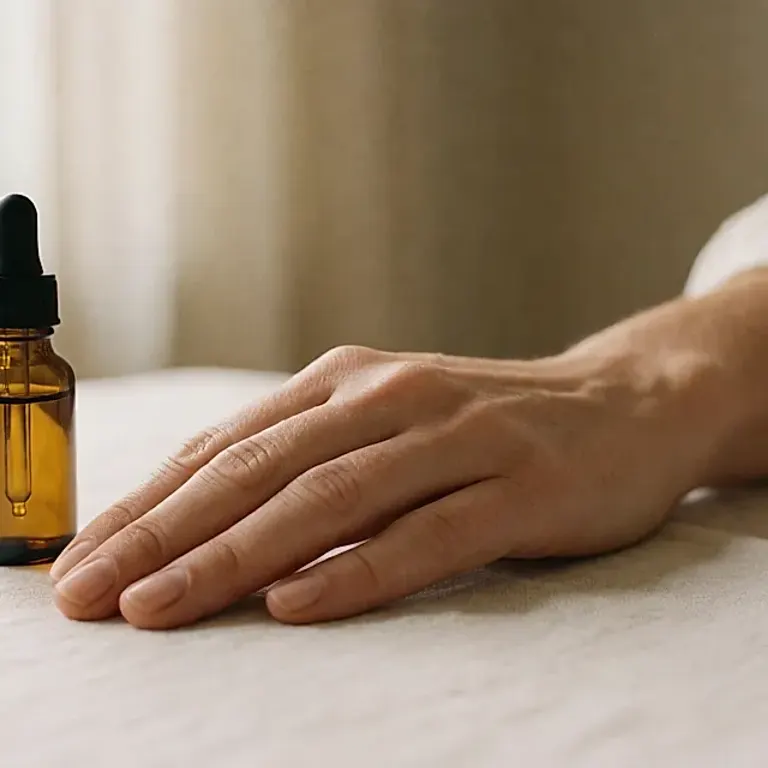
Then put a drop of oil in the hollow of each cuticle. Massage in small circles, paying extra attention to the sides, where the skin can go white and crack as soon as the air turns dry. A more generous application is just greasy overflow onto your phone screen — and nobody wants that. No need to cut your cuticles: gently pushing them back with a warm towel during the massage is plenty.
The five-minute version, for nights when you're falling asleep on your feet: remover, quick wash, dry, then a little oil, massaging each finger for a few seconds, and bed. If you really have nothing left in the tank, one hand is enough — the one that'll be on the steering wheel tomorrow morning.
Nothing here is a ten-ingredient manicurist's secret: a little oil, at the right time, and polish the next day on a degreased surface. The difference often comes down to that one-night gap — and to not confusing nourishing with preparing. Your next manicure will thank you.
Budget
You don't need a full manicure kit to start: one cuticle oil and one gentle remover are enough. In France, count on roughly €7 to €25 for a small bottle of cuticle oil and €3 to €10 for a gentle polish remover; prices vary with the format, the brand, the ingredients, the city and the type of shop. A pharmacy or supermarket version can keep the pair under about €30, while a salon-brand or perfumery oil can push a single bottle higher. Look for them in pharmacies, supermarkets, beauty stores or online — and remember that a little goes a long way, so a small bottle often lasts for months.

Comments
Your opinion matters: rate the article, react and reply to comments.
Comments are moderated; AI-assisted comments are flagged. Text emoticons (8-), :-), <3…) are automatically shown as images.