
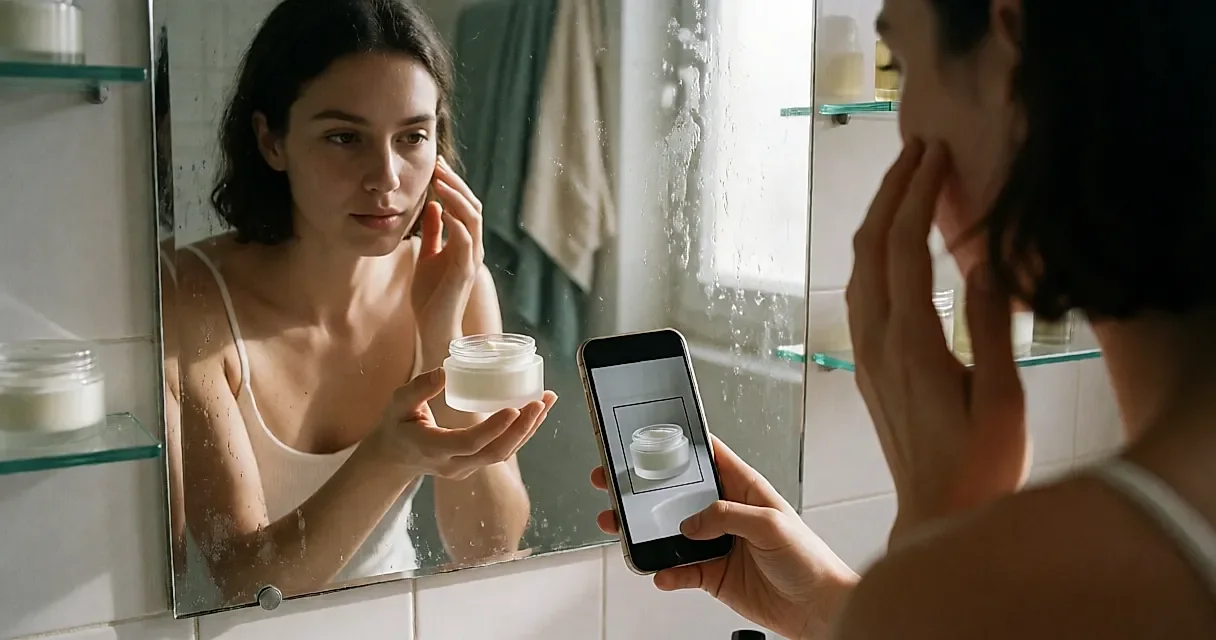
A scanning app knows how to read a label. It has no idea how to read an evening. The habit has become a reflex in the aisle: you point your phone at the bottle, the score lands, green or red, and the product is filed away before you have even opened it. Except that a label describes one product, on its own, as it was formulated — while your skin receives the sum of everything you have put on it since you took your make-up off.
What the app actually reads
A scanning app works from a list of ingredients. In Europe that list — the famous INCI — is compulsory on the packaging, in descending order of concentration down to 1%, then in any order below that. That is already a lot: you know what is in there and, roughly, in what proportions.
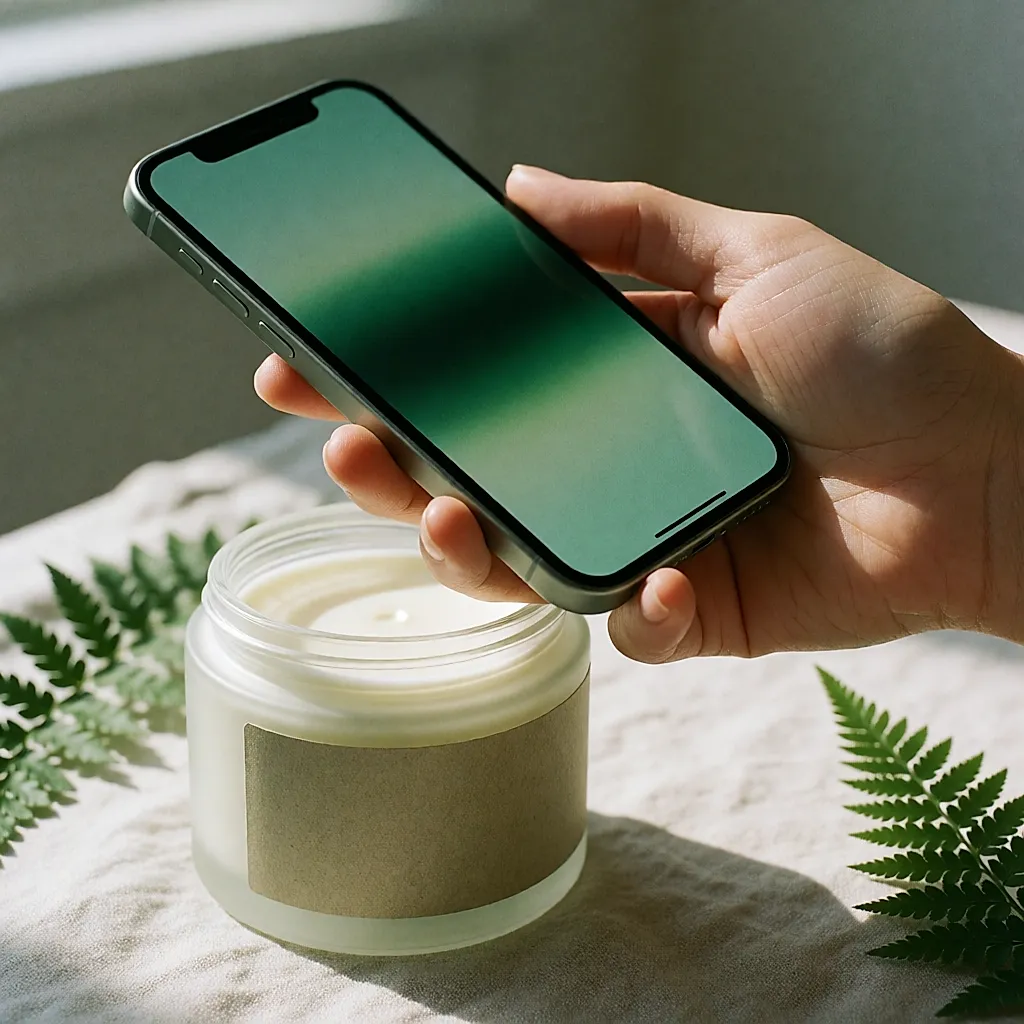
What the app does with that list next depends entirely on the grid it uses. The same ingredient can be marked harshly by one app and pass without comment in another: they share neither the same databases, nor the same criteria, nor the same update date. The score is an opinion, not a certificate. And the word 'parfum' on a label can cover dozens of different molecules without any of them appearing — that is allowed, except for allergens that have to be declared.
What no label tells you
The amount you scoop out, for a start. Two pea-sized amounts instead of one and the dose doubles without anyone flagging it. Then the frequency: the same product used once a week or every single evening does not tell your face the same story. None of that is written on the jar, and no app can guess it for you.
It also ignores the order you apply things in, whether you rinse or not, and above all what you mix together. The actual percentage of an active is often missing from the label and stays the big unknown: 'hyaluronic acid' on a list tells you nothing about whether there is a lot of it or only a trace. There, neither the app nor anyone else can decide without the full formula.
Layering is the real issue
In the evening, a rushed routine often turns into a small contest of actives: a serum, a moisturiser, an oil, a patch, and why not a drop of that other serum you like. Each product, taken on its own, was formulated to be used on its own. The trio sitting on the same cheek has been assessed by nobody.
The point is not to ban layering — that is often where you find the step that genuinely works for you. The point is knowing what is being stacked. Three serums built on the same molecule don't give you three times the effect; they do the same thing three times. You may well be happy with that. Just as well to know it before you finish the bottle.
Adding up your cumulative routine
The method fits on a sticky note. In the notes app on your phone, one line per evening: the products you used and, next to the brand name, the main active — niacinamide, retinol, acids, vitamin C. After a week, the duplicates jump out at you without any need for a spreadsheet.

If you want a practical marker, here is one from the editorial desk, not a rule set in stone: three leave-on products in the evening are usually enough — one targeted treatment, a moisturiser, and an oil or balm if your skin feels tight. Beyond that, ask yourself what the fourth one adds. Sometimes the answer is 'pleasure', and that is an honest answer.
The three-question test before you buy: 1) what is the main active, and where does it sit on the list? 2) do you already own something that does the same job? 3) if you add this to your evening routine, what comes out? Three clear answers and you have often saved yourself a bottle.
Organic and short, without turning it into a slogan
An organic certification on a cosmetic guarantees one precise thing: a minimum share of ingredients from organic farming. It also sets out the list of permitted ingredients. That counts for something. It is not a promise that this particular product will get on with the other three — certification looks at the product, never at your layering.
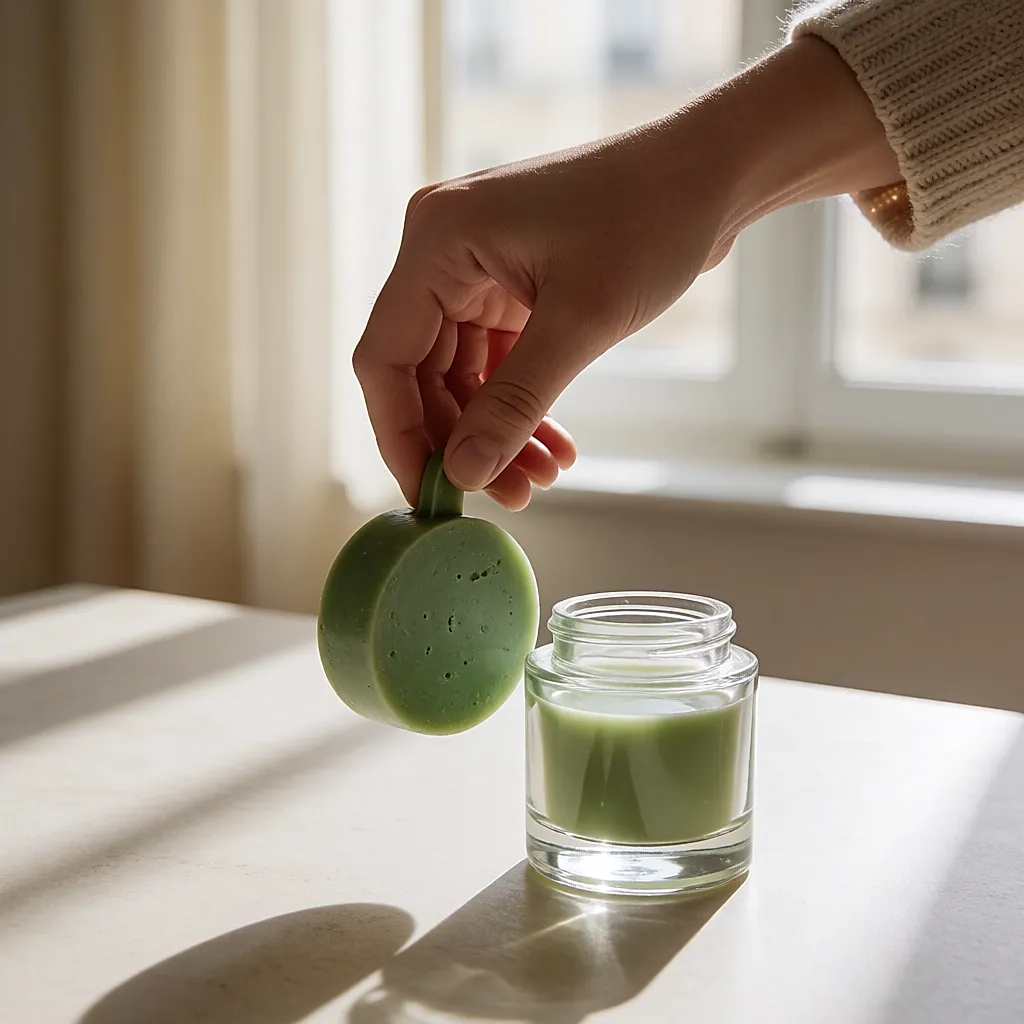
Short formulas have a genuine merit: fewer lines to read, fewer unknowns, quicker triage in the app. But short doesn't mean harmless — a six-ingredient list can contain an allergen, and a long list can be perfectly sensible. Packaging counts too: refills where they exist, glass, card and solid formats. That is the part of the gesture that has nothing to do with your skin, and it is worth a look.
One simple idea remains, and it is free: the app is a starting point, not a verdict. Scan it, read it, note the active in your notebook, and keep the decision for yourself. Tonight, before you start stacking, one question is enough: what are you putting on, in what order, and haven't you already got that somewhere? Your cumulative routine fits on one line — you just have to write it down.


Comments
Your opinion matters: rate the article, react and reply to comments.
Comments are moderated; AI-assisted comments are flagged. Text emoticons (8-), :-), <3…) are automatically shown as images.