
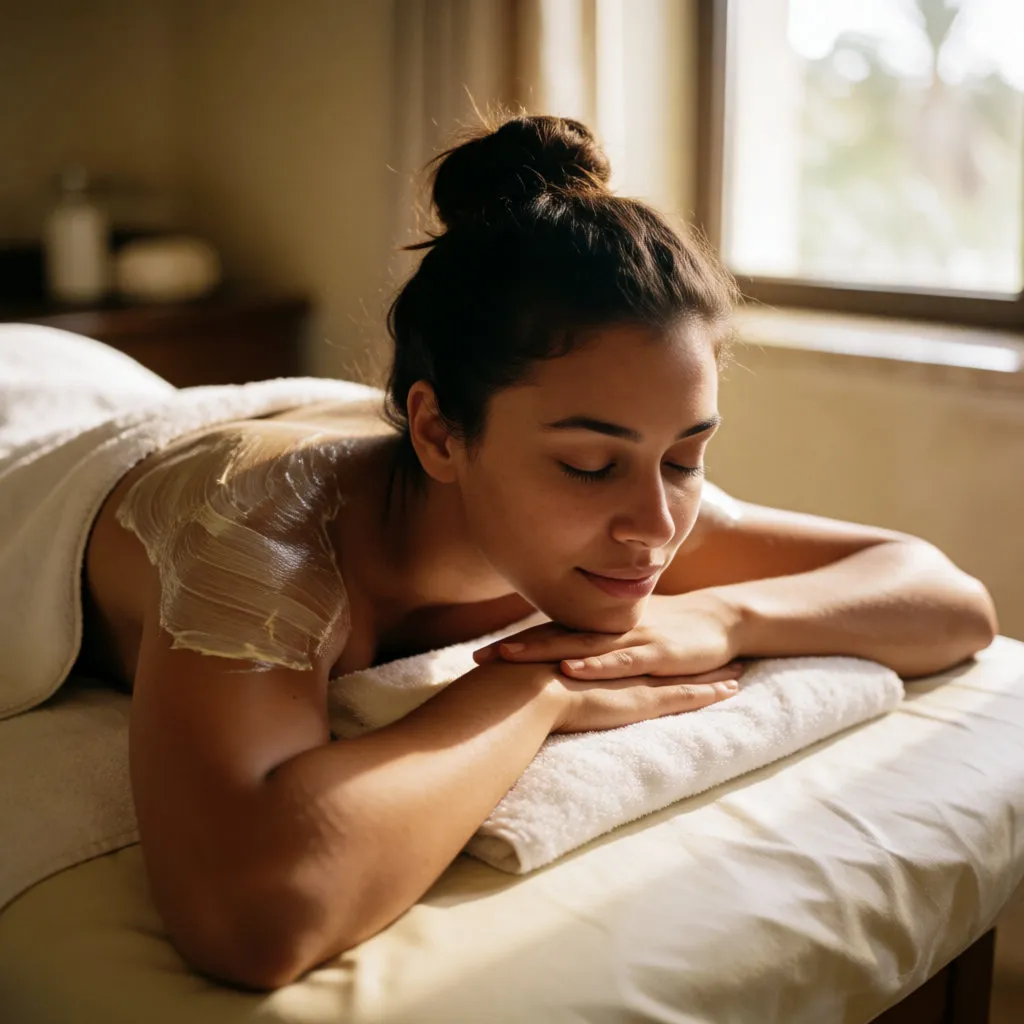
A square of dark chocolate is a small pleasure in itself. But in skincare it is not just an image: cocoa is naturally rich in flavonoids, antioxidant compounds. It also appears in treatments for its scent, texture and cocooning effect. In short, enough to turn a simple break into a ritual!
How it actually works
Chocotherapy covers salon treatments that use cocoa in all its forms: scrub, mask, wrap, massage oil. There is nothing medical in this, and no one is promising to make you younger. It is a sensory experience that plays on scent, warmth and touch — and that is already a lot. The step that changes everything is often simply lying down for an hour doing nothing.
What happens in the treatment room
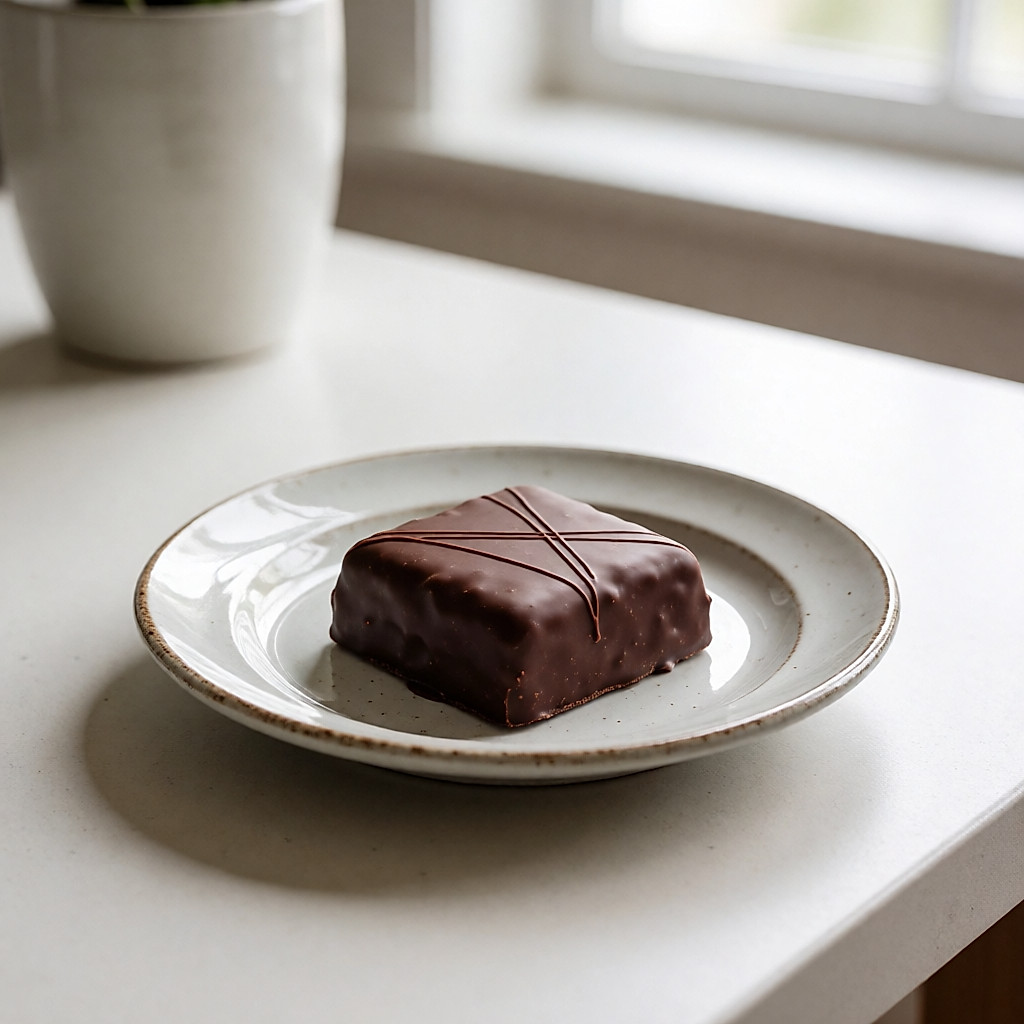
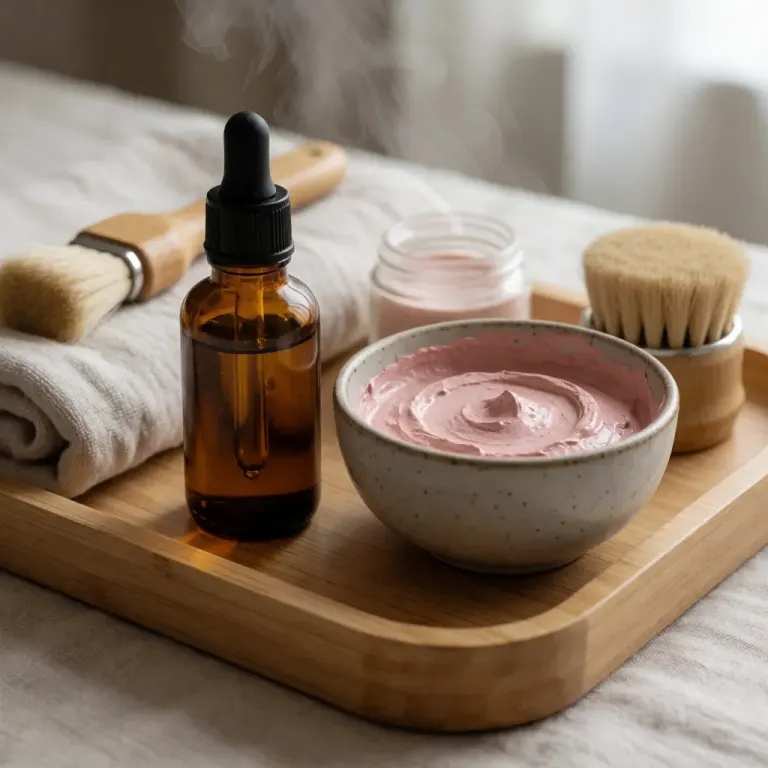
The sequence depends on the spa, but the main steps are similar. It often starts with a scrub using sugar, salt or ground cocoa beans. Then a warm chocolate wrap, sometimes mixed with clay, is applied all over the body. You are wrapped in cling film and then a heated blanket while it gets to work — usually about twenty minutes. A shower to rinse off, then comes the part many people prefer: the massage, often with oil.
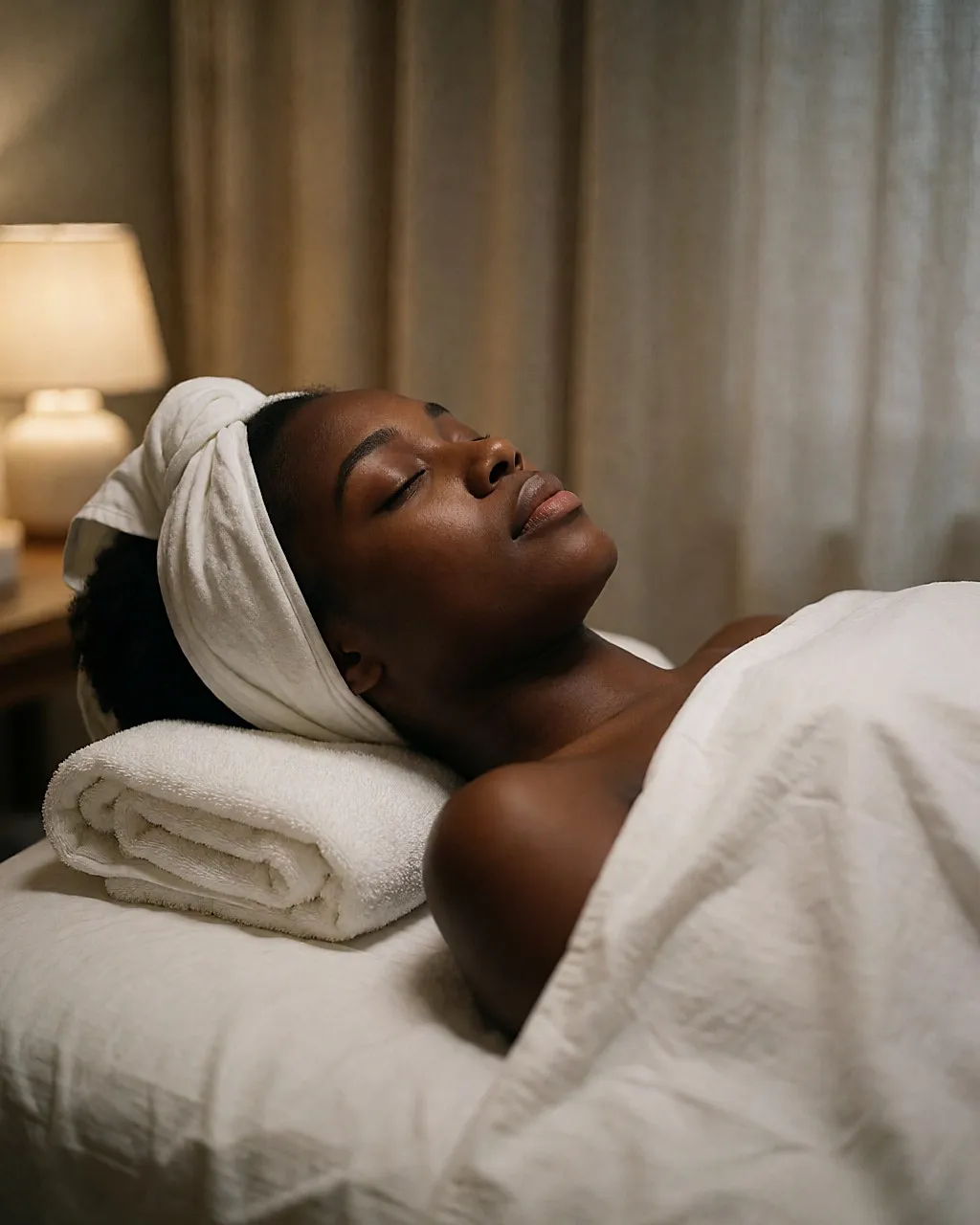
Some spas add a cocoa facial or a scalp massage. Ask for the details before booking: what's included varies a lot from one place to another, and so does the price.
What you get out of it
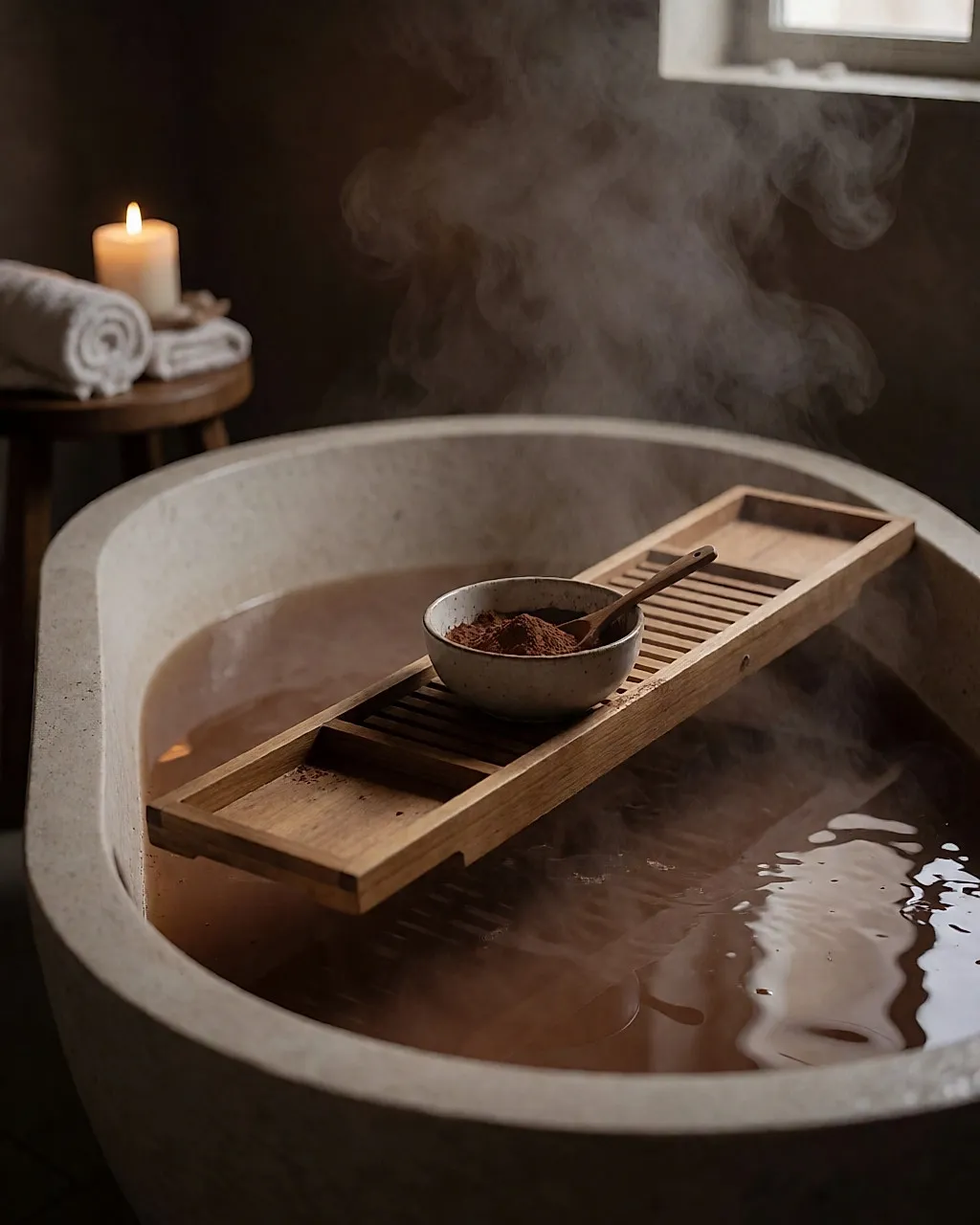
Don't expect a dramatic transformation. What you take away is softer skin, a pleasant scent and genuine relaxation. I'll be honest: I haven't tried this exact treatment, but I have tried similar wraps — it's enjoyable, never magic.
A small precaution: if you have reactive skin, eczema or a known cocoa allergy, do a patch test on your forearm a few days beforehand, or tell reception. If in doubt, mention it to the team before booking: it's common sense, nothing more.
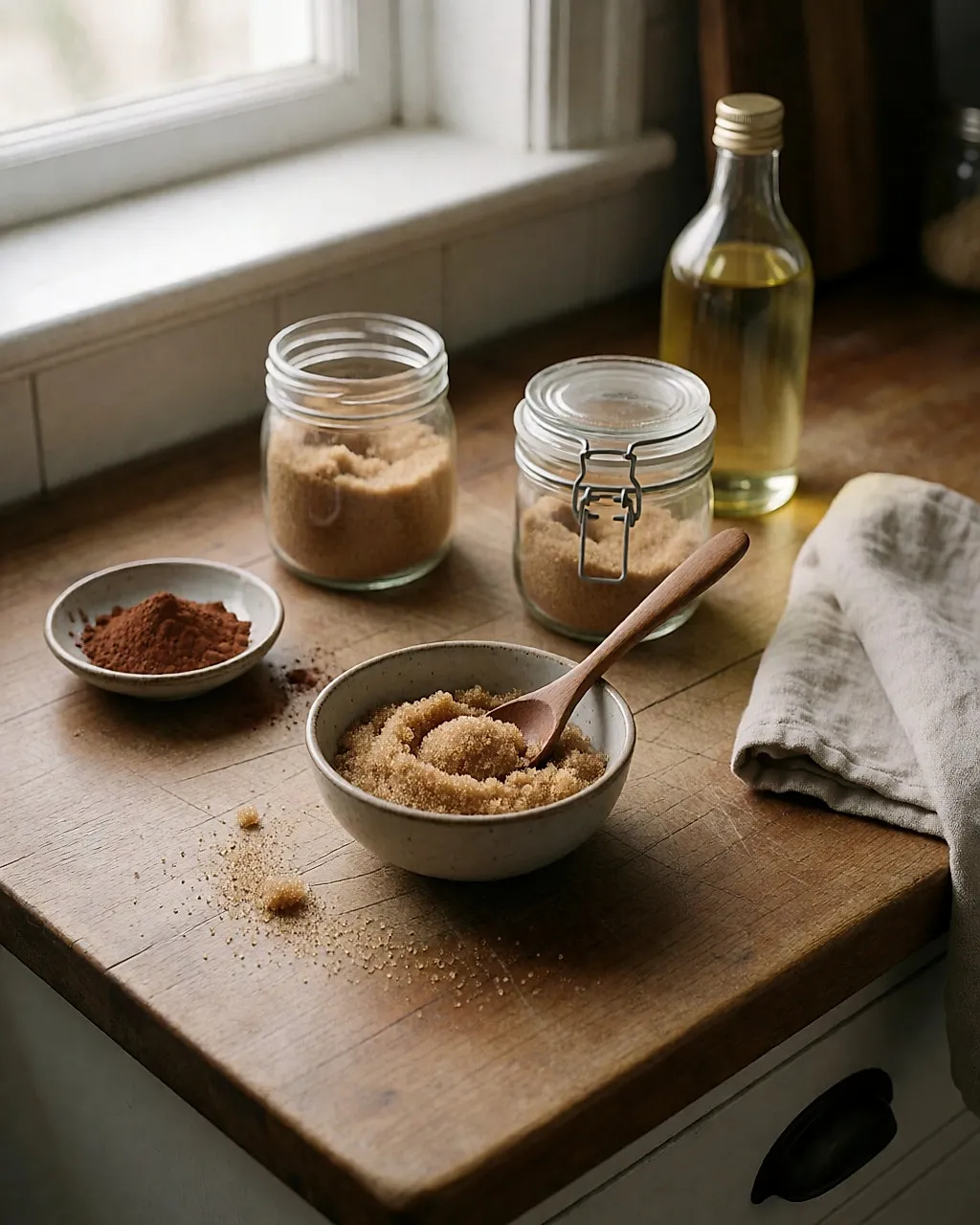
Want to recreate the ritual at home without breaking the bank? Mix two tablespoons of soft brown sugar, one tablespoon of cocoa powder and a drizzle of vegetable oil. Massage in circular movements in the shower, then rinse. The scent lingers for a while and your skin feels soft.
Which products to choose
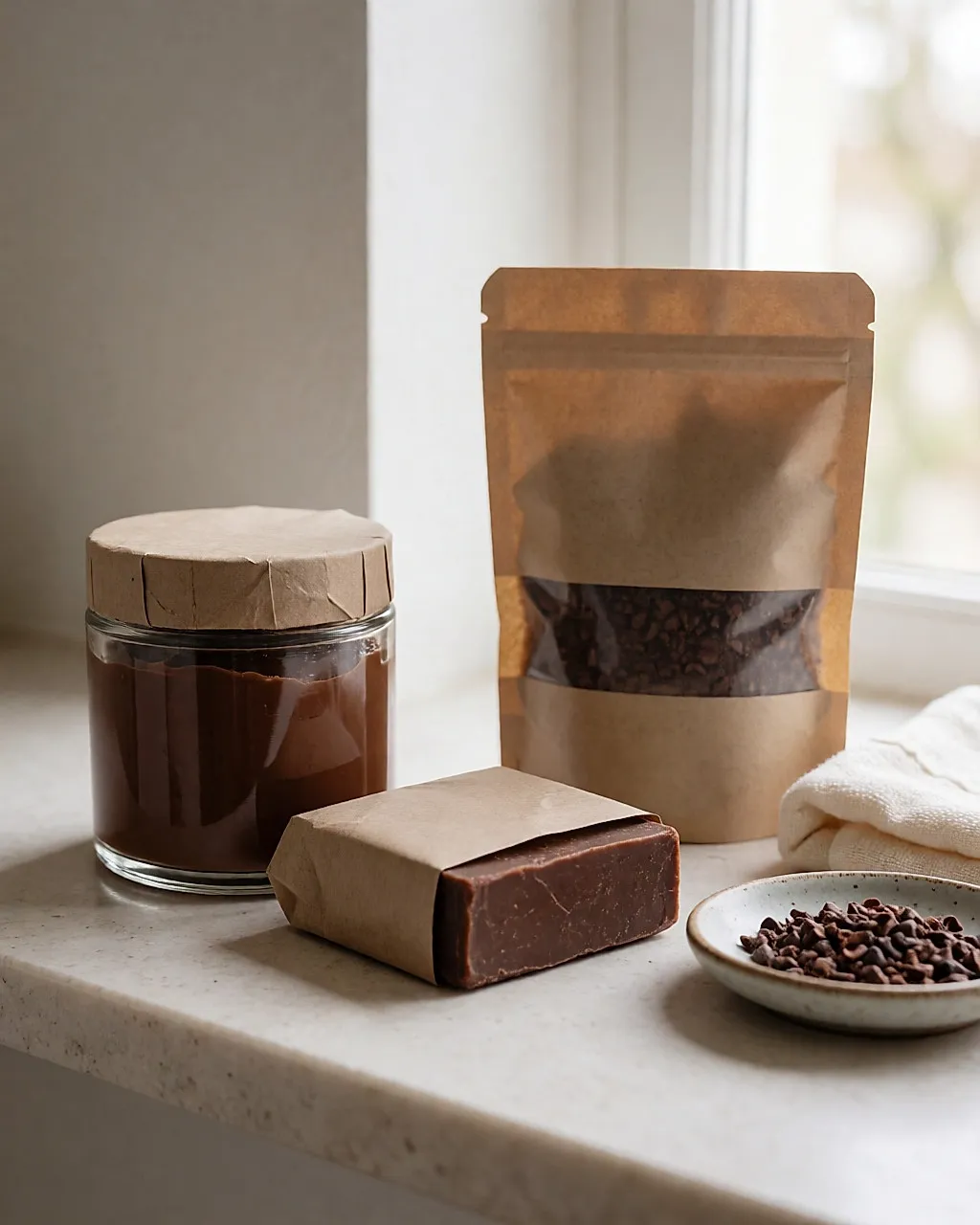
Here, natural ranges have a real advantage: cocoa is often the star ingredient, and many formulas skip the synthetic chocolate-style fragrance. Look at the ingredients list — cocoa or cocoa butter near the top, few ingredients — and the certification: Cosmos Organic, for example, sets rules on the percentage of organic ingredients and which others are allowed. A glass jar, a solid format or a refill also count when you buy again, and European manufacturing limits transport.
That said, the best choice isn't always the greenest on the label: for reactive skin, a short, fragrance-free formula — even a conventional one — may suit better than a fragranced organic scrub. That's where the compromise lies.
Budget
In a spa, expect around £55 to £115 for an hour-long cocoa treatment, depending on the city, the venue and what's included. A hotel spa or a large chain in the city centre often sits at the top of the range, while a small neighbourhood place is usually at the bottom. The price shifts with duration, the product brand and added extras.
At home, a cocoa oil, scrub or body cream usually costs between £7 and £30 in supermarkets, beauty retailers or online. Salon ranges are more like £25 to £55. Nothing is compulsory: you can start with a square of dark chocolate and a scrub made in two minutes in your kitchen.
Sources
- Harvard T.H. Chan School of Public Health, The Nutrition Source — 'Cocoa'.
- Commission Regulation (EU) No 432/2012, list of authorised health claims (cocoa flavanols).
- COSMOS-standard, the reference standard for organic and natural cosmetics.
Comments
Your opinion matters: rate the article, react and reply to comments.
Comments are moderated; AI-assisted comments are flagged. Text emoticons (8-), :-), <3…) are automatically shown as images.