
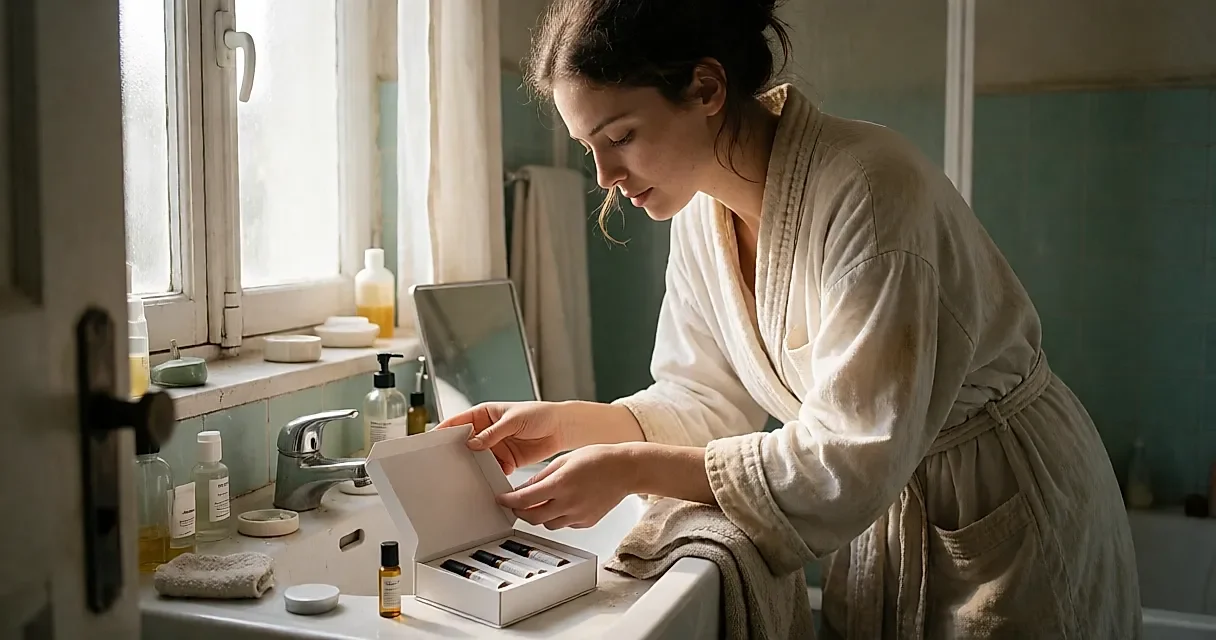
The parcel arrived on Friday. It sat in the hallway for two days, and it was Sunday evening, between two loads of laundry, that you finally opened it. Three mini bottles, a sachet mask, a perfume spray — and that odd sense of having been shopping without leaving the sofa. With a discovery box, the real question isn't whether it looks pretty on the coffee table. It's whether it genuinely stands in for a trip to the shop.
The counter has its charms, but the parcel can wait
In store, you touch things. You put the cream on the back of your hand, you feel whether it's tacky, whether it shines, whether the scent turns soapy after twenty minutes. No sachet will tell you any of that — which is presumably why premium stores are reopening their doors and putting their money on personal advice, flattering lighting and the whole hands-on ritual. One well-judged bit of advice can be worth three samples.
The parcel, though, wins on ground the shop can't compete on: timing. No journey, no Saturday afternoon stuck in traffic, no assistant hovering three feet behind you. You open it when you've got five spare minutes, you test on your own skin, in your own bathroom, with your own hard water and your own Monday-morning lighting. Less glamorous. More accurate.
How many uses does a discovery box really give you?
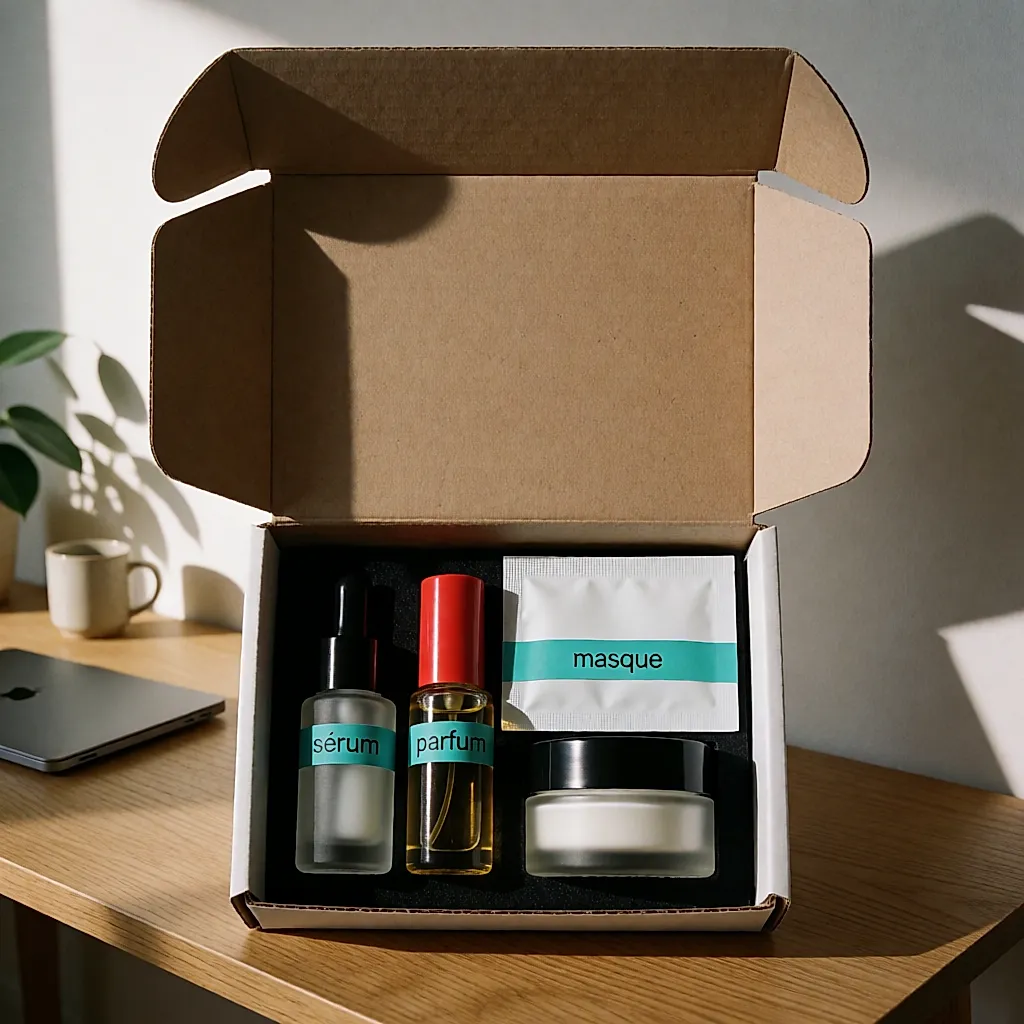
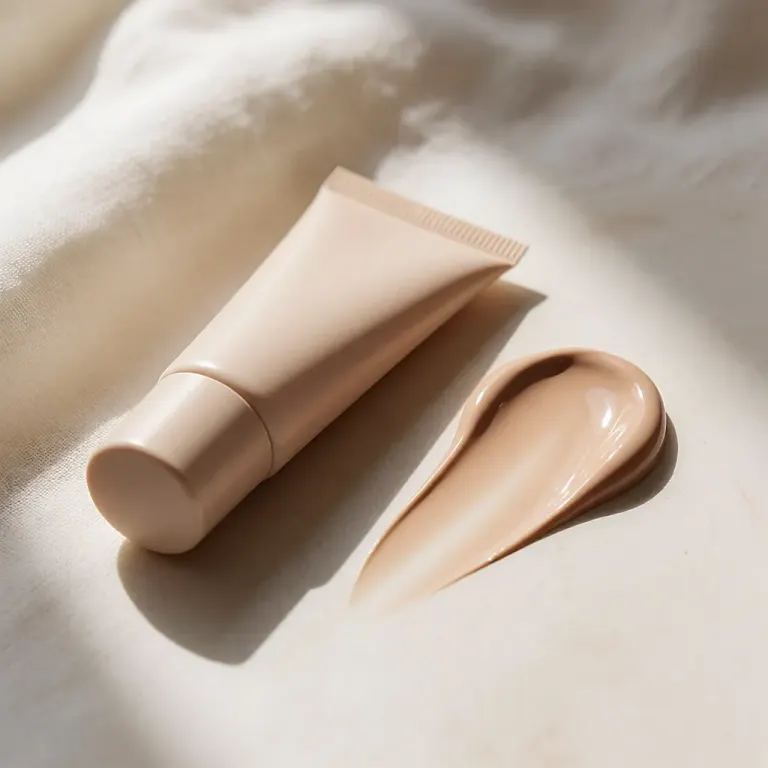
This is where the usual reasoning goes off the rails. People compare the price of a box with the price of a treatment, as if they were like for like. Except a box doesn't contain a treatment: it contains mini formats, and what matters isn't the headline total, it's how many uses each one allows. In practice, a mini serum bottle often stretches to a handful of applications, a sachet mask is a one-off, a perfume sample gives you two sprays — and sizes vary so much from one box to the next that a single figure is meaningless.
And a product you try once tells you almost nothing. A texture can please on the first night and bore by the end of the week. One or two goes give you a first impression, not the full picture: does that hair product weigh down the roots, does that body oil take ten minutes to sink in? The right measure is therefore how many real uses each format actually delivers — and on that count, subscriptions are nowhere near equal.
The quiet luxury: trying what you'd never have bought
Let's face it, we walk into a beauty hall for a mascara and we walk out with a mascara. Nothing more. The clever thing about a box is that it slips categories into your hands that would never have made it into your basket: a cuticle oil, a sugar body scrub, a leave-in treatment for fine hair. Twenty-second gestures, often, that never deserved a full size.
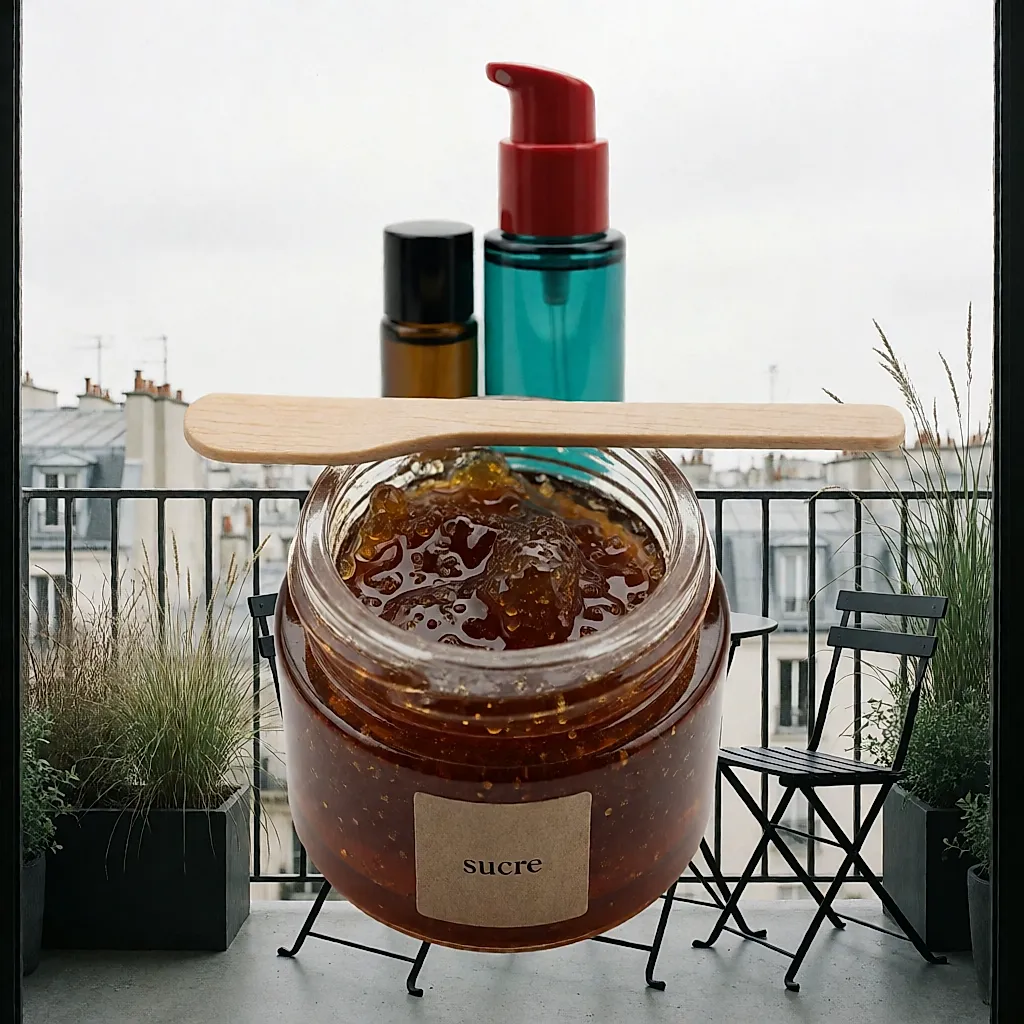
That's where a subscription genuinely earns its keep: it turns a vague curiosity into a concrete trial. There's a flip side, though, and it takes up space. The drawer. The one filling up with half-started minis, sachets saved "for later" and good intentions. A box you never open isn't a saving, it's a subscription to guilt.
Three questions before you sign up How many real uses does each format contain: one or five? Does the box state exact volumes, or just a number of products? And above all: will you open it that same evening, or will it join the pile?
Budget: what a discovery box actually buys
On the subscription side, expect roughly £10 to £20 a month for entry-level discovery plans, £25 to £45 for the so-called ritual boxes, and £50 to £75 for premium offers, which are usually billed annually. Annual plans bring the monthly price down but tie you in: check whether you can pause or skip a month. That's the sort of detail most of us read afterwards.
On the shop side, a basic manicure runs to about £20 to £40, a salon cut around £35 to £60 depending on length, and a facial anywhere from £40 to £80 depending on the city and the range. Set against those figures, a discovery box looks like a bargain — unless its formats are asleep in a drawer.
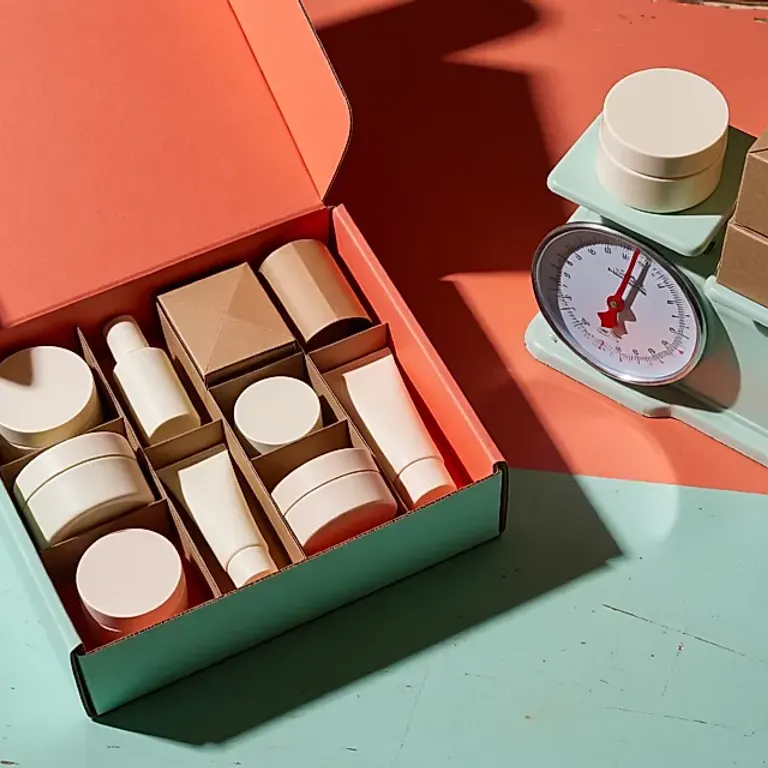
Keep an eye on the packaging, too: plenty of boxes multiply the small plastic bottles. Favour the ones offering glass, solid formats, refills or loose product, and that state their volumes. An identified mini is easier to recycle than an anonymous sachet, and twelve parcels a year adds up.
The truth fits in one line: a box is a first introduction, the shop is the second date. You start with a sachet to check you like the texture, then you push open the shop door for the full size, the advice and the real bottle. With a discovery box you aren't buying a replacement, you're buying the right to try — and you still have to open it reasonably soon, rather than leave it sitting in the hall.
Comments
Your opinion matters: rate the article, react and reply to comments.
Comments are moderated; AI-assisted comments are flagged. Text emoticons (8-), :-), <3…) are automatically shown as images.