

Ever zoomed in on a photo of yourself and winced at your hands? Same here — it happens every single time, now that my days revolve around tidying, cooking and washing up. We slather serum on our faces morning and night, then forget that our hands take a hammering from dawn until dusk: dishes, cleaning products, endless hand-washing, the cold.
Nothing dramatic, and nothing inevitable either. A few well-chosen habits really do change the picture — and there are two or three things I've stopped doing, because they were doing more harm than good.
Why your hands suffer more than your face
The skin on the back of your hands is thin, with very few sebaceous glands. Translation: there's barely any natural protective film there, so the skin barrier has little to fall back on. Add soap, hot water and detergents — which strip the lipids out of that barrier — and you get tightness, redness and cracks.
This is the classic mechanism behind irritant contact dermatitis, which is very common in anyone who spends their days up to their elbows in water or cleaning products. If your hands itch, sting or start to split, see your GP: hand eczema is treatable, but left unmanaged it becomes a stubborn problem.

Three habits that really help
Gloves for anything that foams or stings. Washing-up liquid, bleach, sprays, laundry detergent: never with bare hands. Nitrile is a safer bet than latex if you're sensitive to it, and cotton-lined gloves stop your hands stewing in their own sweat — because a waterproof glove that traps moisture inside is the worst of both worlds.
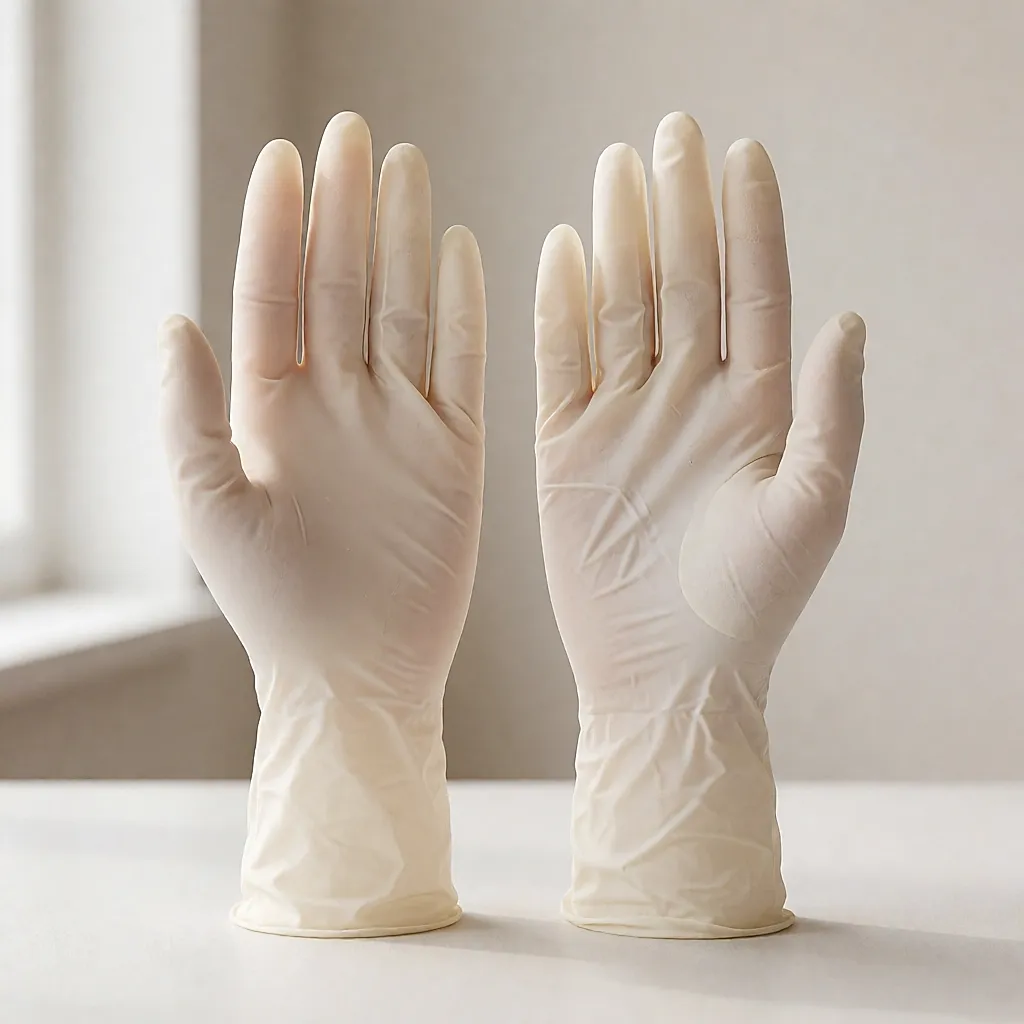
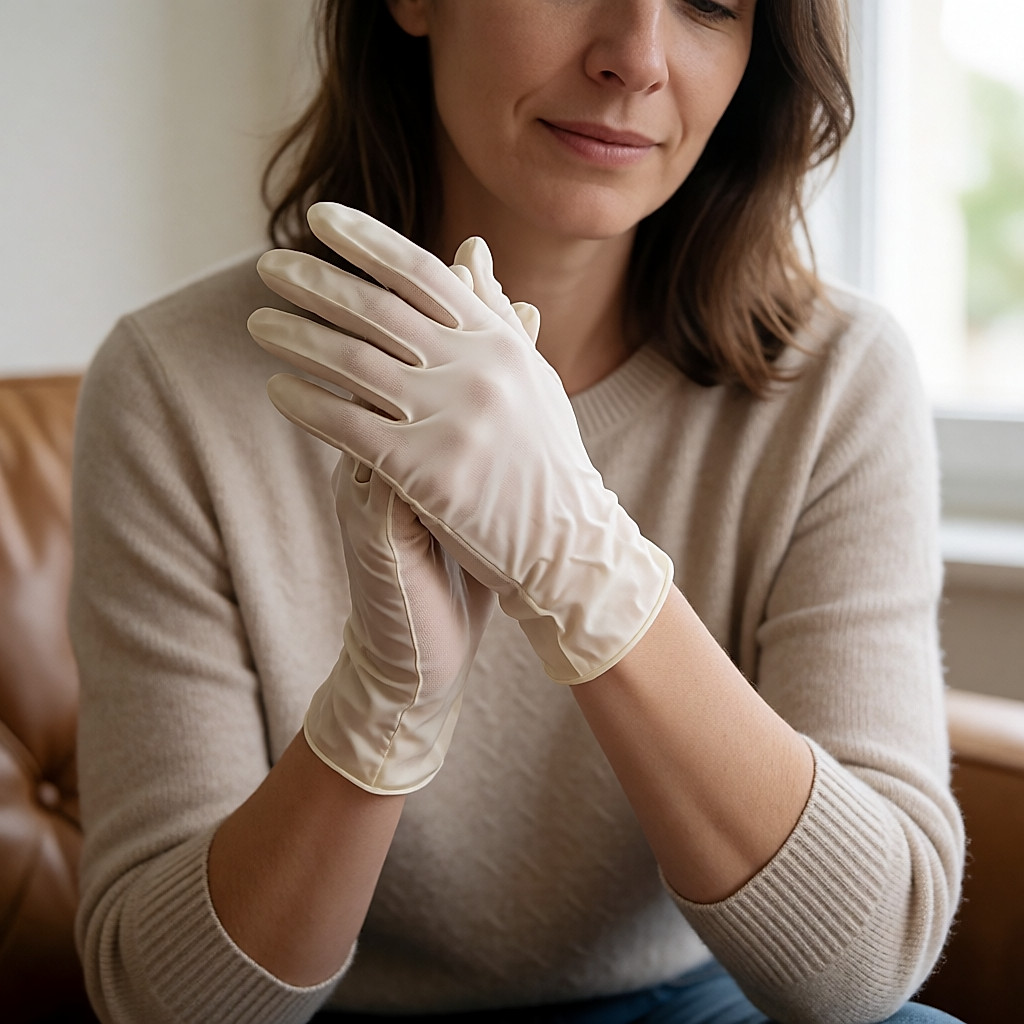
Hand cream after every wash, not just at night. The best moment is while your skin is still slightly damp: that locks the water in instead of letting it escape. In the evening, you can layer it on more thickly, or even sleep in cotton gloves. During the day, topping up ten times does no harm. If your skin is irritated, stick to short formulas without fragrance or alcohol.

Cover up as soon as the temperature drops. Cold and wind damage the skin barrier, and the constant to-and-fro between cold outside and central heating indoors doesn't help. A wool-lined leather pair, or lined technical fabric, will see you through several winters.
The habit that does the heavy lifting: one tube of cream by the sink, another in your bag. Over the course of a day, it's these small reminders that make the difference, not one grand ritual on a Sunday evening. And in winter, the real trap is washing your hands too often: lukewarm water rather than hot, a gentle soap, and pat dry instead of rubbing.
The at-home manicure, done properly
You don't need professional kit, but that's no excuse to cut corners. Give yourself twenty calm minutes: a rushed manicure is the quickest way to get it wrong.
File in one direction only, from the outer corner of the free edge towards the centre of the nail, using your finest grit. Changing direction weakens the keratin layers and makes the nail split. A light pass of the file over the surface smooths out ridges.
Next, push back the cuticles. Soak your hands in warm water first, then use an orange stick or a cuticle pusher — and no sudden moves: this area is delicate, and a nick there gets painful fast. Personally, I've stopped cutting mine — used badly, cuticle nippers open the door to infection. I push, I massage, and I start again the following week. If you want millimetre-perfect edges that last for weeks, leave it to a professional.
Massage the skin around each nail with a cream or oil, then wipe off the excess. Apply a protective base coat before polish: the finish is neater, you limit staining and you disguise any unevenness. Finish with one or two thin coats, leaving a sliver of bare skin at the cuticle, then a top coat.
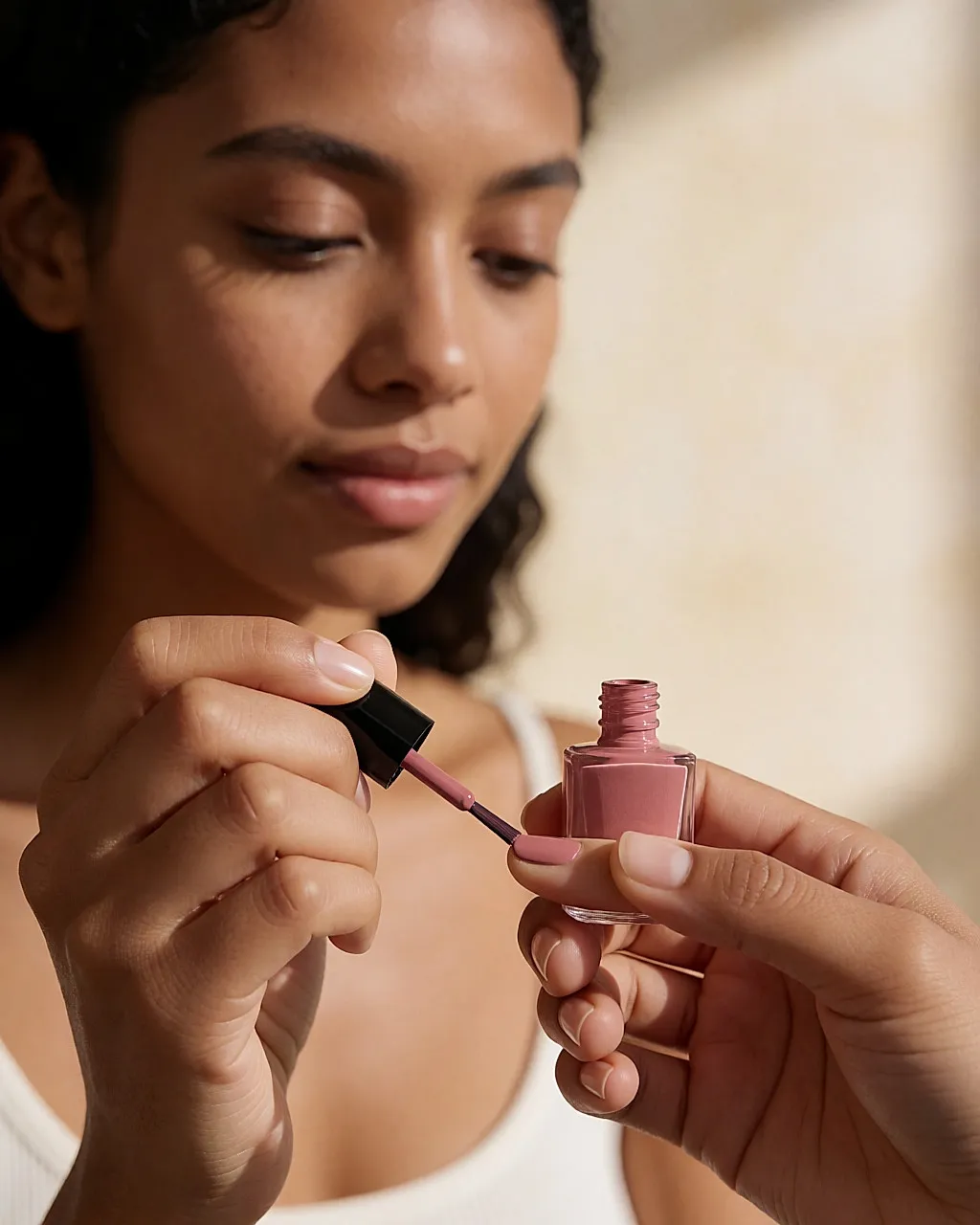
On the product side, two suggestions if you want to keep things on the natural side: creams and oils sold in glass or refillable containers cut down on plastic, and short, fragrance-free formulas are often the best tolerated by irritated skin. A word of warning though: "natural" doesn't mean "risk-free". A highly concentrated essential oil can still irritate, and an organic label governs the ingredients and how they're produced, not the absence of a reaction. If in doubt, a pharmacy is a good reference point.
Budget
- Hand cream: around £3 to £8 in a supermarket or pharmacy for a 100ml tube; more like £10 to £20 for a dermocosmetic brand.
- Cuticle oil or serum: £5 to £15.
- File, nail clippers, cuticle pusher: £5 to £20 for a small kit.
- Household gloves: £3 to £10 depending on whether they're disposable or reusable.
- Cotton gloves for night-time: £3 to £8 a pair.
- Lined leather winter gloves: £20 to £60.
- Base coat, polish, top coat: £5 to £15 each from a beauty retailer, pharmacy or online.
- Salon manicure: £25 to £50; gel polish application £30 to £60, soak-off £10 to £20.
What drives the price: the brand, the size, where you buy it, the skill level of the salon and the city you're in. If you want to try before you commit, a pharmacy or beauty retailer is the easiest place to start.
Sources
- British Association of Dermatologists — patient information on hand eczema and irritant contact dermatitis (bad.org.uk)
- NHS — advice on looking after your skin and hand hygiene (nhs.uk)
- American Academy of Dermatology — consumer guides on hand care and hand eczema (aad.org)



Comments
Your opinion matters: rate the article, react and reply to comments.
Comments are moderated; AI-assisted comments are flagged. Text emoticons (8-), :-), <3…) are automatically shown as images.