
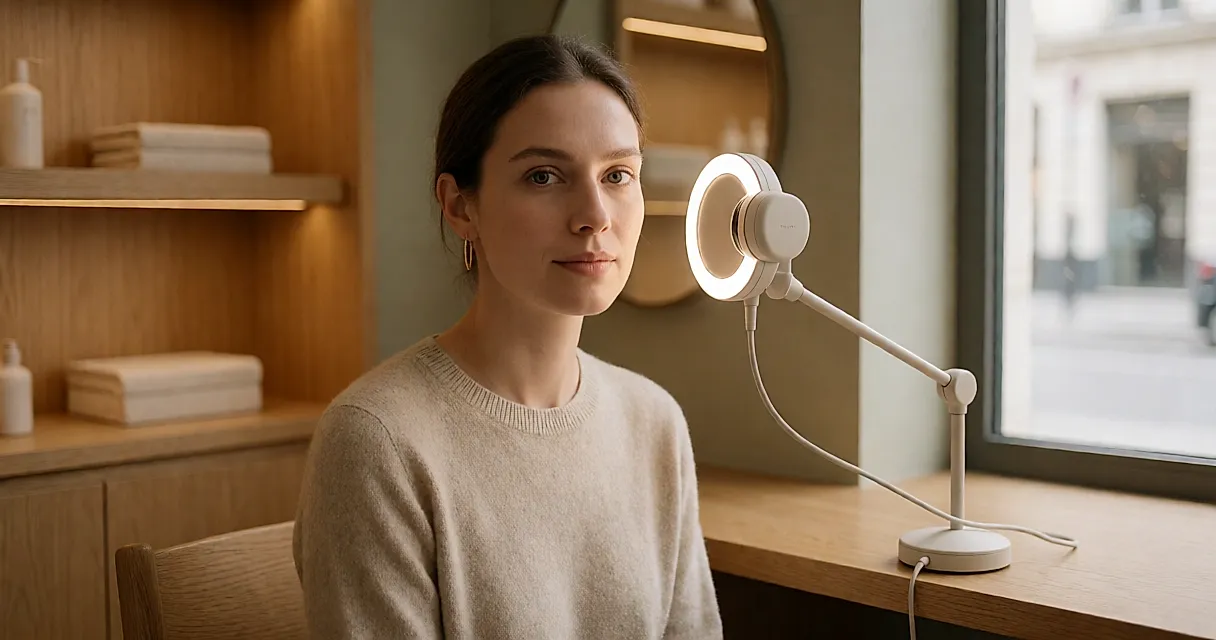
Saturday, 11am, a packed beauty hall: you go in for mascara and come out with a skin score, two samples and a vague worry about your skin barrier. The machine has spoken, the sales adviser has nodded, the basket has filled with suspicious ease. One question remains, the only one that really matters: was that diagnosis worth the trip?
Skin analysis has become software
The first signal is discreet, almost administrative. The tools you see in-store often work more like software than like medical devices: a camera, a questionnaire, an algorithm, a score delivered in seconds. For the retailer, the appeal is obvious: the same protocol everywhere, results that can be compared from store to store, and a record of the advice given. Advice becomes one more component of the system, not a human flourish squeezed in between lipstick testers.
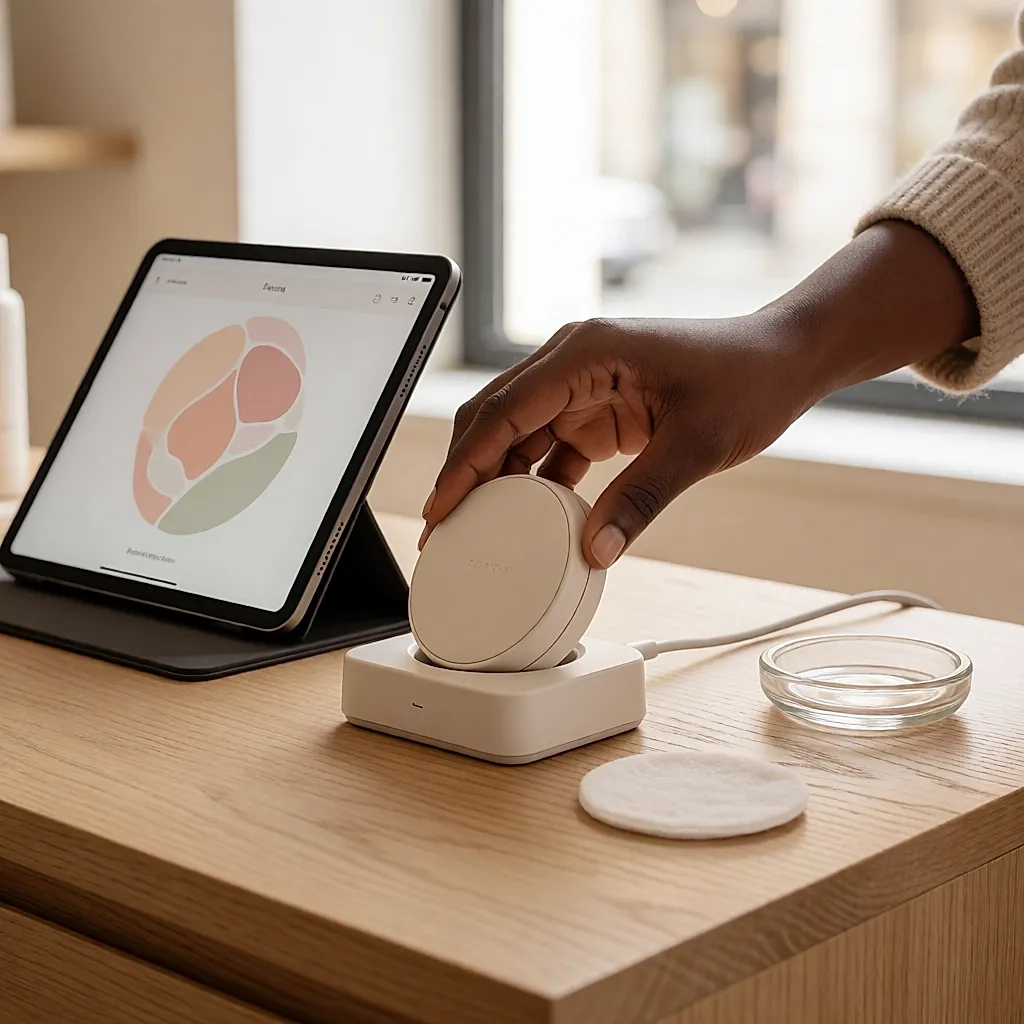
What these tools look at usually comes down to a short list: radiance, visible redness, pore size, pigmentation and sometimes surface hydration. What they do not see is most of what makes your skin your skin: the tightness at 6pm in winter, the cheek that stings after certain actives, the texture that shifts depending on the night you have just had. A score describes one moment, in one place, under one kind of light. Your face lives all day.
The store is being rearranged around listening
The second signal is more visible. You may also see beauty halls being rearranged around service rather than display: fewer straight rows of shelving, more seats, honest lighting for judging a complexion, appointments you book as you would at a hairdresser's. The idea is simple and quietly radical: you no longer go in to buy a bottle, you go in to be looked after — and sometimes you leave empty-handed.
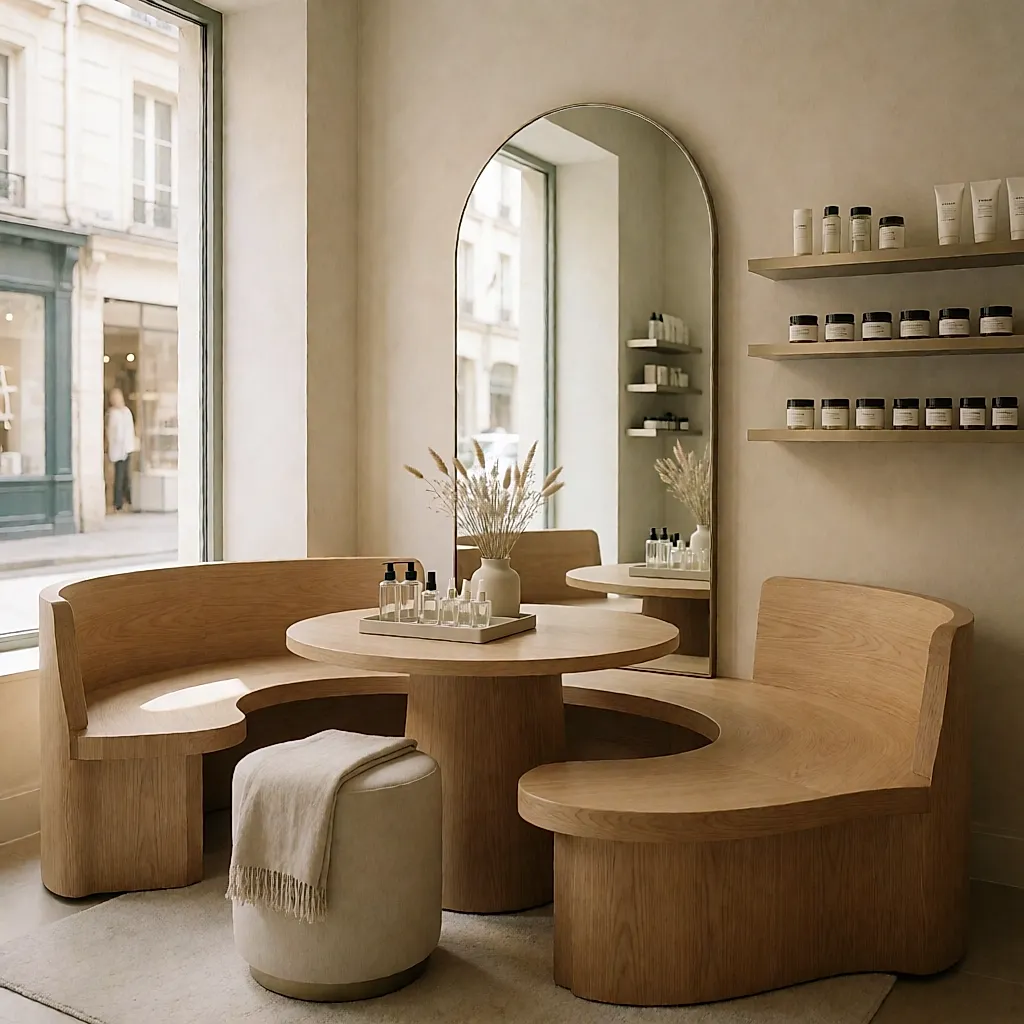
There is something cheering about that reversal. How many times have we come out with one more serum and skin that did not need it? Except that all this time spent listening to you has to pay for itself somewhere. Advice that looks free is still an investment: it is paid for in loyalty, in average basket spend and in data collected. That is not dishonest; it is a model — you just need to know it when you sit down.
The trap of the score you were waiting for
Analysis tools have a dangerous charm: they give you a number. And a number reassures, makes you feel guilty, makes you buy. A detailed dehydration score has the authority of a school report, without the rigour. Be wary of verdicts that are too neat! A surface measurement is not a medical diagnosis, and redness is not necessarily inflammation.
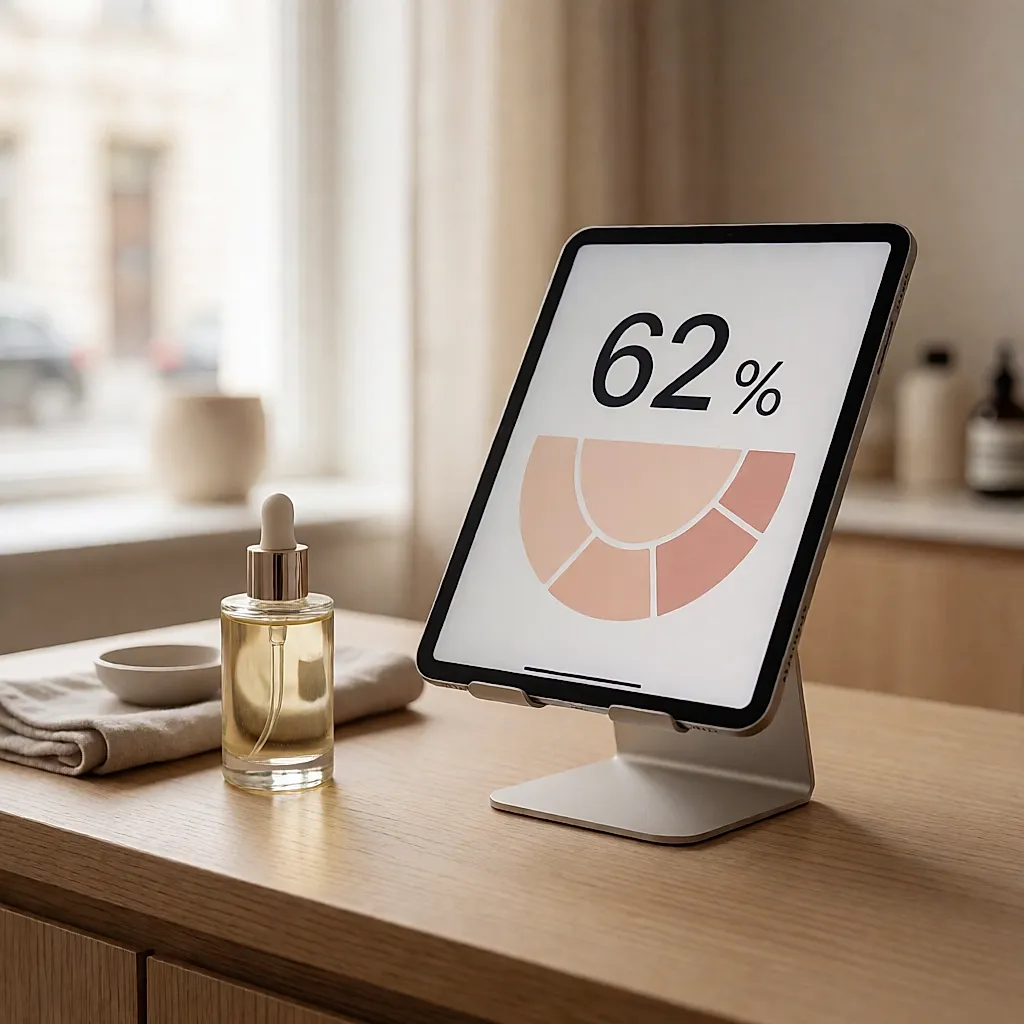
So, machine or sales adviser? The right answer is probably neither on its own. The machine brings consistency, memory and comparison over time; the human brings context, nuance and the right to say 'not that one for you'. And frankly, none of these scores replaces a dermatologist's advice when something has been worrying you for a while.
Budget
On price, the bill varies widely from one store to another. As a rough marker in France, an in-store scan is often free or included with a purchase or an appointment; a detailed analysis in a clinic or treatment room tends to cost about €30 to €80, with big cities and upmarket addresses pushing it higher. Online, some photo-analysis apps may offer free basic versions with paid options that usually run from a few euros a month to around €15; that is where caution rises another notch, because everything depends on the photo you supply and the light in your bathroom. Ask the price and the terms before you let anyone scan you.
Three questions to ask before you let anyone scan you: 'What exactly does this tool measure?', 'What doesn't it see?' and 'If I buy nothing today, what do I do tonight?'. If the third answer is silence, you have your diagnosis.
What happens next is yours to write, and that's no bad thing. Come with your real skin — Monday-morning skin, not Sunday-night skin — note what feels tight, what shines, what stings, then let the number do its job as a number: a reference point, not a verdict. The only step left when you have five minutes? A cream you already know, applied without thinking, rather than a tenth bottle bought under flattering light.



Comments
Your opinion matters: rate the article, react and reply to comments.
Comments are moderated; AI-assisted comments are flagged. Text emoticons (8-), :-), <3…) are automatically shown as images.