
On the shelf, two boxes can look almost identical: same picture, same little serum, same pair of folded gloves tucked inside. Then two words printed larger on one of them — 'ammonia-free' — and that is the box your hand goes for. The trouble is that those words do not answer the only question you are asking in front of the mirror: will it cover your greys, or not?
Because 'ammonia-free' does not mean 'free of everything'. To get pigment into the hair, the cuticle — the overlapping outer layer that protects the fibre — has to be lifted first. Formulas that skip ammonia use another alkaline agent, often an alkanolamine such as monoethanolamine. They are often described as less smelly and more comfortable to use, but that does not necessarily make them gentler on the scalp or the hair itself.
The developer is still part of the equation
The second idea to put away: that without ammonia, hair colour has somehow become a treatment. It hasn't. There is still a developer — hydrogen peroxide, often just called peroxide — which prepares the hair and fixes the colour. It is the developer that sets the level of lift, and it is also what imposes limits on the formula. Ammonia is only one part of the mechanism: leaving it out does not remove the need for an alkaline environment or change the fact that the process is oxidative, even if how comfortable the application feels depends on the formula.
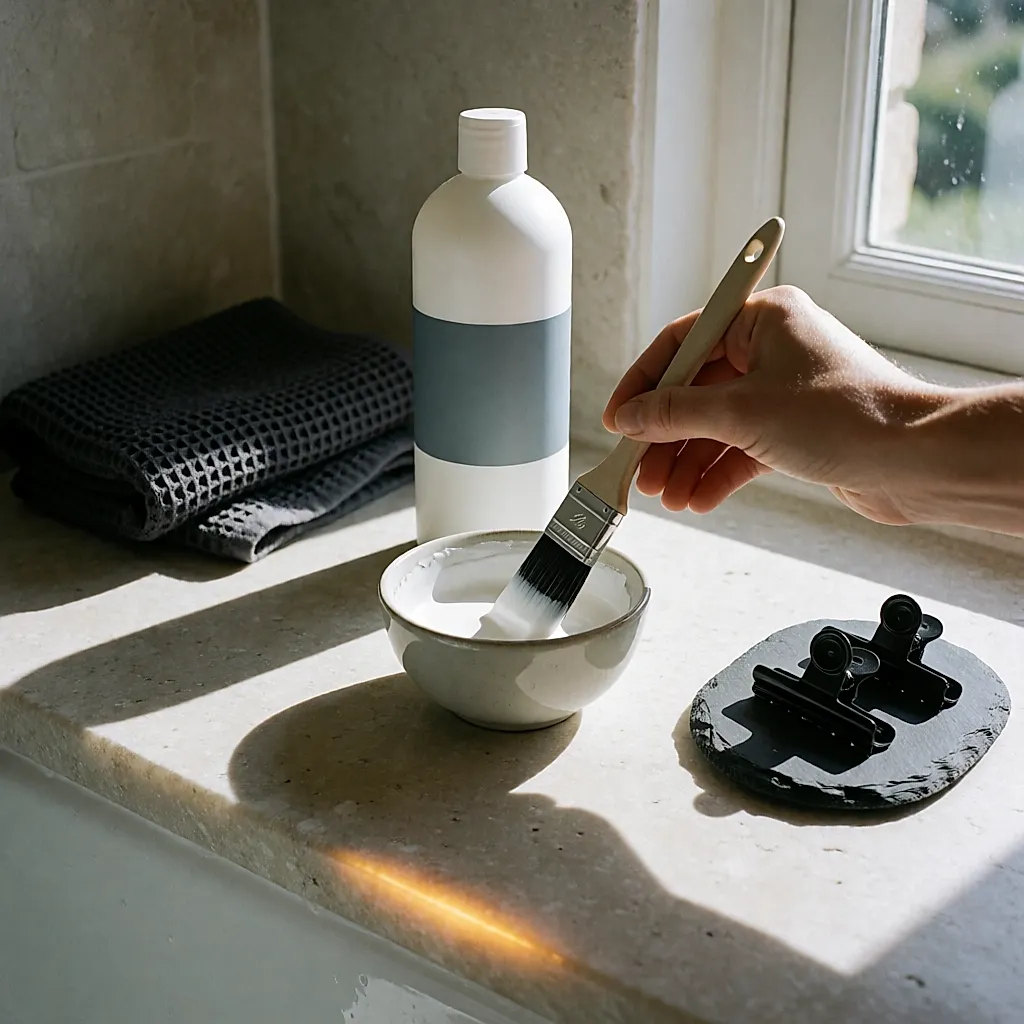
The usual precautions still apply in full. Do the patch test before use (the instructions say 48 hours, and that is not just there for show), wear gloves, work in a ventilated room, and mix in the bowl, not in the bottle cap. And if you have ever had a reaction to hair dye, another box is not the thing to try: seek medical advice.
Processing time is the step we rush
When it comes to processing time, skipping ammonia can cost you minutes. Depending on the formula, some colours need to be left on a little longer, or need a slightly stronger developer; it is written on the box, and that is the instruction to read, not your friend's advice or a forum. Never leave it on longer than stated to 'make it work better': past the recommended time, you stress the fibre without getting better coverage.

How you apply it matters almost as much as the product: roots first, on dry hair that hasn't just been washed, then the mid-lengths and ends for the final few minutes. The most resistant areas — temples, hairline and parting — should be done first, because they take the longest to take colour. A quick, even application also helps avoid uneven processing.
Grey hair is the hardest fibre to win over
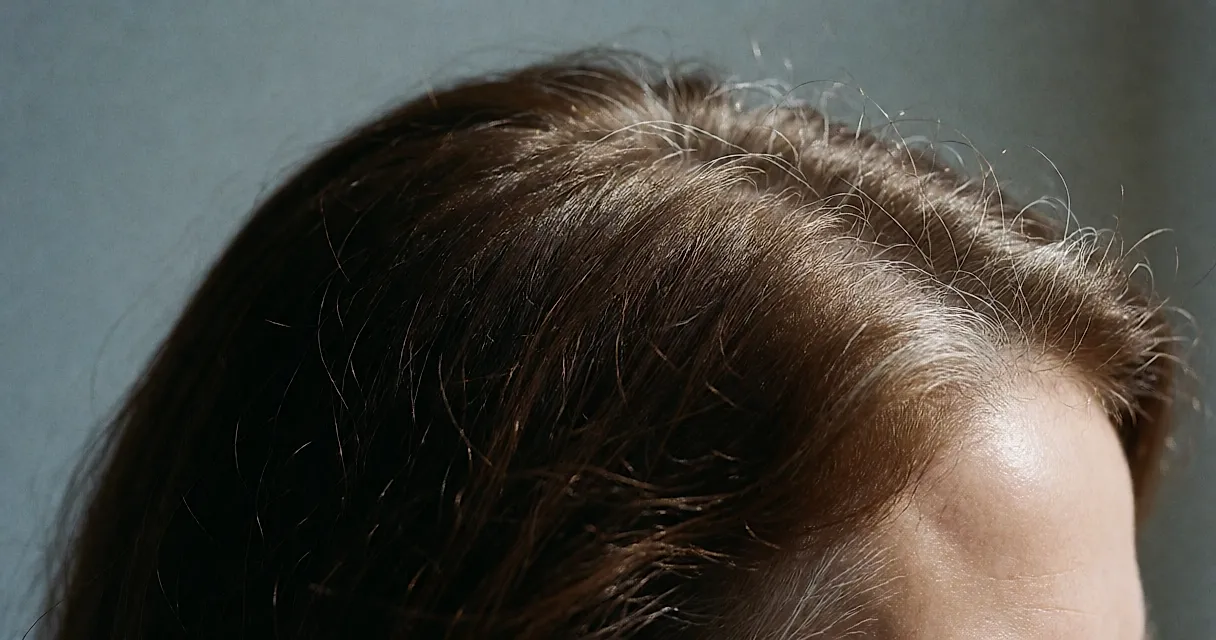
A grey hair is not a pale blonde hair. The pigment has gone, so colour can be less easy to deposit, and the fibre can be more resistant. That is why covering greys is a separate exercise, more demanding than simply changing shade on hair that still has pigment.
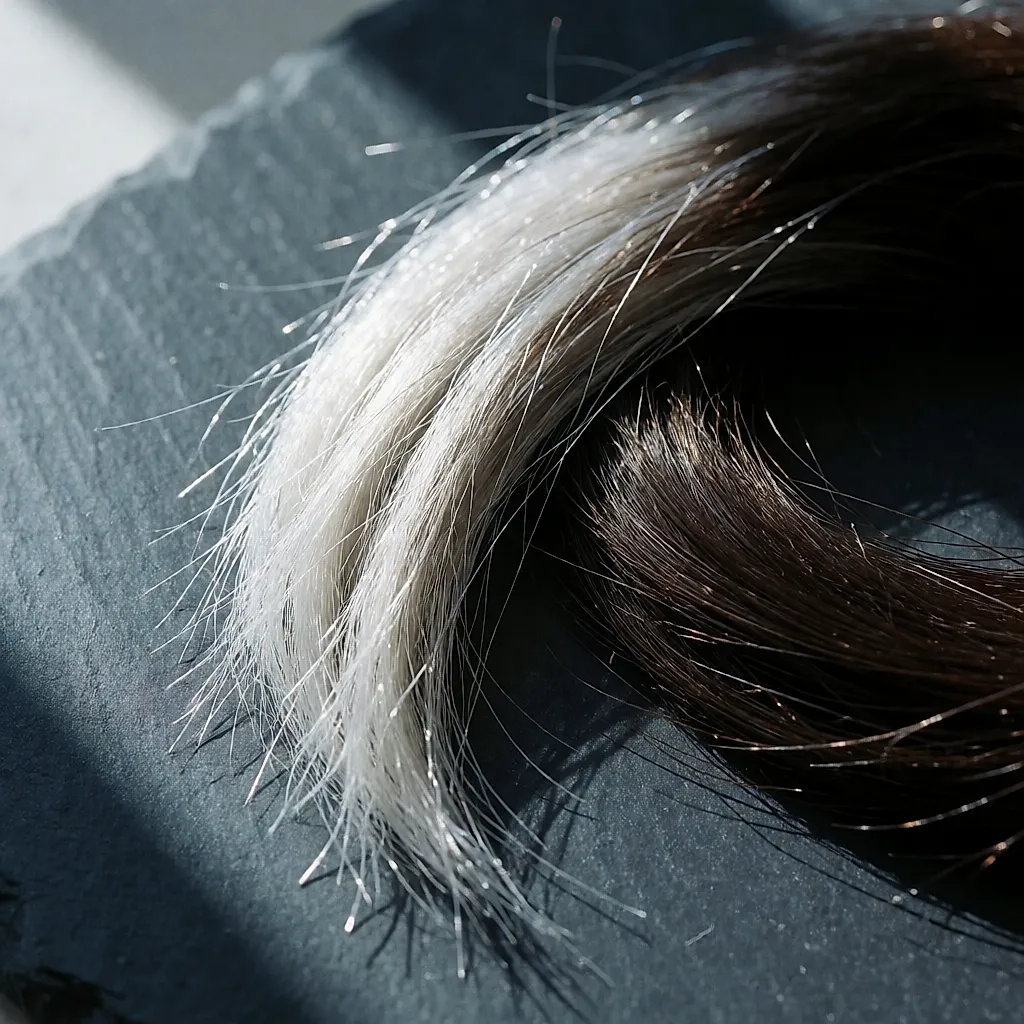
In practice, ammonia-free formulas do cover, but with less margin. On hair with a lot of stubborn grey, the colour can look cooler than it does on the box, fade faster at the front, and the regrowth line can show sooner. I can't give you a magic percentage at which it stops working: the markers vary from one manufacturer to another, and from salon to salon. What is certain is that the higher the proportion of grey, the more precision coverage requires.
When it's better to leave it on the shelf
There are three cases where this box is not the right one. If you want a clear lift — going from mid-brown to blonde, gaining several shades — the ammonia-free version is generally less suitable for significant lightening. If your greys are very resistant and coverage is your only goal, a classic formula, applied properly, often remains more reliable. And if your scalp reacts, do not assume that 'ammonia-free' will solve the problem: other ingredients may be responsible, and that is not a diagnosis you can make in the aisle.
Then there is the case of hair that is already sensitised — porosity, bleach, repeated blow-dries. There, the ammonia-free version is often described as more comfortable during application. That is not a guarantee of gentleness, though — and it matters if you colour every five weeks.
What it costs
As a rough guide, expect to pay around £8–£15 a box in supermarkets or high-street beauty retailers for a home colour, and a little more for ranges sold in salons. At the hairdresser's, the service is most often around £50–£100 depending on length, density and location — and it climbs quickly in a premium salon, or for grey coverage that has to be reworked in two stages.
The real expense is frequency. Grey coverage usually needs touching up every four to six weeks in practice; buying extra boxes to stretch it out often costs more than a well-targeted salon appointment. A gentle shampoo and an occasional mask can do more for colour retention than yet another 'colour-specific' product.
Before you buy: read the instructions through to the processing-time table, check that a developer is included and at what strength, and do the patch test 48 hours beforehand. If you are torn between two shades on hair with a lot of grey, choose the one that matches your natural base rather than the lightest option: coverage will be more solid.
Put simply, ammonia-free colour does cover grey hair — as long as you don't ask it to do what it can't. A smell that is often weaker, comfort that is often described as better, processing time to keep an eye on and coverage that is more modest: it is a compromise, not an upgrade. The one thing you can do when you have five minutes in the aisle is turn the box over and read the processing time. Everything else follows from that.
Comments
Your opinion matters: rate the article, react and reply to comments.
Comments are moderated; AI-assisted comments are flagged. Text emoticons (8-), :-), <3…) are automatically shown as images.