

Two thorough brushes, not three rushed ones
At my last dental check-up, I turned up like a model patient: brushing twice a day, with floss sleeping at the back of a drawer. The verdict? A gum that bled quietly at the lower right, and a little tartar. Nothing alarming, but enough to realise it is not just about how many times you brush. What matters is technique, the tool and consistency — and nobody really tells us that.
The old 'after every meal' rule has had its day. Current advice is more like two two-minute sessions a day, one of them last thing at night. That evening brush matters most: overnight, saliva flow drops and bacteria get to work. So yes, you can get away with a rushed morning brush, but the evening one is the appointment you do not skip.
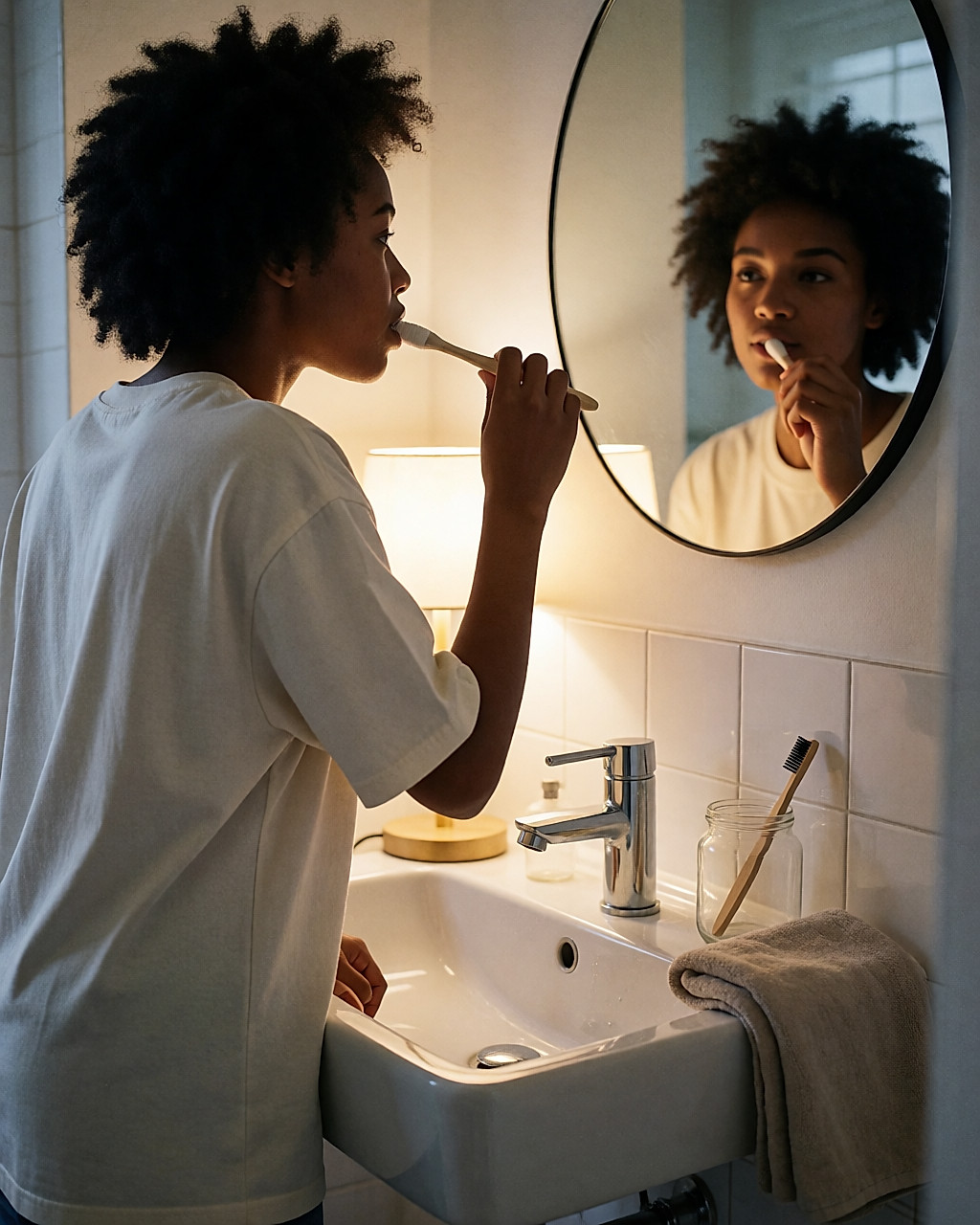
Another habit worth revisiting: if you have just eaten citrus, had a fizzy drink or a vinegary dressing, wait about thirty minutes before picking up your brush. Acid softens enamel, and at that point brushing does more harm than good. Rinse with water, wait, then brush — a small delay that makes a big difference.
A soft brush, a light hand
Hard bristles feel like they clean more decisively, agreed. In reality, they are a false friend: they irritate gums and wear enamel without shifting more plaque. Choose soft, brush in small circles, without pressing. And remember the groove where tooth meets gum, where tartar settles first — often the spot we miss when rushing.

The move that changes everything is simple: guide the brush, do not stab it. With soft bristles, you can also reach all the way round more easily, without scrubbing the same molars while the rest wait. Your brush should last about three months; if the bristles splay in three weeks, your hand is too heavy.
Interdental brushes before floss
A toothbrush cannot get between teeth, and those gaps make up a good share of the surfaces that need cleaning. A Cochrane review published in 2019 found that interdental brushes do better than floss at removing plaque, and may help with gum inflammation. Floss still has its place when teeth are very close together; otherwise, interdental brushes are more effective.

Choose the right size, without forcing: a little blood in the first few days is not a failure; it is often a gum settling back down gently. Start with the back molars, where a normal brush never quite reaches, and work forwards. Once it is part of your evening routine, it will stay with you — promise.
Fluoride first, cosmetics second
Toothpaste is not just a pleasant texture and a minty taste. To prevent decay in adults, you need fluoride at 1450 ppm — it is on the tube, often on the back, in very small print. A toothpaste labelled 'natural' but without fluoride does not protect against decay, and no organic certification makes up for that. This is the one point I do not compromise on.
The honest compromise? Keep the fluoride and improve the rest: a tube made from recycled plastic, chewable tablets or solid toothpaste in a glass jar — checking the ingredients carefully, because fluoride is often missing. It does not have to be eco-friendly choices or your dental health; it is just a matter of reading the label before you buy.
Sugar-free gum: a stopgap, not a ritual
At lunchtime, away from home, you are not going to pull out a wash bag in a restaurant. Chewing a sugar-free gum, ideally with xylitol, gets saliva flowing again and helps clear debris. It is better than nothing, it is not brushing, and it does not excuse you from the two minutes at night. Keep it in your bag for emergencies, not as a cleanliness ritual — gum has never replaced a brush.
Coffee, tea, tobacco: the staining trio
Coffee, black tea, red wine and tobacco leave pigments on the surface of enamel. Rinsing with water straight afterwards is something, but it does not erase everything — let us say it limits the damage rather than reversing it. Tobacco is not just about staining: it is one of the main risk factors for gum disease.
And skip homemade recipes with bicarbonate of soda or lemon, which are too abrasive or too acidic for enamel. Bicarbonate gives a temporary impression of whiteness; over time, it scratches. Lemon attacks the surface directly. Two shortcuts we forget about, but they really do damage.
The electric brush, if you cut corners
It depends on you. Used well, a manual brush does the job perfectly, and there is no point spending £80 on principle. But if you are bad at judging two minutes, if you press too hard or your bristles splay in three weeks, an electric brush helps correct that: timer, pressure sensor, consistent movement. It is a discipline tool, not a luxury gadget.
Change the head about every three months, when the bristles start to splay. And if you are still unsure, try a quick test: ask yourself how long you really brush for in the evening. If the honest answer is 'a minute at most', an electric brush will soon become your best ally.
The dentist before it hurts
We put it off, wait, and end up going only when we have to, on painkillers, wishing we had gone sooner. A check-up once a year, even without pain, and a scale and polish when tartar has built up: it is the gums that hold teeth in place, and that is where it all plays out. No pain does not mean no problem.
Good news for some younger readers: in the UK, NHS dental check-ups are free for under-18s, pregnant women and new mothers, and some people receiving certain benefits; rules vary across the four nations. For everyone else, an annual check-up is better than an emergency over a bank holiday weekend. It is never said often enough, but planning ahead costs less than waiting.
The tongue test. Before bed, run your tongue over your teeth: if it feels rough, there is still plaque. Another clue is your brush: bristles that splay in three weeks signal too heavy a hand. Two quick checks, thirty seconds, and you know straight away where you stand.
Budget
On the budget side, you may be wondering how much all this will cost. The good news: none of these habits is ruinous, but the differences between shops are bigger than you would think. A manual toothbrush is around £2–£5 in supermarkets or pharmacies; a bamboo-handled version is more like £5–£10, and the bristles are often still nylon, which goes in the general waste. A recycled plastic handle with replaceable heads limits waste, but let us be honest, it looks less charming on the bathroom shelf.
Electric toothbrushes range from £30–£60 for a good entry-level model, up to £200 for high-end ones. Watch out, though, for replacement heads at £4–£8 each, often sold in packs of four — that is where the bill climbs, and compatible own-brand versions bring it down. Fluoride toothpaste at 1450 ppm remains the real bargain: £1.50–£4 in supermarkets, £5–£9 in pharmacies. Chewable tablets and solid toothpastes in glass jars: £8–£15, best reserved for fans of that format.
Interdental brushes are around £5–£10 a pack, dental floss £3–£6, and sugar-free gum £2–£4 a packet. At the dentist, an NHS check-up in England falls under Band 1 (around £28), with costs varying in Scotland, Wales and Northern Ireland; private check-ups are often £30–£70. A clinically needed scale and polish may be included in NHS Band 1, while a private scale and polish is around £40–£80 depending on the practice and how much work is needed.
The takeaway: start with the right size of interdental brush and a fluoride toothpaste. That is where every pound gives the most back, far more than a pricey whitening toothpaste or a brush with eight rotating heads. Priorities before gear — that is what really changes things.
Sources
- NHS — Dental care and treatments
- Oral Health Foundation — Brushing and interdental cleaning
- Cochrane Library — Worthington et al., Interdental cleaning in addition to toothbrushing, 2019.
- GOV.UK — NHS dental charges
- NHS — How to keep your teeth clean



Comments
Your opinion matters: rate the article, react and reply to comments.
Comments are moderated; AI-assisted comments are flagged. Text emoticons (8-), :-), <3…) are automatically shown as images.