

It's 8.12am, your meeting is at 9, and you have a very specific project: a messy bun that will last until dinner. Two pins, one strand pulled to the side, and the mirror approves. By 10am, all that's left is a tired ponytail and a vague grievance against your hair. The culprit is almost never your texture: it's anchoring.
Sleek is the enemy
When a bun collapses, it's tempting to blame your hair — too fine, too soft, never quite right. In reality, it's often the pursuit of sleekness that condemns it. To look neat, you tighten. You comb it smooth, pull at the roots, compress the mass until you have a small, dense, very even ball. But a dense, smooth mass is exactly what slips: it has nothing to grip, so it rolls in on itself.
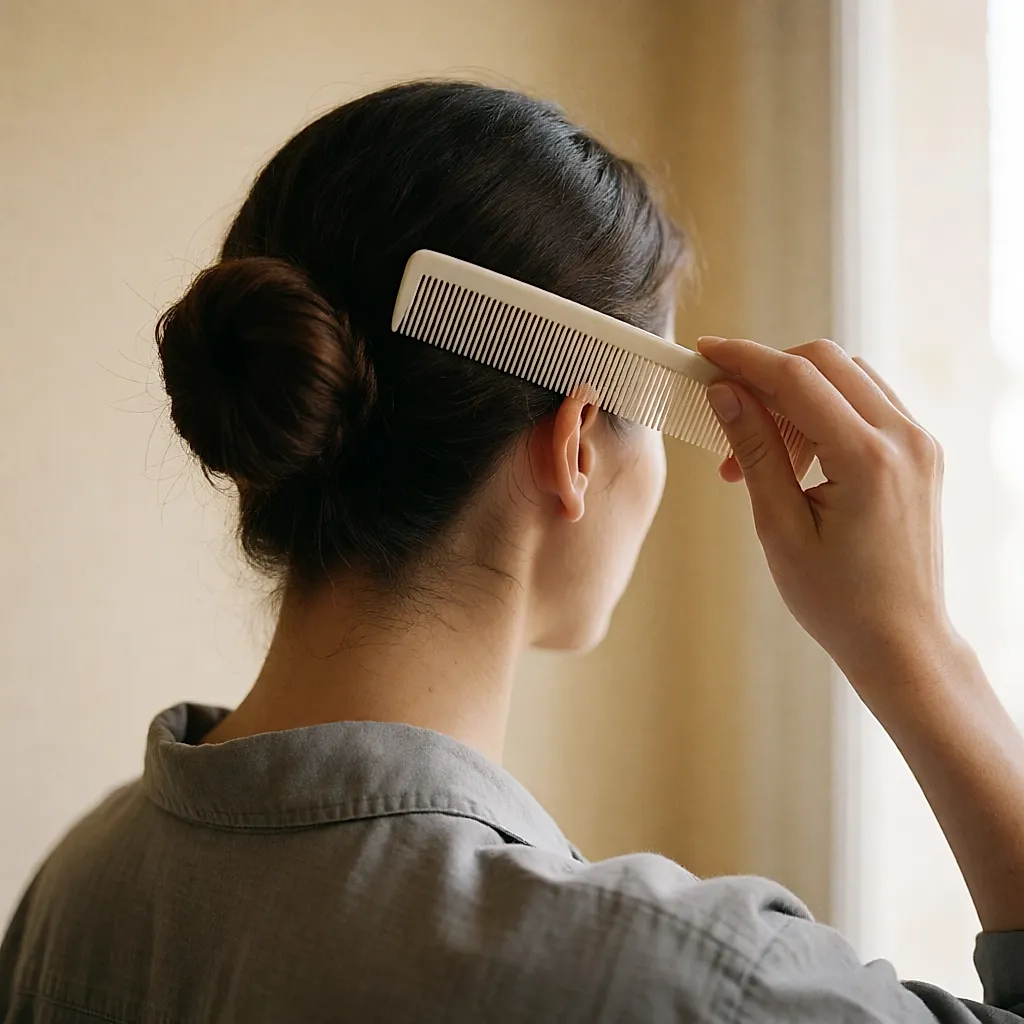
Why does it hold so badly, then? Because a bun relies on two things: tension and anchor points. Rely on tension alone and you get a knot that loosens at the first movement of your head. Work the anchor points — a few well-placed, crossed pins — and you can release the tension. The messy finish becomes what it should always have been: a choice.
Build grip before you shape the bun
First rule: don't wash your hair just before. A day of delayed washing gives the hair more grip. If shampooing is unavoidable, a pinch of dry shampoo or texture powder at the roots restores that little bit of grain that acts as a foundation — clay- or rice-based formulas, often simpler in composition, work very well.
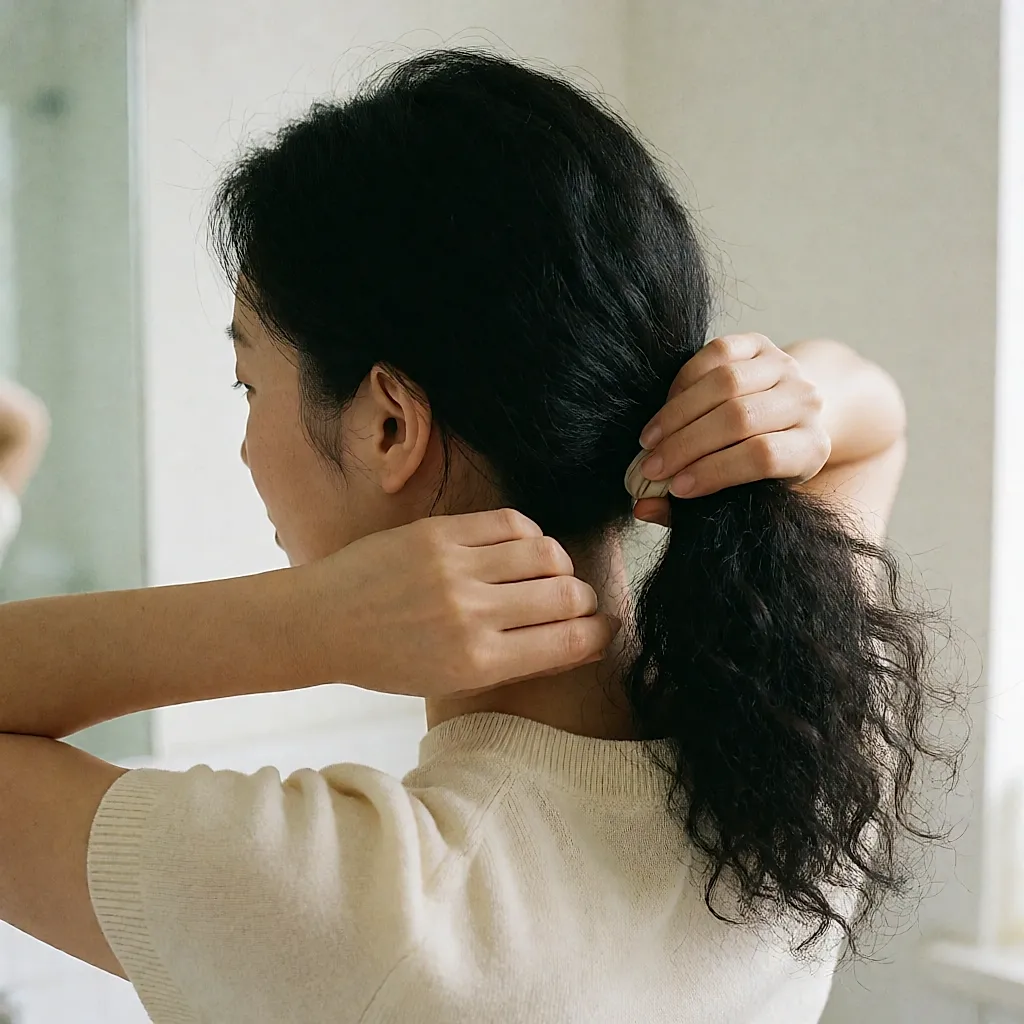
Then, don't brush: your fingers are enough to gather the hair into a low or mid-height ponytail, without pulling at the sides. This ponytail is the true base of the bun. It is what holds, not the ball placed on top. Tie it without pulling too tight, keep some air at the roots: a messy bun begins with a forehead that can breathe.
Cross your pins in an X
This is the step that changes everything, and it takes ten seconds. Push one pin in, catching both a section of the base against the scalp and the mass of the bun. Then the second, in the other direction, just above: the two cross. That crossing is what locks it — one pin alone slips, two pins crossed in an X won't move.
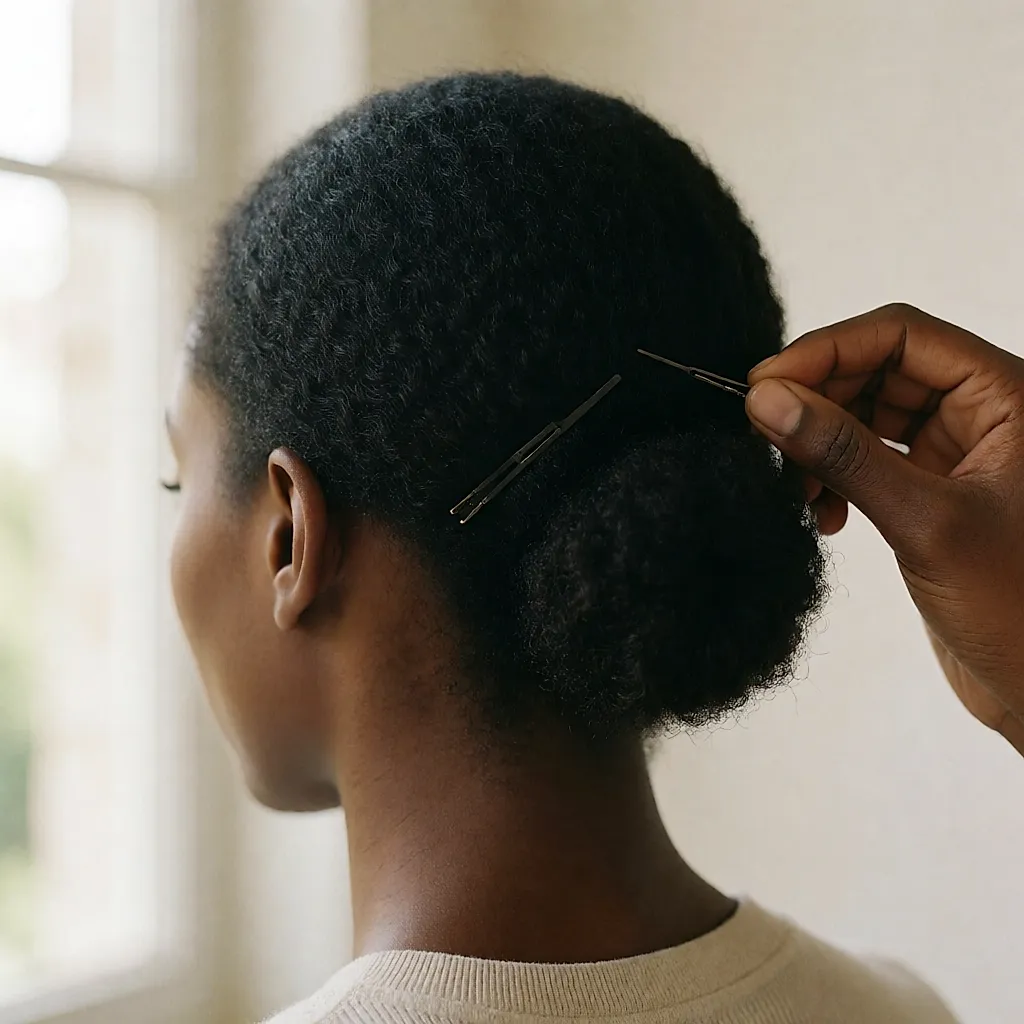
Count four to six crossings, spread all around: one on each side, one at the bottom, one above. Don't stack them all in the same place, or the mass will shift and the whole thing will topple. There are two types to know: the flat, closed kirby grip, which slides in discreetly; and the U-shaped hair pin, sometimes called a bun pin, which opens inside the mass and holds better on thick hair. Open the arms of a kirby grip slightly before pushing it in: it will grip more.
The test that never lies: once the bun is finished, shake your head gently twice, as if saying no to dessert. If nothing moves, the anchoring is good. If the mass slips, you're missing a crossing — not another pin jammed into the same spot.
Loose strands come last
Order matters. Pulling out strands before the base is secured weakens it: you'll have to tighten, and the messy effect collapses. Anchor first, loosen later. Two strands at the temples, one below the ear, one shorter at the nape: that's the right count.
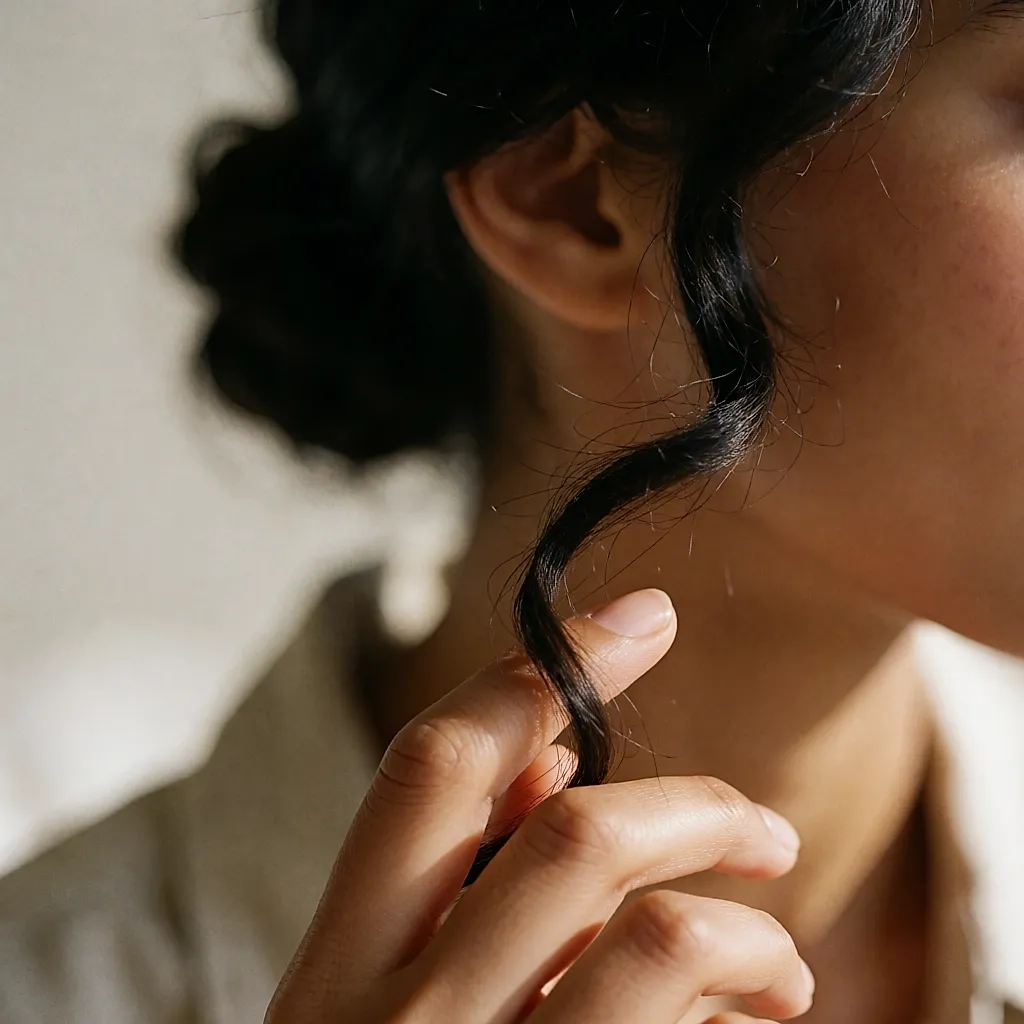
To give them shape without tongs, wrap each once around a finger, release and leave it. If your hair is straight, they'll fall straight — and that's absolutely fine. The charm comes precisely from the contrast between a secure base and a few strands left loose. A touch of cream or light wax through the mid-lengths and ends, never at the roots: at the roots you fall straight back into tight-bun territory, and nobody wants that.
What it costs
None of this is compulsory: a ponytail, two pins, and you already have something to work with. If your pin box is empty, the whole thing costs just a few pounds. A box of 100–200 kirby grips costs around £2–£5 in supermarkets, beauty retailers or online; U-shaped pins, which are sturdier, are around £3–£8 per pack. A local haberdashery or sewing shop is still your best bet, especially for brass pins, which last for years.
For ties, a pack of metal-free hair elastics costs around £3–£6, and a satin or silk scrunchie can quickly cost between £10 and £20 depending on size. Worth noting: an old pair of tights rolled into a ball makes a perfectly respectable bun accessory. A make-do version, and the most understated one — nothing new to produce, nothing to throw away.
And if your first attempt looks more like a small nest than a romantic messy bun, don't start over. Step back, add one crossing, leave the strands alone. The messy bun forgives almost everything except panic.
Comments
Your opinion matters: rate the article, react and reply to comments.
Comments are moderated; AI-assisted comments are flagged. Text emoticons (8-), :-), <3…) are automatically shown as images.