
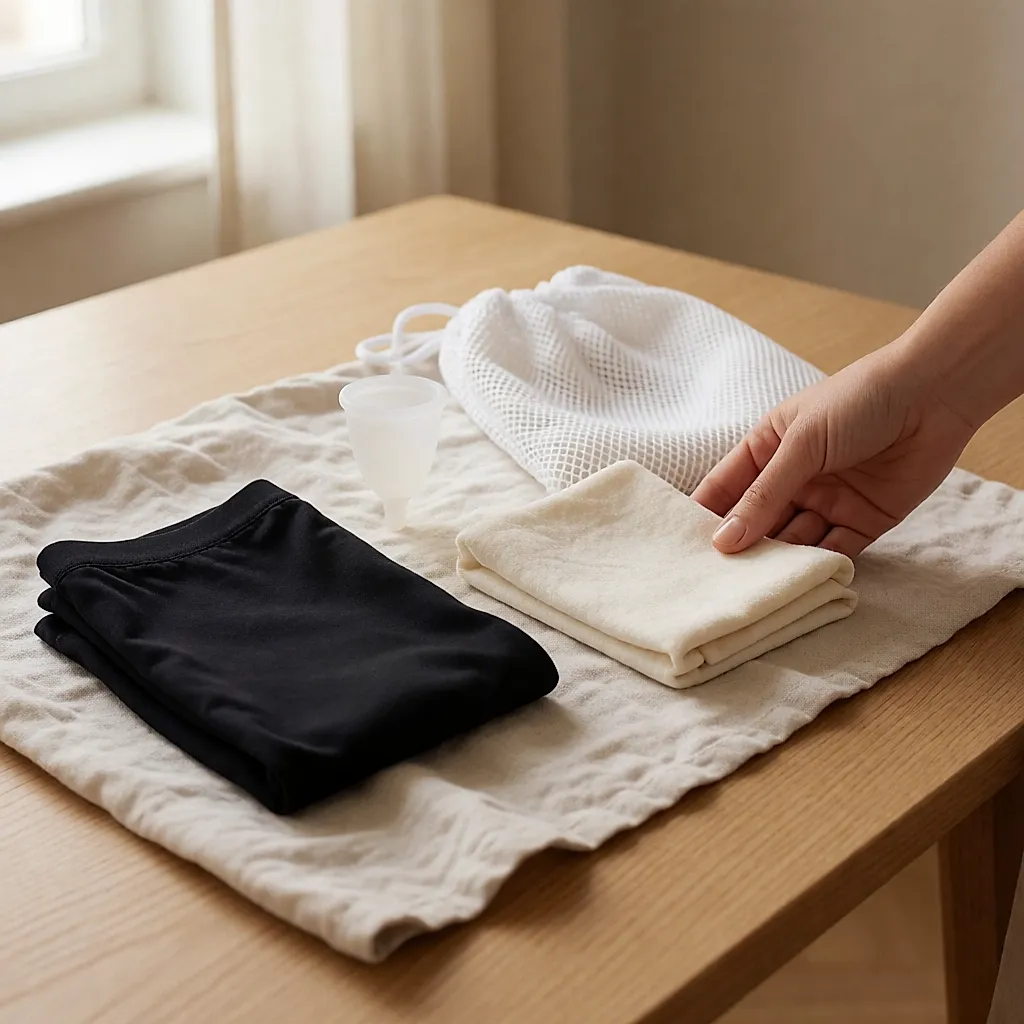
On a Monday morning, three reusable pads are sharing a washing machine drum with your socks. The scene has the feel of old-fashioned laundry, yet it is also thoroughly modern: in recent years, some local schemes have started to help with the cost. The questions are who qualifies, what you pay—and whether the sums add up over three years.
What support is available, and who qualifies?
There is no UK-wide reimbursement scheme for reusable period products. Some local schemes exist—for example, free period product schemes run by councils, schools, hospitals or charities—but they are not universal. The exact terms, rates, caps and any eligibility conditions vary, so check current NHS, government or local council guidance, as rules change.

Some employers, private health insurers, councils or charities may also run their own schemes, so it is worth checking with them directly. Not every pharmacy stocks these products, but they can often order them in. It is best to check the current conditions when you buy. If you are unsure about your own situation, your GP, midwife or pharmacist is a more reliable source than a comparison table you find online.
Read the label before you choose a size or material
There are three main categories, each with its own logic. A menstrual cup is chosen according to flow and anatomy, and sizes vary between brands: one brand's small is often another brand's medium. There is no standardised lettering system, so read the product details rather than trusting the label.
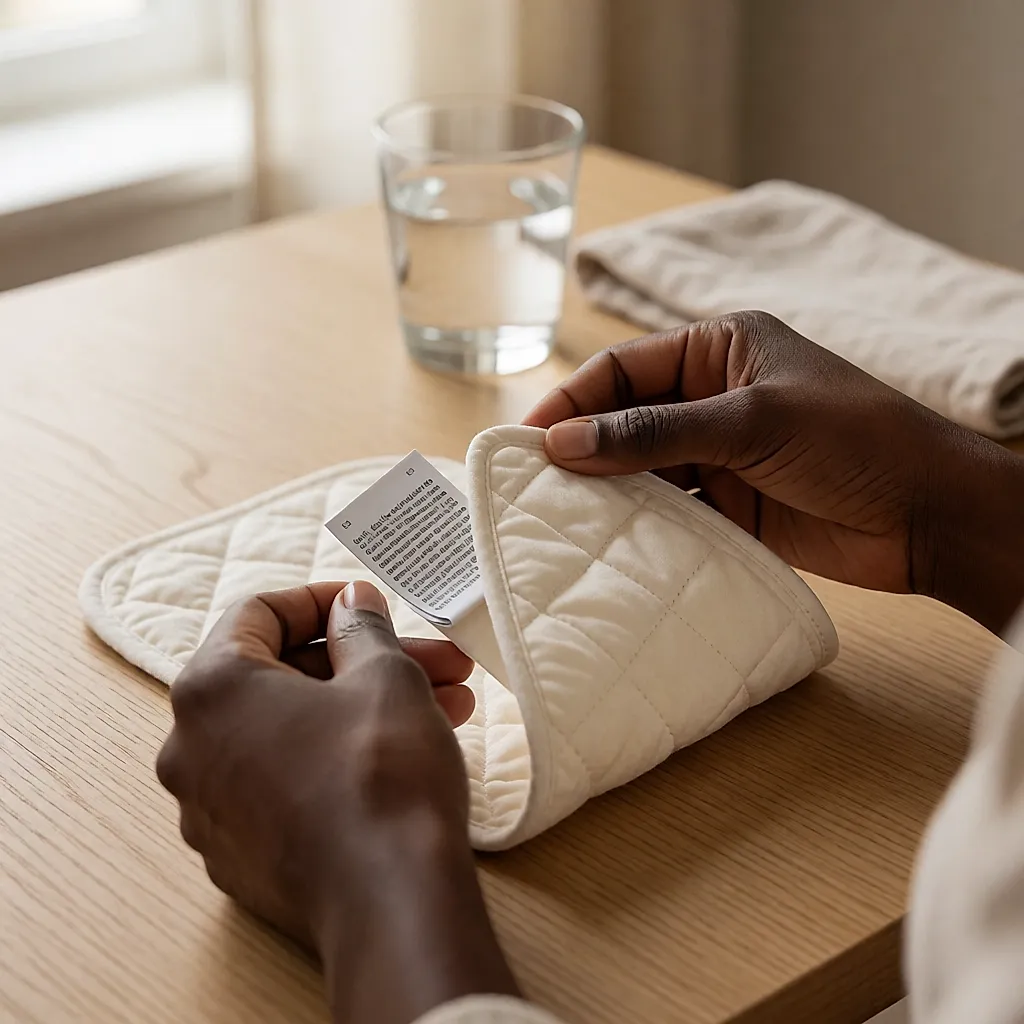
Period pants come down to two things: absorbency, often given as a pad equivalent or in millilitres, and hip measurement, which determines size. In practice, three to five pairs are often enough for a comfortable cycle—a rule of thumb, not an official standard.
Reusable pads and panty liners are chosen by length and fastening: wings, poppers, buttons.
As for materials, the layer next to the skin is usually cotton, sometimes organic, or lyocell. A waterproof layer underneath keeps leaks contained—the least 'natural' part of the setup. On hygiene, remember this: no product, reusable or disposable, removes the need for regular changes.
What it costs
A cup usually costs around £15–£35, period pants around £20–£40 per pair, and a reusable pad around £5–£15, often sold in packs. This is the first shock: where a packet of disposables costs a few pounds, a reusable kit requires an upfront spend—at the pharmacy, on brand websites, in health-food shops, and sometimes in supermarkets.
The maths only works if you spread it over time. Four pairs at £30 come to £120; keep them for three years and that is about £40 a year, including washing—a little water, detergent and machine time. A £25 cup used for several years works out below £10 a year. That is the paradox: the outlay is immediate, the saving is spread out.
And an impulse buy that ends up at the back of a drawer will not pay for itself at all. The real factor is not the brand or the number of pieces: it is how often you wear them.
Looking after them is where it all counts
The crucial step is the first rinse: cold water, straight away. Blood contains proteins that set with heat—once set, they are hard to shift, which is why faint stains can survive repeated washes. Then: wash at 30 or 40°C in a laundry bag, without fabric conditioner, which clogs fibres and damages waterproofing, and air-dry, because a tumble dryer is tough on elastic and seams.

For a cup, the logic changes: rinse with clean water, mild soap, boil for a few minutes or use a steam steriliser between cycles, and wash your hands before and after. Day to day, a waterproof pouch in your bag solves the transport question. And when travelling, dissolving sterilising tablets are handy when there is no pan to hand.
Sudden fever, a rash, or feeling very unwell during or just after your period: remove the product and seek urgent medical advice. Staphylococcal toxic shock syndrome is rare, but it is well documented, and it is not limited to cups. Clean hands, regular changes and following recommended wear times remain essential.
The main thing is this: reusable products do not require a campaigning spirit or a major overhaul—just a drawer, a laundry bag and a bit of method. Start with one item, try it over a quiet cycle, on a Sunday evening rather than a morning you are rushing for a train, and let your week decide. And to find out what support you might be eligible for, the simplest move is still to ask at the counter: 'Is there any help with the cost of reusable period products?'

Comments
Your opinion matters: rate the article, react and reply to comments.
Comments are moderated; AI-assisted comments are flagged. Text emoticons (8-), :-), <3…) are automatically shown as images.