

A weight-loss product sold online can be an ordinary food supplement, a diverted medicine, or a powder whose origin nobody can trace. The product photo tells you none of this. Before you check out, a few markers are enough to sort one from another — and none of them will make anyone thinner. What they do is stop you paying for a risk.
A capsule is not an injection
The form of a product says a lot about its status. A capsule, a powder, a sachet: in the overwhelming majority of cases these are food supplements — a regulated category, but one that sits under food law rather than medicines law.
In practice, a site offering injections without a prescription is operating outside the law, and in the UK the MHRA is the regulator responsible for medicines. The contents of the parcel cannot be verified either, however polished the homepage looks. Provenance, dose and storage all stay out of reach. That is one of the limits of buying outside a pharmacy.

Why the legal status matters
The wording is the first trap. 'Fat burner', 'detox', 'appetite suppressant': these are claims, and health claims on food are tightly regulated. In the UK, rules retained from EU Regulation (EC) No 1924/2006 on nutrition and health claims still apply, with the Food Standards Agency and local trading standards overseeing them. Not every claim can be used freely. So a product promising a set number of kilos lost within a set time is not a product like any other: either it is exaggerating, or it is hiding an active ingredient.
That is where status matters. A food supplement cannot claim a therapeutic effect, and it cannot contain certain medicinal active ingredients. Faced with a promise of rapid weight loss, caution is the reasonable response: doubt should send you to check what the product actually is before going any further.

The ingredient list is the real filter
Turn the box over. The ingredient list is the first thing to read, because that is where the real information sits: a green tea extract with a stated dose and a pinch of powder diluted into a blend are not the same thing. And a 'patented complex' with no detail tells you nothing at all.
What is still unknown is the real effect of many of these blends. With plant-based products, caution is warranted. If you are taking medication, are pregnant or breastfeeding, this is not a question to settle on a retail site: ask your GP or pharmacist, who knows your situation.
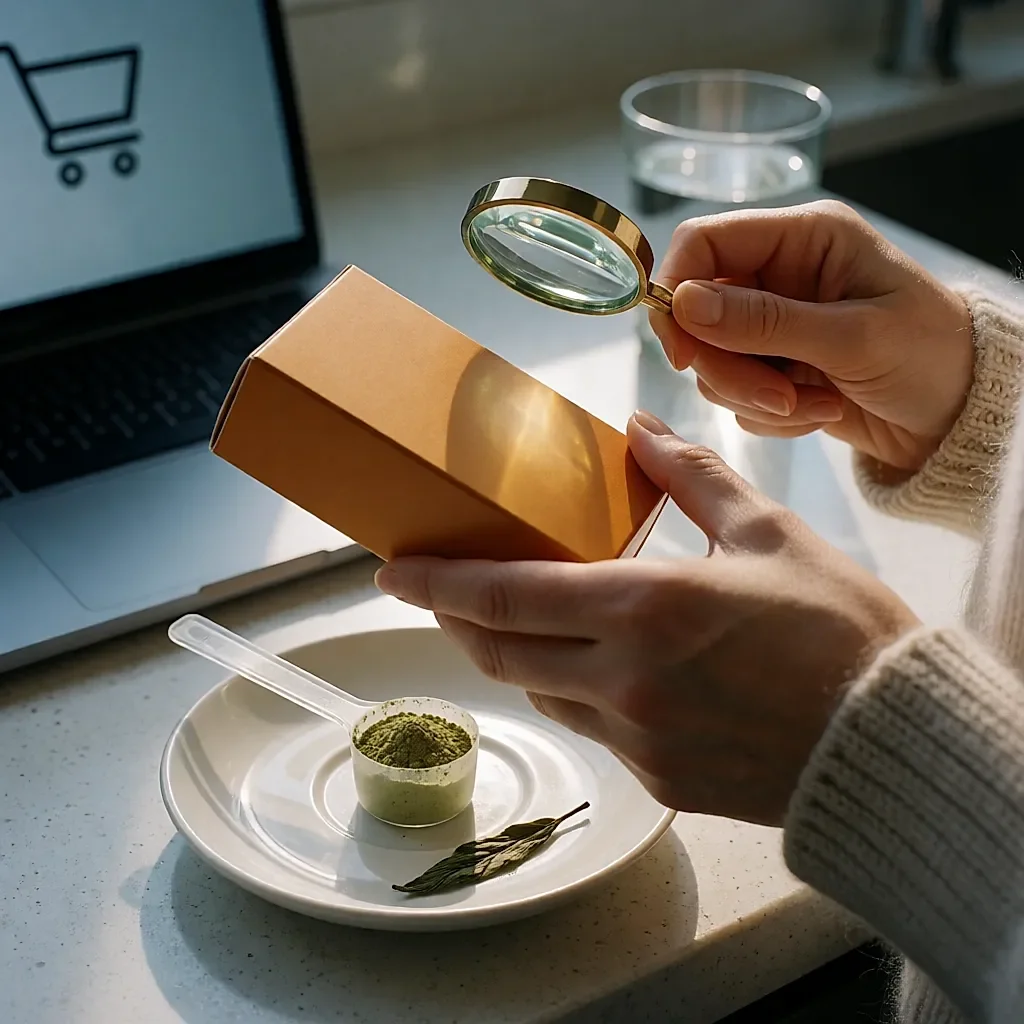
What should make you close the tab — a numerical promise such as '-8kg in 30 days'; a countdown timer and a price slashed by 70 per cent that reappear on every visit; no name and address for an identifiable responsible person on the label or in the site's legal information. A legitimate product needs none of these.
The subscription is the costliest trap
The real damage to your bank balance tends to come from the subscription: a monthly direct debit, cancellation buried in small print, and a payment you didn't clock by the third month. Before you confirm, read the cancellation terms and check exactly what will be taken, and how often.
Sources
Food supplements do not replace a varied, balanced diet and a healthy lifestyle.



Comments
Your opinion matters: rate the article, react and reply to comments.
Comments are moderated; AI-assisted comments are flagged. Text emoticons (8-), :-), <3…) are automatically shown as images.