
Postnatal exercise: when and how?
You gave birth a few weeks ago, the exhaustion is slowly starting to lift, and that little urge is coming back: to move, to breathe, to feel at home in your body again. That's a good instinct. Movement can help your mood, sleep and recovery. But between wanting to move and going for a run, there is an order to respect — and your body isn't trying to trick you: it just needs you to listen, without skipping steps.
Pelvic floor rehab first: your real starting point
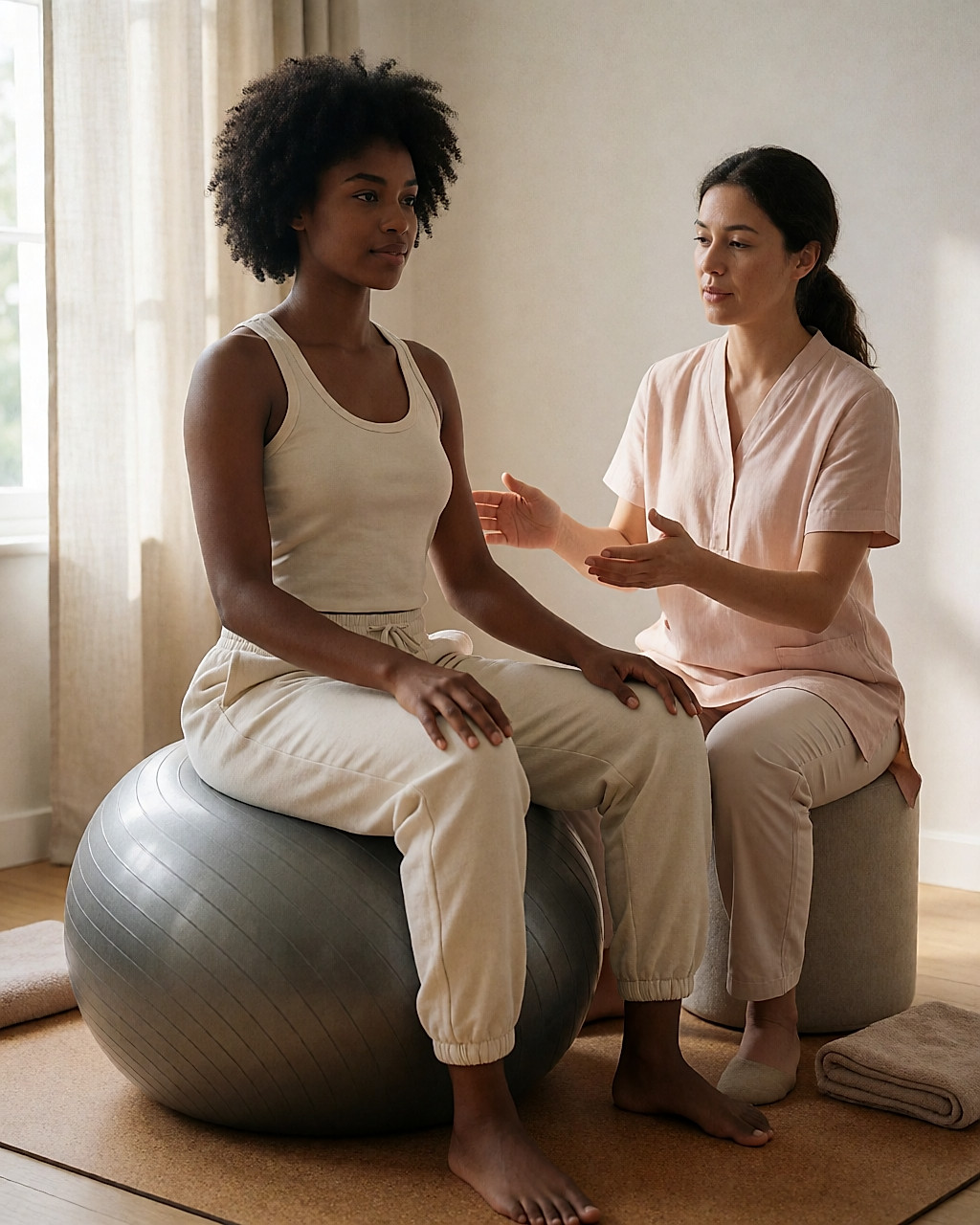
Before running or lifting weights, there is a step you don't skip: pelvic floor and abdominal rehab. The pelvic floor is that hammock of muscles that supports the bladder, uterus and bowel. Pregnancy and birth have stretched it, sometimes weakened it, and it needs proper recovery work to regain tone.
In the UK, pelvic health physiotherapy can be accessed through the NHS after referral, though waiting times and availability vary by area. Where offered, it usually involves a course of sessions with a specialist physiotherapist. You can also see a private pelvic health physiotherapist. Why does it matter? Current evidence suggests that incomplete rehab leaves more room for urinary leaks when you exert yourself, and sometimes for prolapse. These are known risk factors, not a foregone conclusion.
So how do you know where you stand? Don't self-diagnose with a home test. If you leak when you cough, sneeze or jump, that's a signal: talk to your midwife, health visitor or physiotherapist, and keep up your appointments. Some women need more than the usual NHS course — that's neither rare nor serious, but it deserves support. A diagnosis from a professional remains the only reliable way to know where you are.
A leak, even a slight one, when you exert yourself is not "normal" after birth. It isn't shameful and it isn't inevitable: it's a reason to seek help. The earlier and more completely rehab is done, the better the chance the pelvic floor has to recover good tone.
After an episiotomy or caesarean
If you had an episiotomy or a caesarean, the timeline changes. The scar needs to be clean, the cervix back to normal, and the pain gone. Often allow several extra weeks, and above all a medical green light before you put your trainers back on. This is the moment to raise it at your postnatal check with your GP, midwife or health visitor: they know your notes and can tell you when to get back in the saddle.

Which exercise, and in what order?
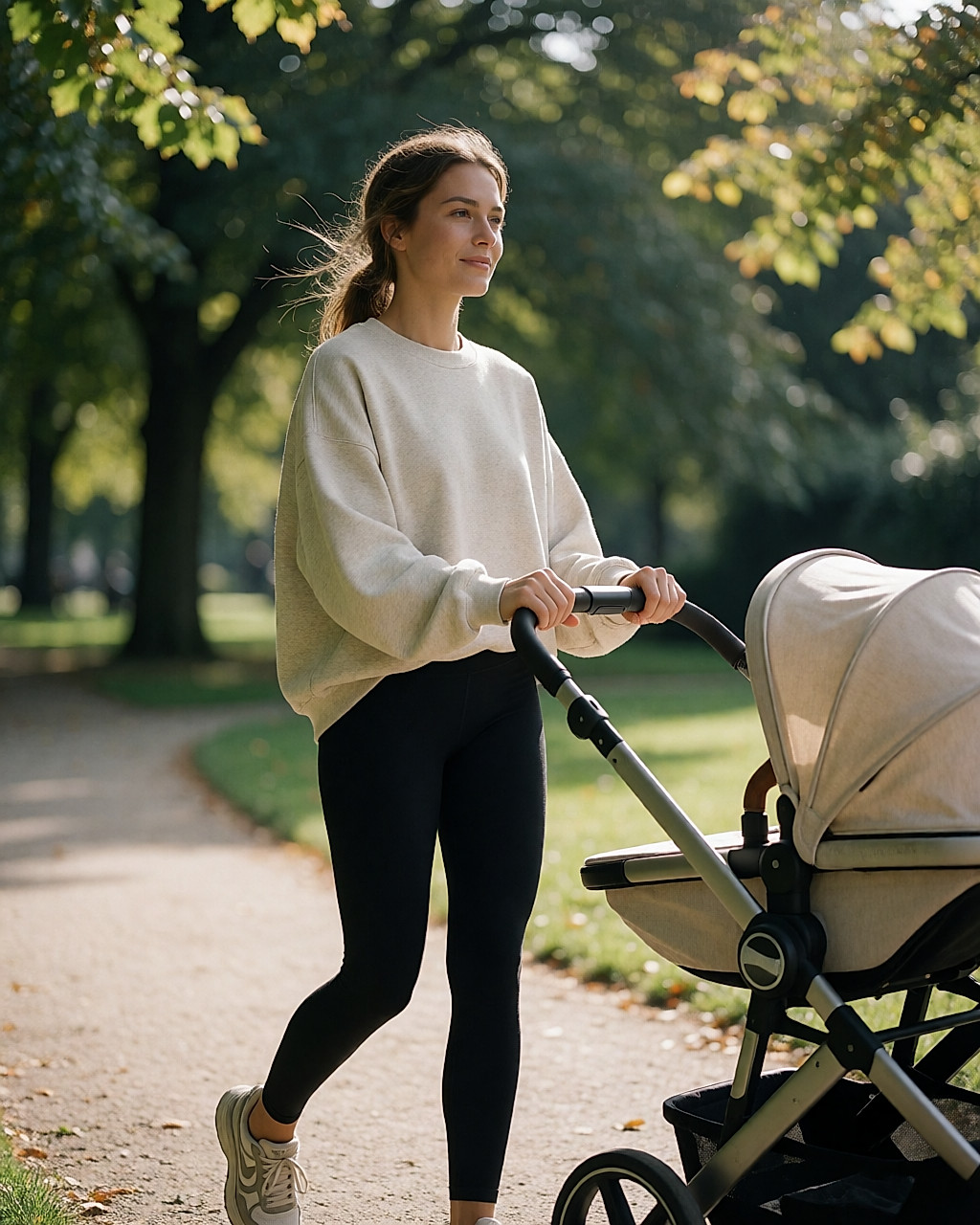
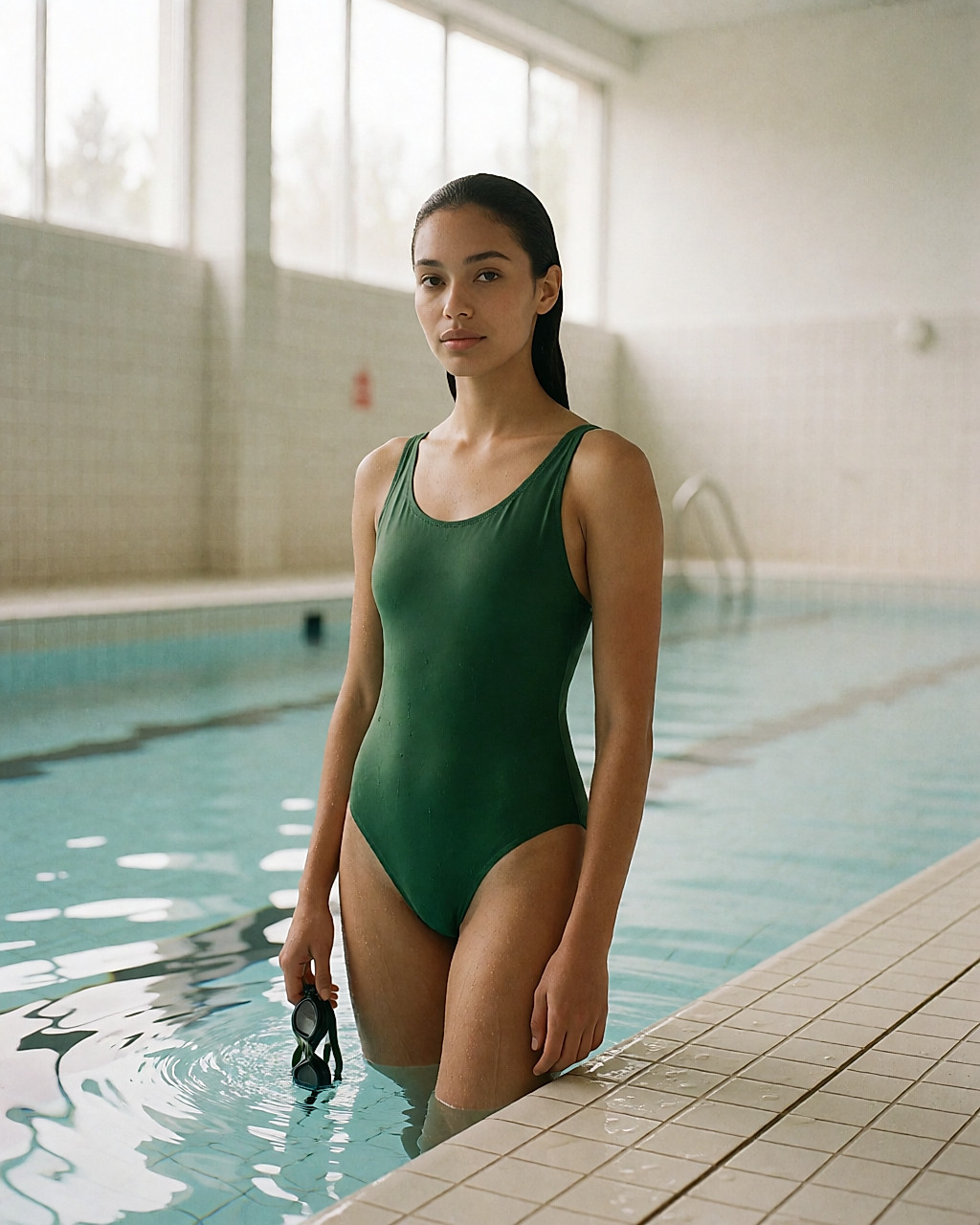
Start gently and progress in stages. Walking is your ally: it gets circulation going without jolts, and you can adjust it day by day according to your energy. Then come swimming (once healing has been checked), aqua aerobics, yoga, Pilates, an exercise bike or gentle gym classes. The idea is to get your body used to movement again without imposing strong pressure on it.
Save anything that jolts for later: running, HIIT, trampolining and other bouncing activities, classic abdominal exercises such as crunches, and lifting heavy loads. These activities greatly increase pressure on the pelvic floor, and it's better to reintroduce them gradually, once you've had the green light. There's no need to rush: your pelvic floor has time, and so does your back.
Mind matters as much as muscle
In the first weeks, fatigue, lack of sleep and breastfeeding weigh heavily. You may feel weak, even discouraged — that's common, and it says nothing about your worth. Rest is part of the return-to-exercise plan: ten minutes of walking is better than a failed session, and missing a session is never a failing.

The aim is to move just as much as your body accepts, without judging yourself. On a day when everything feels fine, walk a little further. On a day after a bad night, settle for a gentle stretch. Progress is rarely linear, and that's perfectly normal. If you feel that fatigue or low mood aren't lifting despite everything, talk to a health professional: postnatal care is there for that too.
Budget
Prices depend on your city or town and the type of provider. As a rough UK guide:
- Pelvic floor rehab: may be available on the NHS via referral; privately, expect around £50 to £90 per session, and some health insurance may cover part of the cost.
- Postnatal gentle exercise or yoga classes: around £10 to £20 per class, or a course block around £80 to £160.
- Gym membership: around £20 to £50 per month depending on where you live.
Where to find these services: GP surgery, midwife or health visitor, pelvic health physiotherapy clinics, children's centres, community groups, and gyms or studios offering postnatal classes. These ranges are UK guide figures only: the final price varies by location, provider and type of support.
Sources
- NHS — Postnatal care and pelvic floor exercises, nhs.uk.
- NICE — Postnatal care recommendations, nice.org.uk.
- Royal College of Obstetricians and Gynaecologists (RCOG) — Postnatal care information, rcog.org.uk.
- World Health Organization — Guidelines on physical activity, who.int.




Comments
Your opinion matters: rate the article, react and reply to comments.
Comments are moderated; AI-assisted comments are flagged. Text emoticons (8-), :-), <3…) are automatically shown as images.