
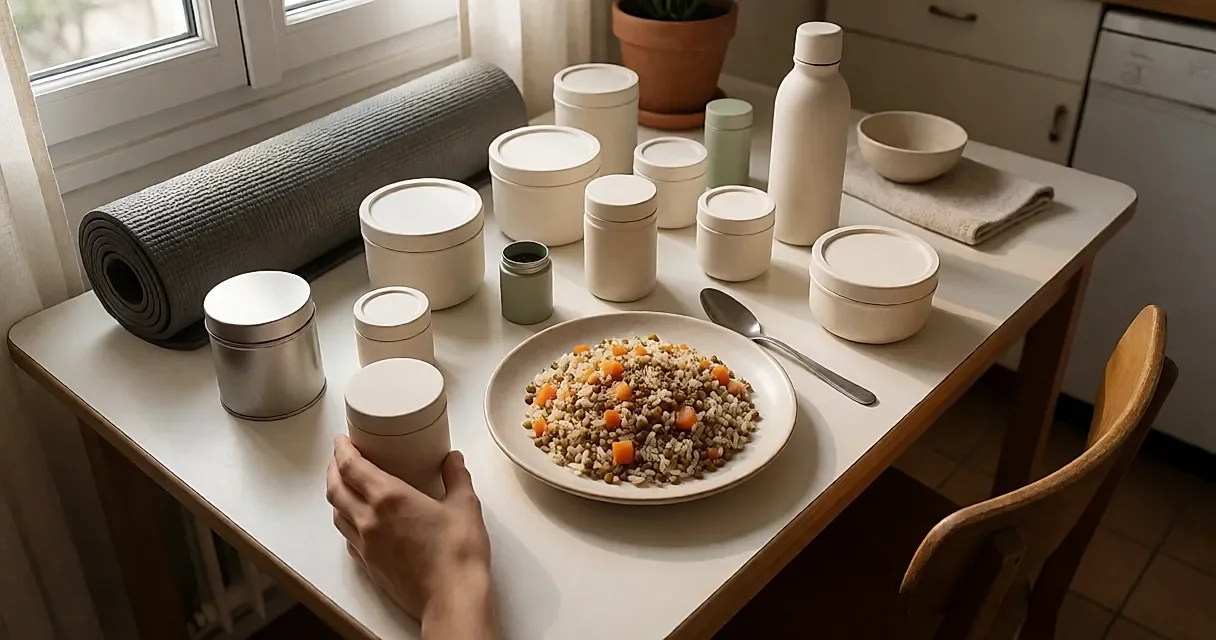
On Monday you checked out: a powder to mix into water, a stick for the evening, the subscription that came with them. On Tuesday it's 8.40pm and the ready meal goes round in the microwave. Nobody lied in between — the two aisles simply never meet. This week another wellness launch landed in your inbox; in the trolley, nothing much had shifted.
Wellness has learned how to sell
A market doesn't grow by repeating "eat more vegetables". It grows by slicing itself thinner: sleep, skin glow, morning energy, digestive comfort, the menstrual cycle. Every promise now has its own format, its own colour and its own time of day. You aren't buying a nutrient, you're buying a better-organised day.

It's well played, too: a capsule takes three seconds, a pan of vegetables takes twenty minutes plus the washing up. So what the aisle really sells is a routine, ready-made. That's not nothing — but it isn't the same thing as feeding yourself. And these products aren't neutral: a supplement can interact with medication or have unexpected effects, particularly when several are stacked.
What we know, and what's still open
What we can do is name them. Ultra-processed foods — fizzy drinks, ready meals, biscuits, reconstructed products — are identified by their industrial processes and by long ingredient lists, additives and flavourings included. The NOVA classification, used in research, separates them from whole or simply cooked foods.
What we can also do is measure their place. In the UK, estimates put ultra-processed foods at more than half of average energy intake — a share that comes from an aisle nobody would describe as a wellness aisle.
What we can't yet do is explain the mechanism. Current data suggest a link between heavy consumption and certain risks, without establishing cause and effect or pointing to one guilty ingredient rather than an overall imbalance. A solid signal and an incomplete explanation — and it is precisely in that grey area that a ready-made answer sells best.
Same trolley, same week
Say the numbers out loud, once, and see. A box of capsules at around £12, a powder at around £25, a subscription at £8 a month: it adds up quickly. Next to that, the £3 ready meal is still the most rational thing in the trolley at 7pm with an empty fridge.
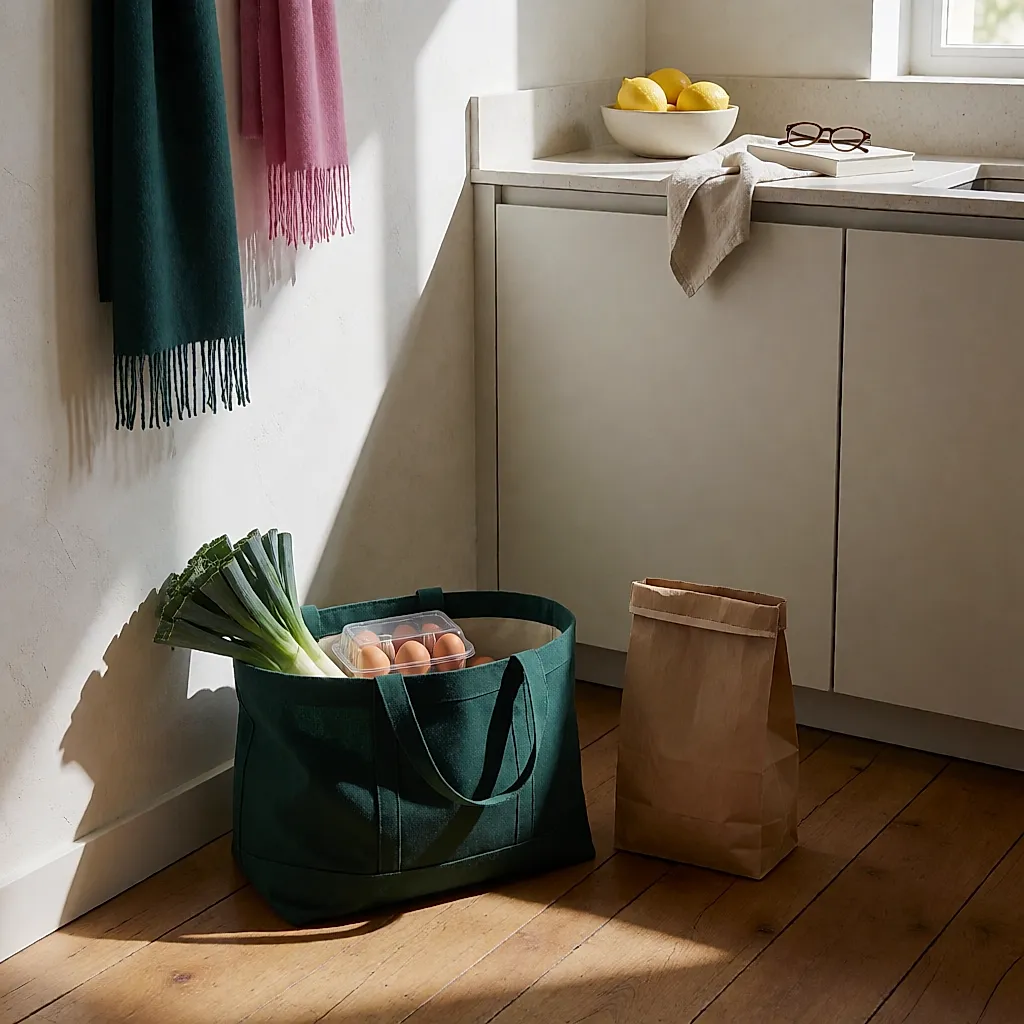
The gap isn't about willpower. It's structural: one aisle is designed to promise, the other is designed to hold a price. The second nearly always wins, and not because you lack discipline. Yet the most effective lever is also the oldest: give fruit and vegetables the lion's share, vary your protein sources, and go easy on sugary, salty and fatty products. That's a general rule of thumb from our team, in line with the healthy-eating advice the NHS gives — not a prescription. Nothing exotic, nothing to order.
Plate first, capsule second
The order of operations matters more than the list of products. Sleep, movement, morning daylight and regular meals do most of the work, and none of them needs a dedicated purchase. A supplement doesn't fix a lack of bearings; it adds a line to a budget.

If you already take something, keep to one product at a time and ask yourself now and then: what do I actually need? A deficiency is documented, not guessed. Speak to a pharmacist or your GP before piling up several products, and keep the ingredient list in view rather than the slogan on the front of the box.
Three questions before you add a product.
- Can I name what I'm trying to put right — tiredness, sleep, skin — or am I buying a word on a packet?
- Am I already taking something with the same ingredients, or a medicine it could interact with?
- Would this budget replace a meal, or would it sit on top of a plate that's already incomplete?
If any of those answers escapes you, that's the moment to talk to a doctor or a pharmacist — not the moment to add a second product.
Budget
On the money side, expect roughly £10 to £25 for a month's supply from a supermarket or a chemist, £20 to £45 for powders and more elaborate formulas from a specialist retailer or online, and £8 to £15 a month for an app subscription. The price varies with the format (capsule, powder, stick), the length of the course and the brand.
Spent the other way, that same budget buys fresh vegetables, eggs and pulses — how many meals depends on your local shops and how you cook. It's worth doing the sum once: it's often the only figure you need in order to decide.
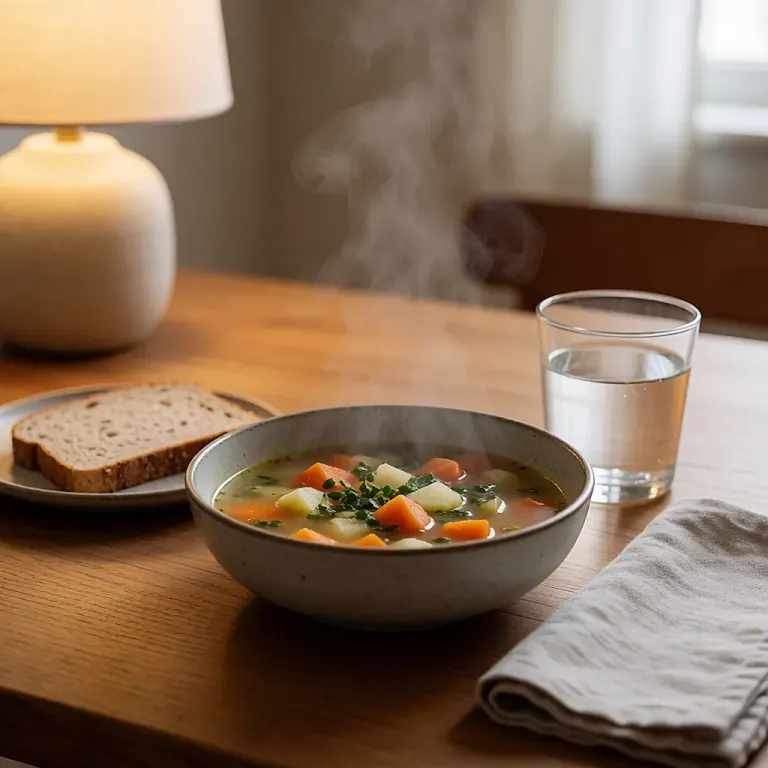
The takeaway fits in one sentence: a plate where you recognise the original shape of the food does more for your everyday than a three-bottle routine. That doesn't replace a check-up, a treatment, or a professional's advice when something is wrong — and no subscription will ever bill you for that.
Food supplements do not replace a varied, balanced diet and a healthy lifestyle.


Comments
Your opinion matters: rate the article, react and reply to comments.
Comments are moderated; AI-assisted comments are flagged. Text emoticons (8-), :-), <3…) are automatically shown as images.