

On the care label sewn into the corner of a duvet cover, a string of letters and numbers runs to two lines. Nobody reads it while making the bed. Yet that is what tells you whether your set appears in a recall, and what to do next. A bedding recall is not just another news item: it is a favour you do your skin, your sleep and your bedroom.
Where the batch number hides
Start with the simplest thing: look at the composition and care label, usually sewn into the duvet cover, the fitted sheet or a pillowcase. The batch number may be printed there, sometimes preceded by "batch", "lot", "L." or "batch no.". It can also appear on the packaging, on a loose label or on the delivery box. If you bought online, keep the order email: it may carry the exact reference.

A bedding set often has several pieces, and they do not always carry the same batch number. Check every item before deciding you are in the clear. Label illegible or cut out? Contact the retailer with the date of purchase and the product reference. The public product safety database run by the Office for Product Safety and Standards (OPSS) lets you search recalls by category, brand or reference; that is the first place to look, before group chats and rumour. Product safety law is enforced locally by Trading Standards, so your council's service is the other port of call.
What to do when a bedding set is recalled
The recall notice lists the affected batches, the reason and what to do: return the item, destroy it, ask for a refund or an exchange. Follow it exactly. If the recall mentions a risk to the skin or the airways, stop using it while you work out the next step. Don't pass it on to a charity shop and don't put it back in the cupboard "for later": a recall is not a promotion, it is a precaution.

What we do know is that the batch number ties an item to a production run. What we don't always know is exactly what happened before you bought it. A recall flags a potential risk, not a certainty of harm. So take the information seriously without panicking: the process is straightforward, and it saves you spending hours asleep against a textile whose history you know nothing about.
Before you bin or return a bedding set, photograph the label, the batch number and the recall notice. These are what you need to get a refund or an exchange.
Why to wash new bedding before the first night
A new bedding set isn't dirty in any visible sense, but it has already had a life: woven, dyed, folded, packaged, handled. New textiles can hold residues of finishing agents or dye, and a wash before first use removes surface soiling along with any excess product. That doesn't make the item sterile — that isn't the aim anyway — but it is plain common sense, especially if your skin is reactive.
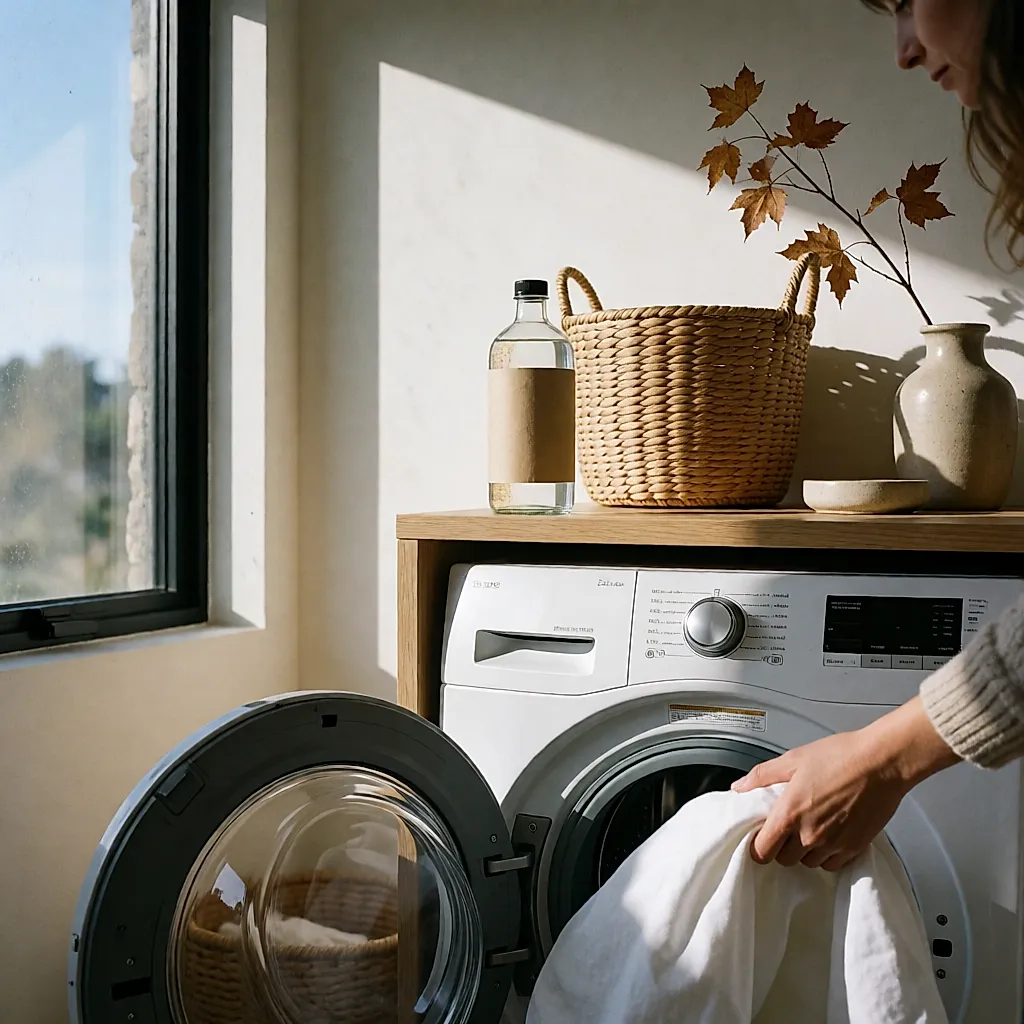
Read the care label before you start the machine. Cotton, linen, wool, silk: every fibre has its own temperature and programme. Detergent matters too; dose it according to the load and the hardness of your water, without cramming the drum. If your skin is sensitive, an extra rinse can help. And dry the set completely before it goes back on the bed: moisture sitting in the seams is not just a cosmetic issue.
The bedroom breathes, and so does your skin
We think about the duvet cover, rarely about the air around it. Airing the bedroom — a few minutes a day, even in November — renews the air and shifts humidity and odours. Keep vents clear, open the window before you make the bed if the weather allows, and don't let damp washing pile up in a corner. It isn't a treatment, it's a comfort habit.

Then there is the composition, worth reading with a curious eye. Bedding that breathes, washes easily and lasts is worth more than a freshness promise that doesn't survive the wash. If a new material makes you itch, or redness appears and persists, stop using it and speak to a pharmacist or your GP. Textile isn't the designated culprit by default, but it is one of the things worth checking.
The right reflex before you make the bed
Next time a bedding delivery arrives, don't just check the colour. Find the label, read the batch, note the reference. Three minutes that can save you a night with a recalled item — and a different way of looking at what touches your skin while you sleep.
A recall isn't there to alarm you: it is there to inform you. And the best response often comes down to a simple routine: check, wash, air. Then sleep easy — or almost.
Sources
- OPSS product safety database, Office for Product Safety and Standards — gov.uk, consulted on 10 November 2026.
- Chartered Trading Standards Institute — tradingstandards.uk, consulted on 10 November 2026.



Comments
Your opinion matters: rate the article, react and reply to comments.
Comments are moderated; AI-assisted comments are flagged. Text emoticons (8-), :-), <3…) are automatically shown as images.