

Ten minutes waiting for a November bus, fingers squeezed into a glove that's too small, and your hand ends up like a clenched fist that's no use to anyone. You shake it, blow on it, tuck your wrists into your sleeves — nothing helps. The culprit isn't always the cold: it's often the size. A glove that's too tight traps the hand instead of wrapping it, and the air — that thin warm cushion between skin and material — has no room to exist.
The half-centimetre you need to allow
It all starts with a measurement almost nobody takes: the circumference of your hand, taken with a tape measure around the knuckles, just above the base of the thumb, without pulling it tight. In practice, most measurements fall between 17 and 20 cm, and the sizes on labels roughly follow that logic — a 7 is around 18 cm, an 8 is close to 20 cm. These are guides, not laws: cuts vary from brand to brand, and a so-called 'women's' glove may well suit a slim hand that measures 6.5.
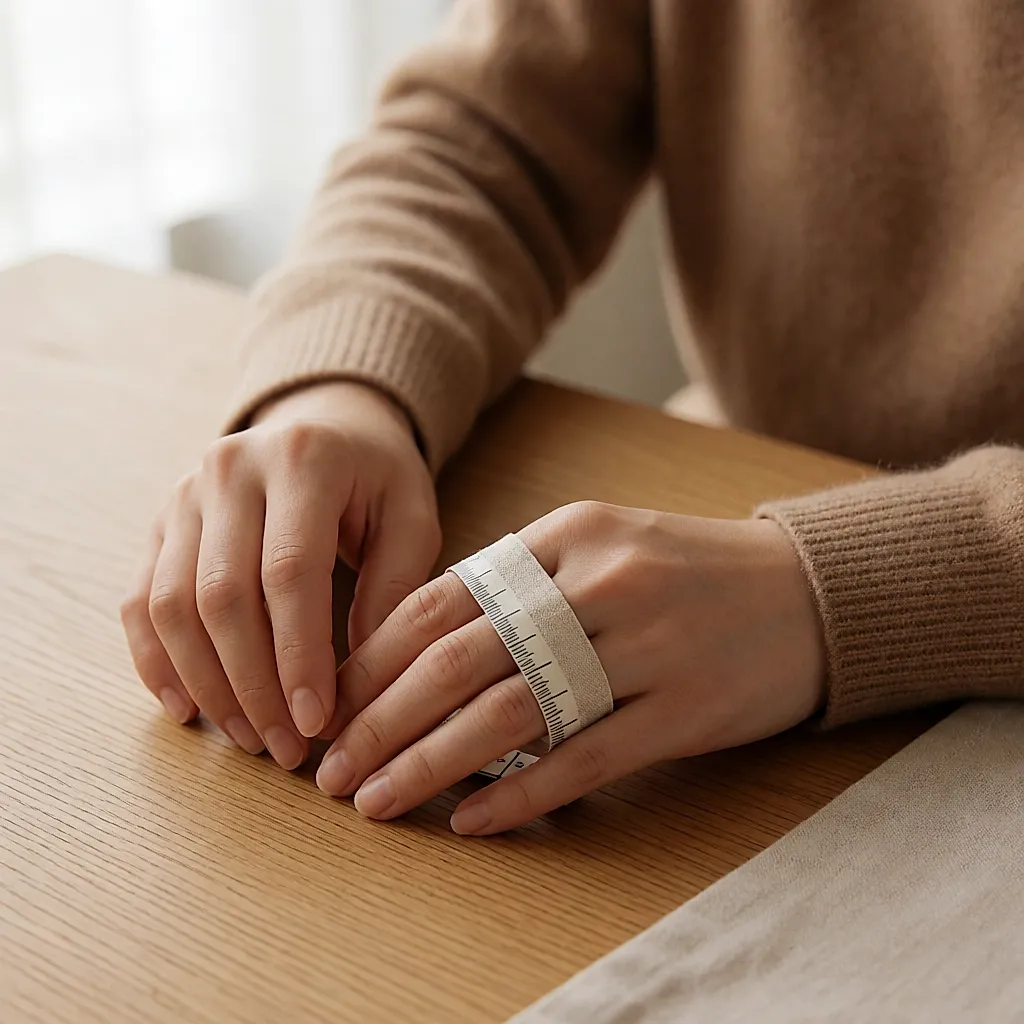
The second thing to do: measure at the end of the day, when your hand is slightly fuller, and allow half a centimetre of ease. That half-centimetre isn't an indulgence; it's the margin that lets you bend your fingers without the seam pressing into your skin. A glove that fits perfectly, with no room at all, can look very elegant in a shop window and become torture after twenty minutes. Do you want the look, or do you want fingers that still work? It's worth asking before you cut off the tag.
Gloves or mittens? Let the temperature decide
The five-finger glove is the city companion: it can hold a phone, a travel ticket, a steering wheel, a bike lock. It suits a moderate winter — say, days between 0 and 8°C when you move between street, office and public transport. Its limit is simple: the thinner it is, the faster your hand cools; the thicker it is, the less useful it becomes. A glove so stiff you can't get your bank card out is no use except as decoration.

Mittens are a different story: fingers stay together in one space, and you gain noticeably in perceived warmth — at the cost of grip. Excellent for a long walk, a Christmas market or a Sunday in the woods; disastrous for driving or unlocking a phone. Hence convertible gloves: fingers exposed, with a fold-back mitten cover. They are the compromise that saves a photo shoot by the lake. And if you're committed to thin gloves, add a pair of merino liner gloves underneath, as thin as a second skin: you double the layer, not the bulk.
Look at the lining before the leather
We all make the same mistake: we fall for supple leather, a perfect caramel colour, an impeccable cut — then discover in February that the inside scratches, the lining has slipped down to the fingertips, and your hand sweats and then freezes. Yet the lining is what decides real comfort. A wool or cashmere lining breathes, keeps you warm and ages well; a badly placed synthetic lining turns the glove into a little damp greenhouse — pleasant for five minutes, unbearable all day.
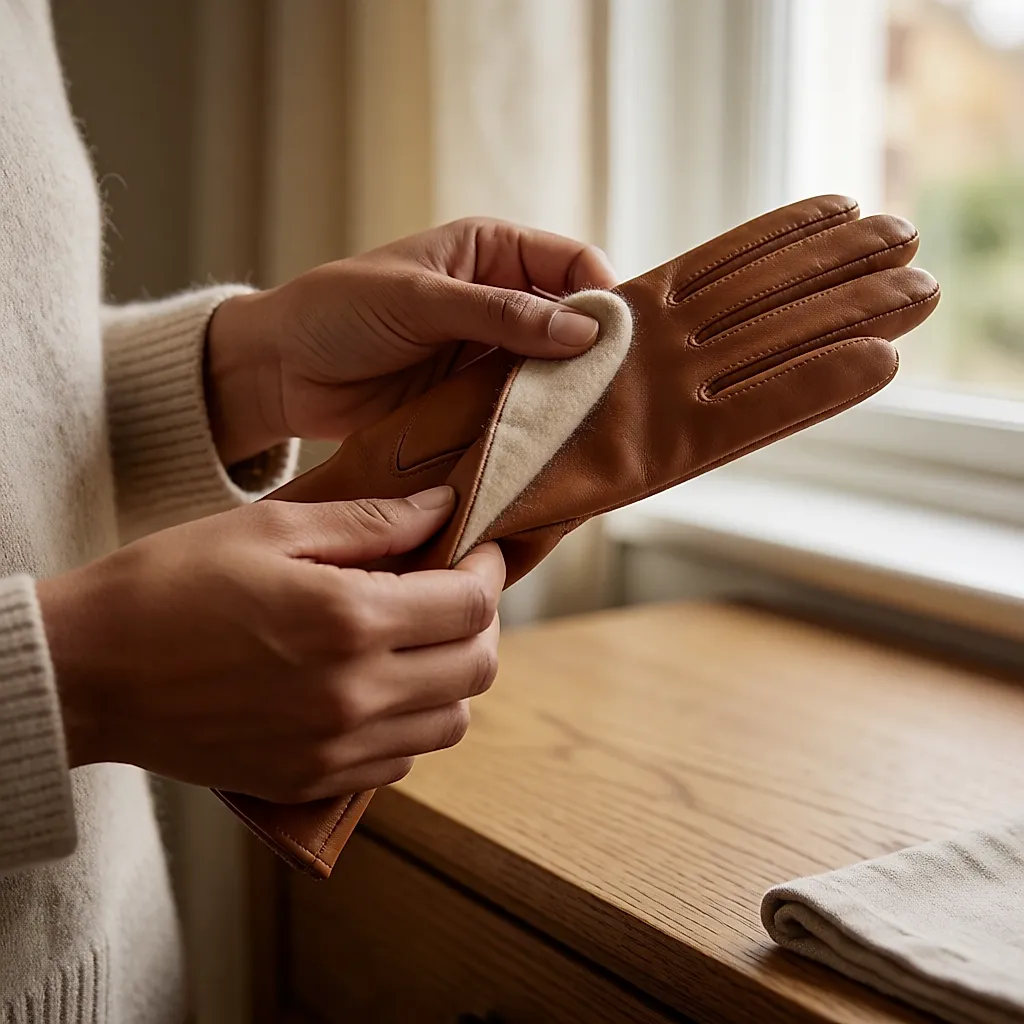
The right move in the fitting room: turn the glove inside out, check that the lining reaches right to the fingertips, feel the seams inside and make sure no thread is pulling. Then actually read the composition label — the synthetic fibre content is often higher than the price would suggest. On materials, favour what can be repaired and kept: vegetable-tanned lambskin or kidskin, recycled wool, second-hand cashmere. A quality glove, resewn once, will outlast three pairs bought in a hurry.
The measurement in three steps. Wrap a tape measure around your knuckles, above the thumb, without pulling it tight. Note the number at the end of the day. Add half a centimetre, then try the glove on: your fingers should bend without resistance and the tip should not float. Between two sizes? Go for the larger one, and a material that gives a little.
What to budget
Expect to pay around £15–£35 for a decent pair of knitted wool gloves from a supermarket, a haberdashery counter or a market — a good find for getting through November without thinking about it. Leather gloves with a wool lining sit more often between £60 and £150, depending on the fineness of the leather, the lining and where you buy them: a local leather-goods shop, a department store, or a glove brand that also sells online. Cashmere and very supple skins easily go beyond that, with no guarantee they will last longer.
What changes the price: the lining material, the finish of the seams, the city — London doesn't have the same prices as a smaller town — and care. Second-hand remains the best value: leather gloves are often barely worn and sell for about a third of the new price, provided you check the inside and the stretch in the wrist.
A well-chosen glove doesn't announce itself: you notice it when you wave goodbye and don't want to go indoors. So take out the tape measure, allow yourself that half-centimetre, and let good leather and a soft lining do the rest. Winter will be long; it may as well be elegant.

Comments
Your opinion matters: rate the article, react and reply to comments.
Comments are moderated; AI-assisted comments are flagged. Text emoticons (8-), :-), <3…) are automatically shown as images.