
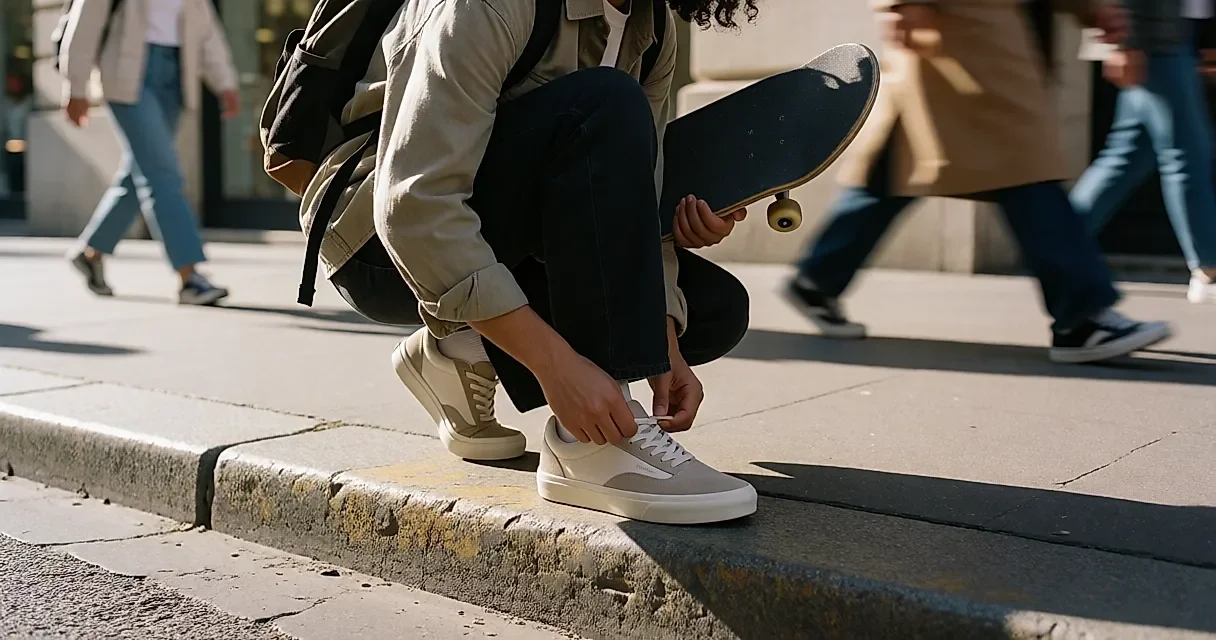
A skate shoe is built to grip a board covered in grip tape. You, on the other hand, ask it to walk across tarmac, clatter down tube-station stairs and cross a puddle while side-stepping the bollard that sticks out. The misunderstanding has been running ever since the silhouette walked out of the skatepark — and the results vary wildly depending on which part of the shoe you look at.
The sole grips the board, not the pavement
On a board, you want contact: a flat sole, thin enough to feel the grain of the grip underfoot, soft gum rubber, tread that is barely there. It is a precision tool, not a mattress. Apply that to paving stones and the diagnosis changes: soft rubber tends to wear faster with daily walking than a running-shoe sole, and the thinness translates into minimal cushioning over long distances.
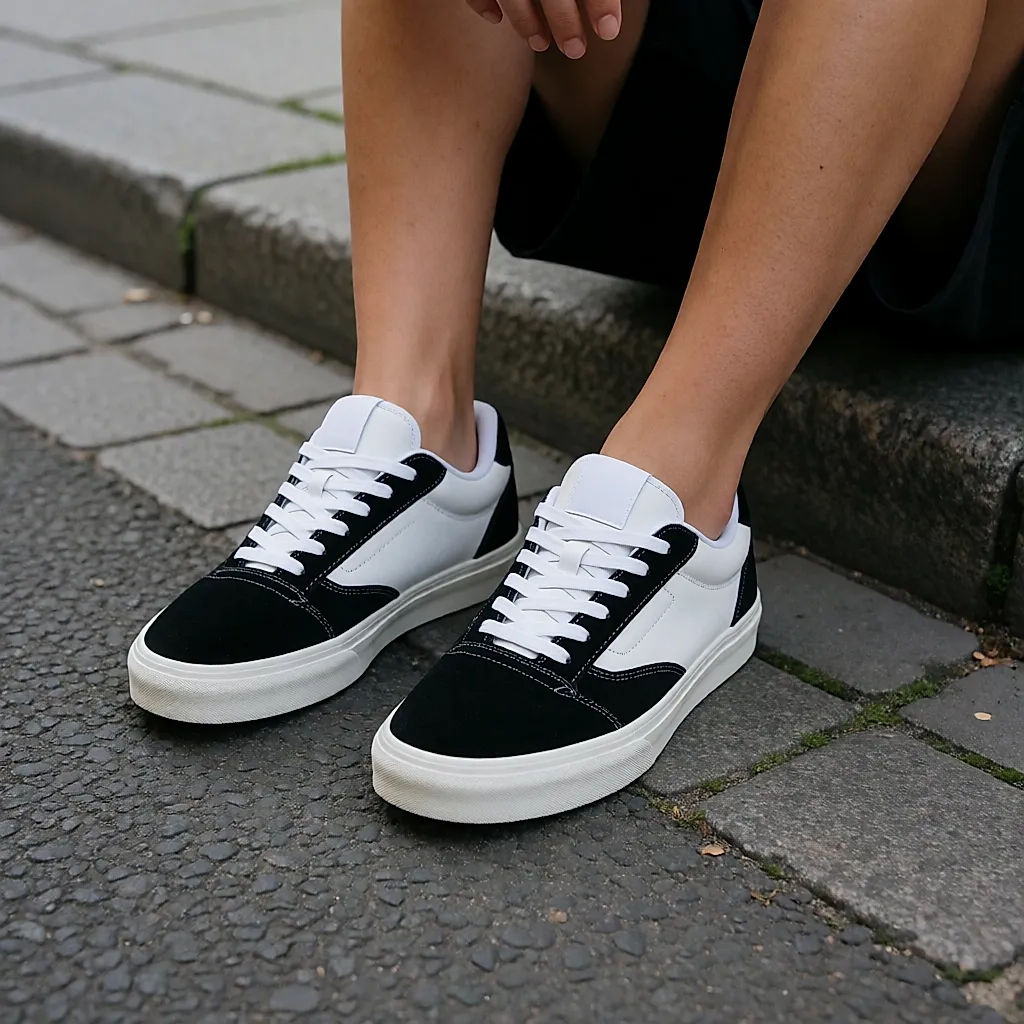
That said, a flat sole has real arguments in the city. It doesn't roll from edge to edge the way heavily sculpted soles can, it keeps the foot level, and its low profile slims the ankle under wide-leg jeans. The genuine point of caution is grip: on wet station tiles or a manhole cover, a smooth, shallow-tread sole doesn't have the lugs of a walking shoe. In practice, you watch where you put your feet. And if you're after cushioning, there are cupsole models — a thicker moulded sole, more padded and heavier too. That's the trade-off worth knowing before you commit.
The side panel, the bit the board made bombproof
Look at the side of a skate shoe: thick suede, double stitching, sometimes an extra panel stitched exactly where the foot rubs the board. That reinforcement was designed for grip tape — in the city it takes kerbs, car doors and commuters' heels. Safe to say it's still earning its keep, just against different opponents.
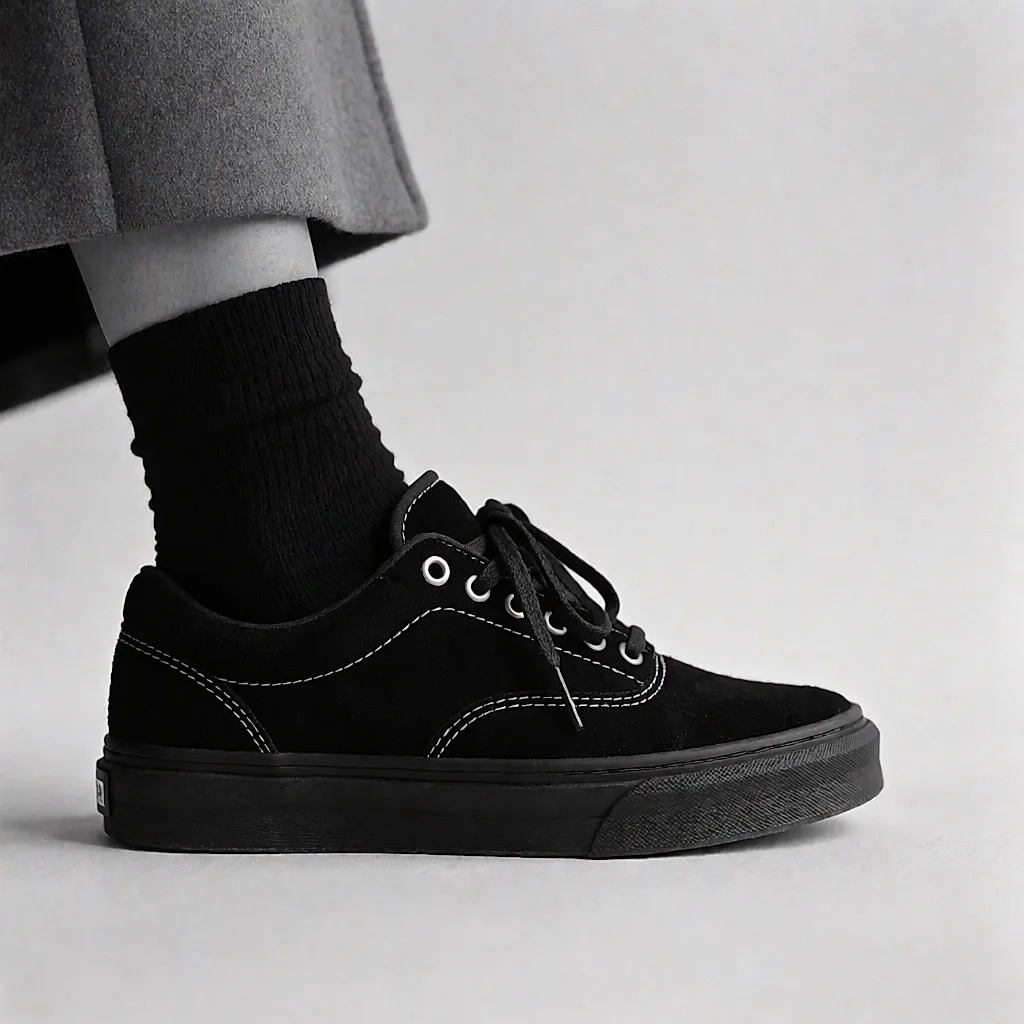
The toe deserves the same credit. A rounded shape that doesn't crush your toes and a toe box that's structured but not hard — that's what makes a pair bearable on a long day. All-canvas versions, by contrast, win you over with their lightness and price, then lose their shape faster at the toe. If you have wide feet, try the suede models before buying: suede gives a little, reinforced canvas far less.
Suede is tougher than it's given credit for
Suede is often assumed to be delicate — fine for special occasions and dry days. On a skate shoe it's the opposite: thick suede is there to last, provided you don't mistreat it. The rule is simple: brush it with a suede brush and let the shoe dry naturally — never in the washing machine, never on the radiator. A watermark? Let it air-dry, then raise the nap again.
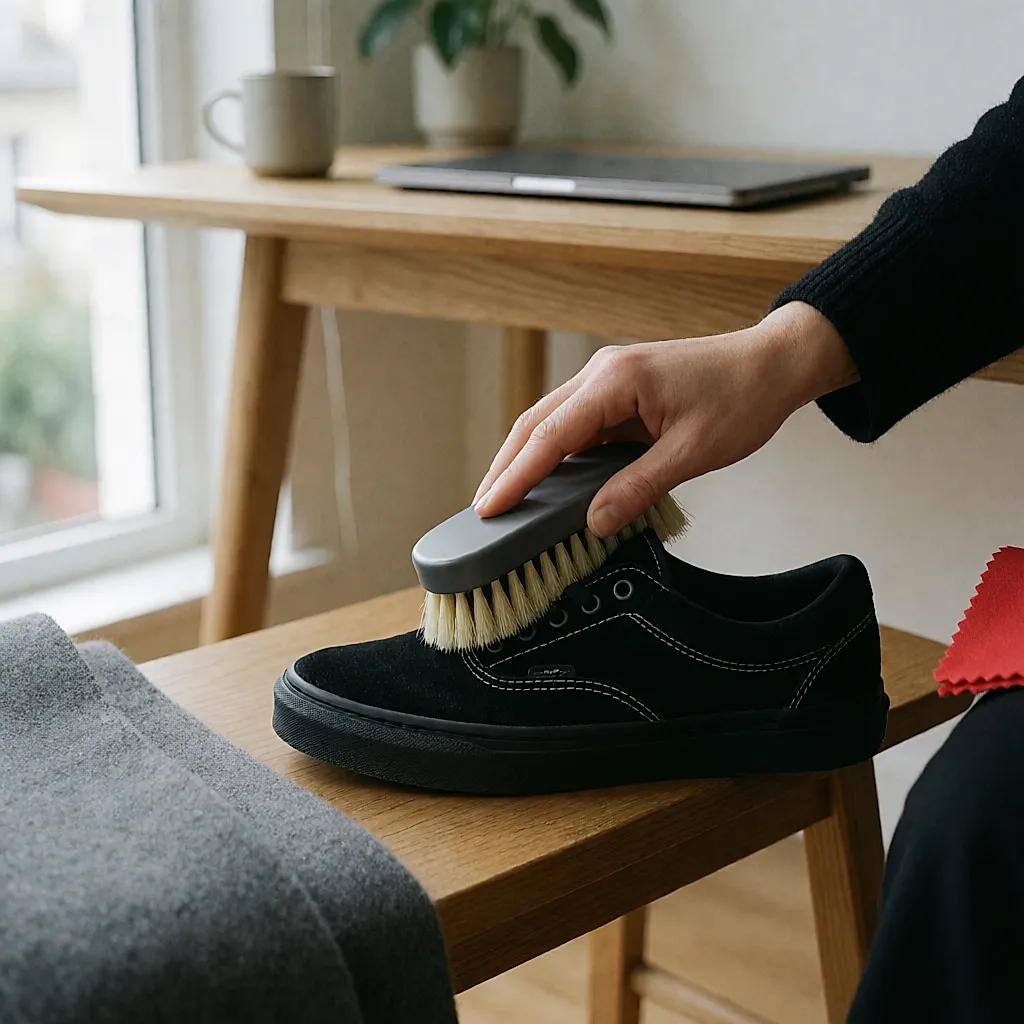
A waterproofer applied before the first wear, while the pair is still new, can make a real difference for the season ahead. And for winter, the colour matters as much as the material: black or brown suede forgives everything, sand suede remembers every puddle. As for white soles going yellow, that's just life — a little bicarbonate of soda on a brush can limit the damage, but don't expect miracles.
The fitting test that beats every review: put the pair on late in the day, standing up, and leave a little room in front of your big toe. Skate shoes are lightly cushioned, so a pair that's too small becomes a punishment fast; too big and it slips at the heel. Take your usual socks — not the thin ones.
Budget: what a pair actually costs
Expect roughly £50 to £70 for an entry-level vulcanised canvas pair, £70 to £110 for a suede model with reinforcements, and up to about £130 for a technical cupsole. What moves the price: the material (suede or canvas), the type of sole, the city and the retailer. In a skate shop you're paying for advice and the chance to try pairs on; on a brand's own site, for the choice of sizes and colourways; second-hand, a barely worn pair can cost up to half the retail price — in which case check the state of the side panels and the wear at the heel, the two places that give up first.
And if your real use is long distances on foot every day, let's be honest: this isn't the right shoe. A walking trainer, better cushioned and with more tread, will do the job better — keep the skate shoe for short trips and the outfits that need its low silhouette.
Last piece of advice, and the most useful: buy the pair for the life you actually lead, not for the skater in the advert. A skate shoe worn in the city is a very good idea — as long as you accept that it wears faster, keeps you less warm and will never be a hiking boot in disguise. In exchange, you get the drape, the line and that way of ageing that makes a wardrobe more interesting than a pristine pair. Fall for it, but with your eyes open.



Comments
Your opinion matters: rate the article, react and reply to comments.
Comments are moderated; AI-assisted comments are flagged. Text emoticons (8-), :-), <3…) are automatically shown as images.