

A wool jacket with its label still intact, three jumpers, a pair of jeans that shrank in the first wash: the bag by the door has been waiting for its local drop-off for longer than you’d like to admit. You can do the sorting. It’s what comes next that stalls. A neatly folded pile is worth nothing until someone picks it up, turns it over and tries it on in front of a mirror.
Sorting isn’t the problem
We all know the drill. Photos retaken three times because the living-room light lied about the colour, the listing rewritten, the messages asking ‘still available?’ before going silent. The pile takes root, and eventually you give away what you meant to sell.
What makes a secondhand piece move is almost never the price on the listing. It’s a place, a date and someone standing in front of you. A rail, a table, a makeshift changing room behind a screen: the garment becomes something people can touch again, and decisions happen much faster than online. The right channel does the work that sorting never will.
What a local sale changes for the seller
First relief: no parcels. No boxes to hunt down, no labels to print, no ‘I’ll drop by tomorrow’ that never happens. You drop things off, they get hung up, they sell.
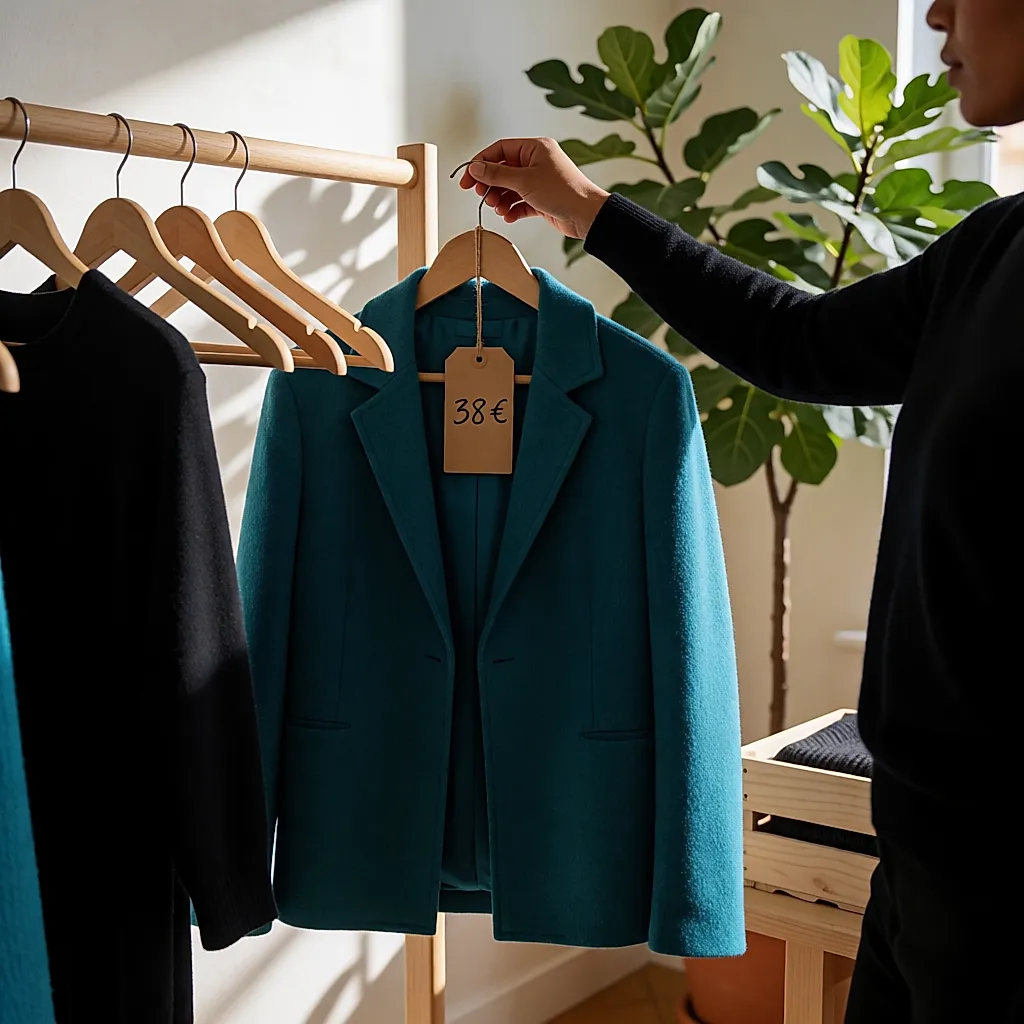
Second, quieter gain: in person, returns are a different matter. Online, a piece can come back creased, smelling of someone else’s laundry detergent. At a local sale, the buyer has seen the seam, the wear at the collar, the real length. What she takes home, she keeps.
Then there are the photos. One shoot at drop-off, a few shots in daylight, and it’s done: no more retaking pictures every time a piece doesn’t sell. The price is decided once, written by hand and displayed. No more drawn-out negotiation—and nobody will mourn that.
How many pieces have you pulled from sale simply because you were tired, rather than because there were no buyers? That’s often where a local sale wins: it takes the logistics out of your hands.
Trying things on: the advantage we’d forgotten
On the other side of the rail, the comfort is much the same. You put it on, turn, check how it hangs. An itchy wool is obvious straight away; a blazer whose shoulders sit badly fools nobody once it’s on. The whole silhouette benefits, instead of a piece being judged on a hanger and two blurry photos.

Money-wise, it’s clear: the price is displayed in person, sometimes haggled over a little, never buried under three rounds of messages. You know what you’re paying before you get your purse out.
The limits are real, so they’re worth saying. A local sale reaches buyers in the area: a very dressy piece, an unusual size or a little-known label will find fewer takers there than online. And you have to accept washing, ironing and choosing—a bag tipped out on a table sells nothing.
Where to find a local sale near you
Start with the places that still put up paper: council offices, community centres, university noticeboards, local shops and cafes that take small ads. Have you looked at your council noticeboard lately? Charity and school nearly-new sales often cluster at the end of the season, when wardrobes swap over.
Permanent consignment shops don’t depend on a date: you drop items off when you like, the selection is made in front of you, and you get the agreed share when the item sells. Always ask two things before leaving anything: the percentage taken and when you’ll be paid.
Budget
Impossible to give a single price: practices vary widely from one place to another, and no national rate card applies. In practice, a consignment shop’s commission is often around 30–50% of the sale price, and a rail or a space at a nearly-new sale often costs £5–20. Always ask for the exact rates before leaving anything: at a consignment shop, ask about the commission taken from the sale price and when you’ll be paid; for a charity nearly-new sale, ask the price of the rail or space and what it includes. When selling, the price of a secondhand piece depends on the brand, the material, the condition and, yes, where you are: a well-cut wool blazer usually sits higher than a basic T-shirt, but only the venue you choose can give you its rates.
The day-of checklist that saves you
- Wash and iron before you go: a creased piece sells less well.
- Bring hangers and canvas bags: there are never enough on site.
- Note down the pieces you’ve dropped off and the price you’re asking, so the maths doesn’t get fuzzy.
- Ask when unsold items must be collected, or they’ll sleep in the back room.
One question remains: selling also means accepting that a piece you loved is leaving. The rail at a local sale has this going for it—it makes the decision concrete, with a person in front of you saying ‘I’ll take it’. And, oddly, you hardly regret a thing. Just leave a little room in your bag for the way home: you rarely leave completely empty-handed.



Comments
Your opinion matters: rate the article, react and reply to comments.
Comments are moderated; AI-assisted comments are flagged. Text emoticons (8-), :-), <3…) are automatically shown as images.