
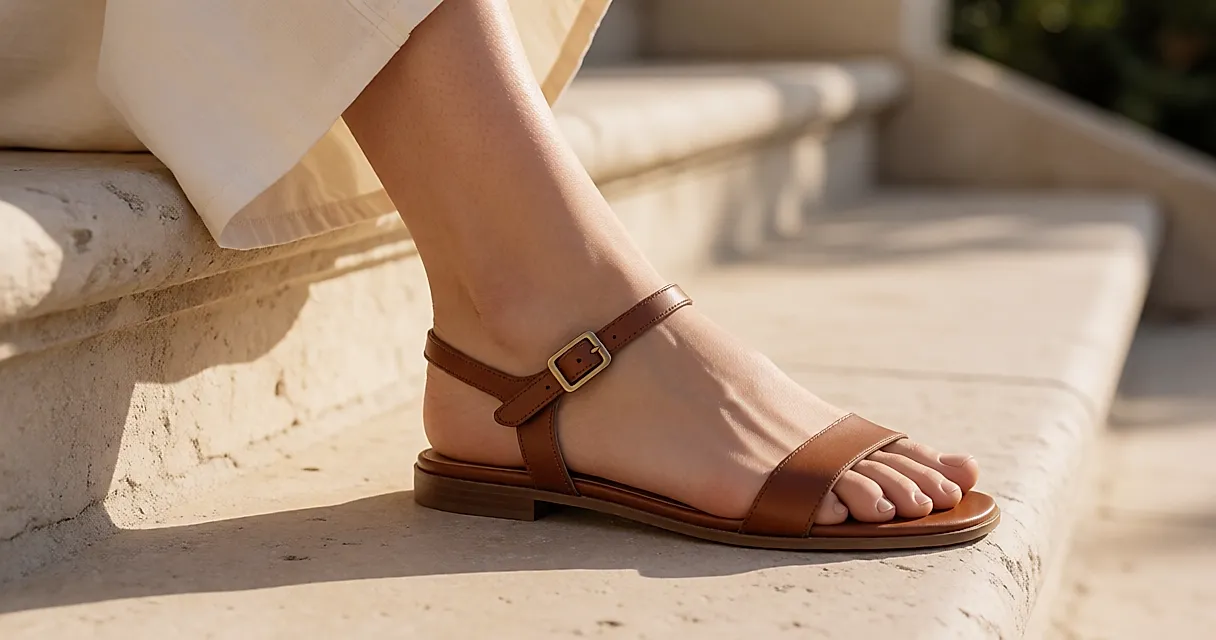
The sandal was perfect: cognac leather, a fine strap, a sensible heel. Three hours into a wedding, it was the buckle that left the lasting impression: a square mark on the ankle and that greenish trace you put down to sweat. The leather had nothing to do with it. The culprit was four centimetres of metal we hadn't even looked at.
What to check before you buy (and it's never the hardware)
You know the scene: you lift the shoe, flex the sole, feel the leather, check that the strap doesn't cut into your heel. The buckle, though, you decide it looks pretty and move on. Except it's the only part of the sandal that stays against your skin all day, while your foot heats up, sweats and rubs with every step. In practice, that's often where the trouble starts.
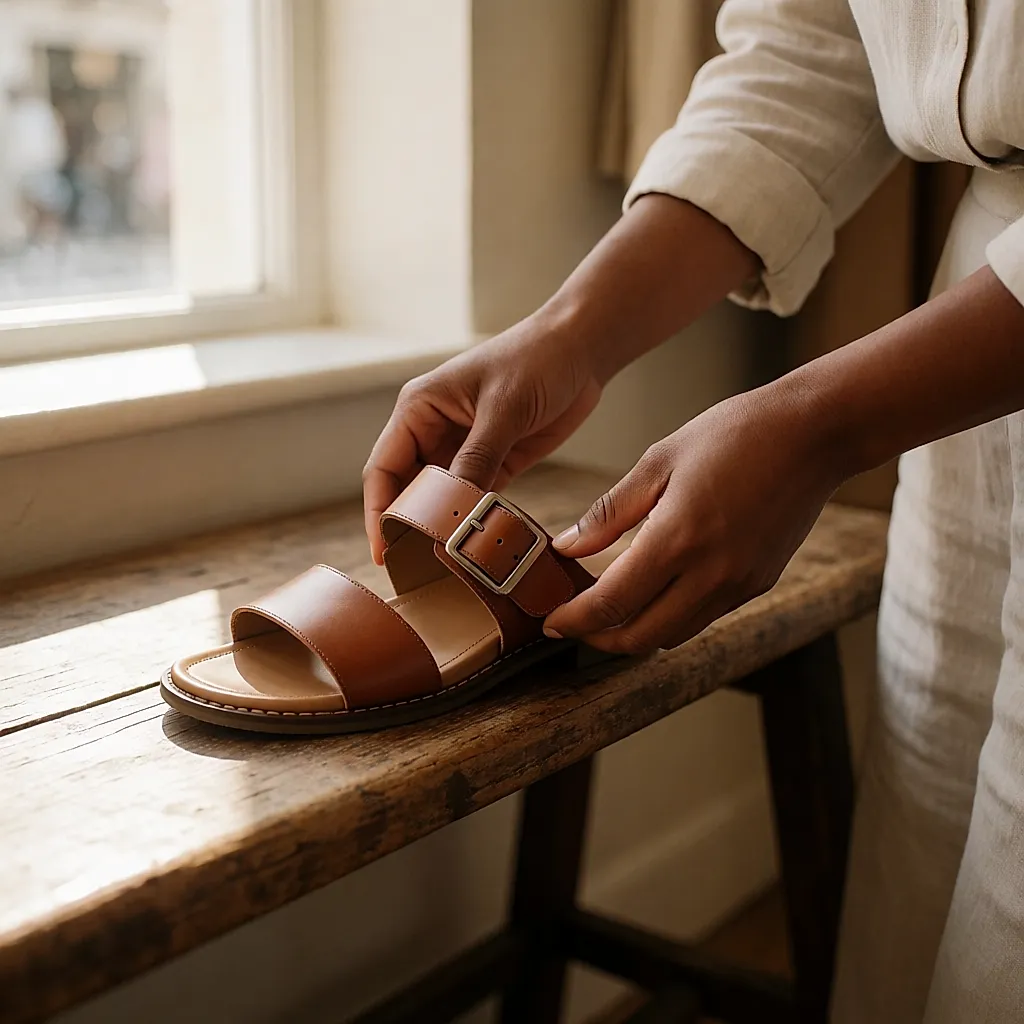
Nickel, plated brass, zamak, gold-tone steel: the names on the spec sheet don't tell you much, but they almost always mean alloys. Nickel is extremely common in fashion hardware — buckles, clasps, rings, eyelets, belt studs, bag loops. Plating that flakes after two summers no longer looks much like the original product.
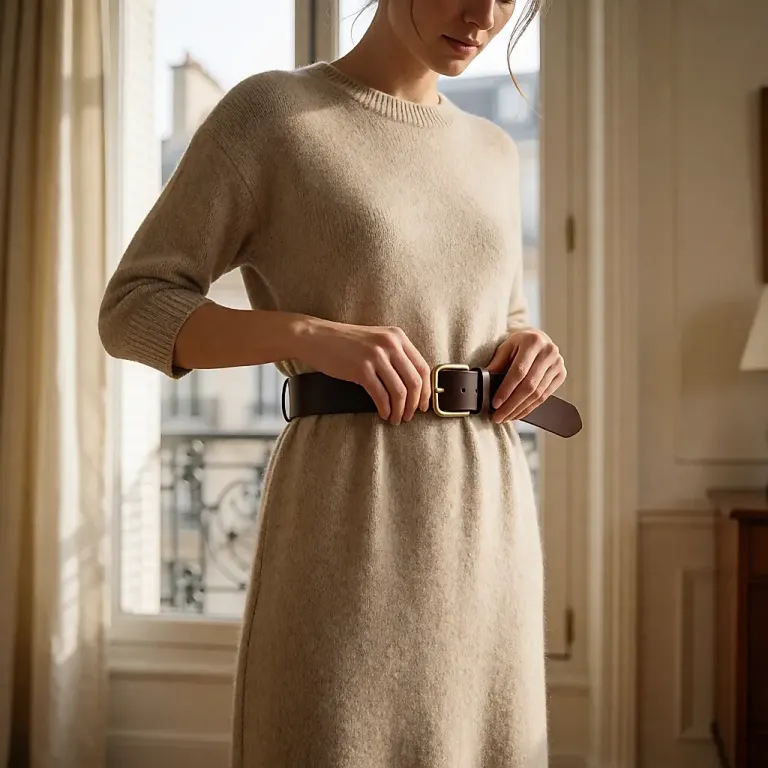
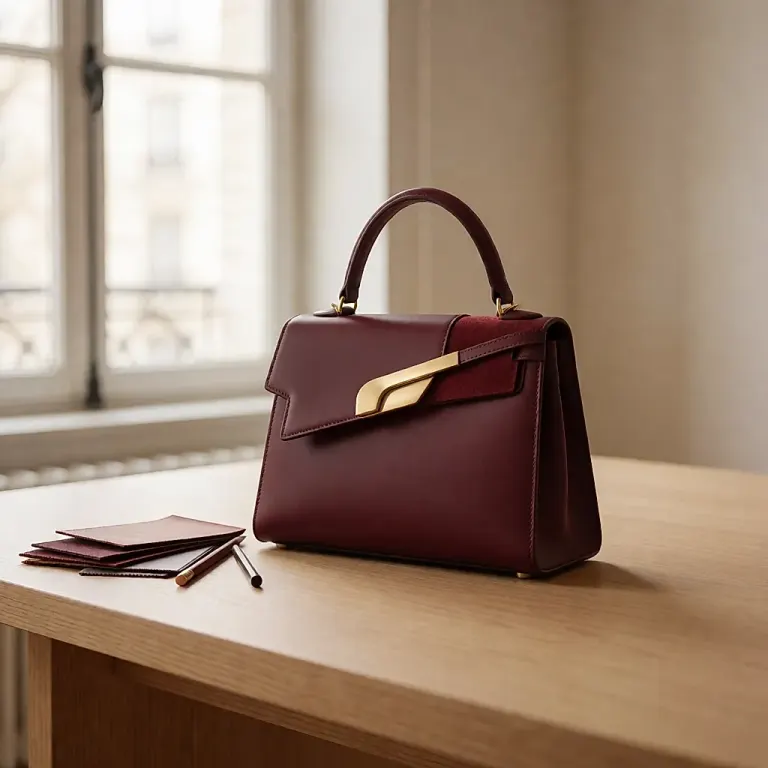
And the problem doesn't stop at shoes. The clasp on a bag worn against a bare shoulder, the ring on a belt rubbing at your hips, the clip on a boot — how many pieces in your wardrobe spend the day in contact with your skin without your ever having thought about it?
Stainless steel, brass and knotted leather — what actually exists
There's good news on the supply side: 316L stainless steel (often called surgical steel) now features in a lot of jewellery and some leather goods. Solid brass is the other reliable choice, often gold-tone or lacquered. Just be aware that bare brass oxidises and leaves a dark mark on skin when it's hot — it isn't necessarily an allergy, but on a bare ankle the visual effect is just the same.
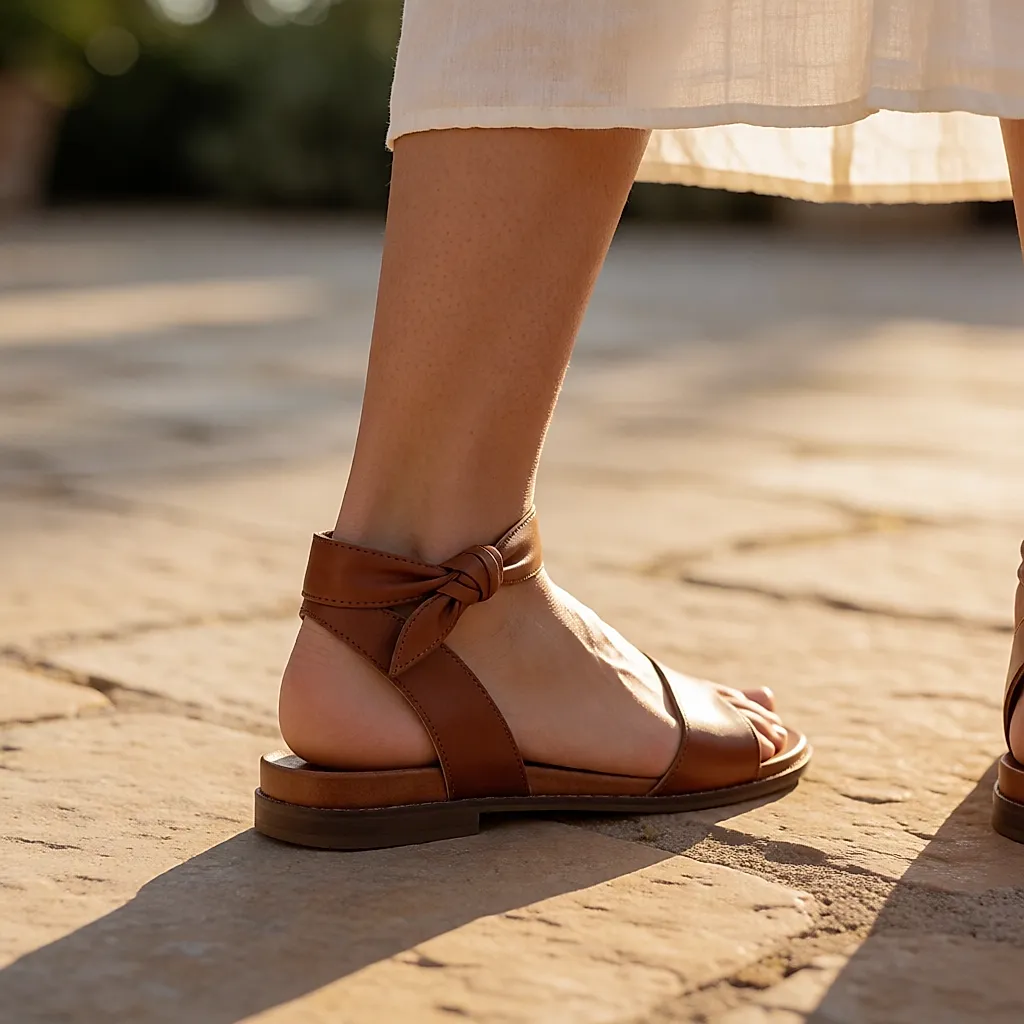
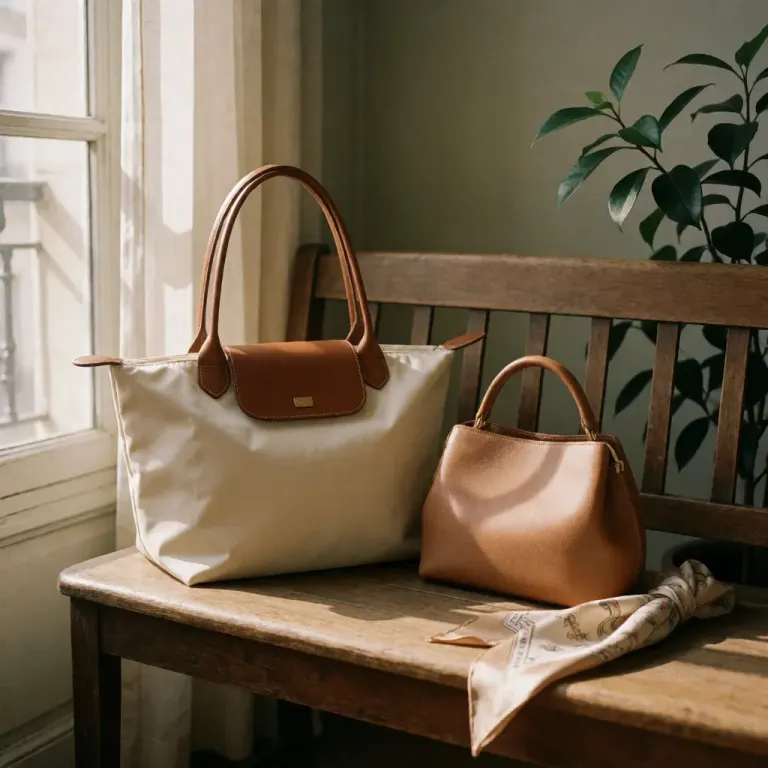
There is also the cleverest option, the one we forget: metal-free pieces. Tie straps, braided-leather buckles, tie belts, horn or mother-of-pearl buttons, cord shoulder straps. Leather that holds without hardware is often thicker and better tanned — the material argument stands up, with vegetable tanning leading the way.
Who is this not for? If you've already had a reaction to costume jewellery, stainless steel is no substitute for medical advice: show the area to a dermatologist rather than stockpiling creams. And if you love big gold-tone buckles, there is a middle ground. A buckle placed on top of the foot, a side fastening, a lined strap: the metal stays visible; it just no longer touches the skin.
Three checks, no lecture
The first can be summed up in one sentence: turn the piece over. Look at the edges of the buckle, where the plating flakes first, and ask what it's made of. A sales assistant who knows the product will answer in ten seconds; one who starts searching the label has already given you part of the answer.
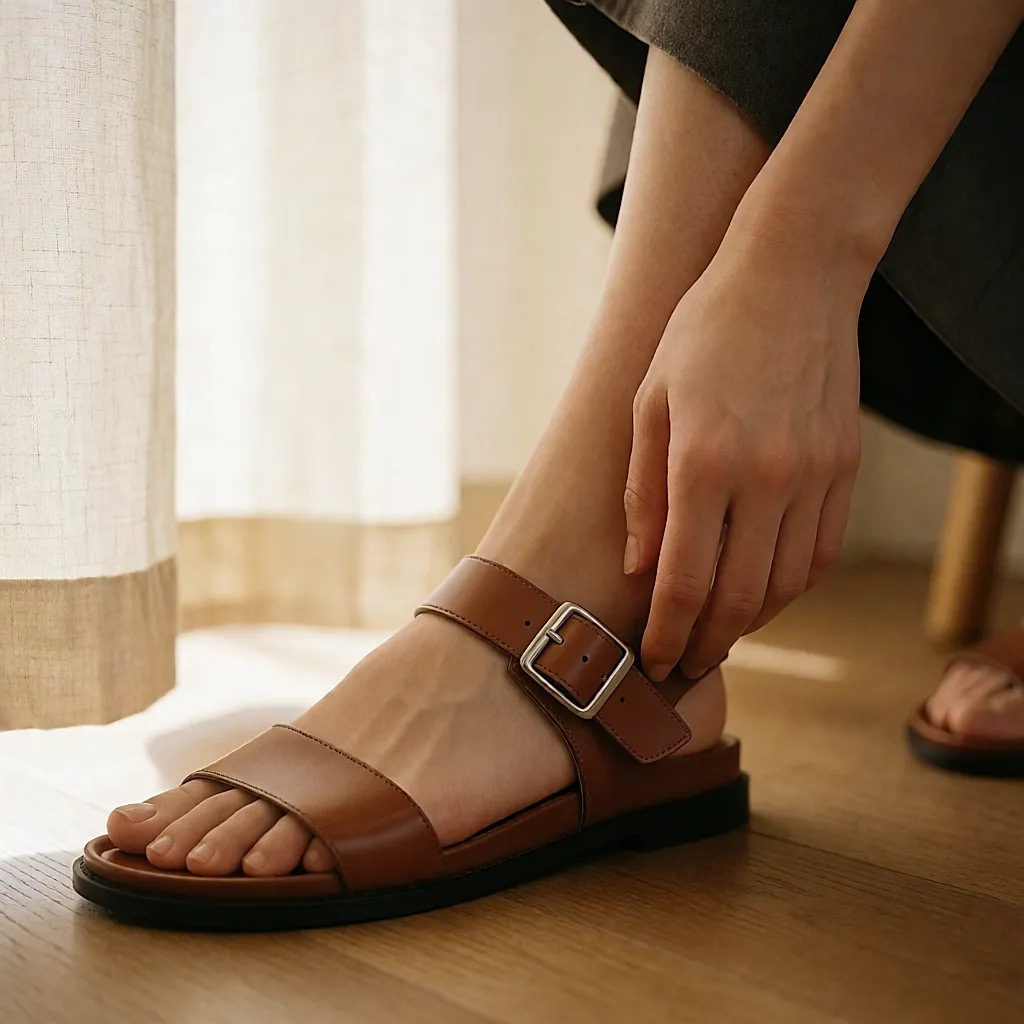
Second check: look all the way around the piece before you try it on. Is the metal in direct contact with skin, or is it sitting on the leather? A difference of two millimetres can sometimes change an entire day. And if you're still unsure about a pair you love, a cobbler can often replace the buckle with a stainless-steel version for a reasonable sum — cheaper than buying the pair again.
Third check, the simplest: dry it. After November rain or a day at the beach, wipe the hardware along with the leather. The plating lasts better, and the mark on skin is fainter. For jewellery, a little clear varnish on the back can help for a few wears — it needs reapplying, and don't expect it to last.
The fitting-room mini-test: turn the buckle over, ask what it's made of, slip a finger between metal and skin as you walk. If the metal is plated over an alloy and the piece costs as much as a good pair, walk away — or negotiate a buckle replacement with a cobbler.
Budget
As a rough guide, expect around £60 to £120 for a leather sandal with serious hardware (the range climbs with the city, the brand and the type of tanning). For a leather belt with a brass buckle, £30 to £70; for 316L stainless-steel jewellery, £15 to £50 depending on whether it is gold-plated. A solid-brass piece often sits between £20 and £60, and buying second-hand can easily halve all of that.
For a buckle replacement at a cobbler, budget £10 to £30 depending on the piece and the hardware chosen. Where to look: local cobblers and leather repair shops, markets, jewellery makers who list their materials, charity shops for belts. The best-value move, honestly, is often repair: a much-loved pair whose buckle irritates deserves better than the back of a wardrobe!
A good sandal is leather that falls well, a strap that doesn't cut, and a buckle you've taken the trouble to turn over in the fitting room. The rest — the shop window, the photo, the name on the sole — won't leave you with a square mark on your ankle. Next time you're tempted by a piece, just ask: 'What's this buckle made of?' It changes the conversation, and sometimes the whole comfort of your summer.
Comments
Your opinion matters: rate the article, react and reply to comments.
Comments are moderated; AI-assisted comments are flagged. Text emoticons (8-), :-), <3…) are automatically shown as images.