
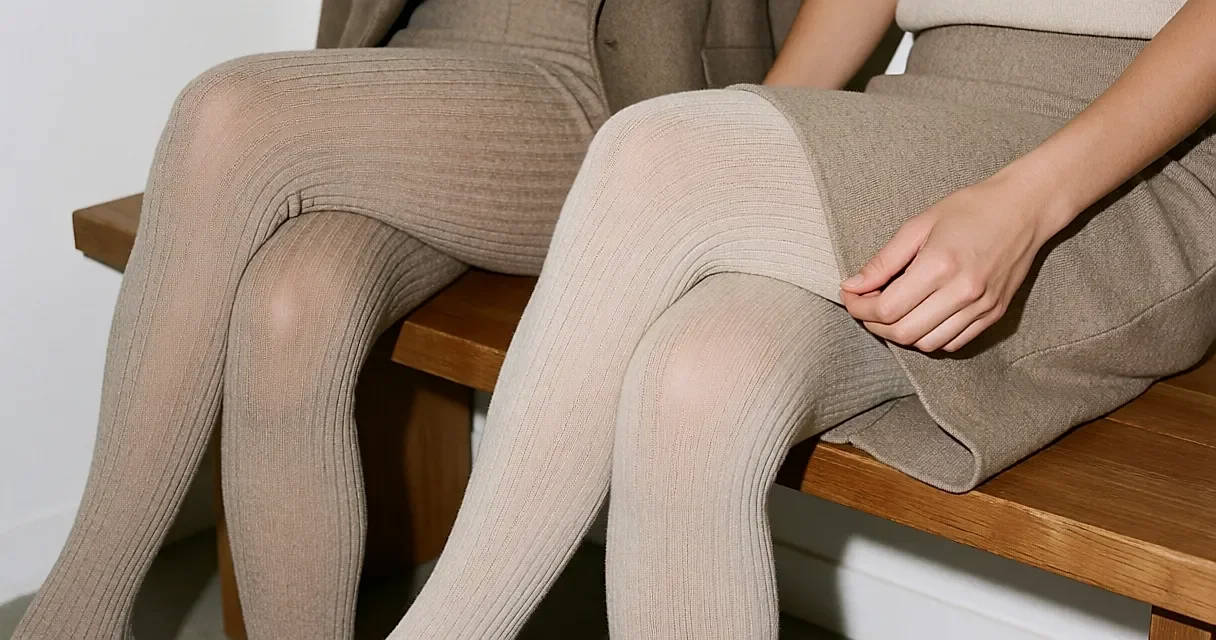
Two pairs of tights can both be marked '70 denier' on the packet. One is mostly synthetic, the other contains wool. At the same denier, the fibre changes how they feel — and thickness has nothing to do with it.
The number you read first, the one that climbs from 40 to 100, does not measure warmth: it measures the thickness of the yarn, and therefore mostly opacity. That is how you can end up shivering in a 'thick' pair while feeling perfectly comfortable in a finer pair whose label mentions wool.
Denier measures opacity, not warmth
A denier is a matter of weight: the weight in grams of 9,000 metres of yarn. The higher the number, the thicker the yarn, the more the knit covers the skin — and the more opaque the tights. A 100-denier pair hides the leg; a 20-denier pair lets it show through. That is all the number promises. It says nothing about temperature.
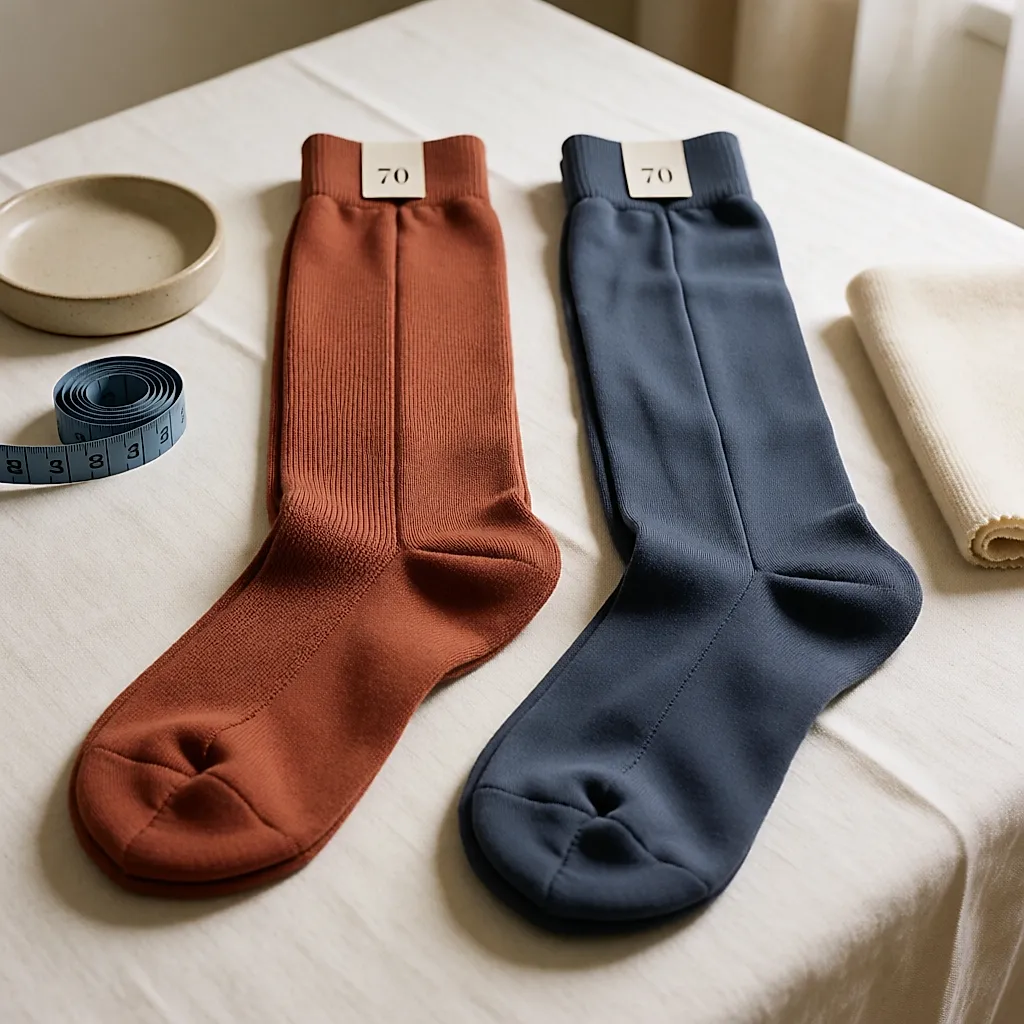
Warmth is decided elsewhere: by the fibre, the density of the knit, the space left for air between the knit and your skin, and what you wear over the top. Hence the gulf between a 100-denier pair that covers without warming and a 60-denier wool pair that does the job. Denier is the curtain; the fibre is the heating.
Wool, cotton and the 'extra warm' misunderstanding
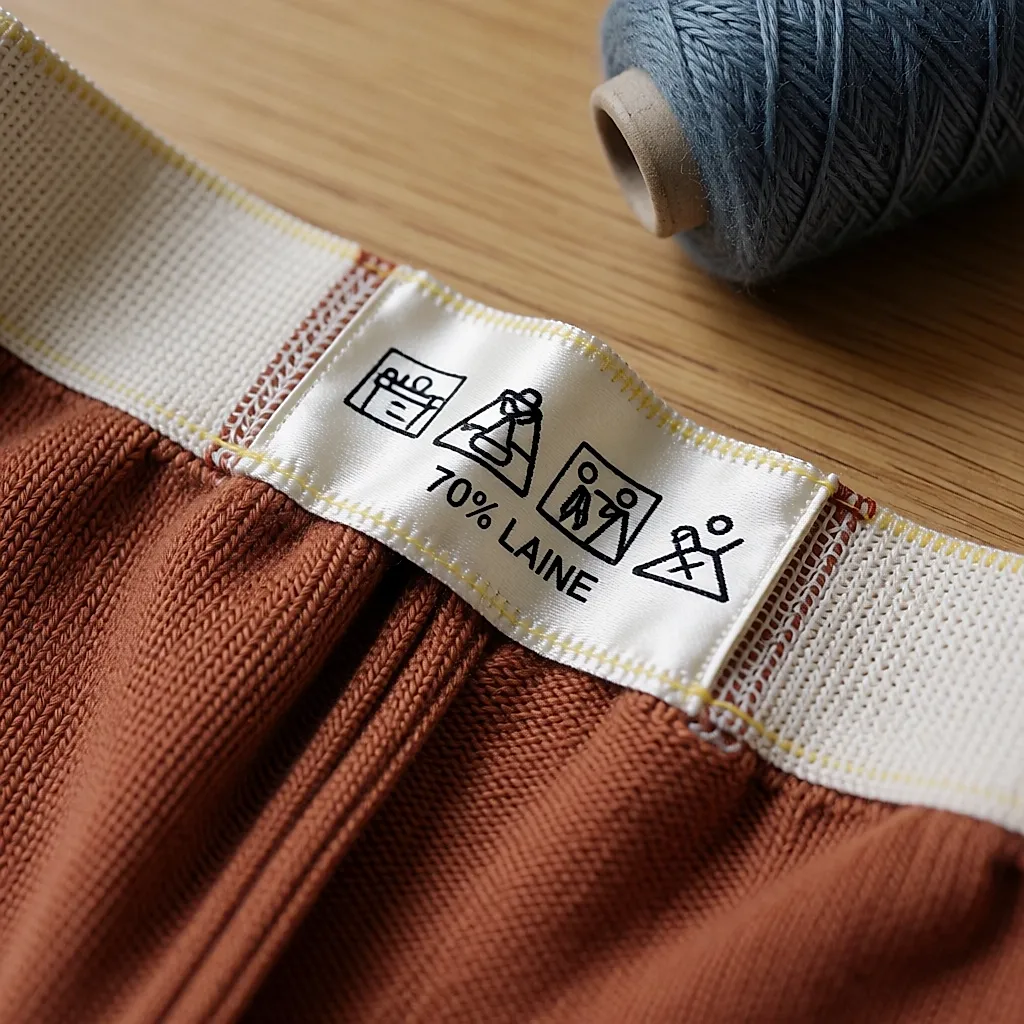
Wool remains the reliable choice for cold legs. Fine merino no longer scratches the way old-fashioned wool did, and it feels soft; wool-cashmere or wool-silk blends add drape and a little luxury at the start of the day. In return, it costs more, needs washing less often and dislikes the tumble dryer. Above all, it will not do all the work by itself: a pair labelled 'wool' with 12% wool and 60% synthetic fibres is mainly selling you opacity. Check the wool content before the denier — always.
Cotton is the drawer's great misunderstood: very pleasant, breathable, but a poor insulator. It is far better for mid-season than for the depths of January. As for the lined or fleece-backed pairs in outdoor ranges, they are warm, of course — just glance at the composition before you get to the till, so you know what you are paying for.
How the fit can make or break the day
A lovely warm pair that rolls down at the waist and needs pulling up every ten minutes is useless. Look for a flat waistband that sits high enough, discreet seams, a comfortable gusset, and reinforced heels and toes: these are the details that decide whether a pair survives the winter or only three wears.
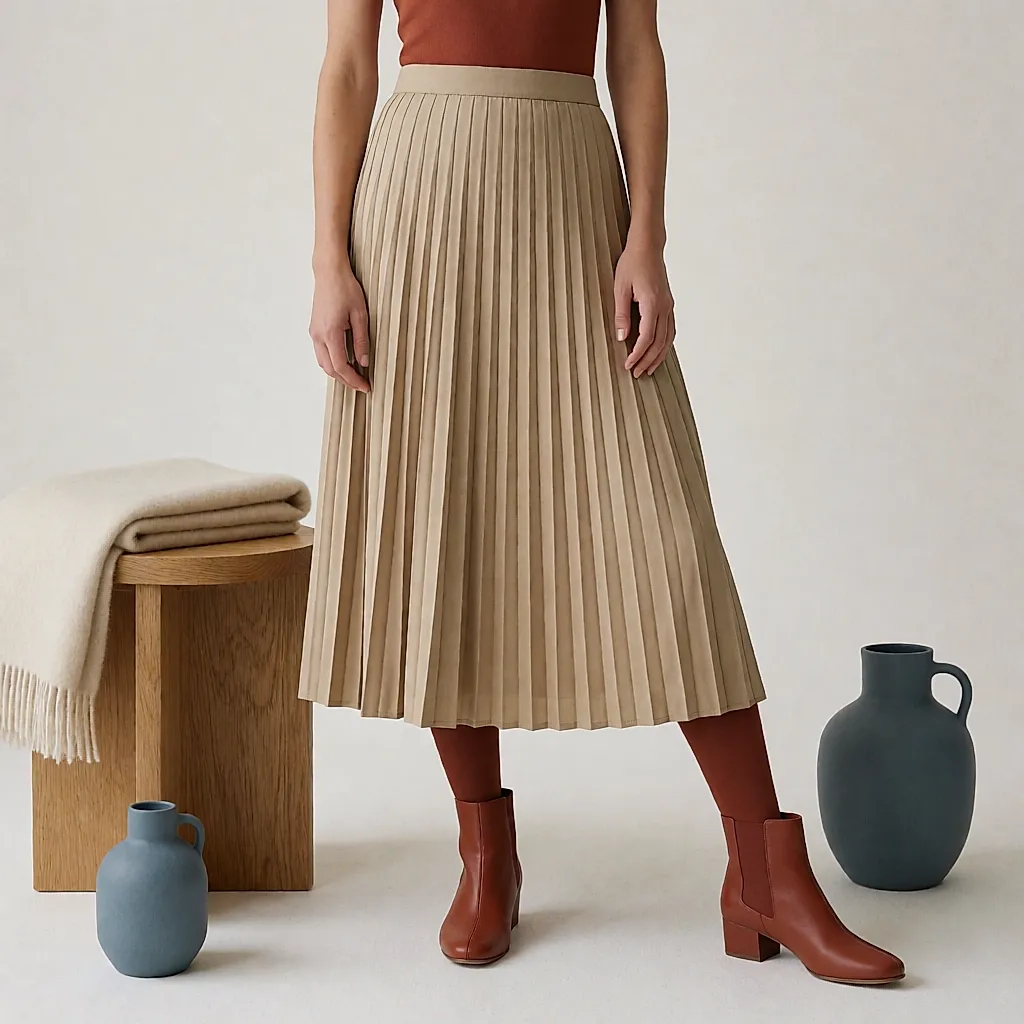
In terms of silhouette, wool adds substance — and therefore presence. Under a fitted pencil skirt it shows; under a fluid skirt, a jumper dress, leather shorts or a knitted dress, it works beautifully. And take your usual size, or even one up: tights that are too small stretch tight, lose their air and scratch. If everything goes in the washing machine at 40°C and you live in fur-lined boots, a good matte opaque pair will be more than enough — there is no need to switch to wool.
Budget
Expect to pay £6 to £15 for a classic opaque pair from a supermarket or lingerie chain: you will get the opacity, and warmth is a matter of boots. From £20 to £35, you are into wool blends — often with a variable amount of wool, which needs checking on the label — from mainstream brands and fashion chains, with a real gain in comfort.
Beyond that, from £40 to £70 and sometimes more, you will find merino and wool-silk; it is also worth looking at brands such as Falke or Wolford. What moves the price: the percentage of wool, the denier, the size (plus sizes are sometimes priced higher), where you buy them and the time of year — a January sale is nothing like October. Second-hand is worth a look too: new pairs still in their packaging circulate for £5 to £15.
Care determines whether they last a second winter
Wash by hand or on a delicate cycle at 30°C, in a mesh bag, with no fabric conditioner (it coats the fibre and softens it just where you want it to stay firm). Dry flat, never on a radiator. Air them between wears, mend any small snag straight away, and rotate two pairs rather than relying on one.
That is the real wool compromise: thirty seconds more on laundry, and legs that stop counting the degrees. Whether the trade-off is worth it is up to you.
Three checks before you pay: the wool content on the label (not the product name), the waistband (stretch it — it should not pucker), and the real opacity by holding the knit up to a lamp — that is where you see whether 70 denier lives up to its promise.
Then comes the question that settles everything: what are you actually cold from? If it is the wind between your skirt and boots, a £20 to £35 wool-blend pair will change your winter. If it is a freezing office, two merino pairs in rotation are better than one at £60. And if money is tight, a £12 matte opaque pair, a pair of long socks and a blanket over your knees will do the job very well.

Comments
Your opinion matters: rate the article, react and reply to comments.
Comments are moderated; AI-assisted comments are flagged. Text emoticons (8-), :-), <3…) are automatically shown as images.