
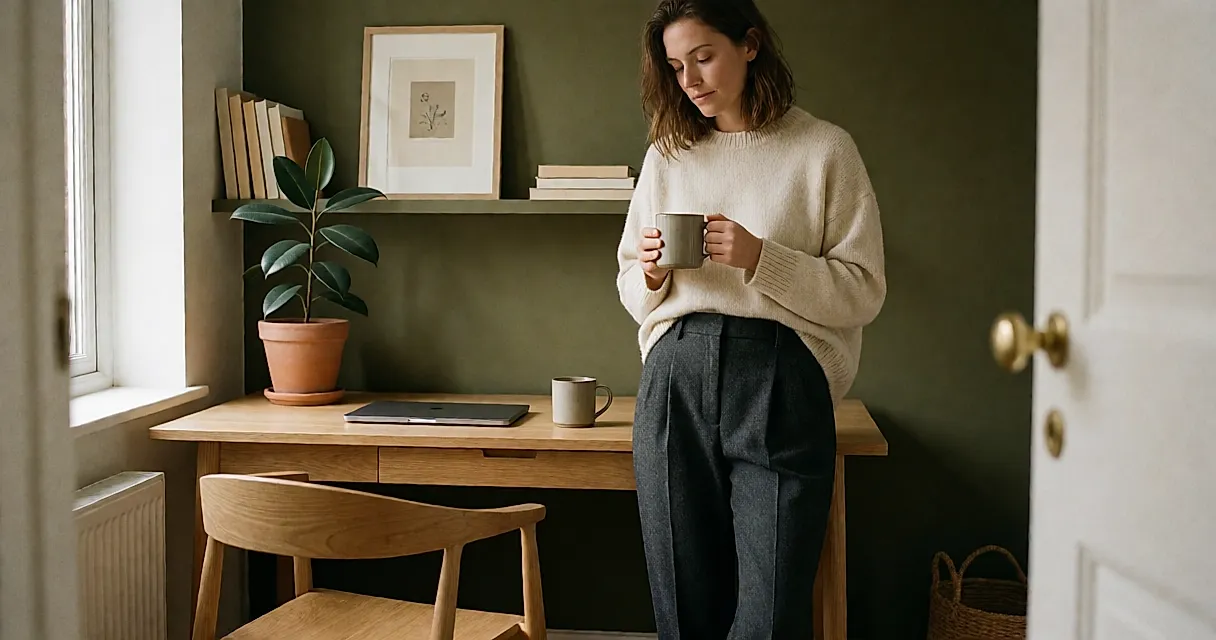
Tapered trousers have made their comeback through a detail nobody saw coming: the ankle. On Sunday evening, in front of the mirror, a hem that stops two finger-widths above the shoe changes everything – and suddenly the most ordinary pair in your wardrobe looks intentional. This time, it isn't about how tight the leg is. It's about where it ends.
Tapered, not compressed
Do you remember the skinny trouser of ten years ago? The one that clung to the calf, rode up the moment you sat down and required a gymnastics session to get off at night. The style returning to the rails has kept the line, not the restriction. The leg stays straight to the knee, then narrows from the calf; the waistband sits high without cutting in. This is a trouser that tapers from the calf, not compression wear for the legs — the difference comes down to a few extra centimetres of fabric.
The fabric does half the work. A slightly heavier cotton, a cool wool or a fine needlecord holds the line on its own and keeps the legging effect at bay. Conversely, when the composition lists a lot of elastane, the trousers cling to the knee, crease badly and age quickly: a word of warning, then — check the synthetic fibre content before you take anything into the fitting room.
The ankle is where it turns
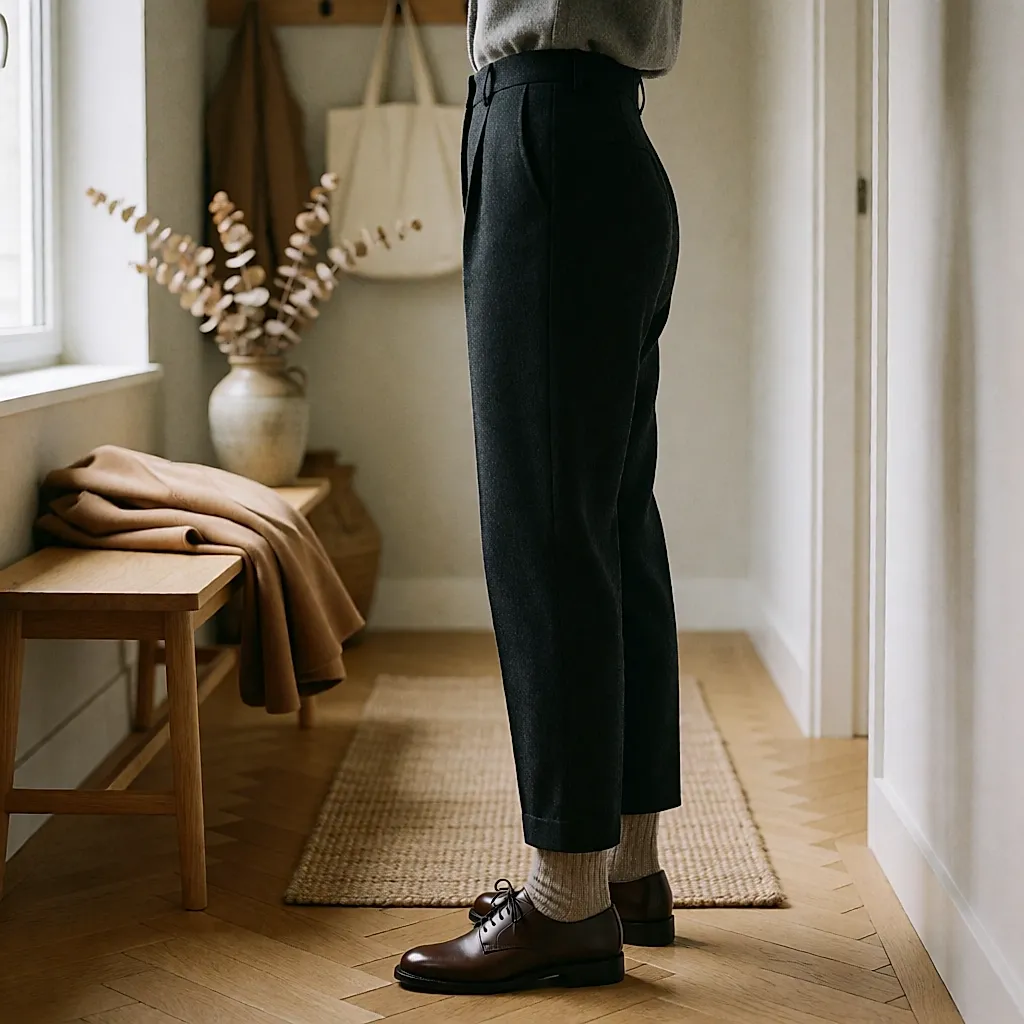
Everything happens at the bottom, in those few centimetres we used to hide. Two lengths work: a hem that stops cleanly above the ankle, and one that barely breaks over the shoe. Between the two is a no man's land that cuts across the leg and makes it look as if you're floating. The practical marker: one to two centimetres above the ankle, adjusted to the height of your shoes, not the other way round.
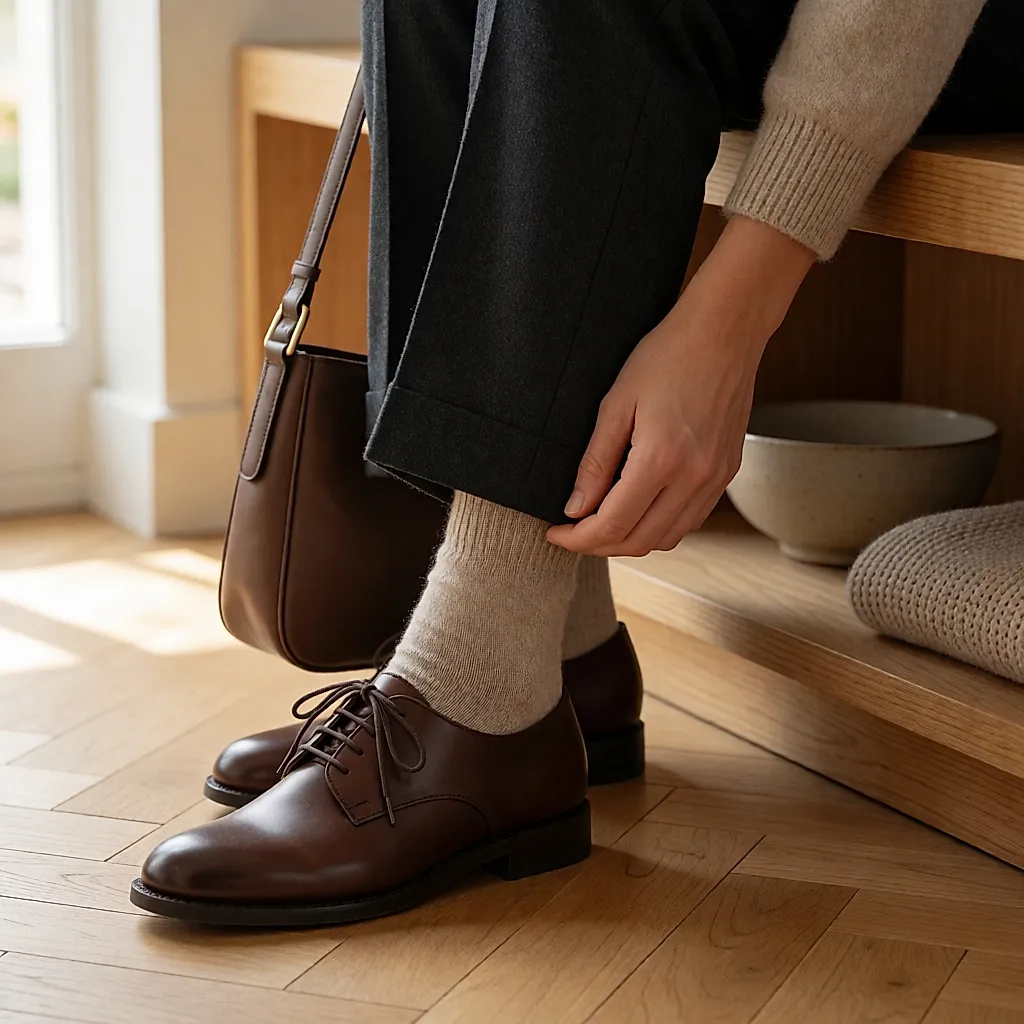
This is where shoes come in. Under a tapered trouser, a round-toed shoe with a fine sole works beautifully: a Derby, a loafer, a slim ankle boot, a court shoe, a strappy sandal. Chunky lug soles, by contrast, weigh the line down and turn the leg into a question mark. The test that never lies? In the fitting room, keep your shoes on, sit down, cross your legs, then walk five metres. If the hem rides up with every step, it's the length that needs revising — not your body.
Loosen up on top
The good news is that the top half no longer needs to be tight to balance things out. Since the leg is close to the body, the volume moves above the waist: an oversized jumper that stops at the hip, a short cardigan, a straight blazer, a slightly loose shirt tucked in at the front only. That contrast saves the silhouette and makes the trousers as wearable in the office as they are on a Sunday.
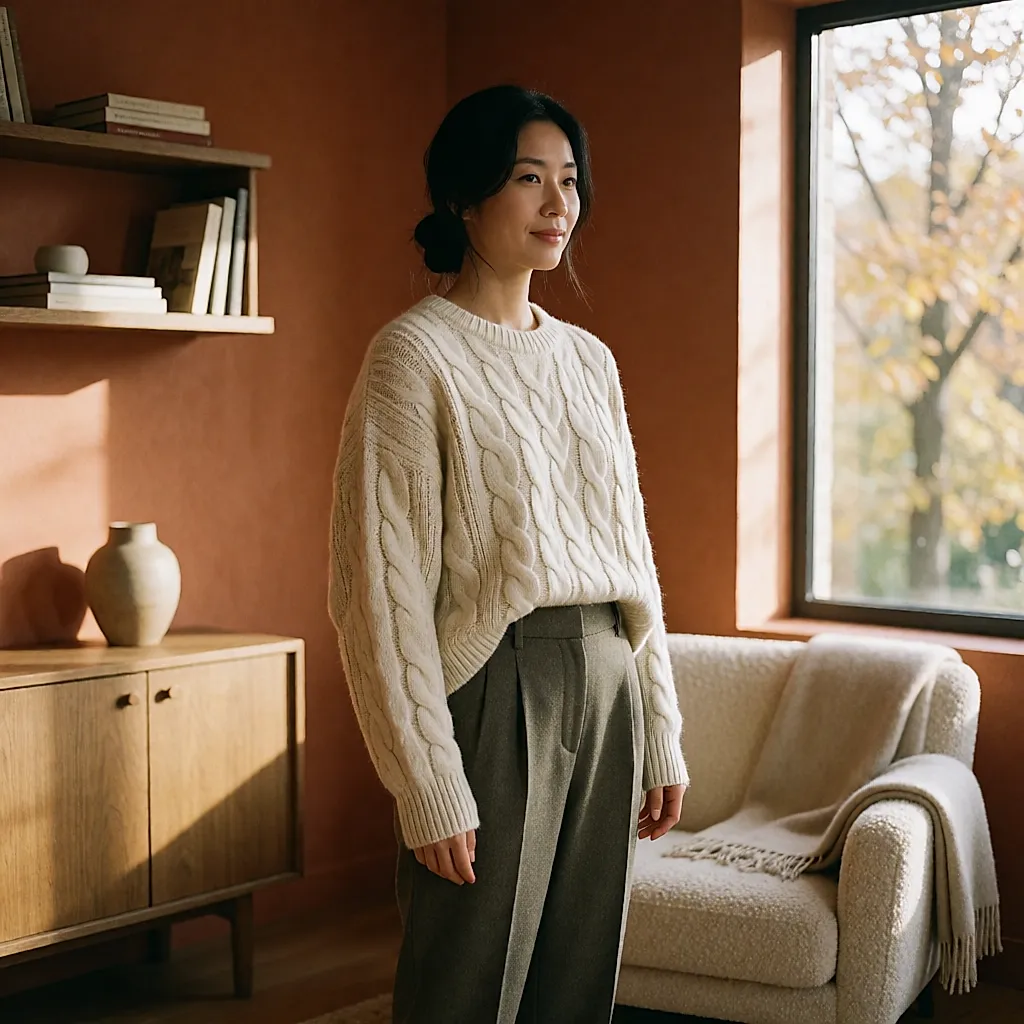
Layering helps, too. A fine knit under a wool jacket, an overshirt open over the top: you build up the layers, you can breathe, and you don't look like a tube. One word of caution: texture. A chunky knit over fluid cotton trousers is a happy contrast; the same knit over a fine, shiny fabric is an imbalance. And one question worth more than ten fittings: can you see yourself sitting down in this outfit for two hours? If you hesitate, the cut is too close to the body.
Who it suits, and who it doesn't
Let's be frank: these trousers are unforgiving on knees that show through thin fabric, and on days when you're rushing from one appointment to the next. They suit slight frames looking for structure, and anyone who likes a long line with a slim ankle boot. For a pear-shaped figure, or if you hate the feel of fabric on your calf, wide-leg, bootcut or pleated trousers will do a better job.
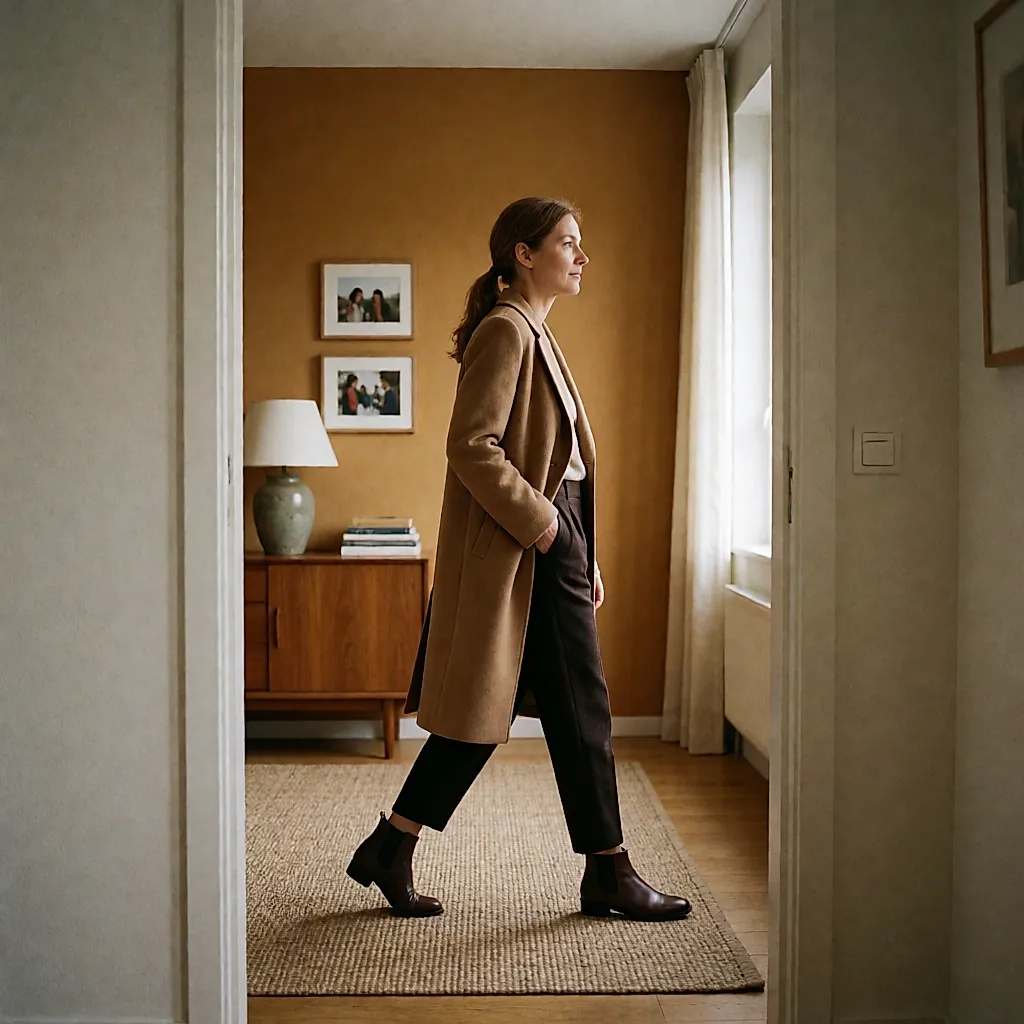
Then there's the question of use. Tapered denim is for the weekend, the cinema, the local café. Cool wool or heavy cotton is for the office. Fine needlecord sits in between, provided you accept that it will crease a little when you sit down. Nothing dramatic: we're talking about a pair of trousers, not a suit of armour.
What to budget
Expect to pay roughly £35–£80 on the high street for a cotton-blend pair, and £90–£220 at a label known for well-cut wardrobe staples if you want cool wool or heavy cotton that will last several winters. Secondhand, in charity shops or on resale platforms, genuine finds exist at £15–£45 — check flat measurements, the inside leg and the condition of the seams.
And don't forget alterations: having a hem taken up often costs £10–£25 at a local tailor, and it's the change that turns an ordinary pair of trousers into a pair that works. Before you reach for your card, have a look in your wardrobe: the tapered trousers you no longer dare to wear may simply be too long. It's remarkable what two centimetres can do.
Three try-ons before you pay. With your shoes on — never barefoot on the fitting-room floor. Sit down with your legs crossed to see whether the knee pulls. And stand near the window: daylight reveals sheerness and creases that shop lighting hides very well.
The next time you take a pair of tapered trousers out of the wardrobe, start at the bottom: a fine shoe, a clean hem, and the leg will do the rest. Tapered trousers don't need to squeeze you to fit — they just need to be cut in the right place. And no label will do that for you.

Comments
Your opinion matters: rate the article, react and reply to comments.
Comments are moderated; AI-assisted comments are flagged. Text emoticons (8-), :-), <3…) are automatically shown as images.