
There's a very precise moment when you know a pair is finished. It isn't when the leather creases at the flex point, nor when the lining waves the white flag. It's that November evening when the sole peels away with a smile, on a wet pavement, three streets from home. So what if, this time, you only replaced the sole?
It all comes down to what's underfoot
On a trainer, the construction decides everything that follows. A glued sole — the case for the vast majority of what's sold — and replacement becomes a high-wire act: no stitching to unpick, a lot of glue and heat, an uncertain result. A sole stitched to the upper, or sometimes screwed, and the shoe can be taken apart and put back together in the workshop. That single gesture — resoling — is what separates a three-season trainer from one you keep.
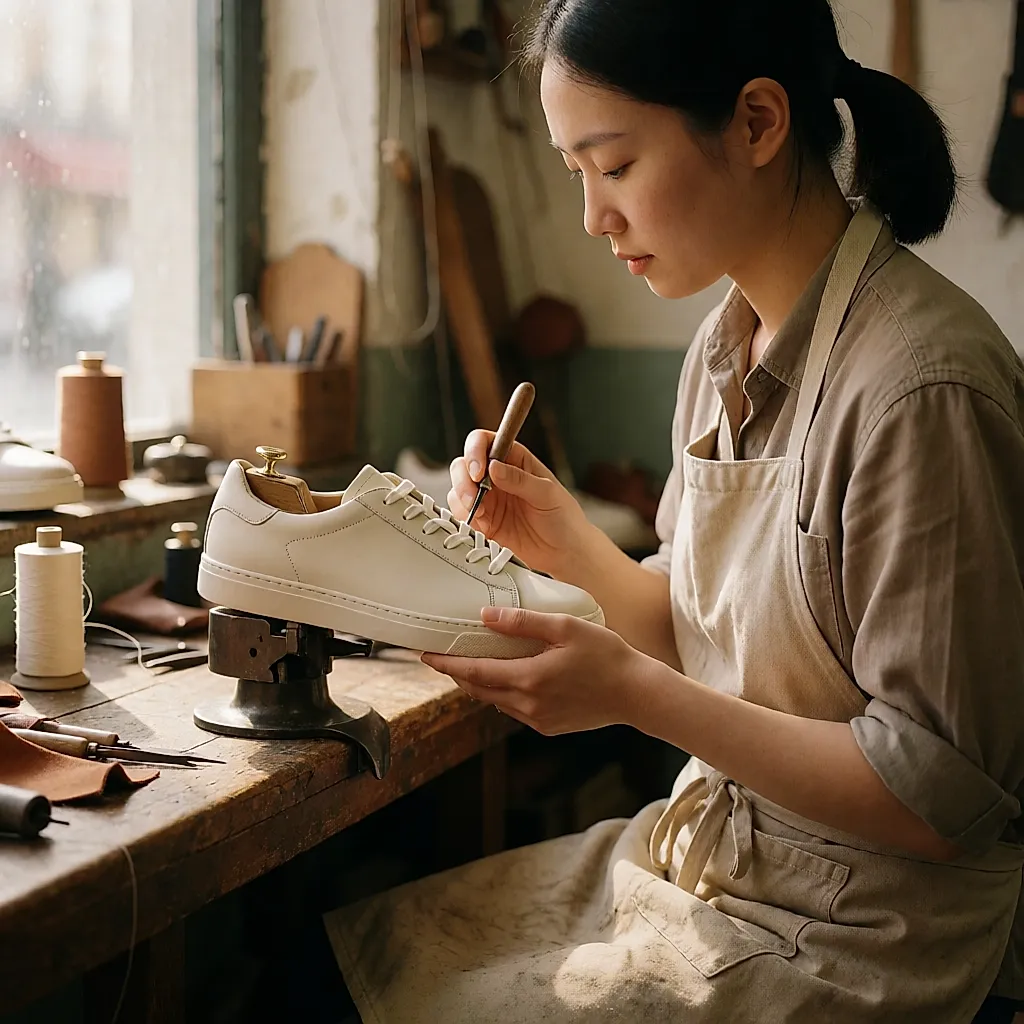
That said, the skill isn't in every pair of hands. Not every cobbler resoles trainers; some pass the pair on to a specialist workshop. A quick phone call before you rely on one will save you a wasted trip — and you'll know straight away whether your model sits on the right side of the line.
What to check before you commit
A second point, often overlooked: the replacement sole. A shoe sold as resolable, for which nobody supplies the sole, is an empty promise. Ask whether the brand sells the spare part, or whether the workshop can adapt one. Without that, the upper may be gorgeous, but the pair will end up at the back of the wardrobe.
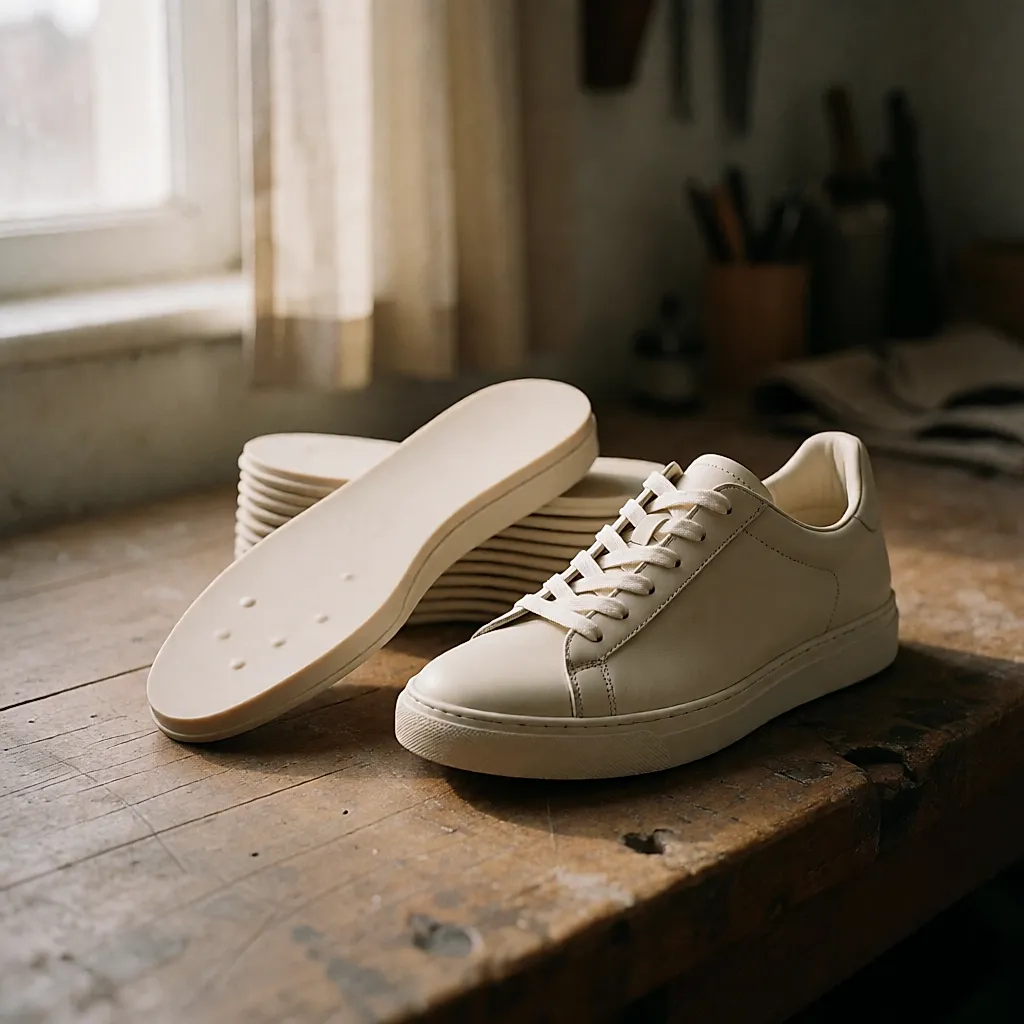
Then there's the material. Look for a full-grain leather upper — the top layer of the hide, the part that takes on a patina rather than flaking away. A leather or natural textile lining lets the foot breathe; as for synthetic fibres, a quick look at the label is enough to check the share stated.
A final detail, and not the least: the shape. A slim sole, sitting slightly proud of the upper, is simpler to replace than one sculpted into complicated lines. Simplicity pays here as it does elsewhere — and it's rarely the one that catches your eye in the shop window.
Three questions before you reach the till. Is the sole stitched or screwed, and not simply glued? Does the brand supply the replacement sole? Is the upper full-grain leather, lined in leather or cotton? Three clear answers, and you'll know whether the pair deserves its place in your wardrobe.
The pair that lives: rotation, cream, timing
A leather trainer doesn't like back-to-back days. Rotating two pairs — one on your feet, one at rest — gives each time to dry out between outings, and it's probably the single most rewarding thing you can do for a wardrobe. A wooden shoe tree slipped in at night, a nourishing cream in wet weather, and the leather keeps its shape instead of collapsing.

As for resoling, the right moment comes before the emergency: when the sole is wearing but the upper is still sound, the lining holds and the stitching hasn't given way. Wait until the sole is holed and you risk damp working its way into the upper — and then there's nothing left to repair. A pair that has lived shows in its patina, never in its holes.
How long, exactly?
In practice, you count in resoles rather than in months. A well-cared-for full-grain leather upper, resoled when it needs it, will happily take several years of pavement. The real factor isn't the logo on the tongue: it's how regularly you look after them and whether replacement soles are available. By contrast, a glued synthetic upper, however much it costs, doesn't get that kind of career.

Budget
To buy, expect to pay in the region of £90 to £180 for a stitched or screwed model with a full-grain leather upper — the range climbs with the tannage, European manufacturing and the work that goes into the sole. Resoling usually sits between £40 and £65 at a cobbler's, more if the workshop also reworks the stitching or the lining. Prices vary with the city, the type of workshop and the complexity of the construction.
Where to look? Independent cobblers first: some resole on the premises, others work with a specialist centre. When it comes to brands, the quiet makers — small runs, direct sales, vegetable-tanned leather — are often your best allies, provided you check that replacement soles are available before you fall in love. And on the second-hand market, a quality pair at a low price that you have resoled before wearing remains one of the smartest calculations in the wardrobe.
Then there's the deeper shift, the one that makes you want to believe: repair rather than replace. A pair you keep is a pair you don't buy again — and, while we're at it, leather that takes your shape rather than a stranger's. Next time your sole winks at you on a wet pavement, you'll know how to answer.



Comments
Your opinion matters: rate the article, react and reply to comments.
Comments are moderated; AI-assisted comments are flagged. Text emoticons (8-), :-), <3…) are automatically shown as images.