
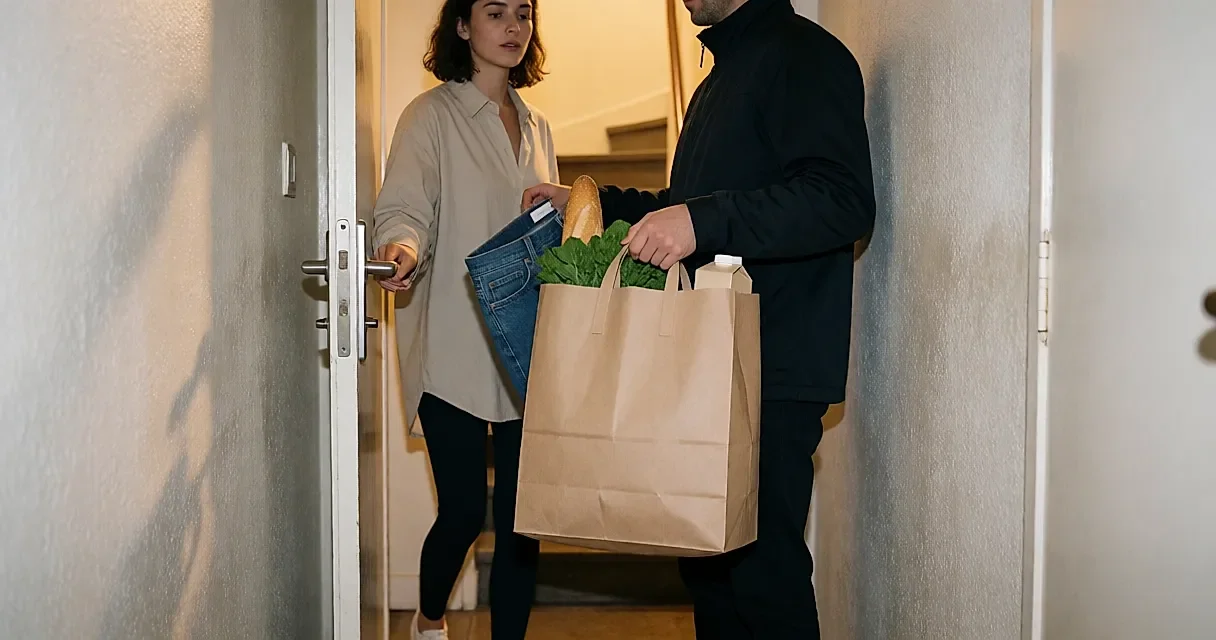
A pair of jeans folded in four, wedged between a bag of carrots and two plain yoghurts: the scene has stopped being absurd. Some apps that bring us dinner have opened a clothing aisle in the same breath, and clothes slip into the basket before we quite notice we have said yes. We confirm a pair of socks along with the pint of milk, and the person advising us is no longer a person at all.
The grocery bag has a new aisle
What has shifted isn't so much the offer as the setting. Buying a garment used to mean going somewhere: slightly unforgiving lighting, a full-length mirror, the fabric you rubbed between two fingers to work out whether it would last the winter. Now all of that fits into a square thumbnail, a size chart and three photos of the back. The convenience is real enough, it has to be said: the parcel turns up with the evening shop, when you're already at home, and Saturday afternoon's reluctance to trek into town no longer wins the day.
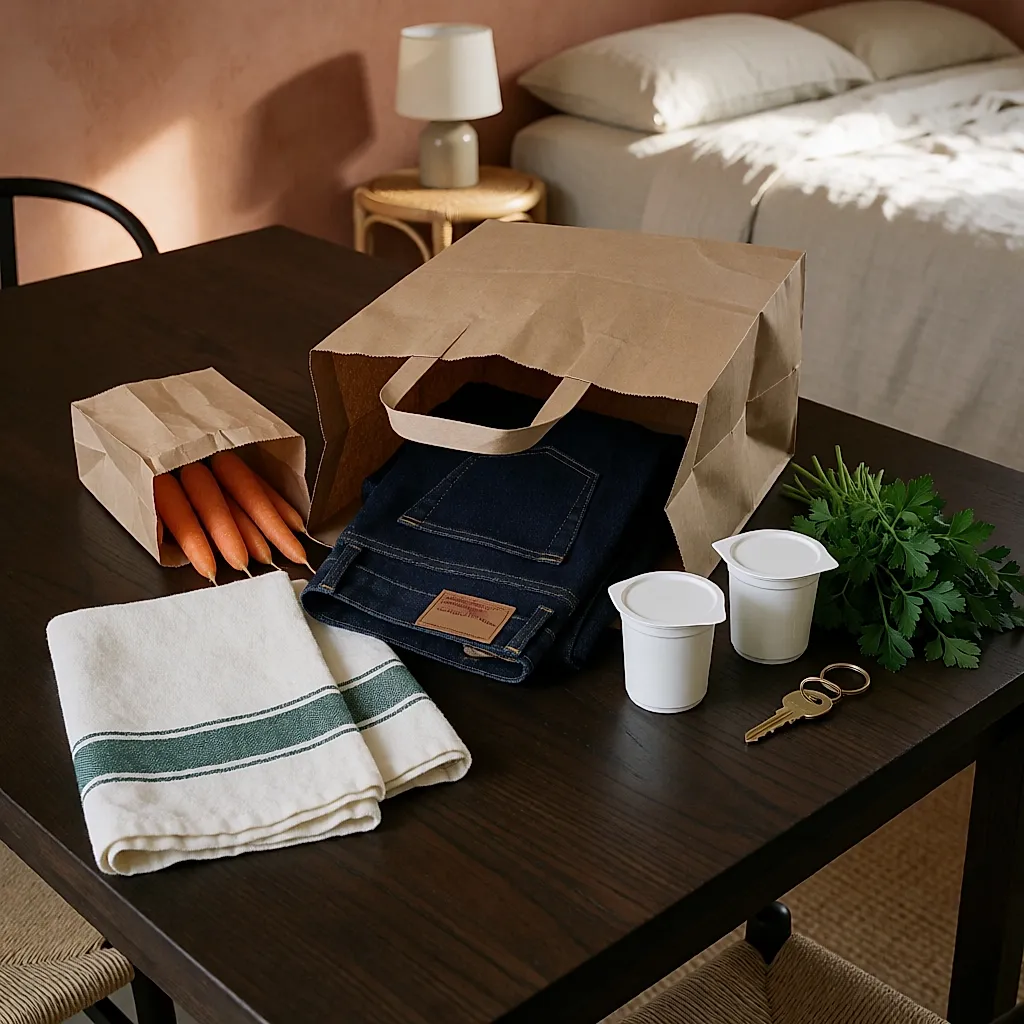
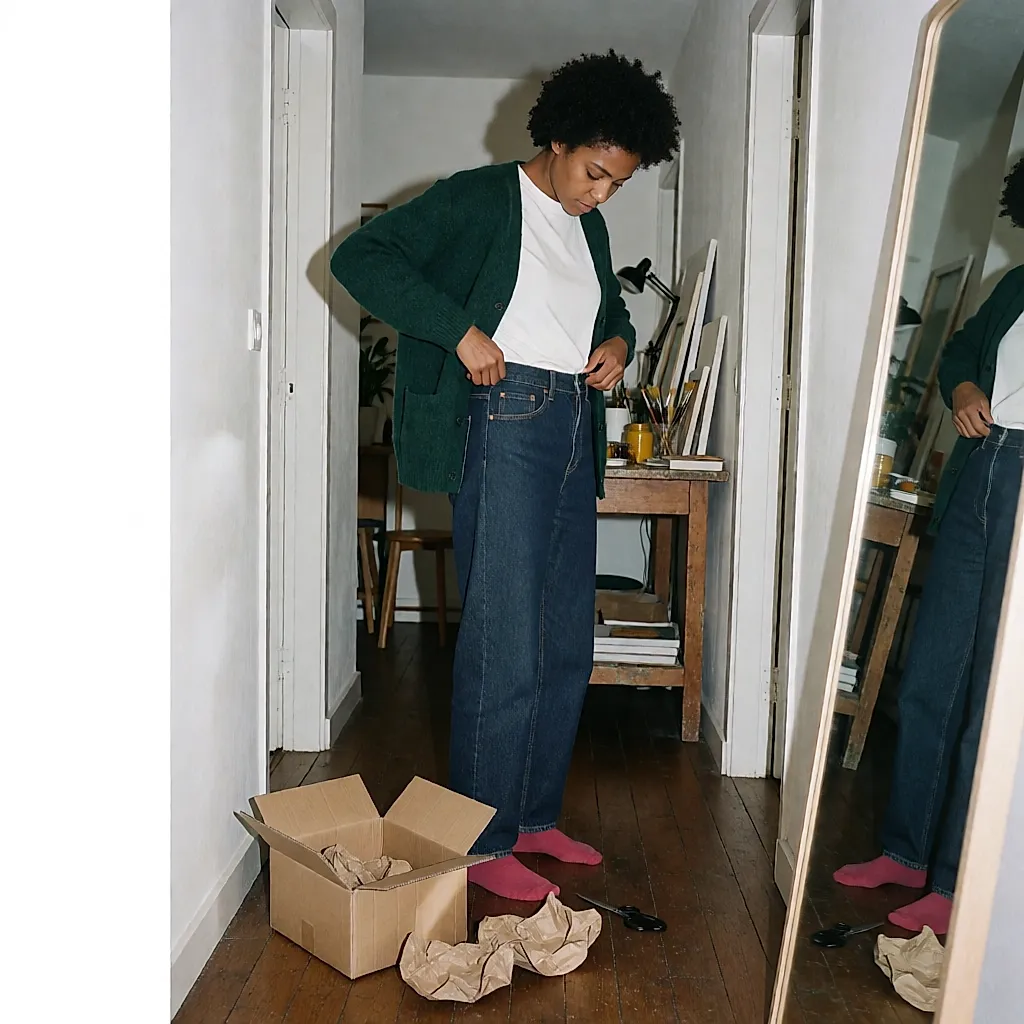
Except that a thumbnail is no substitute for shop lighting. A cotton that holds its shape and a jersey that will quickly lose its shape often look identical on screen. So you order, you try it on in the hallway, and you discover the gap between what you pictured and what the box actually contained. This is the great misunderstanding of delivered fashion: it is very good for restocking the pieces you already know, far less so for anything that needs a proper try-on.
When the algorithm does the advising
An aisle is a journey: you went in for a belt, came out with a scarf, sometimes found nothing at all and went home empty-handed, which also happened. In the app, that randomness disappears. The recommendation engine may well know your saved sizes, your returns, the colours you keep and the ones that go back. So it serves up, with formidable efficiency, yet another version of what you already wear.
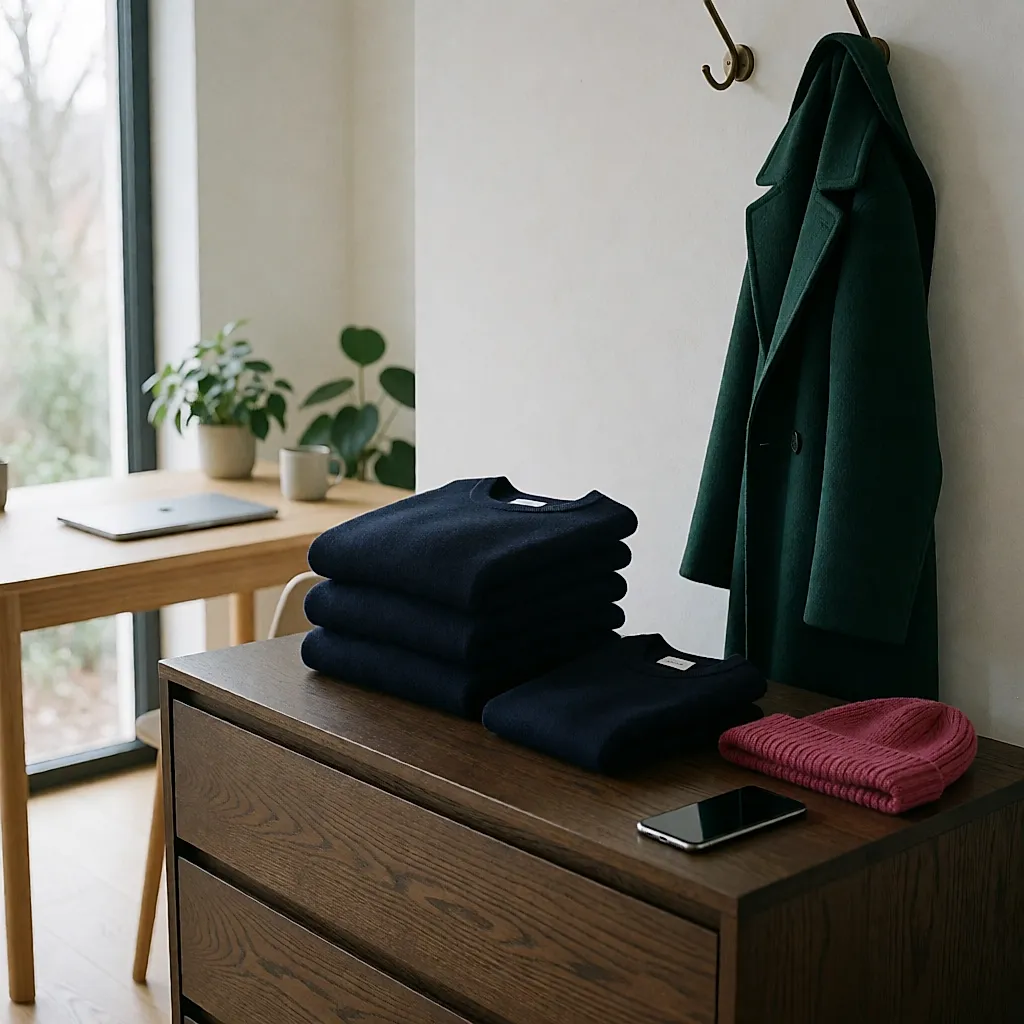
Is that a bad thing? Not always: for a capsule wardrobe, a machine that spots your good basics has its merits. But the recommendation is chasing the click, not the silhouette. It probably won't tell you that this structured blazer won't work with the rest of your wardrobe, or that a third beige trench is a duplicate. And because the basket fills up next to a grocery list, the finish line blurs: where does dinner end and shopping begin?
What it means for your wardrobe
There is a genuine sweet spot here, and it's worth saying so. The pieces that are easy to order without risk — a well-cut organic cotton basic, socks, tights, a layering tee — are genuinely practical to buy this way. The night before a trip, when you discover the only clean trousers are the ones that shrank, that evening delivery feels like a lucky find.
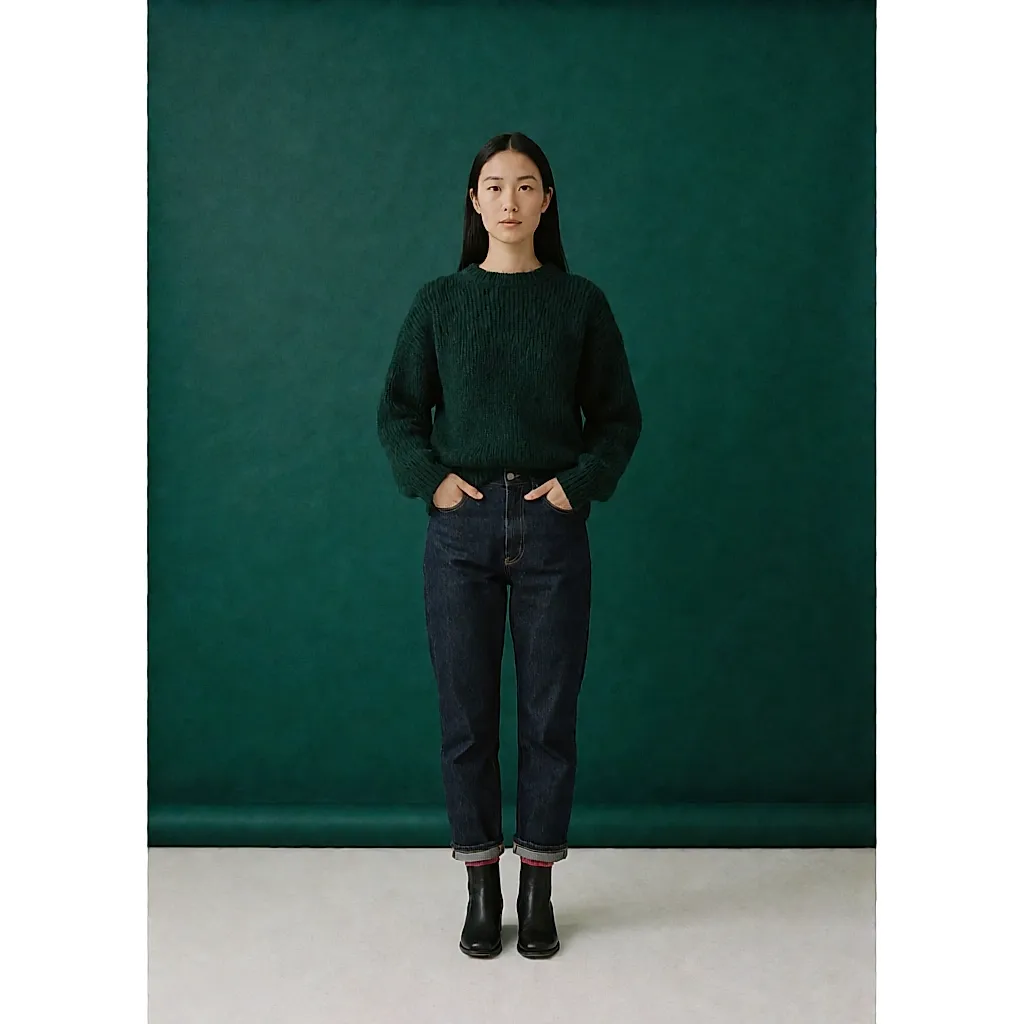
For everything else, tread carefully. Jeans, above all, are less forgiving than we are: a waist measurement, a leg length, a drape that depends on the fabric and the weight of the denim — none of that reads properly on a product page. A statement piece, a jacket with built-up shoulders, a bias-cut dress: these are clothes to try on standing up, not sitting at a screen. If you're torn between two sizes, the second one will probably stay in its packaging — and cost you a return.
Before you check out, three questions: can I name two outfits this piece would work with, and two others that already exist in my wardrobe? Am I buying it because I like it, or because it was two clicks away from the pasta? And is the cost of returning it stated anywhere?
What it costs
On price, fashion slipped into the grocery shop is neither the most expensive nor the easiest on the wallet. Expect to pay somewhere around £40 to £110 for a pair of jeans from a mainstream high-street label, and upwards of £130 from brands working heavier denims or particular finishes. Delivery usually sits between £2 and £5 depending on the subscription and the size of the basket, with service fees sometimes quietly added on top — check the final line, that's where the nasty surprise hides. And returns? Free, or up to about £5 depending on the retailer, which changes the maths. Prices shift between shops, so treat these as a guide rather than a rule.
The real alternative is the same as anywhere: second-hand and charity shops for denim basics, often £15 to £40, with the advantage that you can try them on and feel the fabric. Another option, less glamorous but effective: keep a list on your phone, and only order the piece on the day you genuinely lack it. The grocery basket doesn't need to know you're looking for a blazer.
The bottom line
This merger has an undeniable practical upside and a downside we all know: the easier it is, the less we think. So keep hold of one thing — the try-on. Order dinner without guilt, but give the jeans the time of a proper mirror, and if the drape doesn't convince you, send them back without agonising. Your wardrobe will thank you, and so will your bank balance.


Comments
Your opinion matters: rate the article, react and reply to comments.
Comments are moderated; AI-assisted comments are flagged. Text emoticons (8-), :-), <3…) are automatically shown as images.