

You've just bought a pair of ankle boots in September, at full price, with the quiet pride of someone who has planned ahead. Three weeks later, there they are at the top of the homepage, with a discount banner clearly visible on the image. Same style, same colour, and that little voice in your head: 'I could have waited.' This autumn, the scenario seems to be playing out earlier than usual — and it says a lot about the trade-offs we make.
The calendar seems to have shifted forward
Until recently, the season had an almost reassuring order. Boots appeared in shop windows at the end of August, you bought them at the first October rain, and the real reductions waited for the January sales. This year's autumn offers seem to arrive earlier than usual, sometimes before you have even got your coat out again. Footwear seems less inclined to wait for its own season before going on sale.

One possible explanation comes down to one word: waiting. When some shoppers no longer rush to buy new styles at full price, it can make more sense to interest them straight away than to hold stock until the January sales. Add an often mild autumn that delays boot weather, a Black Friday firmly established at the end of November and January sales that arrive after the battle, and the window seems to have shifted forward. This is probably not a quirk of the calendar, but a possible response to our habits.
What it says about us
Price is no longer a detail you discover at the till; it is part of the decision from the first try-on. We no longer compare just two pairs; we compare two lifespans. The measure that matters is cost per wear: how many times will you actually wear them? A pair worn two days out of three is a different proposition from one saved for a wedding and then forgotten. Many of us do that calculation in our heads, in front of the shop mirror.
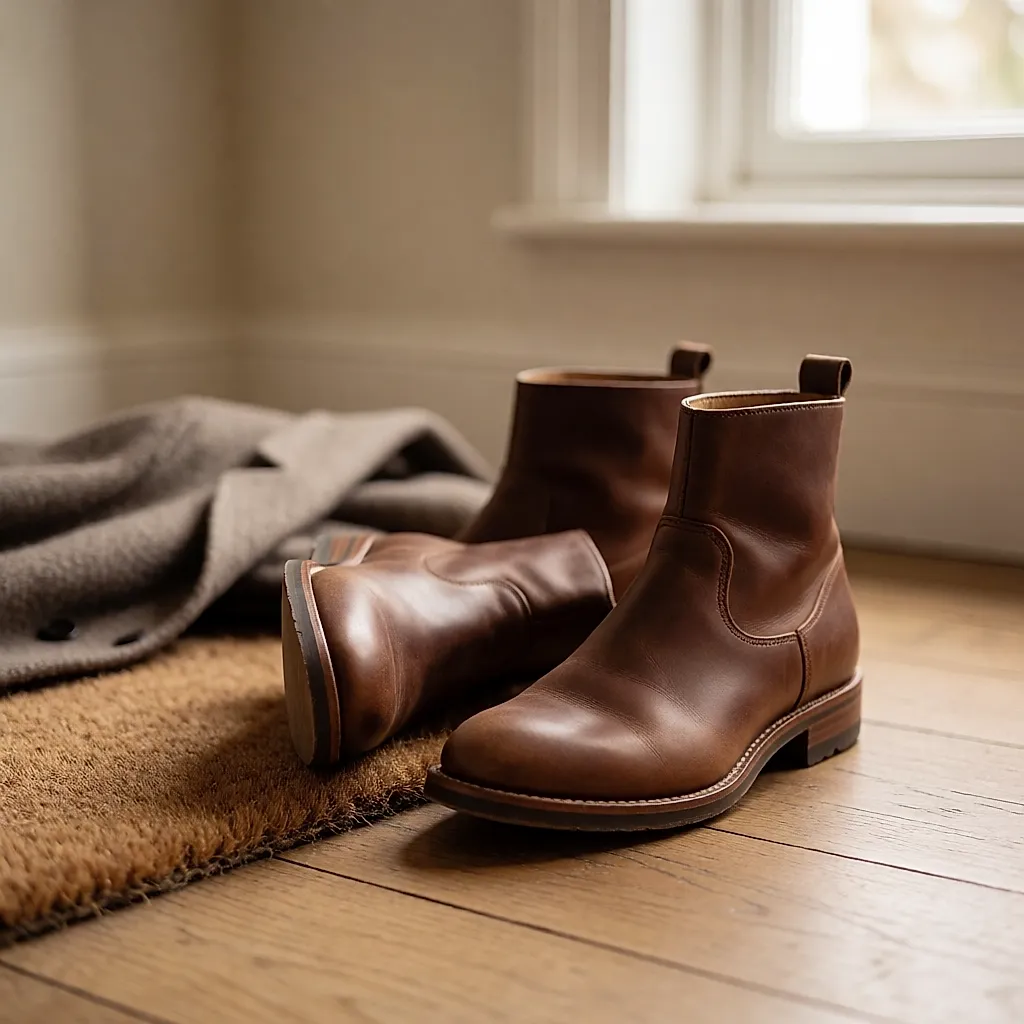
That is no bad thing. Shoes are one of the few pieces in our wardrobe that can be repaired, resoled and kept. Buying less but wearing until they wear out isn't deprivation: it's common sense, elegantly done. There remains the half-price pair that pinches after two hours and ends up at the back of the wardrobe like a polished regret.
Read the label before you fall for the discount
A discount doesn't change a material. When prices are crossed out, that is exactly the moment to read the label word for word: full-grain leather is not the same story as a leather upper with textile lining and synthetic sole after two winters. One useful warning, while we are here: check the proportion of synthetic materials, even when the word 'leather' is writ large in the window.
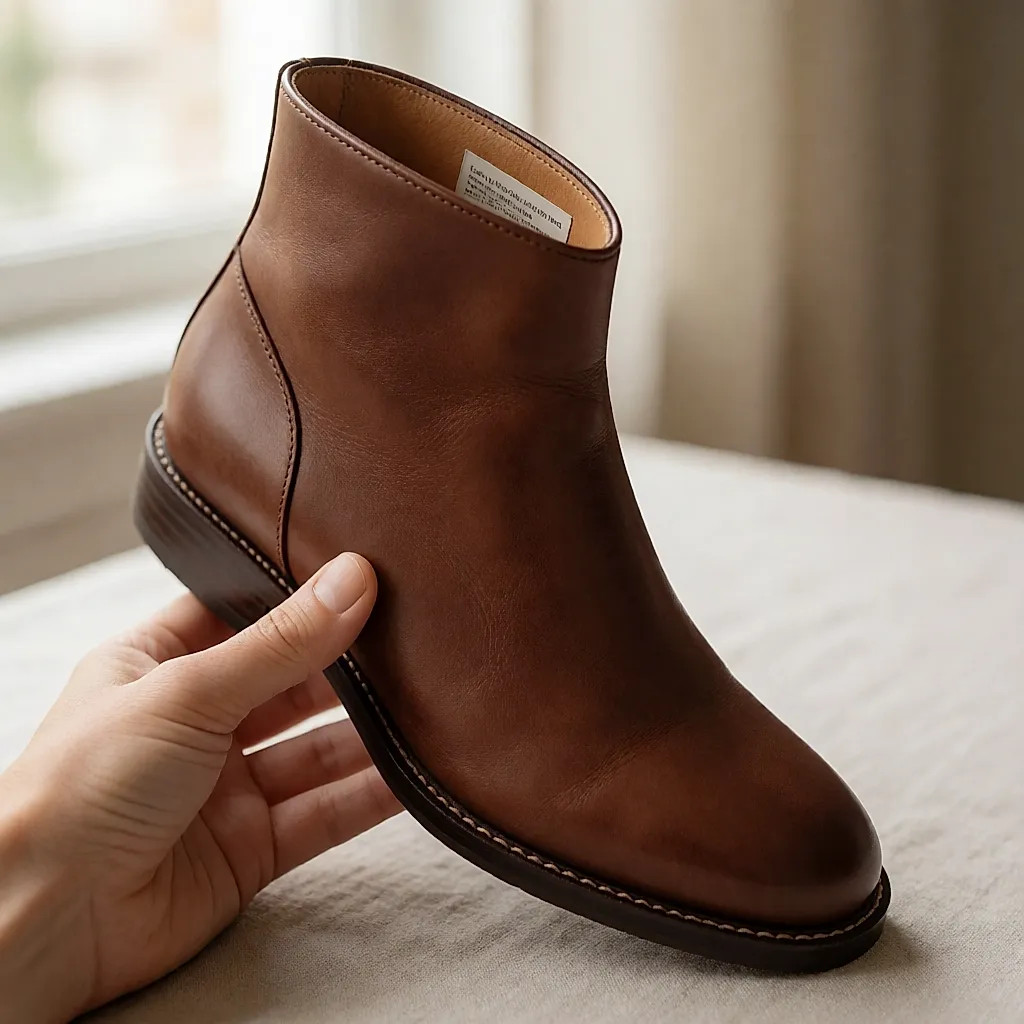
Construction matters too. A stitched sole can be resoled without drama by a cobbler; a glued sole may, depending on the quality of the bond and exposure to damp, be more prone to coming unstuck. The heel, the arch and the suppleness of the upper matter more than the discount on the price tag. And a slim-heeled court shoe, charming for an evening out, won't do well on a Saturday morning of errands: that is not about price, it is about use.
Timing matters when you try shoes on. Test them at the end of the day, standing, on a hard floor, and always try both feet: pairs of feet are rarely identical. An ankle boot that slips at the heel is unlikely to be fixed with an insole. And favour a style with a replaceable heel and sole — that is often what separates a pair that lasts three winters from one that lasts three months.

Budget
The price bands are still fairly easy to read. As a rough guide, expect around £45–£110 at general high-street retailers, often with a leather upper and simple construction. Between £110 and £220, you enter brands that take more care over the leather, lining and construction. Above that, you are also paying for European manufacturing and repairability — rarely for the discount, incidentally: these houses seldom discount, but their pairs go to the cobbler several times.
Maintenance costs little: around £15–£30 for a heel, £35–£70 for a resole depending on the sole and the city. Second-hand changes the equation completely: a leather pair worn for one season often sells well below the new price, provided you try it on first and check for wear inside. And if you are hunting a bargain, note that extreme sizes often go first — in both directions.
The right time is the one that works for you
There is no absolute rule. If you need a pair today, it is comfortable from the first try-on and you can see yourself wearing it three times a week until March, then buying at full price is not a mistake. If you can wait, the ladder is well known: autumn offers now, Black Friday at the end of November, the January sales. Each step down brings a lower price, and each step also nibbles away at the choice of sizes.
What this earlier calendar really teaches us is to count differently. The pair that carries you from November to March is worth more than three pairs stored away that never see February. The best bargain isn't the one that costs least on the day you buy it — it's the one you don't regret. Happy hunting.



Comments
Your opinion matters: rate the article, react and reply to comments.
Comments are moderated; AI-assisted comments are flagged. Text emoticons (8-), :-), <3…) are automatically shown as images.