

A wide head isn't a fault. It's a misunderstanding. On a shin it covers ground without complaint; on a knee it floats. And because the spec sheet lists millimetres of width, never curves, we often choose on the one number that says nothing about the area we actually wanted to treat.
What a wide head promises, and where it falls short
A wide head means fewer passes to cover the same area: on a thigh or a shin, the time saving is real — and nobody's going to complain about that on a rushed Monday morning. That isn't the problem.
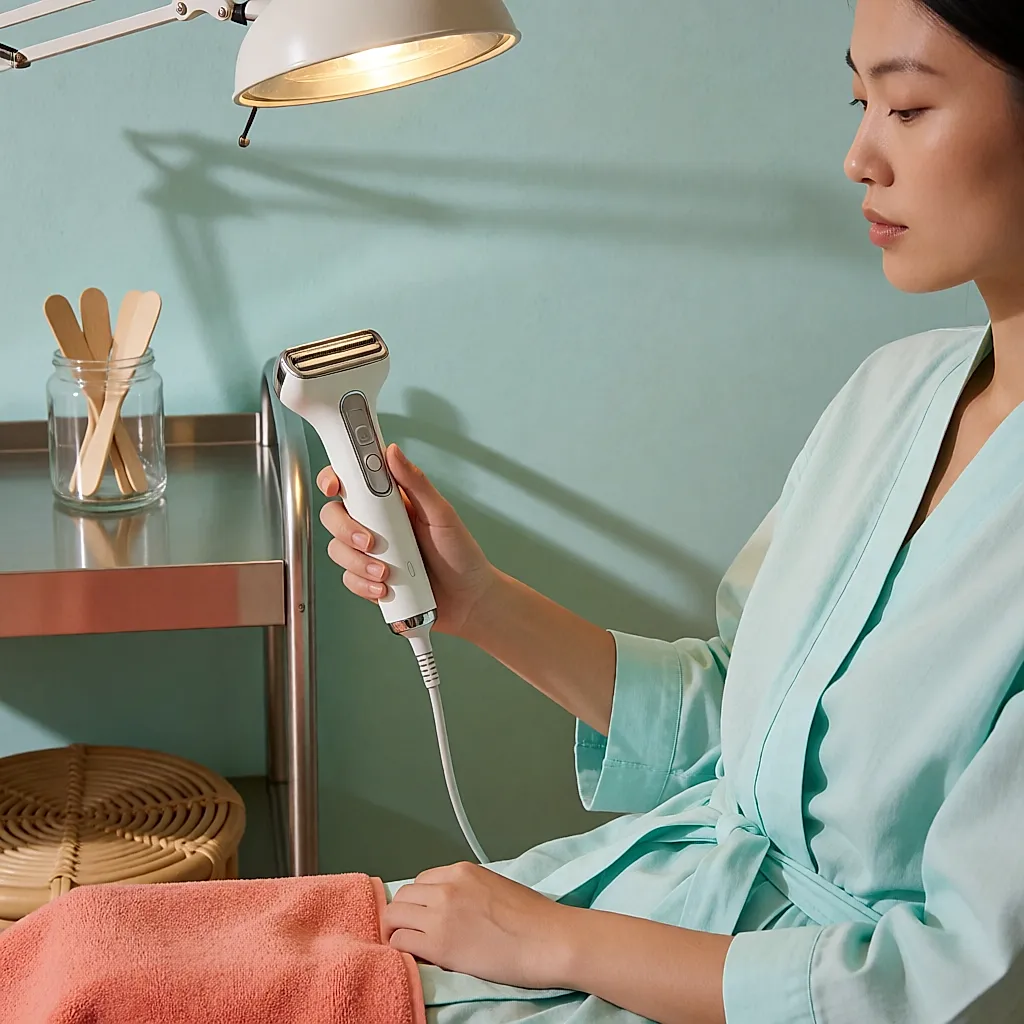
The problem is contact. To catch a hair, the head has to sit flat against the skin. On a curved area, only the middle of the head presses down; the edges lift away from the skin, quite literally. You go over the same spot again and again, and there are often still a few hairs left at the base of the knee: the ones you discover while pulling on jeans, obviously.
Some models have a pivoting or flexible head, and that genuinely helps around the bends. It doesn't turn a wide head into a precision tool for the hollow behind the knee, though.
Legs: the main event, with a few awkward bends
If 90% of your hair removal happens on your legs, a wide head is a good deal. Shin and thigh are flat, taut and easy: it moves quickly and saves time on flat surfaces. That's exactly what it was designed for.
Except a leg isn't a plank. Knee, ankle, back of the knee: three areas where the big head becomes clumsy. You end up making little circles with a device built for straight lines, and the time you saved on your thigh gets spent again at your ankle. Not a disaster — but worth knowing before you pay for centimetres that won't help where it counts.
Face and bikini line: a different game entirely
On the upper lip or chin, a wide head is close to heresy: you can no longer see what you're doing, and the skin there is thin. This is where a narrow head wins, no debate. Models that include one alongside the wide head aren't exactly plentiful, but they're the ones to look at if your face is among the areas you want to treat.
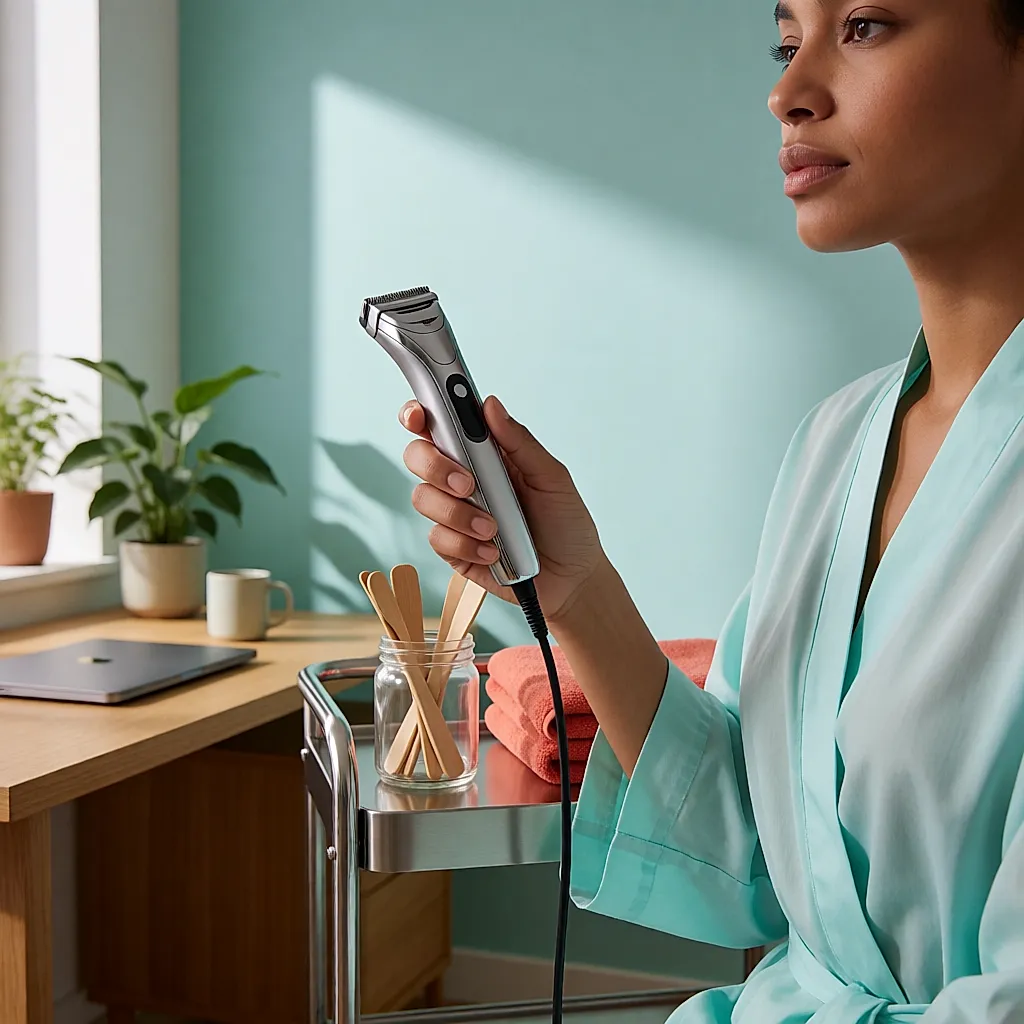
The bikini line is another matter. Tiny surface area, sensitive skin, and a tolerance for plucking that varies enormously from one person to the next. No product page will tell you whether your skin can handle it; it will tell you whether the device takes a precision head. On that terrain, that's the deciding factor, not the wattage on the box.
The technique that matters more than the head
Here's what nobody puts on the packaging: stretch the skin with your free hand, just ahead of the head. Taut skin gives the blade a flat surface to work with — the knee almost becomes a thigh. It's the move that does the heavy lifting, and it costs nothing.
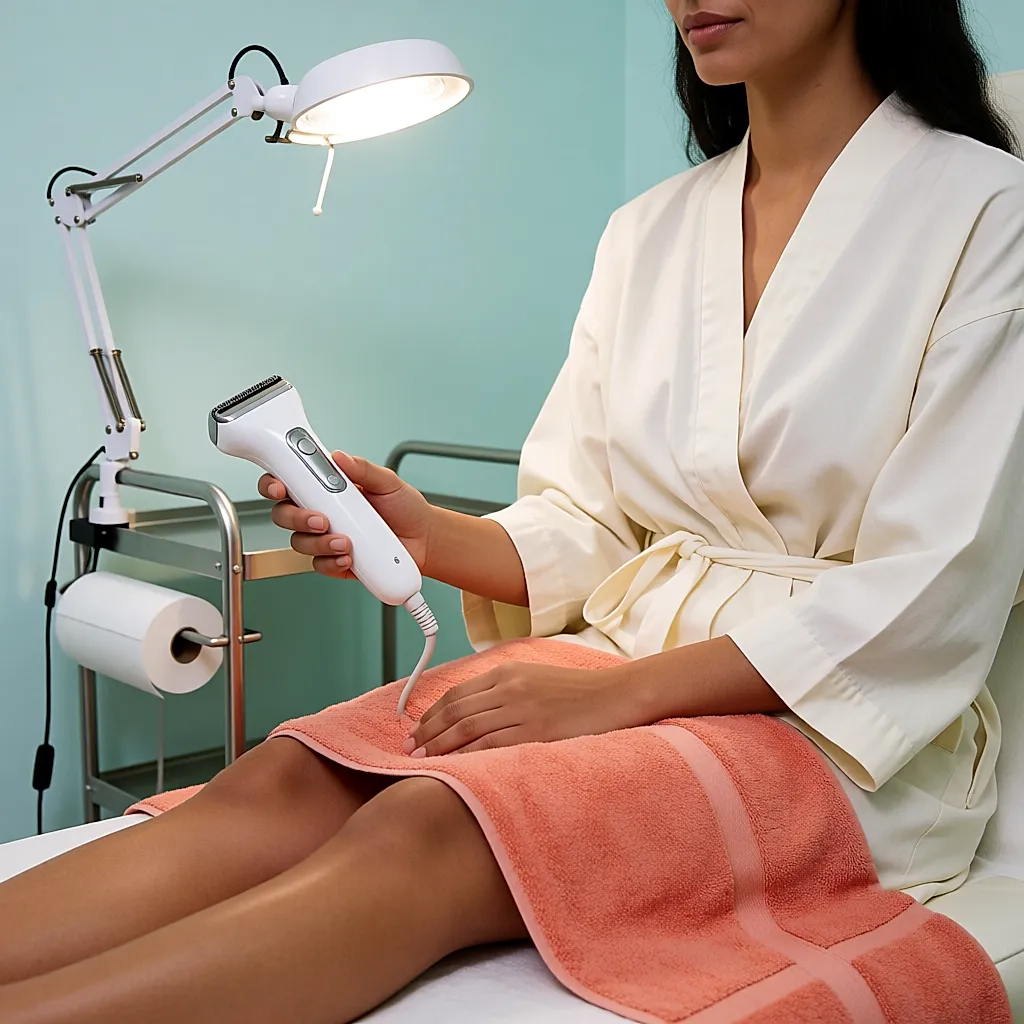
Then go slowly. A wide head tempts you to sweep quickly, which is precisely how to make it skid. Slow down, use short passes, overlap slightly: you'll see the difference on the stubborn patches. And no, it doesn't become painless — it's still epilation.
Budget
Then there's the awkward question: how much? Expect to pay in the region of £30–£55 for a basic single-head device, and £70–£160 for a model with several heads, including a narrow one. Beyond that, you're often paying for lights, cordless operation or finish — not necessarily versatility.
The real cost, the one people forget, is replacement heads: often £20–£35, to be replaced as the blades wear out. Check availability and price before you buy the device, not after. You'll find these models in supermarkets, electrical retailers and online; replacement heads less often on the high street, more often on the brand's website. A device with a replaceable head that lasts a few years remains the most economical choice over time.
The knee test, in store. Pick up the device and imagine it following the curve of your kneecap: is the head narrow enough for that, or does it pivot? Then check whether a precision head exists for that model, and what it costs. Two minutes of checking beats another gadget consigned to the back of a drawer.
The bottom line
To put it plainly: if your legs are the only thing you're tackling, a wide head does the job and will save you time on flat surfaces. If your face or bikini line are in the mix, the small head decides — and your budget should follow that choice, not the other way round.
And if you're still unsure, start with the technique: stretch the skin, slow down. There's a good chance your current device, even an imperfect one, will surprise you. We can always argue about millimetres later.

Comments
Your opinion matters: rate the article, react and reply to comments.
Comments are moderated; AI-assisted comments are flagged. Text emoticons (8-), :-), <3…) are automatically shown as images.