
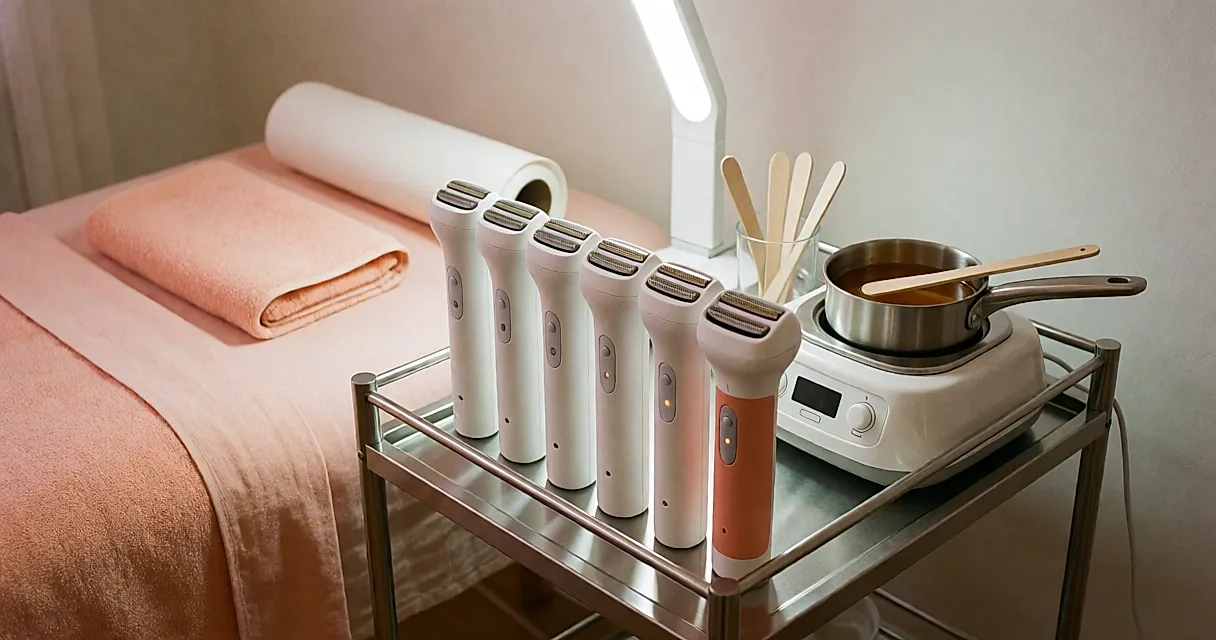
The freedom of a cordless epilator comes down to the battery pack in the handle. Everything else – the tweezer discs, the head, the finished result – depends on how much charge is left when you start your second leg. Plugged in, the question does not arise. Cordless, it shapes how comfortable the whole session feels.
Two speeds on the box, one in real use
The spec sheet often says '1 speed' or '2 speeds'. That tells you only how many settings there are. It says nothing about how well those settings hold up over time.
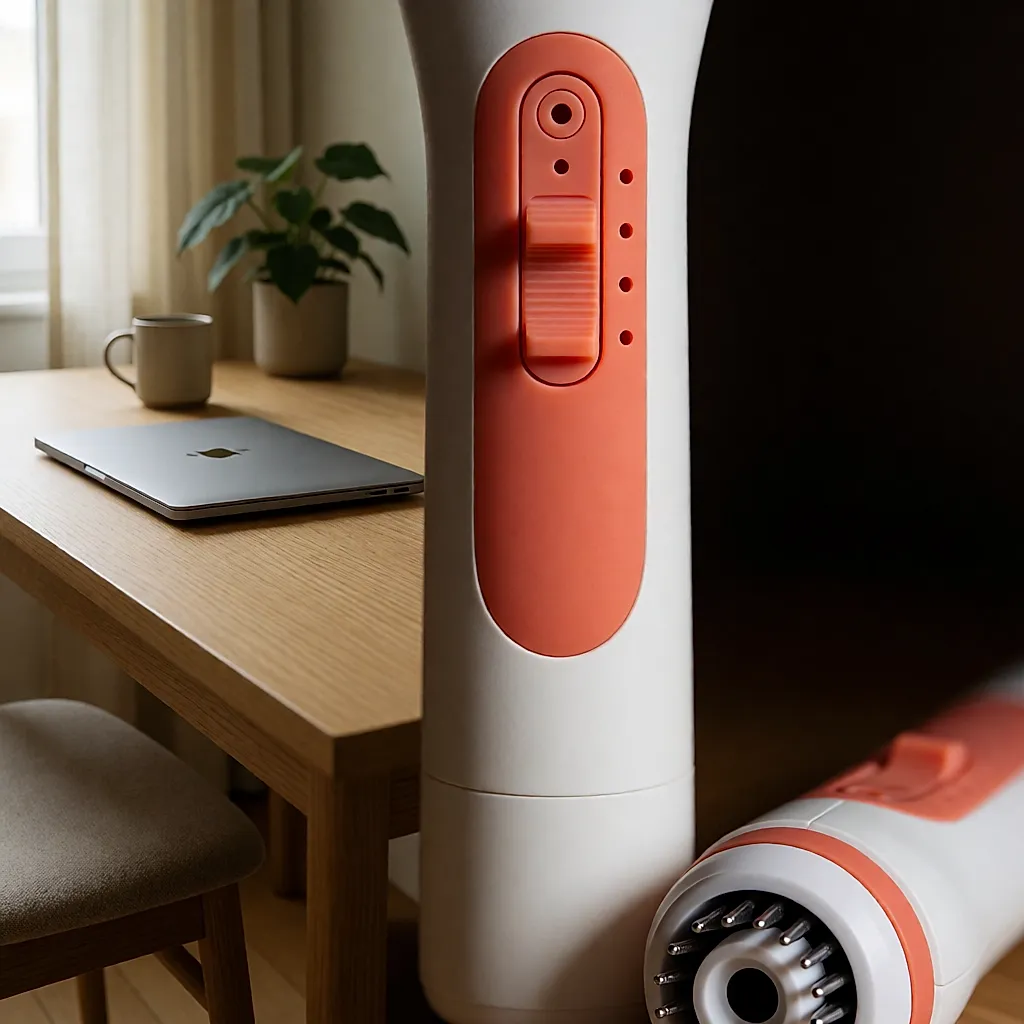
What makes the difference is electronic speed regulation. On a model without it, battery voltage drops as the charge runs down, and the motor slows with it: the tweezers close less firmly, epilation becomes stop-start, and you go over the same strip of skin three times. On a regulated model, the electronics compensate and keep the pace steady. Some manufacturers state it plainly – 'constant speed' on the box or in the instructions. That is the only claim that really answers the question, and you can check it in three lines, not in a slogan.
Let's be clear: I haven't timed every model on the market, and not every brand publishes this information. The criterion itself does not change. Look for a mention of maintained speed, not the number of settings.
The mains lead and its obvious drawback
A corded model has one obvious drawback: the plug. You have to find a socket, sometimes move the mirror, and contend with a cable that wraps around your elbow at exactly the wrong moment. In return, it delivers the same performance from the first second to the last, with no battery to have a say.

Corded models also have the edge on lifespan: no battery to wear out, so the appliance can last for years if you replace the heads as they wear. Check, too, that replacement heads are still available – that is the real indicator of lifespan, and it is better to check before you buy than afterwards.
Some cordless models can run plugged in while charging; others cannot run from the mains at all. The distinction matters: a model that also works on mains power gives you both uses – consistent performance at home and freedom on the move.
Before a full session, charge the night before and start with the largest area while the battery is full: legs first, finishing touches afterwards. If the light turns red halfway down a shin, stop and recharge – persisting with a motor that is fading irritates the skin more than it removes hair.
Narrow head or wide head: size is not the real question
There are places where a wide head is no use at all, and others where it changes everything. Under the arm, on the bikini line, above the lip, the area is small and curved, and a narrow head gets where a large one only rubs. And rubbing is exactly what you want to avoid: you pinch the skin, go over the area again and give up.
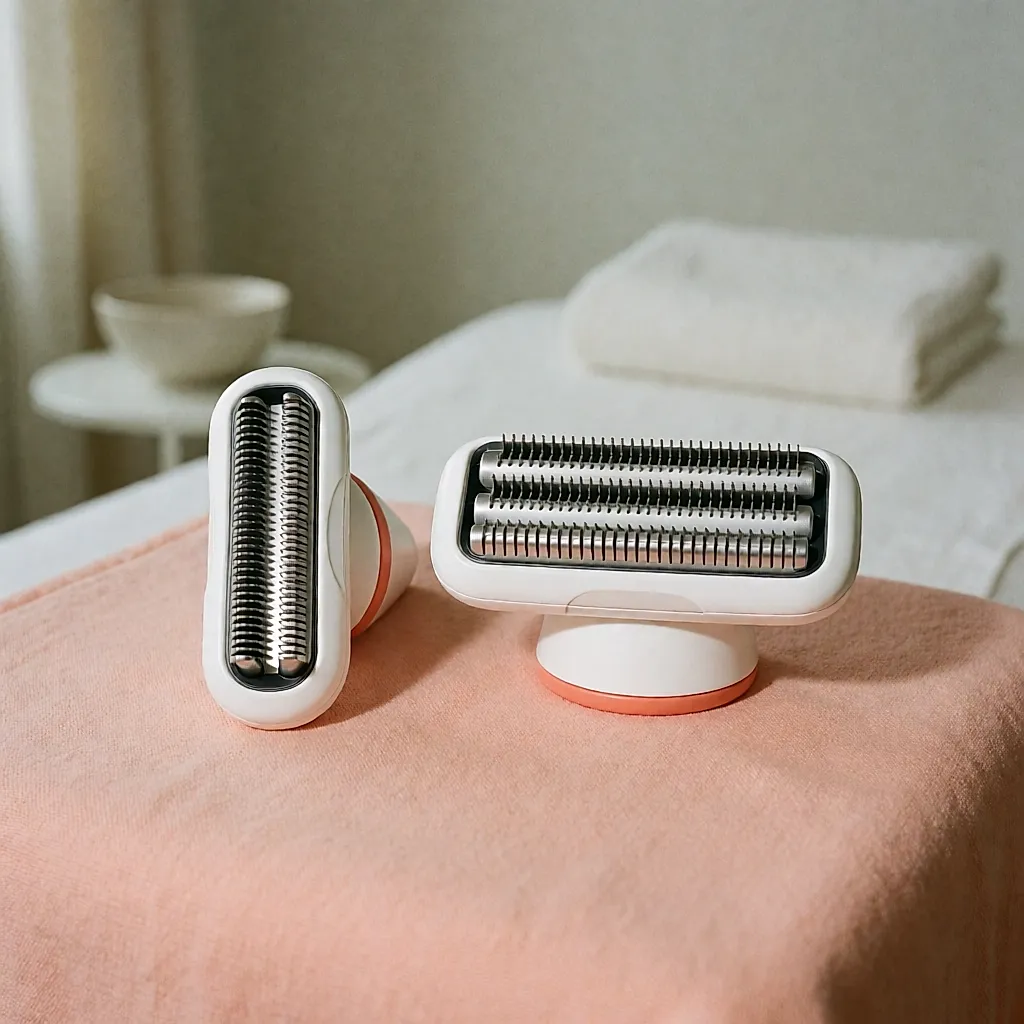
On the legs, the logic reverses. A wide head carries more tweezers, covers more surface per pass, and saves real time on thighs and calves. Then there are the areas where the contours get awkward: kneecap, shin, ankle. There, a wide head makes less contact, and you have to stretch the skin to make up for what the appliance cannot do on its own.
That is why interchangeable heads are useful: wide for legs, narrow for everything else. If a model offers only one, choose it according to the area that takes you the most time – and accept the compromise elsewhere.
Budget
In the UK, expect to pay roughly £20-£45 for a simple, effective corded model, £45-£110 for a decent cordless one, and £130-£180 for well-made wide-head models with regulation. You will find them in supermarkets, beauty retailers, electrical retailers and on retailers' websites; prices move quickly with the season, so compare before you commit.
Remember the hidden cost: replacement heads are bought separately and add up over five years. As for buying second-hand, a used model is worth considering only if the head can be replaced with a new one – otherwise, leave it.
Ultimately, the real question is not 'cordless or corded' but 'does the appliance keep its performance right to the end?' Two minutes with the instructions will tell you whether your future purchase slows down along the way. The only step left is to check before you buy, rather than discover it halfway down your leg.



Comments
Your opinion matters: rate the article, react and reply to comments.
Comments are moderated; AI-assisted comments are flagged. Text emoticons (8-), :-), <3…) are automatically shown as images.