
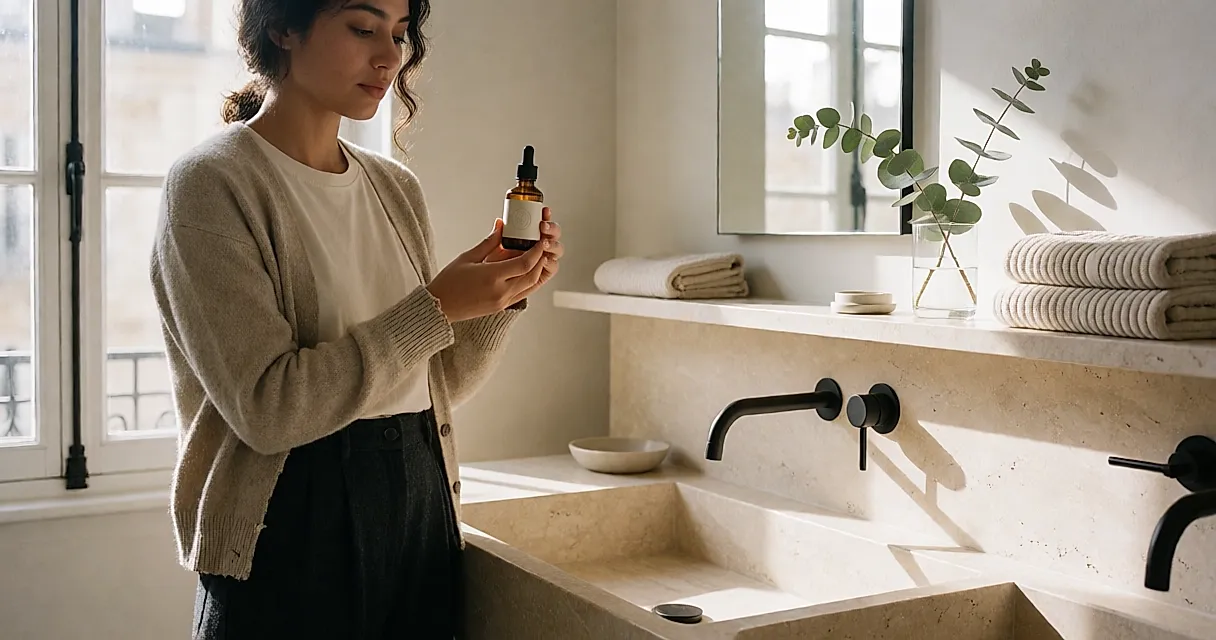
A full-price bottle, parked on the edge of the bath a couple of centimetres from the shower jet, because that's obviously where it belonged. A few weeks later it smells wrong and you don't dare open it. A drawer would have done.
Steam, the housemate who never knocks
Nobody has ever stuck a warning label on a shower head, and yet. A formula is built to hold up under ordinary conditions; hot steam, temperature swings and direct sunlight are not part of the brief. The edge of the bath stacks all three: the spray that lands, the condensation that settles in, the radiator pumping out heat thirty centimetres away from November onwards.
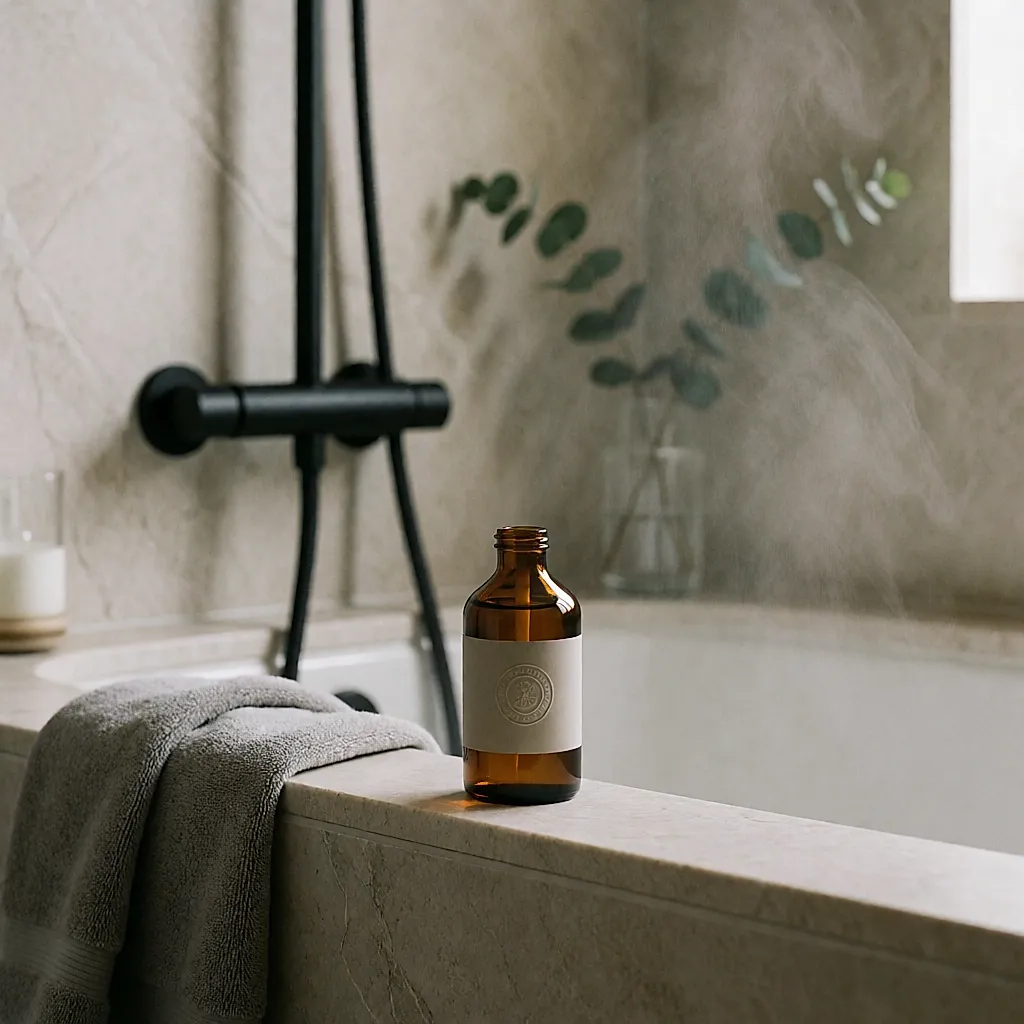
The result is that you get through a serum far quicker than you would have in a closed drawer — not because it's a bad product, but because it's badly housed. Silly question: how many bottles have you binned in the last two years, sighing "I really liked that one"? More often than not it's the storage, not the formula, that signed it off.
What can move, and what has to stay put
Nobody is suggesting you strip your bathroom back to showroom levels. Some products need water within reach: the evening cleanser, the morning product, the makeup remover. Those stay. Everything else — serums, oils, masks, perfume, anything you open once or twice a week — can move to a bedroom drawer, a closed box or a shelf out of the sun without any harm.
Perfume is the textbook case: usually the loveliest thing you own, and the most roughly treated, sitting in full sun on a chest of drawers. A bottle kept upright, cap screwed on, somewhere cool and dark will come through the seasons looking far better. And a bedroom drawer forces a sort-out: anything you haven't reached for in three months probably doesn't need to be in there.
The bin-it-or-keep-it test
When a bottle has been hanging around, the temptation is to replace it "just to be safe". That's usually a false economy — and a real hit to your budget. Before you write it off, look, smell, feel: a texture that's separating, a smell turning rancid, a colour that has clearly shifted, a product that stings where it never used to. One of those signals is enough to settle it.
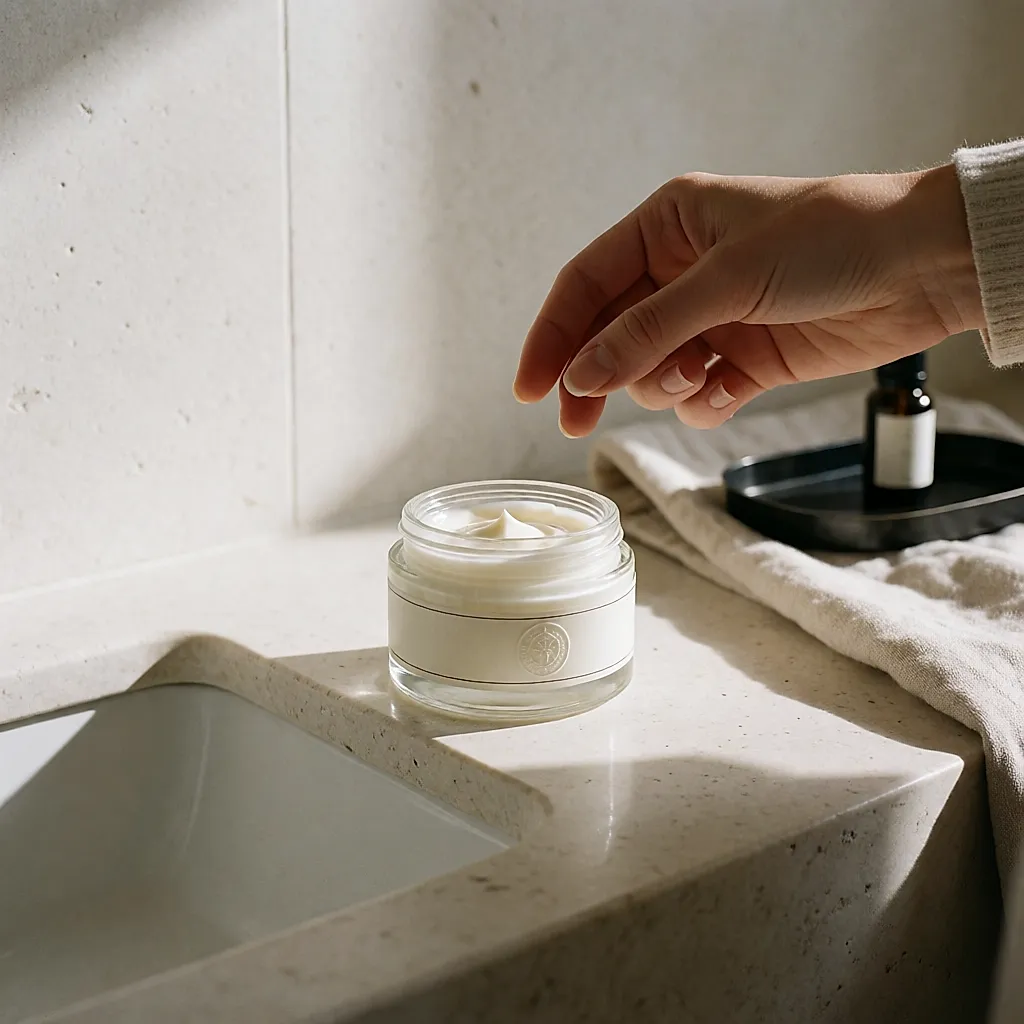
The little open-jar symbol printed on the packaging, with a number inside, gives the manufacturer's period after opening — a guide, not an expiry date in the strict sense. In practice plenty of products last well beyond it when they're stored dry and out of the light, but something opened months ago in a steamy bathroom hasn't had the same chances. I can't give you a reliable number for those margins — every formula lives its own life — so if in doubt, or if your skin is reactive, the safest move is not to push it, and to ask a pharmacist or GP if redness sets in.
The packaging does half the work
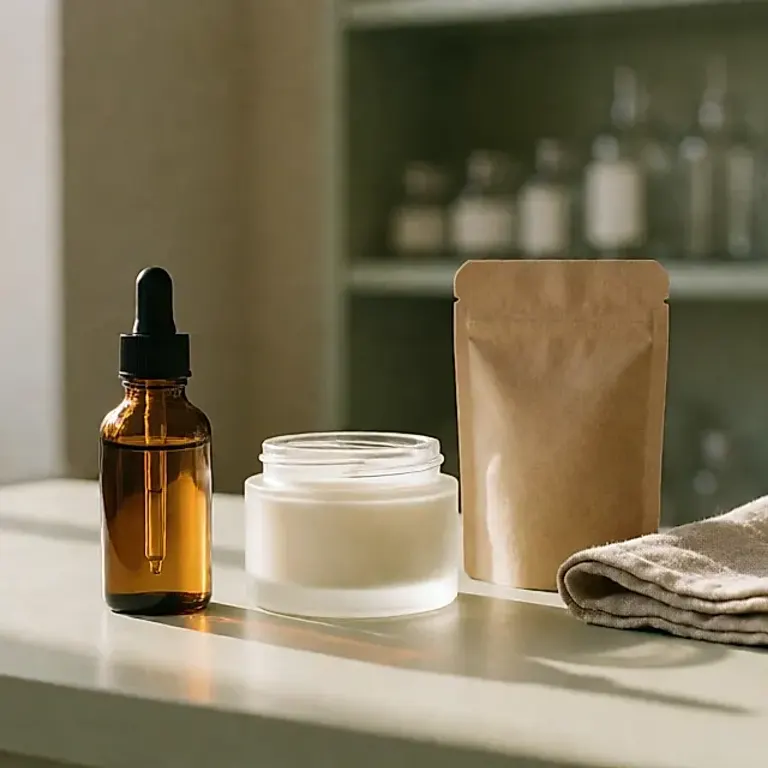
All else being equal, the container counts. Opaque packaging keeps light out, an airless format limits contact with air and fingers, and a refill saves you buying fresh glass and plastic with every bottle. The good habits come down to three things: amber glass, sturdy, refillable — checking that the brand genuinely offers a refill for that specific product, and not just in the family photo on its website.
Watch the compromise, too. Some of the most technical formulas only exist in conventional packaging, and that's absolutely fine. The real move isn't to replace everything at once, it's to keep what you already own going for longer before you buy better.
Budget
Let's be clear from the start: sorting out your storage doesn't have to cost a penny. A clean shoebox, a drawer you've emptied, a basket doing a different job will all do it. If you want something sturdy and good-looking, expect to pay around £5–12 for an airtight glass jar, £8–20 for a drawer organiser, £18–35 for a small bathroom shelf. You'll find them in supermarkets, homeware shops, garden centres or online, with prices shifting depending on size and material.
The five-minute sort. Tip everything out onto a towel. Only the products you use with water, morning and night, stay near the basin. The rest goes somewhere dry. Anything that hasn't moved in a year can be repurposed for feet and hands, or goes in the bin — and you note the name so you don't buy it twice.
A closed drawer, a bottle standing upright, a cap screwed back on: three seconds a day that give you back weeks of product. It isn't glamorous, it doesn't photograph well, but it's probably the best-value bit of preservation in your entire bathroom. And if you take one thing from this Sunday evening, make it this: the bottle on the edge of the bath gets moved now, not next week.


Comments
Your opinion matters: rate the article, react and reply to comments.
Comments are moderated; AI-assisted comments are flagged. Text emoticons (8-), :-), <3…) are automatically shown as images.