

A scrubbing mitt on the little bumps on your arms is a bit like a stiff brush on a window: plenty of effort, the dust shifts around, but none of it comes off. And still we keep at it, convinced the skin will give in eventually. Except these bumps aren't acne, they're not a hygiene problem and they have nothing to do with being dirty. They're blocked pores — and that changes the whole approach.
What's really going on under the skin
On the upper arms, sometimes on the thighs, they form a band of small, tightly packed grains, flesh-coloured or faintly pink. To the touch, the skin feels raspy. The usual name is keratosis pilaris: keratin, the protein that makes up the outer layer of the skin, builds up and blocks the opening of the follicle. Hence the impression of clogged pores — because in a sense that's exactly what they are.

Nothing serious, nothing contagious, and a clear tendency to run in families. It often appears or gets more pronounced in the teenage years, and it has an annoying habit of settling in. One useful caveat: if the area itches, turns properly red or spreads, it's no longer a cosmetics question — show it to your GP, who can diagnose it and refer you on if needed. The rest of the time, it's about routine.
Scrubbing harder doesn't fix it
A grainy scrub starts from a good place: the wish to feel smooth skin under your palm. In practice, the grains polish the surface, but the keratin plug stays lodged in its pore. The result is temporarily softer skin, and sometimes a bit more redness. So why do we keep scrubbing? Because it feels like doing something, and that counts for a lot.
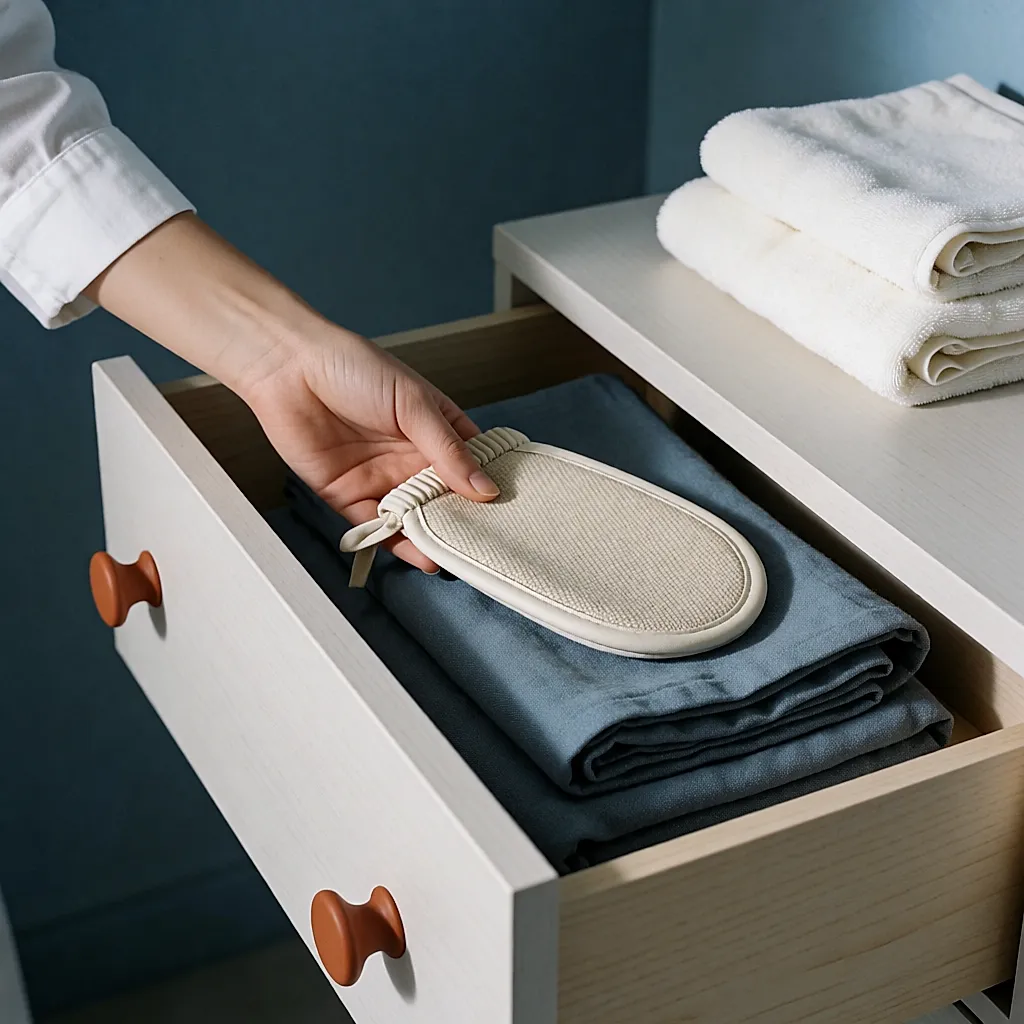
Because skin isn't a saucepan. The more you go at it, the more it answers with irritation, and irritated skin feels tight, itches, and makes you want to scratch it again. That's where the vicious circle starts. Put the scrubbing mitt away without a second thought.
The two ingredients that soften the plug: urea and lactic acid
The idea isn't to wear the plug down but to soften it. That's where two ingredients you'll find in body lotions come in: urea and lactic acid. The thinking goes that they loosen the keratin, which then detaches by itself over repeated applications. No magic wand — think several weeks, and no missed applications.

The method matters as much as the product. Apply to damp skin, straight after a shower, in a thin layer, without rinsing. In practice most people start with two or three times a week and then adjust according to what their skin tolerates. Don't double up with a grainy scrub on the same day: that's sabotage with a smile. Lactic acid can make skin more sensitive to the sun, which makes winter a fairly convenient ally.
Winter is the easy window
Long sleeves, low light, covered skin: from November through March you can treat it without anyone noticing. It's also the season when daily moisturising comes naturally, and that's the best-value step in this whole piece. A moisturising lotion smoothed onto the arms every evening already does half the job, with no active ingredients and no instructions to follow.

Watch out, though, for a scalding shower. Central heating on full and water that's too hot both dry the skin out, and dry skin makes the little bumps more visible. Turn the temperature down a notch, get out sooner, moisturise while your skin is still warm. It won't feel as thrilling as a new bottle, but it's what holds a real week together.
What it costs
None of this needs to cost much. A urea body lotion generally sits somewhere between £6 and £15 in a supermarket or high-street chemist, and a lactic acid treatment between roughly £10 and £30 depending on size and brand — prices move, so it's worth checking before you buy. Expect 200 to 400 ml for regular use: across a season, budget somewhere between £20 and £40.
Two things to look at when you choose. Favour short ingredient lists, and refillable or glass packaging where it exists, and check the labels (Cosmos Organic, Ecocert) if organic certification matters to you — they guarantee the formulation, not the results. In all honesty, cosmetic urea is mostly synthetic; it's not a drama, it's just worth saying. Lactic acid, on the other hand, often comes from plant fermentation (sugar beet, maize): check case by case; it doesn't change the routine, it changes the supply chain.
The three steps to remember
- Warm shower, quick exit, moisturise within the next few minutes.
- The urea or lactic acid product on damp skin, two to three times a week, never on the same day as a grainy scrub.
- A moisturising lotion every evening, even in the weeks when you do nothing else.
This isn't a one-tube job, it's a season's work. Put the scrubbing mitt away, keep up the daily moisturising, add the ingredient that softens the plug — and let the weeks do their thing. No formula works the same way on every pair of arms: if nothing shifts despite regular use, talk to your GP or a dermatologist rather than stacking up bottles. By spring, when the sleeves come up, you may have forgotten your arms ever bothered you.



Comments
Your opinion matters: rate the article, react and reply to comments.
Comments are moderated; AI-assisted comments are flagged. Text emoticons (8-), :-), <3…) are automatically shown as images.