
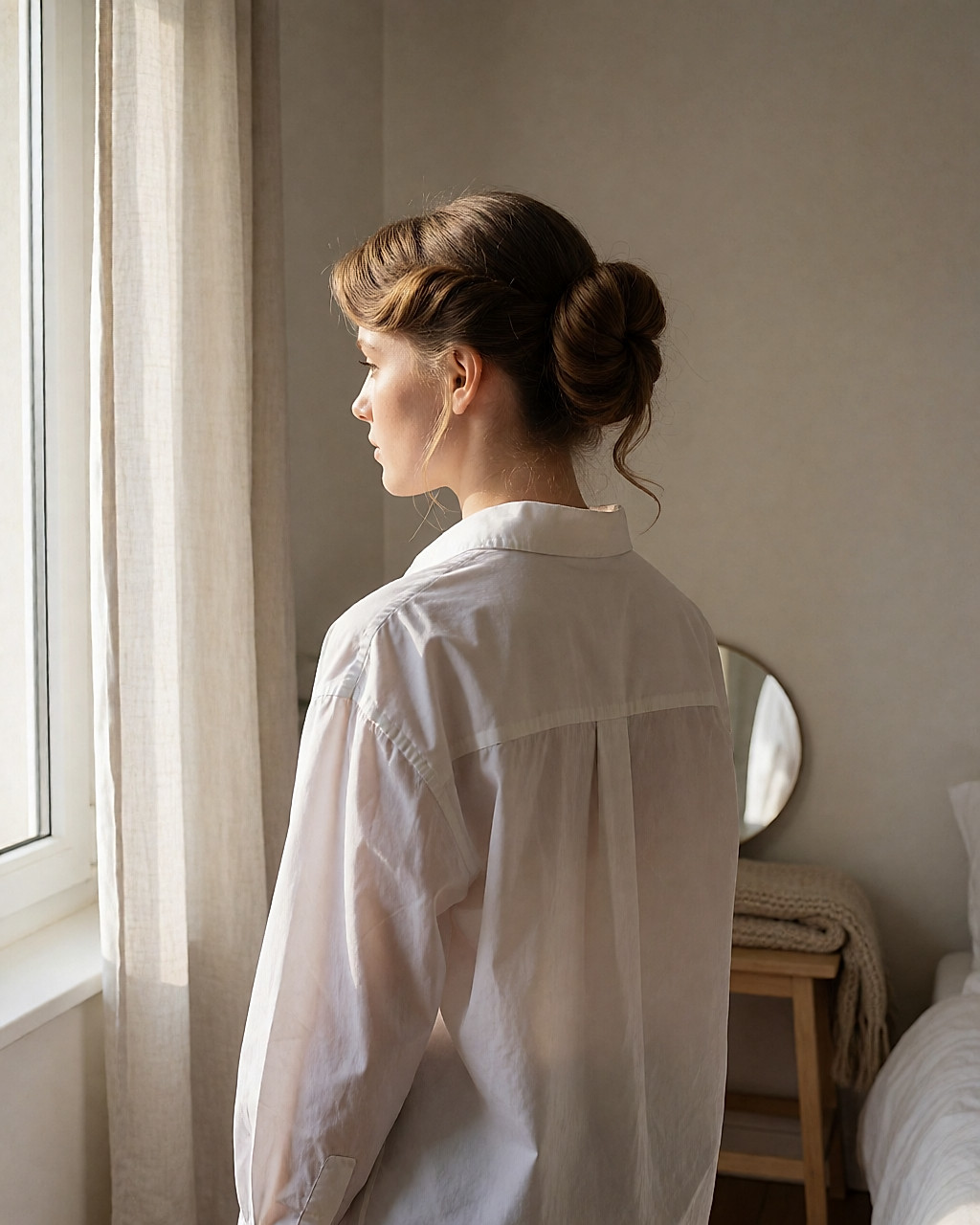
The big comeback of retro hairstyles
My first banana roll was for a wedding. Verdict: a wonky ponytail and about fifteen pins stuck in at random. I watched two or three tutorials, worked out where it was going wrong — the tightness, almost every time — then started again. Honestly, retro isn't any more mysterious than any other hairstyle: it takes method, a little hairspray and patience!
What's changed is the setting. These styles are no longer reserved for costume parties. You see them at a wedding, in the office, in a feed, and increasingly in softer versions — less sculpted, more relaxed. Which one would you try first?
Why retro still works
The argument is very practical: when done well, a retro style often holds better than a loose one. A properly pinned curl or a carefully fixed banana roll moves little over the evening. Mind you, we're not talking about guaranteed hold: everything depends on your hair texture, the hairspray you choose and how you move. Let's say it's exactly what you want when you have to get two children to bed before going out! And the positive point is that we're talking about skills to learn, not expensive kit.
One clarification while we're here: I haven't tested heated rollers. I mention them as an option that circulates in tutorials, not as a safe bet. The curling tongs, on the other hand, I've used for years — and they create most of the volume we're talking about here. Which is to say that if you're a beginner, it's not the tool to reach for first.
The banana roll, the easiest to master
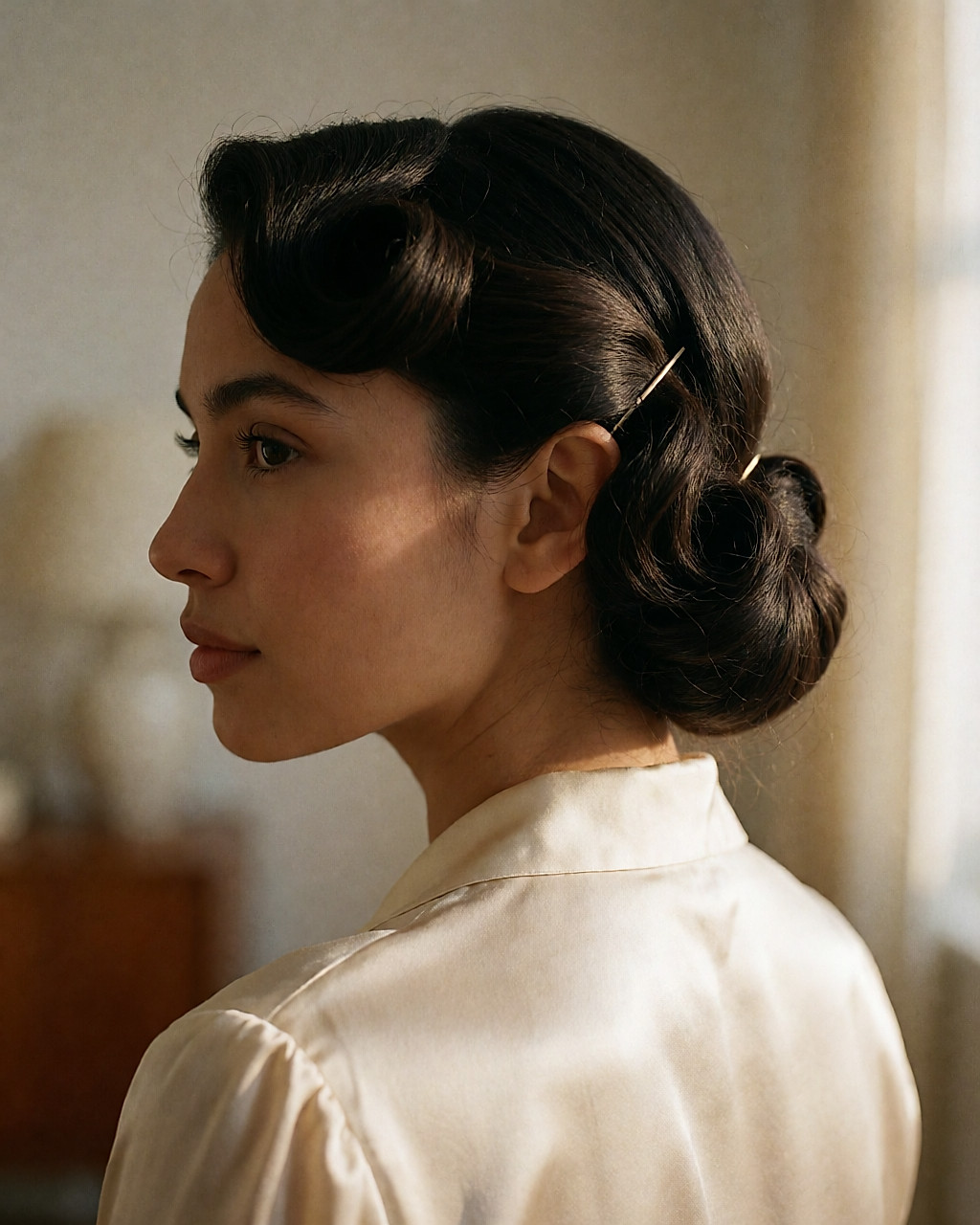
Behind this unglamorous name is a style often linked to rockabilly. It's easy to do and suits almost every look.
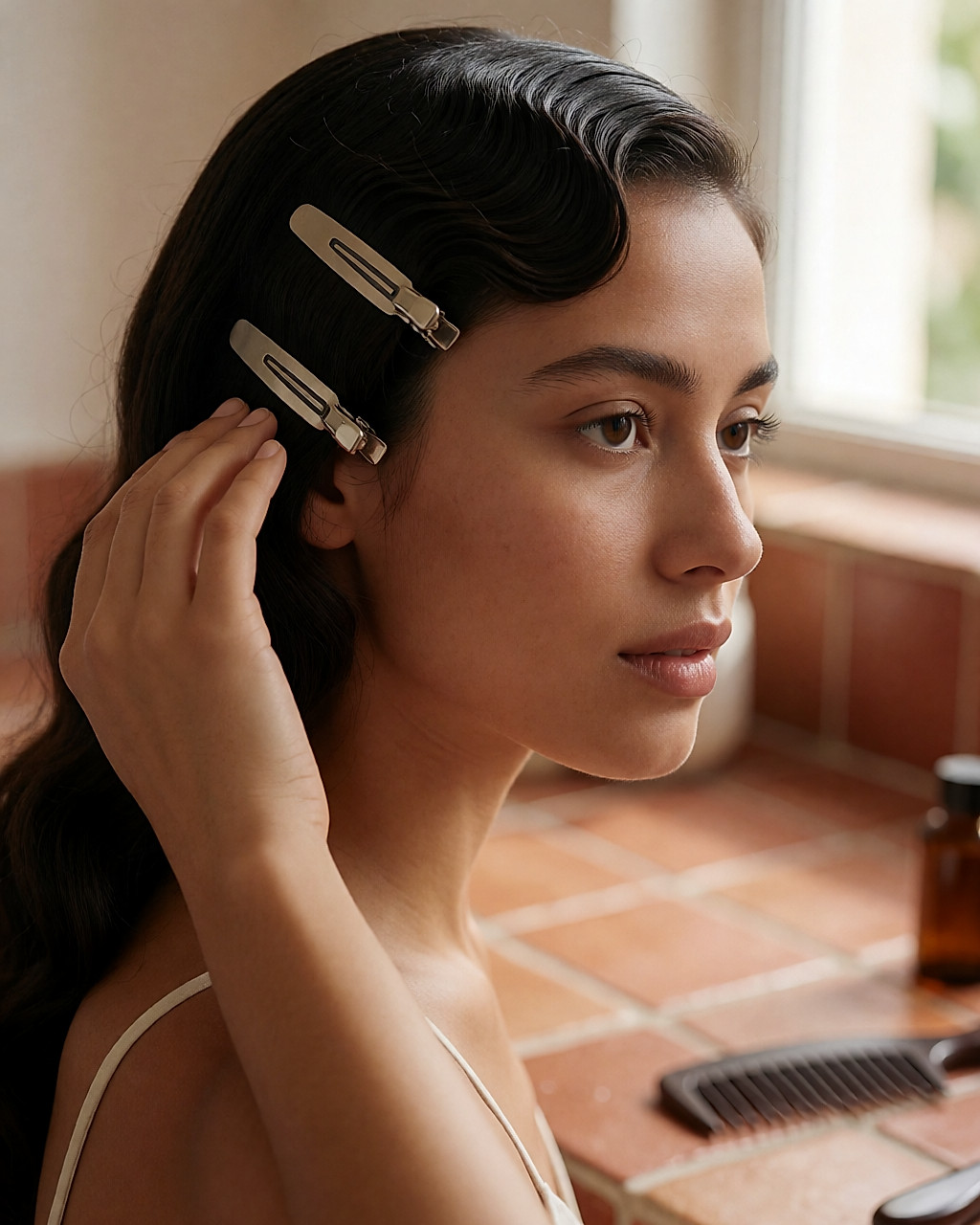
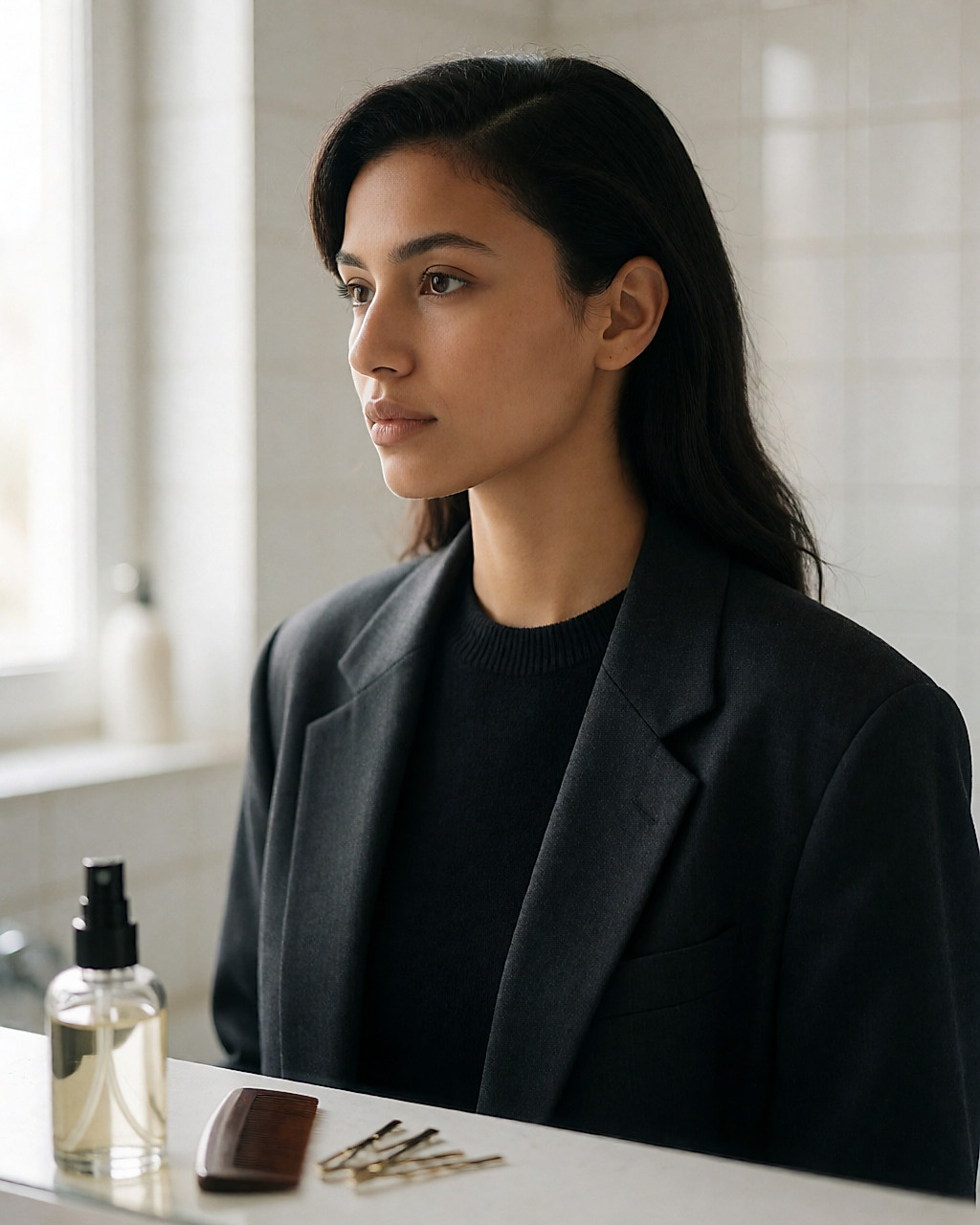
The method: spritz hairspray on towel-dried hair, smooth it, then make a side parting. Bring all the hair to one side and twist it with your hands. Tuck the ends back into the twist, secure with pins, finish with a cloud of hairspray. The detail that changes everything: don't pull too tight, or the banana roll turns into a stiff sausage.
Curls and waves, modern version
The Marcel wave is one of those shapes drawn with curling tongs. Work section by section, let each curl cool before brushing — it's the cooling that sets the shape. If you skip this step and brush while it's still hot, the wave drops immediately.
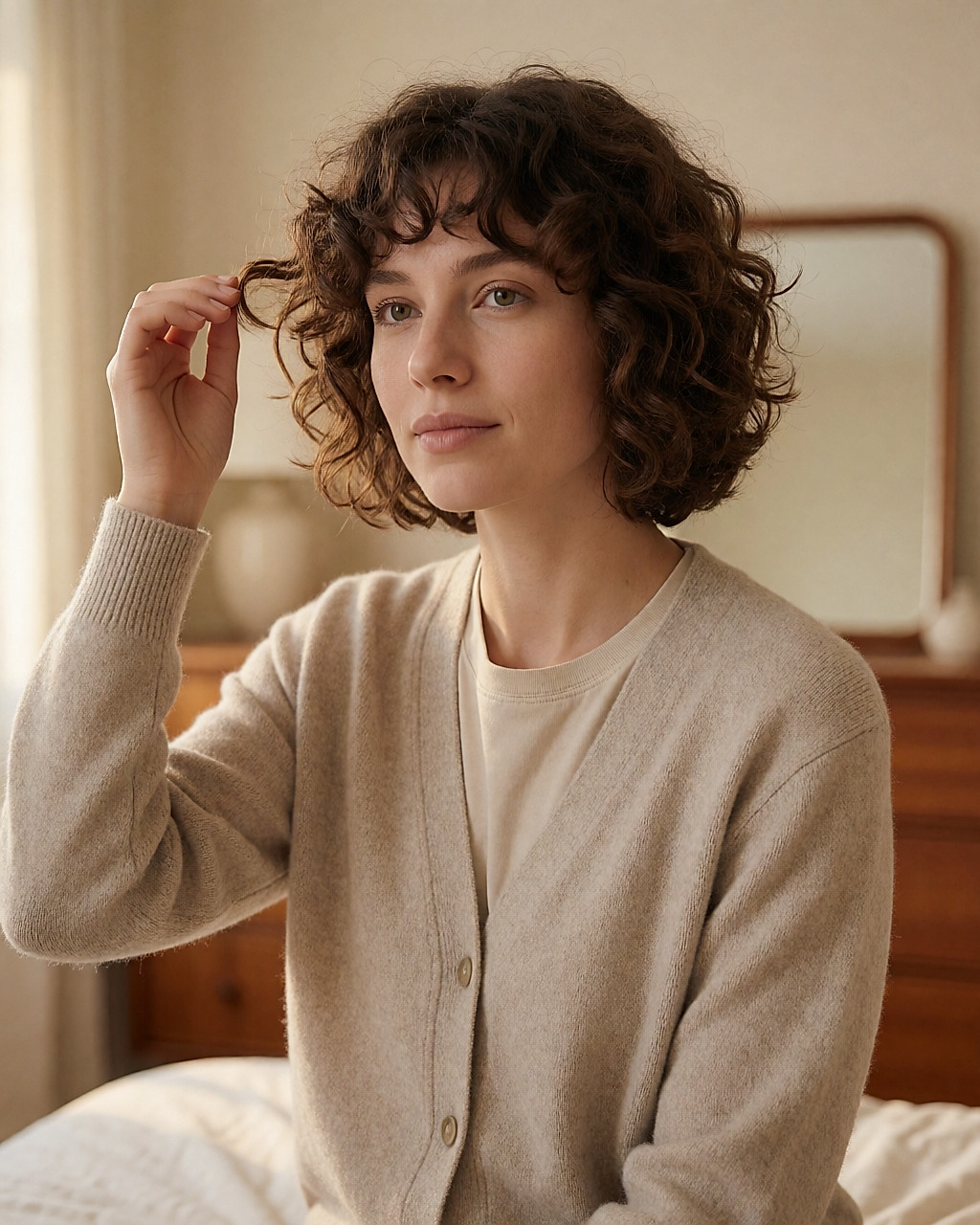
For a voluminous curly bob, heated rollers on dry hair often come up in tutorials; you then need to finish with a holding hairspray. A simple curling wand gives a softer, faster version. As for time, it all depends on your hair: it's quicker on fine hair, longer on thick hair.
The bun, classic or dramatic
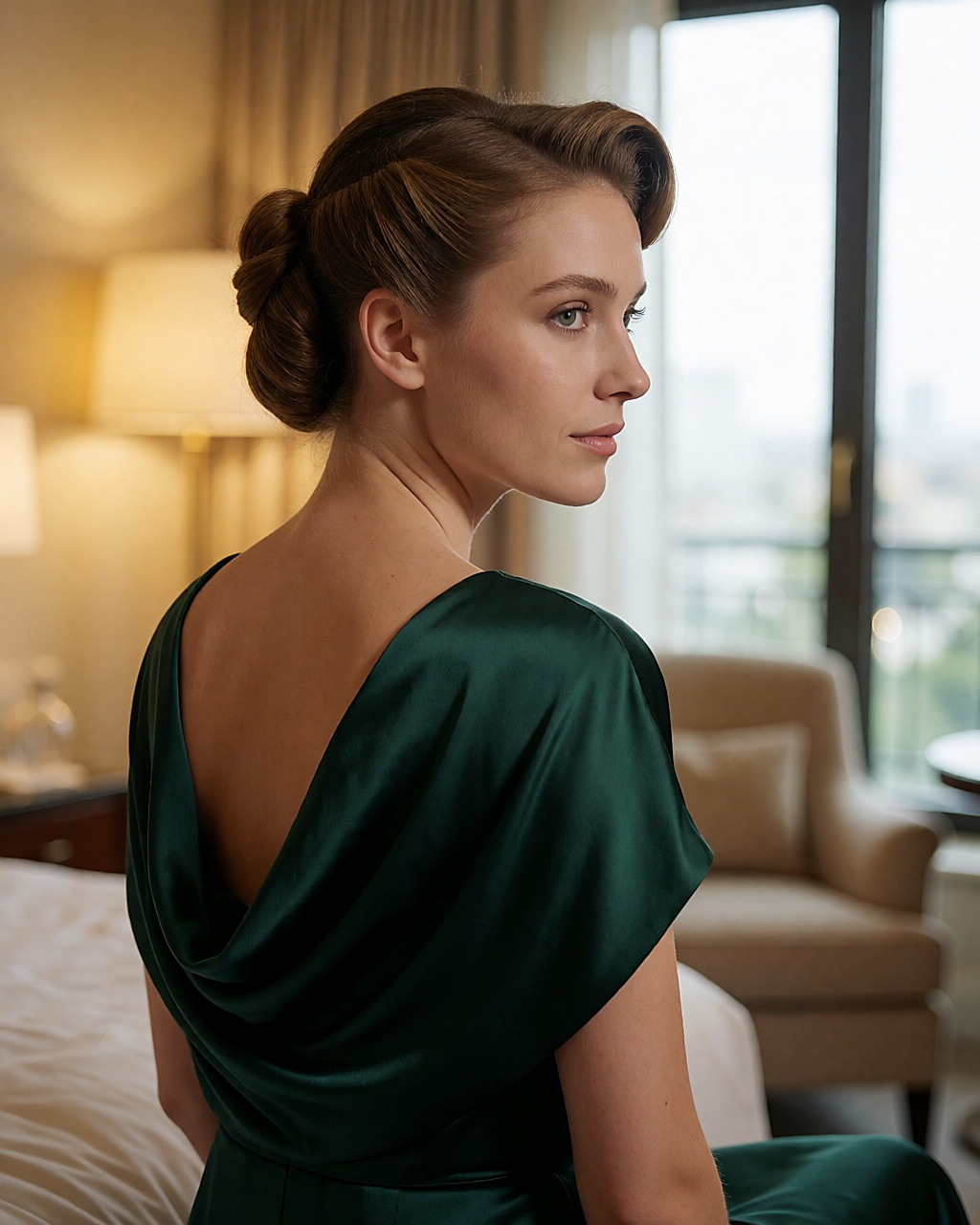
It's the great classic of retro hairstyles, and it's less intimidating than it looks. Backcomb the hair, make a side parting, isolate a large section at the front. Roll the back into a banana-roll bun, secure with hair pins.
To create a loop, roll the front section inwards and fix with spray. If you're after a more elaborate version, take inspiration from the ceremony buns seen on the catwalks — but plan a trial run before the big day.
Do a full trial run before the event: the style, the hairspray, and two hours of wear. You'll see what shifts, what pulls, what drops. What holds at 2pm has a good chance of holding at 10pm, but nothing guarantees it — and discovering otherwise in the car is far more unpleasant.
Budget
Nothing here is compulsory: most of these styles can be done with what you already have to hand. If you want to kit yourself out, budget around £20 to £55 for decent curling tongs — the price climbs quickly with brand, barrel size and heating quality. A set of heated rollers is more like £20 to £60, and a holding hairspray £4 to £13. Pins and clips cost a few pounds, and that's often where the evening's hold is won or lost.
You'll find all of this in supermarkets, beauty retailers, hairdressing suppliers or online; at the same level, differences come mainly from where you live and when you buy.
On the care side, if you want to be kind to heat-stressed hair, a mask or plant oil (argan, coconut, olive) costs from a few pounds in the supermarket to around £20 in a natural beauty store. Look at the ingredients and labels: Cosmos Organic or Ecocert set limits on the percentage of naturally derived ingredients and processing — which says nothing about how effective it will be on your lengths, but at least avoids the most overloaded formulas. A refill or glass bottle, when the brand offers one, lightens the impact without changing the result.
If you'd rather delegate for an event, a salon ceremony style usually starts at several tens of pounds — expect more like £50 to £120 in a salon for an elaborate style with a trial run, depending on the city, hair length and salon range. Blow-dry bars and hairdressing schools sometimes offer gentler prices, provided you accept a little less flexibility on timings. In any case, ask for a quote before booking: it's the only way to get a reliable figure.
Easier to get to grips with than it looks
The main thing remains: these styles aren't mastered in the salon, but in front of your mirror on a Sunday morning, when you have time to get a banana roll wrong and take it down. Start with the softer version, even if you don't go as far as a tight wave or a perfectly rolled loop — it's already retro, and it already looks lovely on you. The movement comes with repetition, never the first time, and that's exactly what makes it so satisfying once it finally flows on its own.


Comments
Your opinion matters: rate the article, react and reply to comments.
Comments are moderated; AI-assisted comments are flagged. Text emoticons (8-), :-), <3…) are automatically shown as images.