

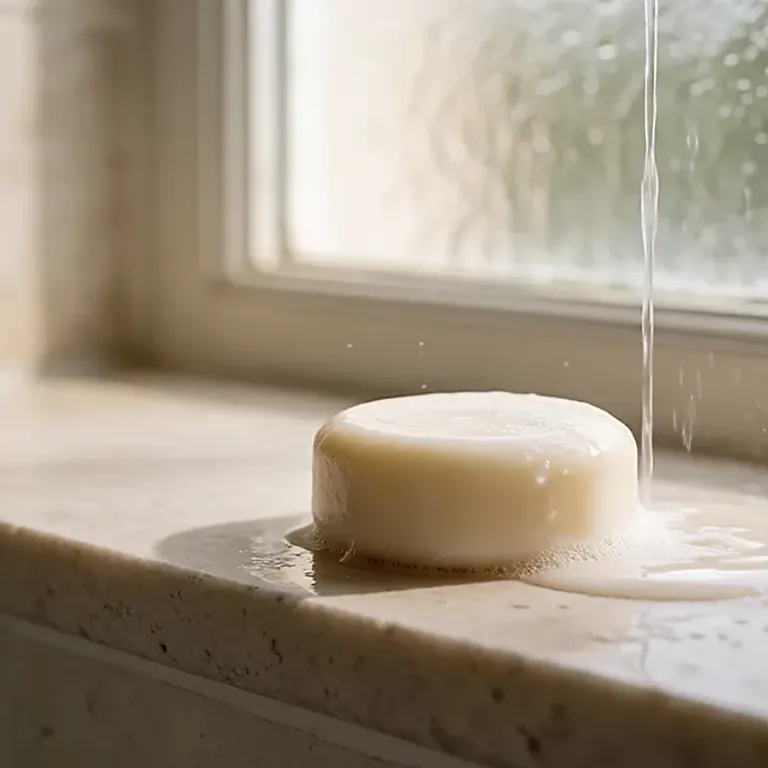
Two 50g cleansing bars can look like identical blocks of blond wax and behave in opposite ways. One rinses clean with plain water; the other needs a face cloth and leaves a film on the skin. The difference isn't price or fragrance, but a discreet molecule tucked into the INCI list. Without it, your 'solid cleanser' is just a massage balm in denial.
The word to look for on the label
A solid balm, in its simplest form, is a mix of oils, butters and a wax for structure. All of these ingredients are lipophilic: water doesn't dissolve them, it slides off like it would off a greasy plate. For a balm to rinse away with plain water, it needs an emulsifier — a molecule with a water-loving head and an oil-loving tail. When it meets water, it brings the two together, and the rinse carries the makeup with it.
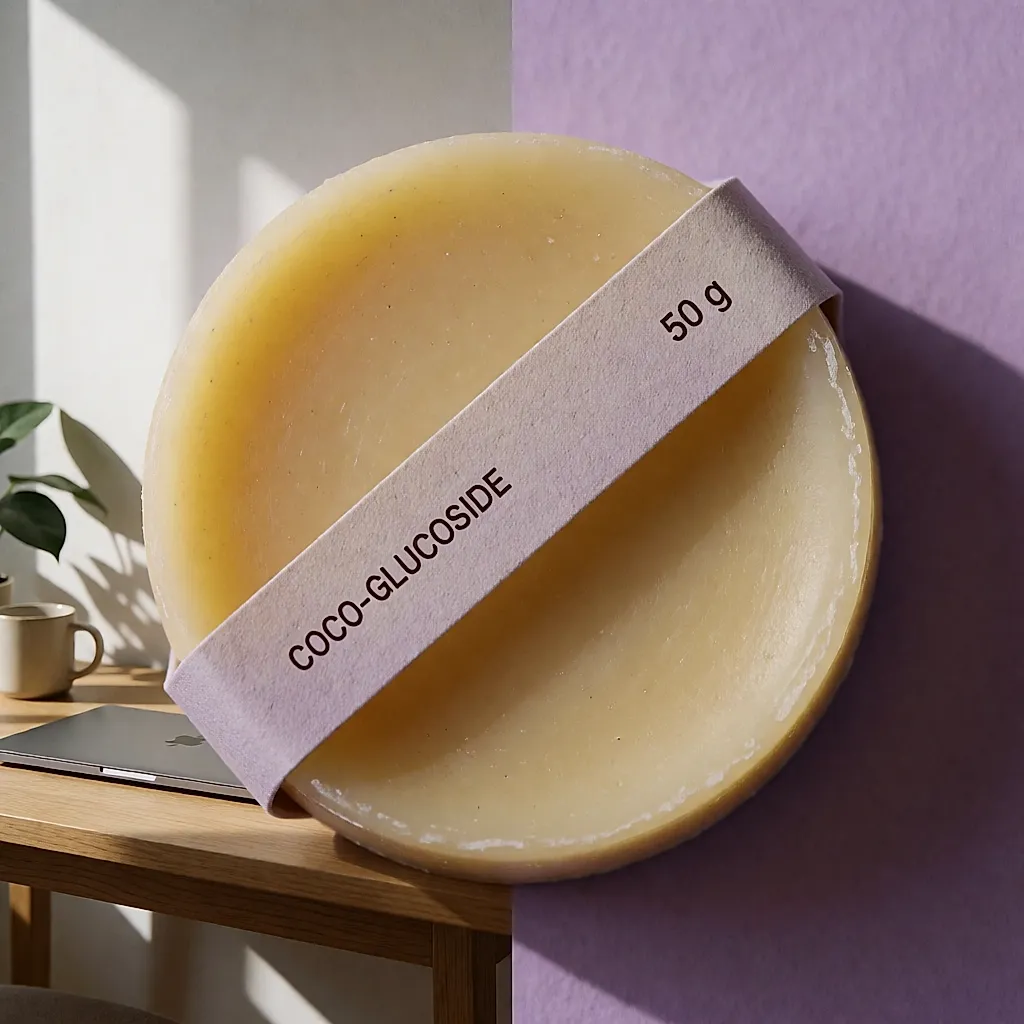
So how do you spot the right one? On the label, look for known emulsifiers such as coco-glucoside, cetearyl glucoside, cetearyl olivate, sorbitan olivate or sucrose stearate. A suffix or a single word isn't enough: '-ate', '-glucoside', '-laurate', '-olivate' or 'sucrose' can also point to ingredients that aren't emulsifiers. As a rule, especially among the main ingredients, a balm listing coco-glucoside or cetearyl glucoside has a good chance of turning milky under water and rinsing clean without a cloth — keeping in mind that INCI order isn't always a strictly reliable guide to concentrations. Conversely, a list featuring only oils, shea butter, beeswax and candelilla is promising you a cleanse... with a face cloth.
The word doesn't tell the whole story, though: not all emulsifiers are equal. A glucoside or an olivate is gentle, whereas a saponified soap — 'sodium cocoate' at the top of the list — strips more aggressively.
The water test, in a shop or at home: melt a crumb between two fingers, add a drop of water and rub. If the texture turns milky and rinses away, the emulsifier is there. If the water beads and slides, you'll need a cloth — that's not a fault, just a different routine.
Dry skin battered by central heating
Winter skin feels tight, goes red in patches and reacts badly to rinses that foam too much. For skin like this, look for an emulsified balm rich in shea butter, avocado or jojoba oil, perhaps with a little glycerin. And fragrance? Be wary: 'parfum' or 'fragrance' at the end of the list often hides essential oils, which some reactive skin types tolerate poorly when the air is dry.

Be cautious, though, with some bars sold as 'cleansing soap', where sodium cocoate dominates: their higher pH can leave that tight feeling you then put down to the cold. I haven't found a study comparing solid balms with one another on dry skin, so my benchmark remains the ingredient list, re-read with every purchase, because formulas change from one year to the next. And if your skin burns or stays red for several days, it's no longer a cleanser question: speak to your GP or a dermatologist.
The method, and what you trade for it
The ritual has four steps: dry hands, a pea-sized amount taken from the bar, a facial massage of around 30 seconds — adjust to suit — then a little water to turn the balm milky before rinsing. Expect a little more time than with a soaked cotton pad: not exactly a hardship, but enough to jolt a low-energy evening.
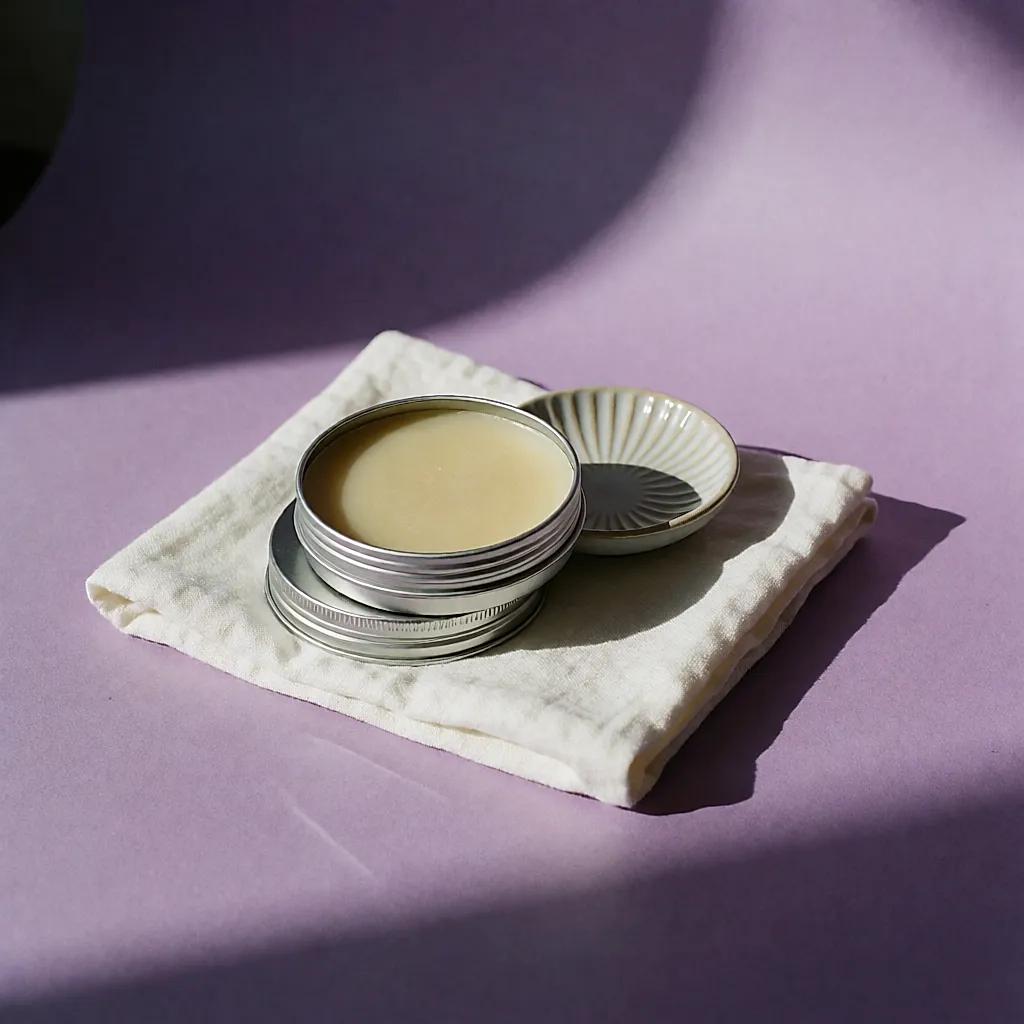
What you also accept is keeping the product dry. A bar left in the shower softens, hollows out and melts faster; a metal tin or a draining dish kept out of the water stream changes how long it lasts. In winter it hardens: warm it between your palms for a few seconds before taking some.
In return, you gain bathroom shelf space, fewer cotton pads and a format that lasts for months. You lose the immediate freshness of micellar water and the speed of the routine. Is it worth it? For dry skin and everyday cleansing, often yes; for stage makeup, keep your oil.
Budget
As a rough guide, expect to pay around £8–£20 for a 30–50g bar or balm from a health-food shop or the brand's own website, and more like £15–£30 in a pharmacy or from premium brands. A metal tin, if not included, is usually £5–£10 and lasts for years.
Cost per gram is more telling than the ticket price: a 50g bar often lasts several months with daily use, which makes it competitive against a 200ml bottle. You'll find them in health-food shops, pharmacies, refill sections in some grocers and online; read the INCI list before you commit, not the promise on the front.
And if you're still hesitating, keep this reflex: a solid cleanser that rinses clean with plain water is first a question of vocabulary. Re-read the label, look for the emulsifier, check that fragrance isn't squatting in the first few places, and accept a little more time at the mirror. The rest is bathroom-counter chat.


Comments
Your opinion matters: rate the article, react and reply to comments.
Comments are moderated; AI-assisted comments are flagged. Text emoticons (8-), :-), <3…) are automatically shown as images.