
A reader wrote to me last week: 'By midday my legs feel like lead, and I haven't got time to join a gym.' I know exactly what she means — two pregnancies left me with a fairly vivid memory of those end-of-day moments when your ankles ache. The good news: you don't need a gym membership to lighten and slim your legs. A few well-placed habits already do a great deal.
Walking — but at a decent pace
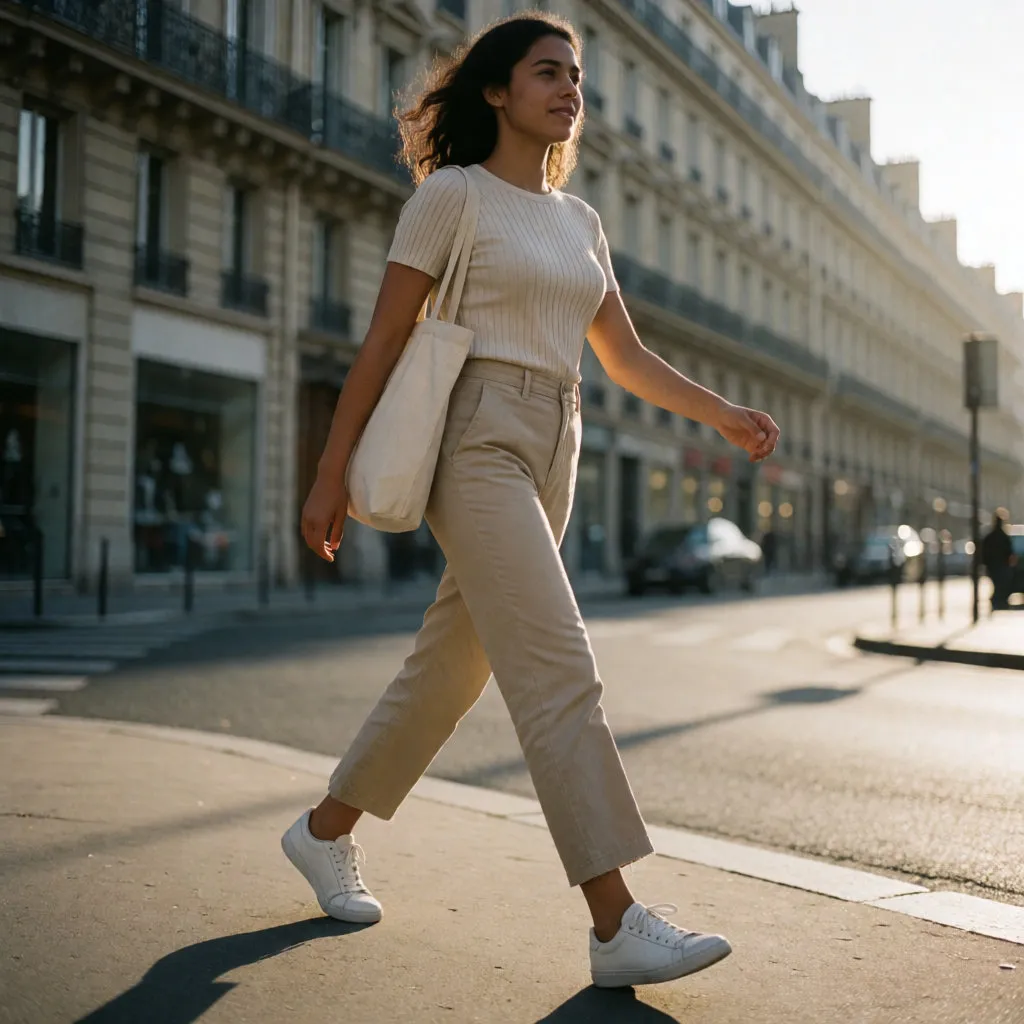
The principle is simple: thirty minutes of walking a day, at a sustained rhythm. Aim for a pace where you feel you're working, without having to stop every two minutes; around 5 km/h is a good baseline, and you can speed up if you're feeling up to it.
And what about shopping, then? Three hours of browsing the shops don't replace those thirty minutes: the walking that counts is regular, continuous, a little brisk. What's in it for you? Calves and thighs that take on shape, glutes that get a workout, a back that's better held. And really, walking also boosts your circulation — which is no small thing when your legs ache at the end of the day.
Easing the heaviness in the evening
Prop your legs up on a cushion, ten to fifteen minutes before bed, long enough for one episode. Drink water regularly throughout the day: around a litre and a half, more if you're active or the weather's warm.
Forget scalding baths. A lukewarm-to-cool shower, from the bottom upwards, can leave your legs feeling fresh and lighter. After that, a 'light legs' gel — menthol, plant extracts — brings an almost immediate sensation of freshness. On the formula side, look for arnica, witch hazel or horse chestnut, often available in organic versions: a label like Cosmos Organic requires a minimum share of organic ingredients and a restricted ingredient list. An aluminium tube or a refill also changes things on the waste front. But I'm not going to promise you a miracle: comfort, yes; a transformed silhouette, no.
As for so-called draining capsules, I haven't tried them and I remain cautious about them. Ask your pharmacist for advice, especially if you're taking medication.
To try tonight: legs up against a wall, ten minutes, then a cool shower from ankles to thighs. The move that changes everything after a day on your feet.
If the heaviness comes back every day, if an ankle swells, if varicose veins appear or if an area becomes red and painful, see a doctor. These signs point to venous insufficiency, which can be diagnosed and managed.

Faking it, without cheating
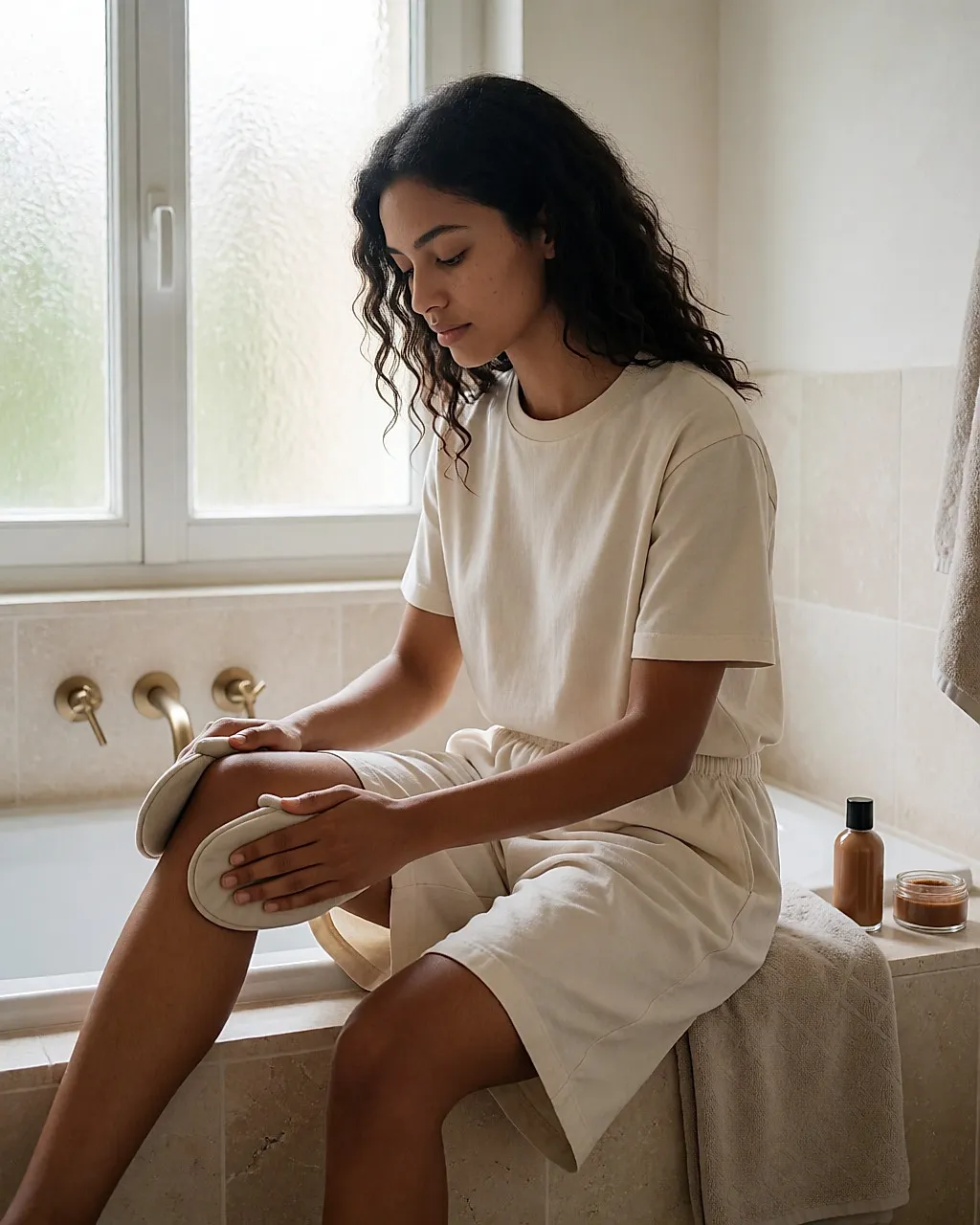
For a quick tan: a gentle scrub on clean skin, then self-tan in a thin, even layer. Most current formulas moisturise as well as colour, and gradual-tan versions are more forgiving of mistakes. Wash your hands afterwards, don't overdo it on knees and ankles, and do a patch test on a small area the first time. That orange effect is often down to too much product or an uneven application, though the formula and how you prep your skin play their part too.
Budget
'Light legs' gels generally sit between £7 and £17 for 100 to 200 ml, at the pharmacy, in larger stores, at the supermarket or on brands' own websites. The price climbs with the concentration of active ingredients and the brand's positioning.
Body scrubs come in between £5 and £17, self-tans between £7 and £25 depending on the format and where you buy (supermarket, beauty hall, official site). Organic versions often cost a few pounds more, but a certified formula isn't always more expensive than a premium mainstream brand.
Draining capsules run at around £8 to £21 a month: bear in mind that their effectiveness remains debated.
On the medical side: a GP appointment is free on the NHS. If you're referred to a vascular specialist, the wait can be long, and a private consultation will cost you.
Sources
- Assurance Maladie (ameli.fr), on venous insufficiency of the lower limbs.
- World Health Organization, guidelines on physical activity and sedentary behaviour (2020).
- Santé publique France, recommendations on physical activity for adults.


Comments
Your opinion matters: rate the article, react and reply to comments.
Comments are moderated; AI-assisted comments are flagged. Text emoticons (8-), :-), <3…) are automatically shown as images.