

The word 'parfum' takes up a single line of the INCI list, wedged between a surfactant and a pH adjuster. Yet it is what moves a shampoo to another shelf, another price bracket and another brand house. Sometimes it is the same name, the same square bottle, the same world as the juice sold at the far end of the beauty hall. Fragrance is no longer sold only at the perfume counter.
The shift is recent, and it is sharp. You can now find a fragrance signature in a wash product, put a scented detergent into your washing machine, buy a whole universe in the shower. A welcome democratisation? Or a dilution of the gesture? The question deserves better than a shrug.
Fragrance has found its own shelf
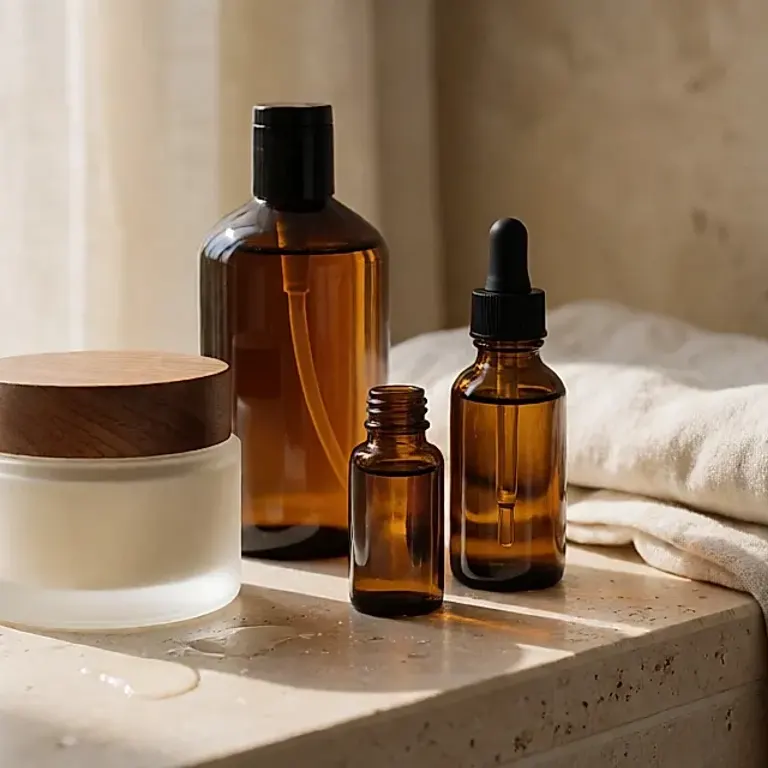
Chanel, Dior, Hermès, Diptyque, Byredo, Aesop: these fragrance and skincare houses each have their own world. The mechanism is simple — a body lotion, a shower oil or a gel can carry a scent signature, your dressing gown holds onto the imprint, and the house slips into a room where you did not expect it.

The cleverest bit is laundry. A scented detergent promises a trail that no longer depends on you but on your wardrobe — and it works, in both senses of the word. You clock someone by their coat before you clock them by their perfume. You have to admit, that is a neat shortcut.
A scented product is not a perfume
The difference is dose. In an eau de parfum, the concentrate makes up a serious share of the formula; in a shampoo, fragrance is one ingredient among many, in a very small proportion. And with a rinse-off product, water carries most of it away: what stays on your hair is a trace, not a trail.
Does that mean it is not worth believing in? No. A hair mist, which stays put, can last longer than a shampoo, and a lotion leaves something like a base note on the skin. But do not ask a wash product to replace the bottle. And keep an eye on the label: the word 'parfum' covers dozens of molecules, and not all allergens are necessarily named. Scalp feeling tight? Stop using it, and have a word with a pharmacist or your GP rather than trying the next one.
What it costs
On price, budget a few pounds for a supermarket own-label version — shampoo, lotion, mist or detergent — and tens of pounds once a fragrance house's name is on the label. Prices then vary by house, size and retailer, and can climb quickly. Better to compare with your supermarket equivalent before you fall for the bottle.
Where to find it all? Department store beauty halls and the brand's own website for the wash products, specialist retailers or online for the detergents — supermarkets remain the territory of the generic versions. The sensible move is to start with the small or travel size, and come back for the large one later. I have not yet given in to the detergent sold in beauty halls — my laundry basket and my bank balance are not ready. And when a refill exists, buy it: that is the bit that counts.
Three questions before you pay for a scent
- Does it get rinsed out? A rinse-off product leaves a trace; a mist or a lotion leaves far more. Spend on what stays.
- Does it still smell the next day? Smell your hair in the evening, not the lather in the shower: what lingers is what counts.
- Is there a small size or a refill? Two ways to avoid an impulse buy that ends up at the back of the cupboard.
One simple truth remains, and it is rather reassuring. A scented product is smelled; a perfume is worn. The first dresses a bathroom, the second follows you down the street, and the two can coexist without spoiling each other. If you have to choose this year, keep the juice for yourself and leave the lotion to the dressing gown. As for the rest — the price, the name, the aura — it is marketing. Lovely marketing, but marketing.
Comments
Your opinion matters: rate the article, react and reply to comments.
Comments are moderated; AI-assisted comments are flagged. Text emoticons (8-), :-), <3…) are automatically shown as images.