
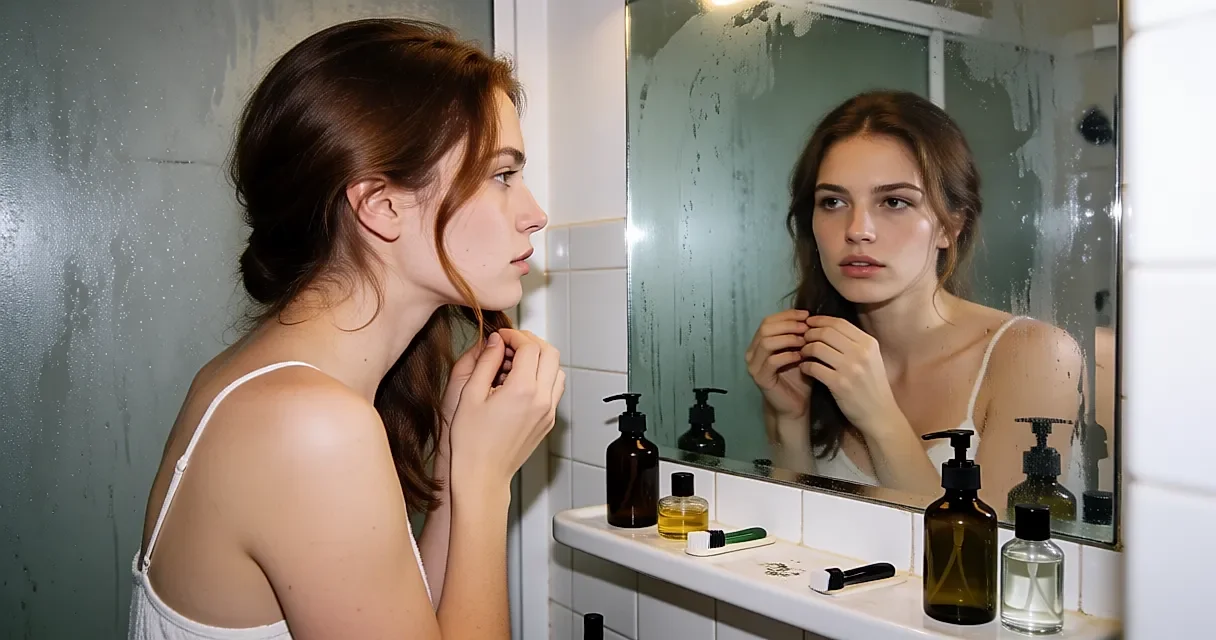
The cape is fastened, the nape is bare, and the decision sometimes comes down to one sentence: cut it all off, for good, with months of regrowth to live with and a final farewell to length. That is exactly the scenario Florence Pugh has blown apart. In a few years the actor has gone from a pixie to a shaved head, then back to length for a red carpet. Three hairstyles, and a new idea: a very short cut no longer ties you down for life.
A pixie is no longer a vow
For a long time, going very short felt like a solemn decision, almost a contract signed in front of witnesses. You did it to mark a turning point, and then stayed stuck in the in-between for months, checking the back of your head in the lift mirror. With Florence Pugh the logic runs the other way: the pixie arrives, leaves, the head gets shaved, the length comes back — and none of it looks like a point of no return.
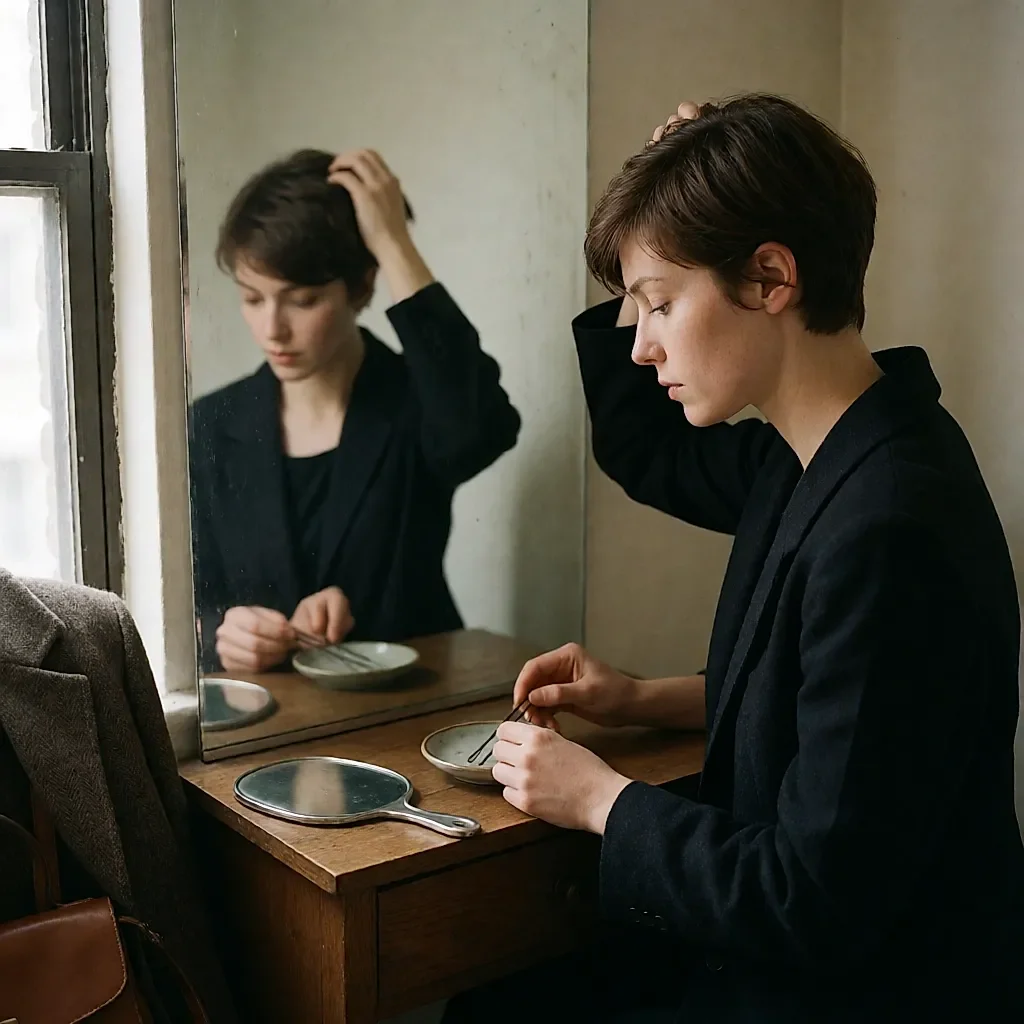
The short cut has simply changed status. It is no longer proof that you have made a decisive break in your life; it has become a trial run you allow yourself: you test a silhouette, live with it for a few weeks, let it grow out if the mood passes. Hair doesn't ask permission: regrowth varies from one person to the next, and it stays slow. In other words, a freshly cut pixie holds its shape for a few weeks, then nature takes over — and quite right too.
A bare nape, and everything it frees up
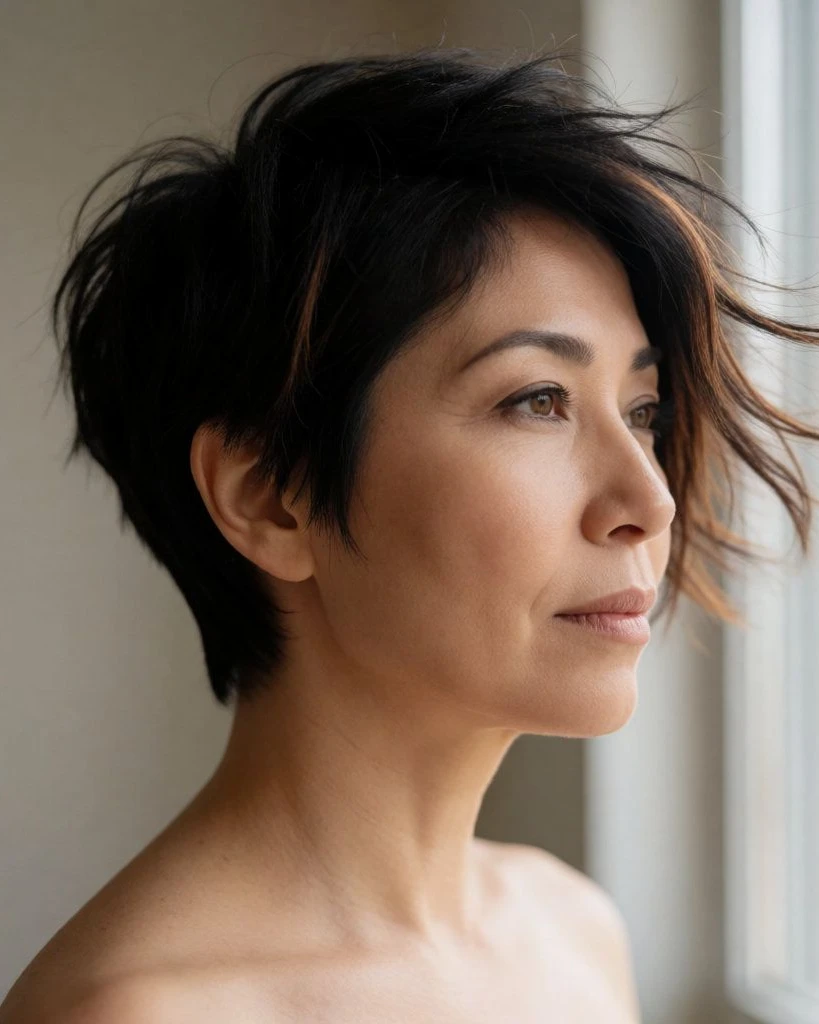
In practice, a very short cut moves the eye. The neck appears, the jawline is drawn, and collars start working for you: a merino wool turtleneck just under the ear, an organic cotton shirt open one button, a stand collar that does its job with no necklace at all. Where long hair used to swallow the neckline, a pixie puts it centre stage. It is the kind of detail you only notice afterwards — and then never want to give up.
Second, more cheering consequence: earrings take the lead. Fine hoops, slightly chunkier rings, a sculptural brass piece for Sunday evening: nothing hides them any more. And with the face fully on show, everything counts. Put shape back into the brows, look after the mouth, keep the complexion glowing rather than loaded. One gesture and the look is complete.
Growing it out: managing the in-between
Let's be honest: growing out a pixie is no stroll. Plenty of people find that after a few weeks the sides start to stick out, the nape thickens, and volumes appear that nobody invited. The bathroom mirror turns into a tribunal. This is where many give up and get it all lengthened at once — when all it takes is a bit of management.
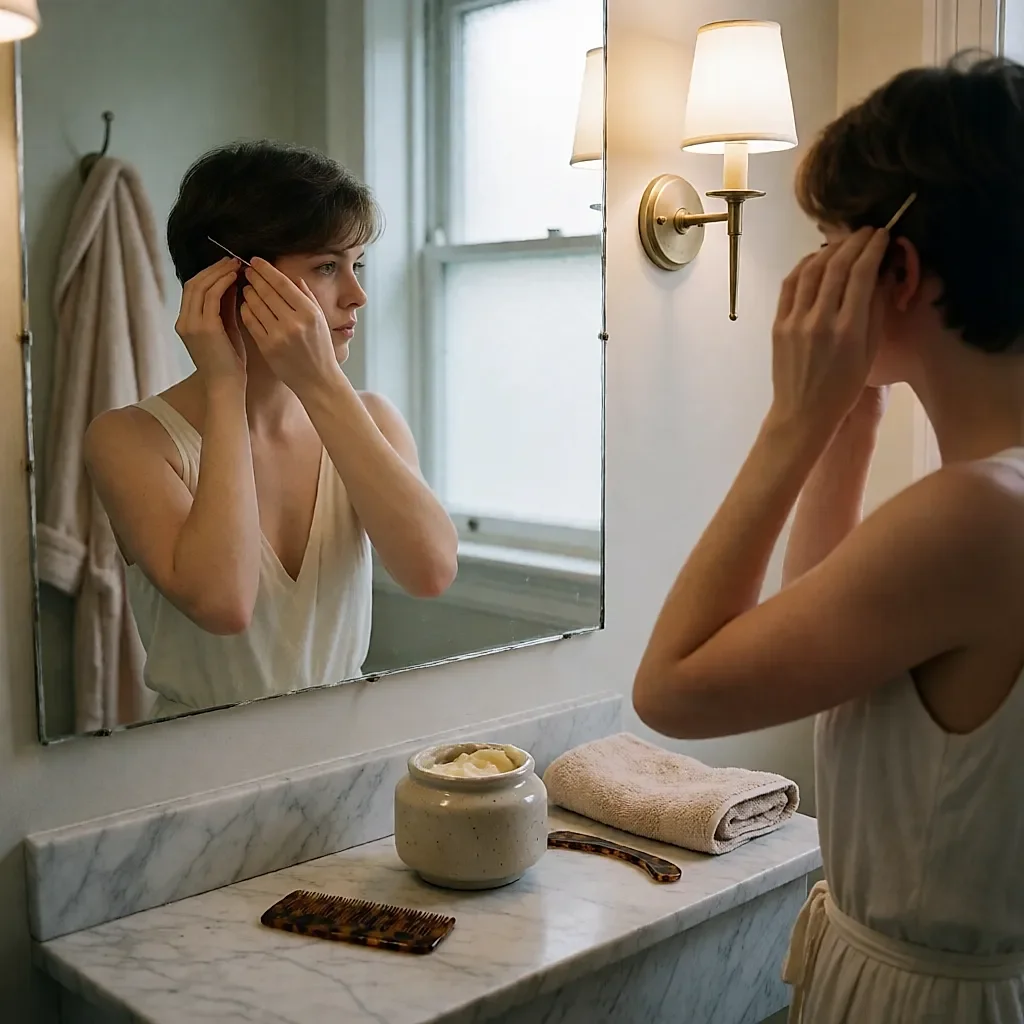
The move that saves you? Have just the nape and the outline refreshed, leaving the top alone so the length can gain ground. In practice, many stylists suggest a short, regular salon visit to keep the line clean. A little texturising paste on towel-dried hair brings the movement back. A wool hat in November, a silk headband on days when your hair is in open revolt: nothing magic, just organisation. And if the urge for length returns, extensions remain an option — for an evening, not a lifetime.
Before you cut, ask yourself the right question. Not "can I pull it off?" but "do I actually want to handle a few weeks of regrowth?" If the answer makes you smile, go for it. If it tightens your stomach, ask for a short bob instead: the same bare-nape effect, a gentler transition.
What it costs
On price, a short cut is often cheaper to maintain than long hair: expect to pay roughly £30 to £60 in a salon for a pixie, depending on where you live, the salon and how long the stylist spends on it. Nape refreshes, which are quicker, usually come in at around £10 to £25 — ask for one explicitly, because not every salon offers it unprompted.
With extensions the sums change entirely: somewhere in the region of £200 to £600 for natural-hair strands, with the fitting possibly on top, plus regular upkeep to budget for. The greener compromise, if the idea appeals: choose natural hair, avoid synthetic fibres, and think about resale or donation rather than the back of a drawer. And one last bit of restraint — keep the offcuts for a hair pad and you can skip the purchase.
Ultimately, the lesson of this hair timeline is pretty simple: your haircut isn't a commitment, it's a stage. Cut it, let it grow, add length — and hold on to the one thing that still works when you have five minutes: a bit of texture on fresh hair, and an earring that commits. The rest can wait.
Comments
Your opinion matters: rate the article, react and reply to comments.
Comments are moderated; AI-assisted comments are flagged. Text emoticons (8-), :-), <3…) are automatically shown as images.