

The other day, walking through the market, I turned round: someone had just passed by wearing the scent I wore at twenty. Exactly the same bottle. Except it wasn't me. On someone else's skin, the very same fragrance told a completely different story — softer, rounder, almost demure. And that's where it all gets complicated when you set out to find the perfume that matches your personality.
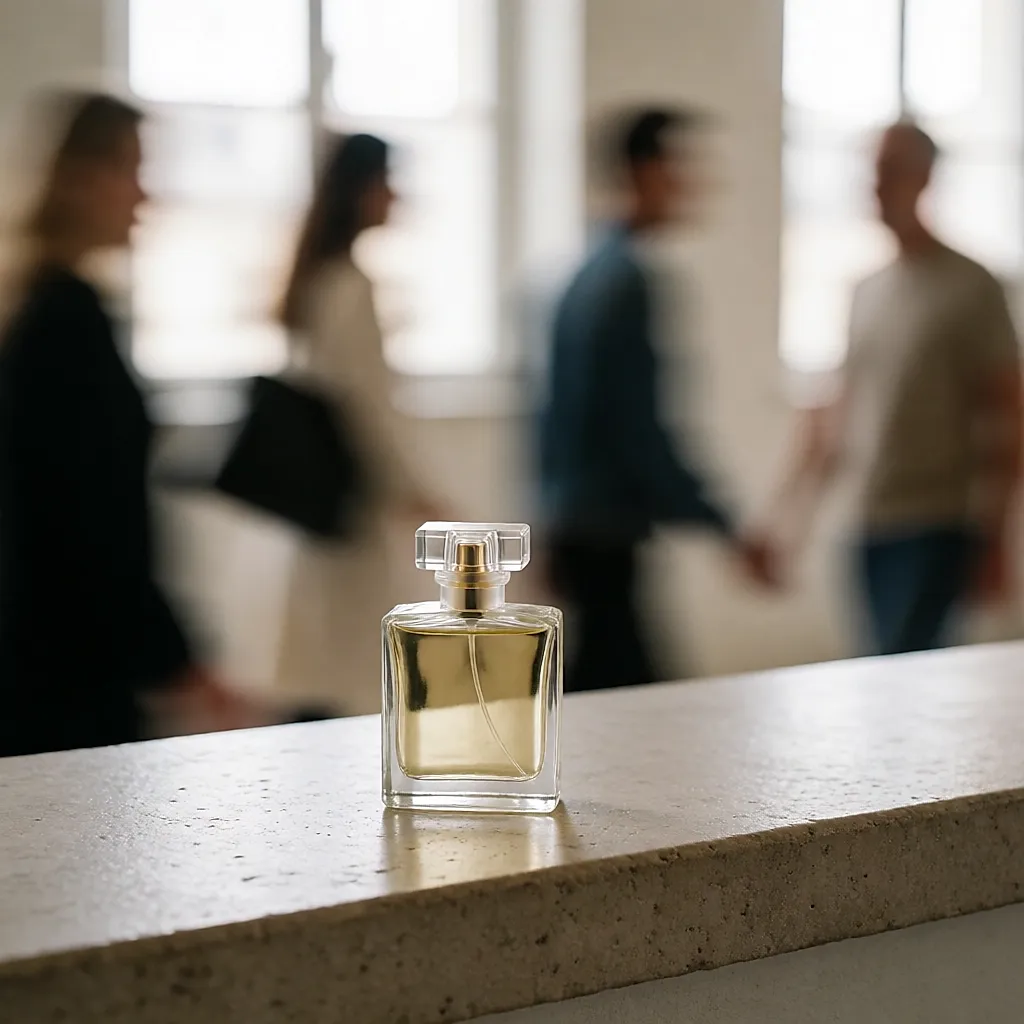
Same bottle, two different stories
A perfume isn't a ready-made formula. How long it lasts, how it develops, the way it opens up — all of that depends on your skin's pH, your sebum, your body temperature and, on some days, what you've eaten. A top note can vanish quickly on you while a friend is still wearing it hours later. In other words, you don't adapt to the bottle: the bottle works around you. The one thing that changes everything is accepting that from the off — the same juice rarely behaves in exactly the same way on two people.

Scent families: your compass
Rather than sorting people into media-friendly labels, perfumes get grouped into families. That's far more useful when you're working out where to look:

- hesperidic: citrus, bright, sunny — a morning ritual you can wear all day;
- floral: from lily to tuberose, soft or bold depending on the flower;
- woody: sandalwood, cedar, vetiver — a composed feel without being stern;
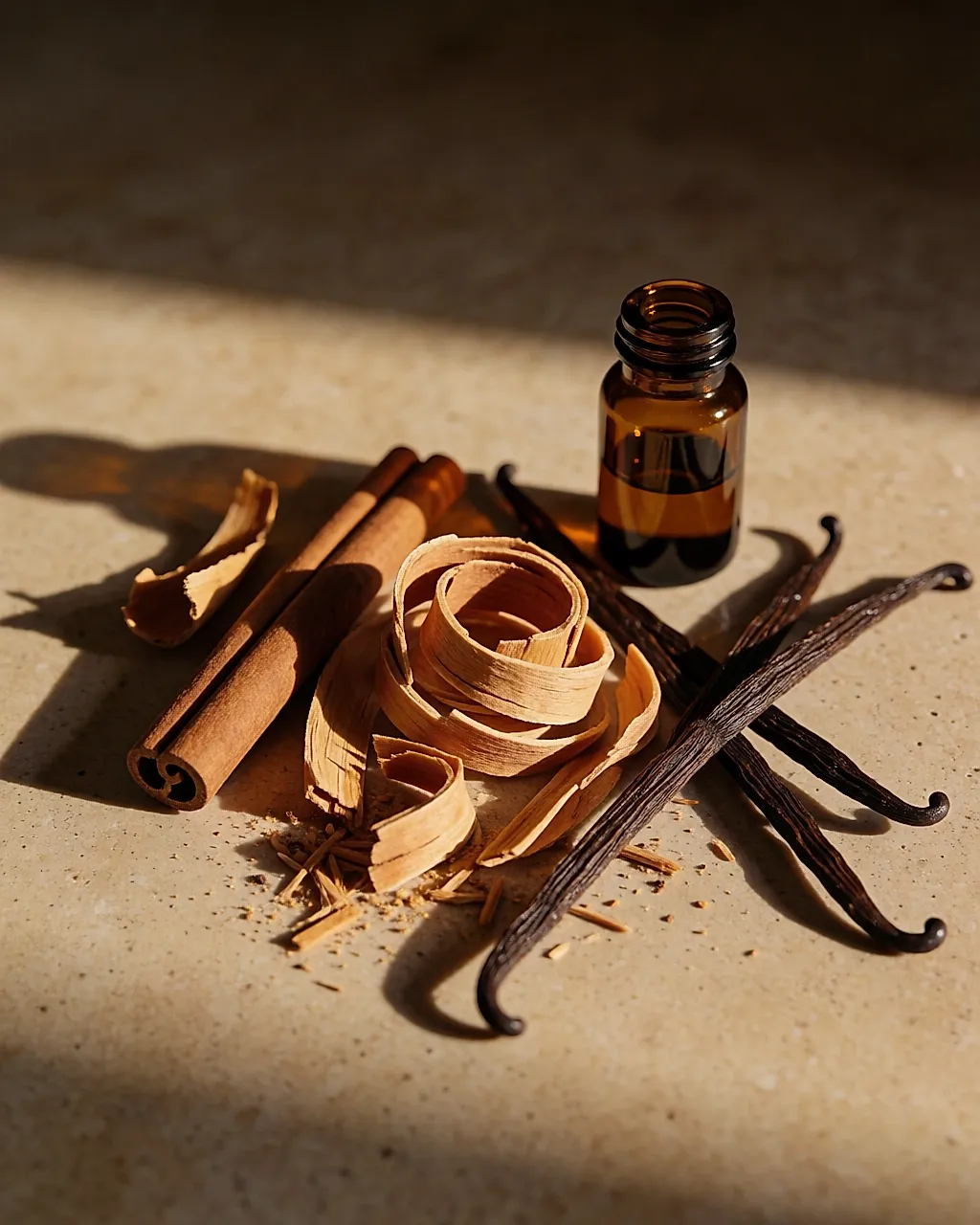
- amber or oriental: vanilla, labdanum, spice — warmth and real staying power;
- gourmand: praline, tonka bean — comfort with a playful edge;
- chypre: moss, patchouli, bergamot — a more grown-up character.
Start with the family, not the brand: you'll save a lot of time on the fragrance floor.
How to test without getting it wrong
Smelling a paper blotter gives you an idea, not the truth. Ask to try it on skin — two or three at most per visit; any more and your nose packs up and everything starts to smell the same. Then give it twenty minutes or so before you make up your mind. At that stage you're mostly smelling the heart notes; the base often only shows itself after a few hours, and that's usually the part that stays with you longest.
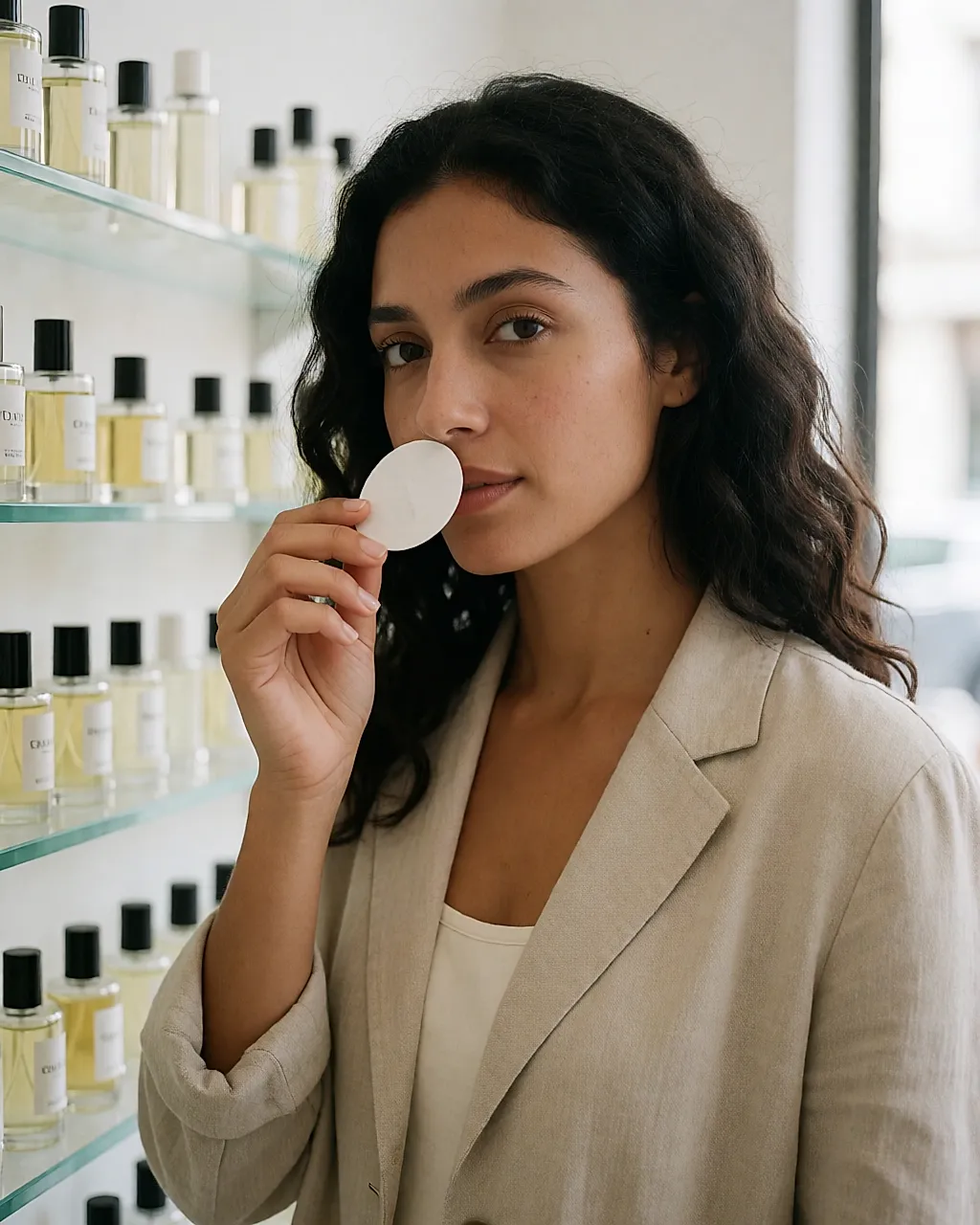
You rarely buy a perfume on the first visit. Ask for a sample if one is available, live with it for twenty-four hours, then decide — it's a good way to avoid a bottle you end up regretting.
Where to spray it, how to keep it
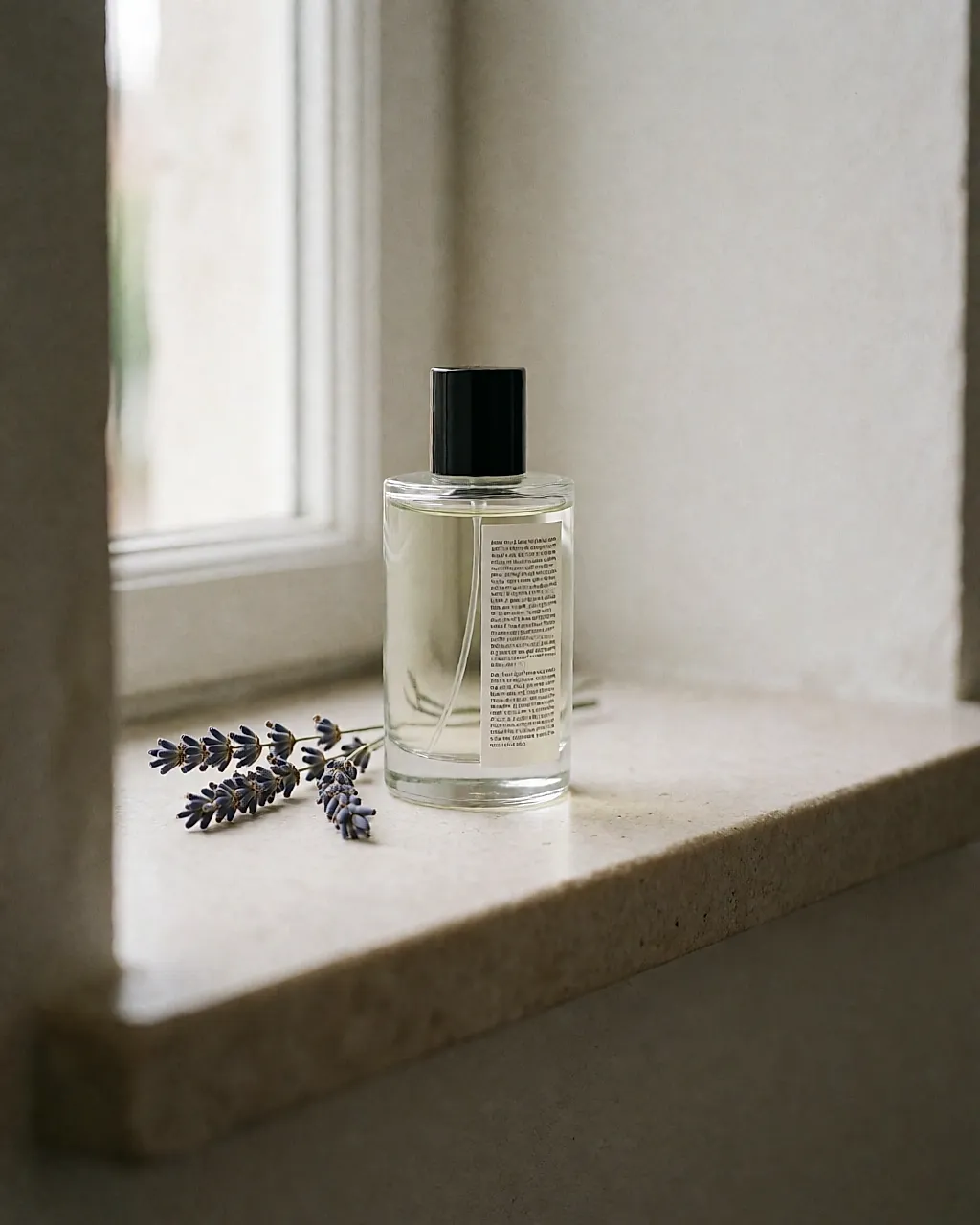
Spray on your pulse points: wrists, base of the throat, behind the ears, décolletage. And don't rub your wrists together — you crush the top notes and lose exactly that fresh opening. For storage, keep the bottle away from light and heat: an opened perfume, stored well, can keep for a long time.
Budget
On price, expect around £40 for a 50 ml eau de toilette from an accessible brand or a supermarket. Budget between £60 and £110 for a designer eau de parfum or something from a department-store or specialist fragrance counter. Beyond that you're into niche and extrait territory, with higher concentrations — often longer wear, but the bill climbs fast.
Refills generally cost less and use less new glass; not every house offers them, so check before you commit. Discovery sets and samples remain the lowest-risk way to try something. Where to find them? In fragrance shops, including independent ones, in high-street chemists and beauty retailers for the more affordable brands, on the houses' own websites and from online retailers. Prices vary by city, size and range: a 30 ml picked up online will often cost less than a 100 ml bought in a city-centre shop.
Choosing a more understated bottle
If this matters to you, look at three criteria rather than a slogan. The share of naturally derived ingredients, when it's spelled out in black and white. A COSMOS certification (Natural or Organic), which genuinely governs that share. And whether refills are available, which cuts new glass and transport. Worth knowing: a fully natural perfume is still rare, and not every raw material can be natural — some are synthesised, sometimes precisely so a plant in high demand isn't over-harvested. Few bottles are completely neutral: a workable compromise is to keep it for a long time.
Sources
- Regulation (EC) No 1223/2009 on cosmetic products, as retained in UK law — legislation.gov.uk
- COSMOS Standard — cosmos-standard.org
- Cosmetic, Toiletry and Perfumery Association (CTPA) — ctpa.org.uk
Comments
Your opinion matters: rate the article, react and reply to comments.
Comments are moderated; AI-assisted comments are flagged. Text emoticons (8-), :-), <3…) are automatically shown as images.