
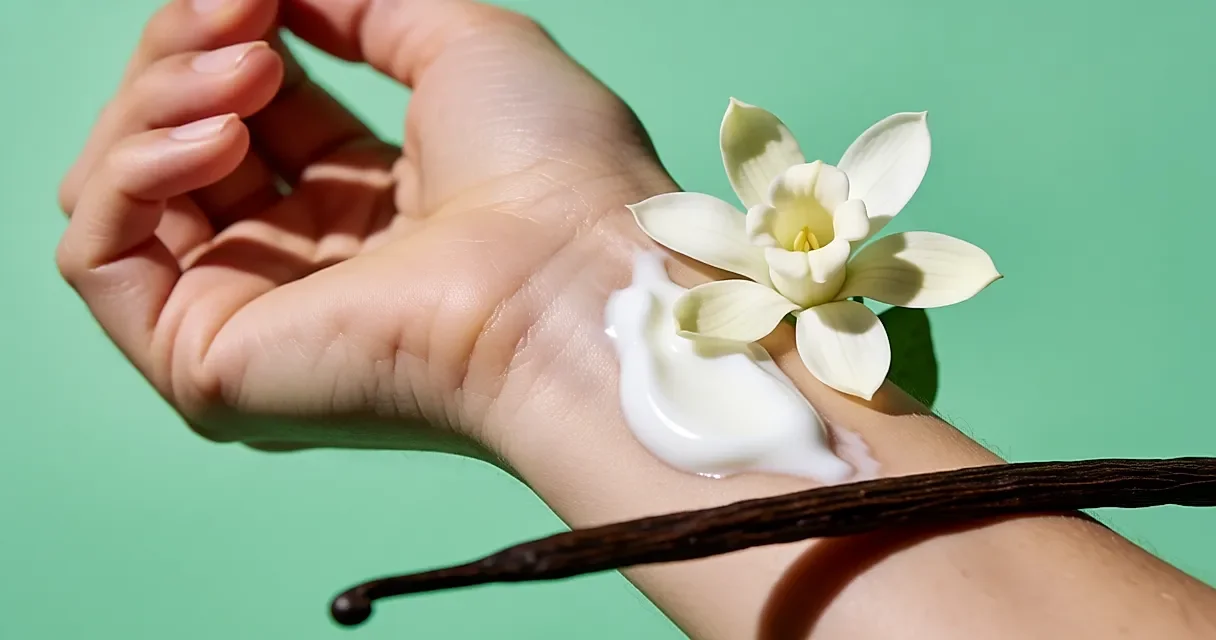
An organic logo tells you nothing about the smell. A body lotion stamped organic can smell of orange blossom with the insistence of a wedding morning; a 'fragrance-free' lotion can smell of toasted hazelnut, smoke or earth, simply because the unrefined shea butter in it gives off those notes. Two different promises, one tick box on your shopping list — and that is where the aisle turns into a battlefield.
Organic certification covers how it is grown, not how it smells
An organic standard such as Cosmébio in France, or COSMOS, which is used across Europe and whose UK certification is handled by the Soil Association, sets the share of naturally derived ingredients, the share of plant ingredients from organic farming, the processing methods allowed and the packaging rules. That is already a lot: it means the jojoba oil or shea butter in your lotion was grown to a specification that bans synthetic pesticides.
What the same standard does not do is ban added fragrance. In practice, organic standards do regulate which fragrances are permitted, so check the specification of the certification you are looking at. Lavender essential oil is 'natural', but it is no less a concentrated active: some compounds in lavender oil, linalool among them, are on the list of allergens that must be declared above set thresholds. Which is to say: an organic lotion can be scented, and a scented lotion can be organic. The two labels do not contradict each other; they answer two different questions.
'Fragrance-free' is a criterion in its own right
'Fragrance-free' means no fragrance has been added to the formula. Not that the product is odourless: raw materials have a smell, sometimes a decided one. A lotion rich in unrefined shea can smell of toasted hazelnut, smoke or earth; an oat lotion smells of grain — and quite right too.
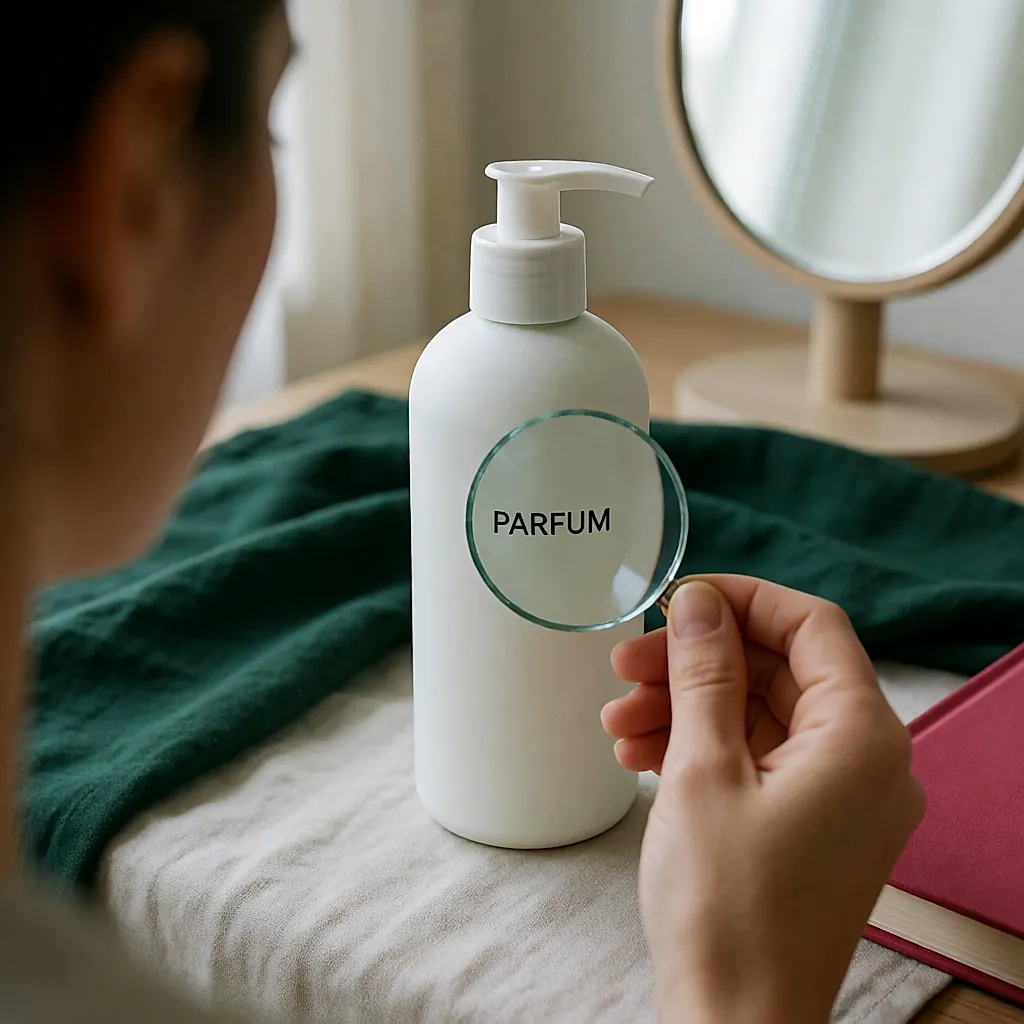
Watch the neighbouring vocabulary as well. There is no official 'allergen-free' standard in cosmetics: a plant extract can always set someone off. 'Hypoallergenic' is not an official standard; it is a brand claim, and should be taken as one. The INCI list, on the other hand, is your best ally: you will see Parfum / Fragrance in plain sight, and regulated allergens appear under their own names (limonene, linalool, citronellol…) once they go above the set thresholds.
So: dry skin that tightens and reacts to everything? Make fragrance-free your first filter. If your skin is dry but not reactive, and a morning lotion that smells good is the whole point? A scented organic lotion will do the job nicely — as long as you are happy to accept the essential oil that comes with it.
Where to find it, and in what formats
In a pharmacy or a health and beauty retailer, the dermo-cosmetic ranges offer unfragranced lotions in large sizes, often around 400ml, with short ingredient lists and sensible prices. Supermarket own-brands have followed: several now offer a fragrance-free version next to the classic one, on the same shelf — sometimes cheaper than the scented version, which is no bad thing.
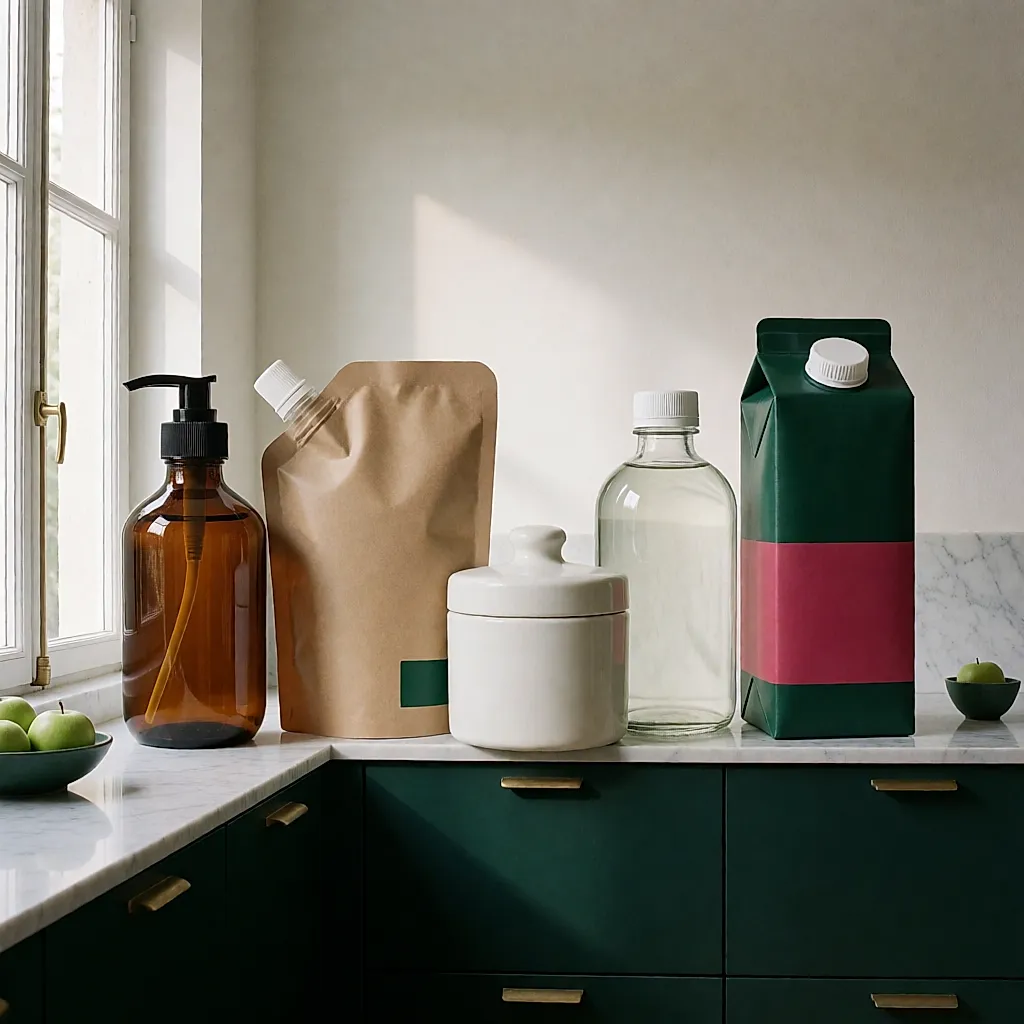
On packaging, a few families share the market. The pump bottle doses accurately and stays within reach, though check locally whether the pump can go into standard plastic recycling. The refill, where it exists, cuts down on packaging material — but check that it clicks onto the pump you already own, otherwise you end up buying a whole new bottle and the environmental benefit stays theoretical. The jar lets you scoop out the last drops (guilty pleasure) but exposes the formula to air and fingers (a downside). Glass looks lovely on the shelf and is heavy to carry; cardboard formats are gaining ground.
What it costs
At the time of writing, expect to pay in the region of £3 to £5 for 400ml of unfragranced own-brand, £6 to £12 in a pharmacy for a large size, and £16 to £28 for a certified organic lotion in a 200 to 250ml pump bottle — the price per litre climbs fast, and that is the trap with pretty bottles. With refills, compare the price per litre against the full bottle and check it clicks onto the pump you already own; with duo packs, do the same maths if you already know the formula suits you.
The three-step shelf check. Turn the bottle over and read the INCI: 'Parfum' or 'Fragrance' in the list is information in itself. Look for an explicit fragrance-free claim on the front, then check the INCI anyway: no claim on earth saves you from that check. And compare like with like: a 200ml jar at £18 costs more per litre than a 400ml bottle at £10.
How to decide without blowing the budget
There is a third way: the large unfragranced format for the whole body, and a small scented organic lotion for the days when you want the bathroom to smell nice. The routine is simple, the budget holds up, and the two labels finally share a shelf without squabbling.
I am not going to promise you a study of my own on how these lotions hold up over 24 hours — that is not the point, and no brand would come out of it well. What I can say: a sensible rule of thumb is to apply lotion while skin is still warm, straight after a shower. The technique often matters more than the label. You now have what you need to read the label differently: organic is about the land, fragrance-free is about your nose and your skin. Two pieces of information, two decisions — and a bottle that will not lie to you about either.


Comments
Your opinion matters: rate the article, react and reply to comments.
Comments are moderated; AI-assisted comments are flagged. Text emoticons (8-), :-), <3…) are automatically shown as images.