

A wig isn't chosen in front of a mirror, but on a piece of paper with your measurements. Three numbers — head circumference, forehead-to-nape, ear-to-ear — and a lot of styles that had been catching your eye fall off the list. That's not a punishment; it's good news: what's left will actually fit, without a strip of tape slapped on in a rush on the morning you leave.
The cap before the colour
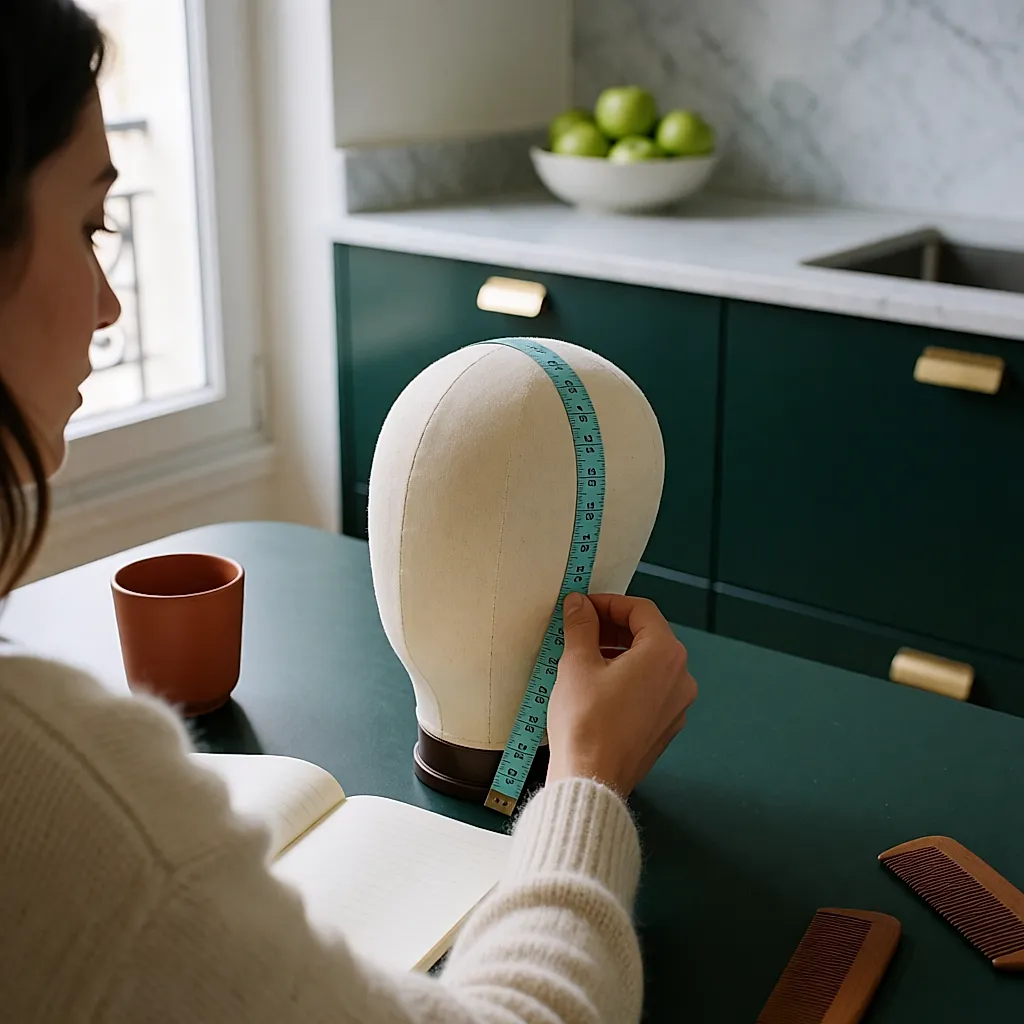
A cap that's too big rides up whenever you move your head; one that's too small presses behind your ears after a while and leaves a mark no one deserves. Your head circumference is measured with a soft tape measure, above the ears, around the middle of your forehead, without pulling tight. Manufacturers usually offer caps in small, medium and large, but the measurements behind those labels vary from brand to brand, so trust their size chart rather than what you remember about hats.
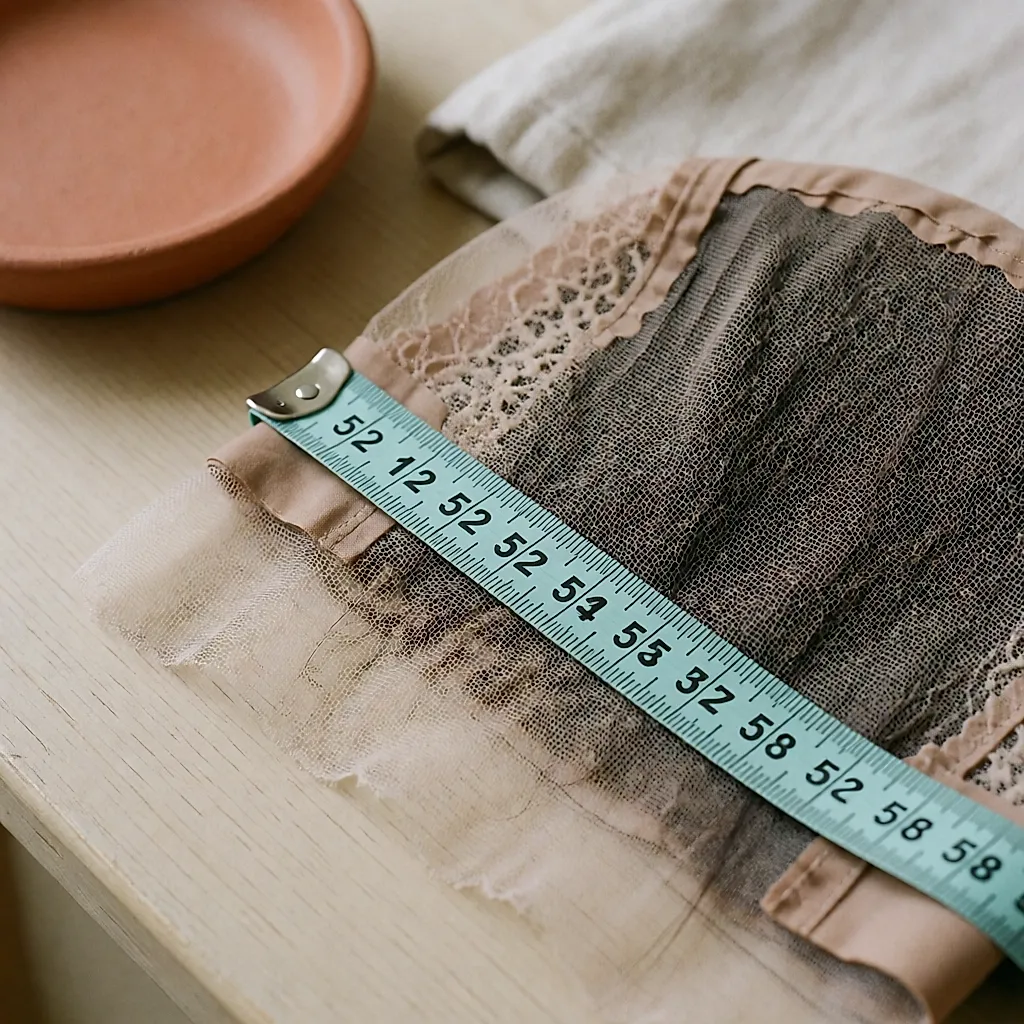
Second step: front of the forehead to nape, then ear to ear over the crown. These measurements determine the cap base, meaning how the wig is constructed. A monofilament base — a fine mesh with hand-knotted hair — is designed to be breathable and to let you place the parting where you want it. A more open, wefted base is also designed to be breathable, but it often means the parting is fixed. As for a lace front — the lace that mimics a hairline — it's a deliberate choice: it needs glue or tape and a little more time in the morning. Will you really give yourself that time on a Monday when you're already looking for your keys?
Density and length: aim for liveable, not spectacular
Density is how much hair there is per square centimetre. Catalogue photos often show generous density — wonderful in a picture, like a helmet on your head. For everyday wear, medium density is plenty and puts less weight on your neck; go up a level only if you plan to wear your hair up often, because a sparse model doesn't cope well with that. The question to ask before you commit: how much time are you willing to spend on it in the morning?

For length, take your tape measure and picture the real scene. Long hair needs detangling, washing and drying, and it tangles beautifully without asking your opinion. If it's your first wig, a bob or shoulder length slots more easily into a schedule.
Synthetic or human hair: the question people forget to ask
Synthetic fibres, such as modacrylic, have a real selling point: price, and the fact that many survive a rain shower without any fuss. Their limits are heat — straighteners, curling tongs and too-hot hairdryers can mark them, unless they're heat-resistant versions — and wear, which is faster than with human hair. For a first purchase or a very elaborate colour, it's an honest compromise, as long as you know that going in.
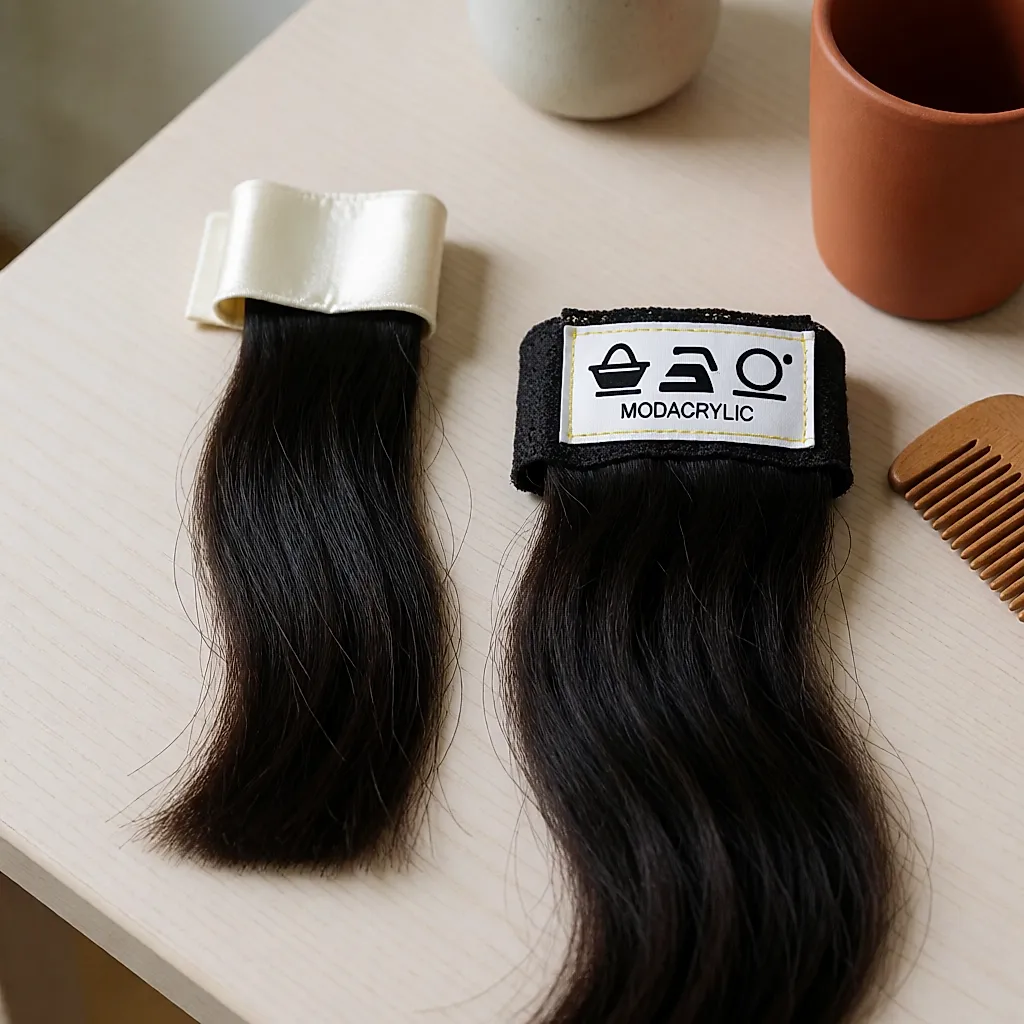
Human hair behaves like your own: it can take heat and colour, and in return it asks for the care of normal hair. Price isn't the only issue. Ask the seller where the hair comes from and how it was collected. When it's described as “Remy”, that is meant to indicate that the cuticles all point in the same direction — often presented as a sign of softness and easier detangling. Some retailers can answer, others much less so, and at that price, that vagueness deserves a question.
The note to take with you to the seller: your head circumference in centimetres, the base you want, density, length, colour in two words — and three questions: where the hair comes from, aftercare, and whether adjustments are possible.
Budget
On price, two worlds coexist. Synthetic wigs are usually the least expensive — as a rough guide in the UK, between £30 and £200 — while human-hair wigs cost more, often from around £200 to £1,000 or more, especially in long lengths and lace bases. Your city and where you buy can change the bill: a specialist wig salon, a hair-loss clinic or an online retailer.
One thing to know, too: in some medical situations, there may be NHS support for wigs, depending on eligibility and local provision. Check the details with your GP surgery or a local NHS wig service; a specialist retailer may also be able to explain what paperwork is involved.
The step that stays with you
Three measurements on a Sunday afternoon, a note in your bag and one slightly awkward question for the seller: not much, for something you wear on your head. A wig doesn't tell the story of what you've lost; it tells the story of what you want to try. You might as well get the size right.


Comments
Your opinion matters: rate the article, react and reply to comments.
Comments are moderated; AI-assisted comments are flagged. Text emoticons (8-), :-), <3…) are automatically shown as images.