
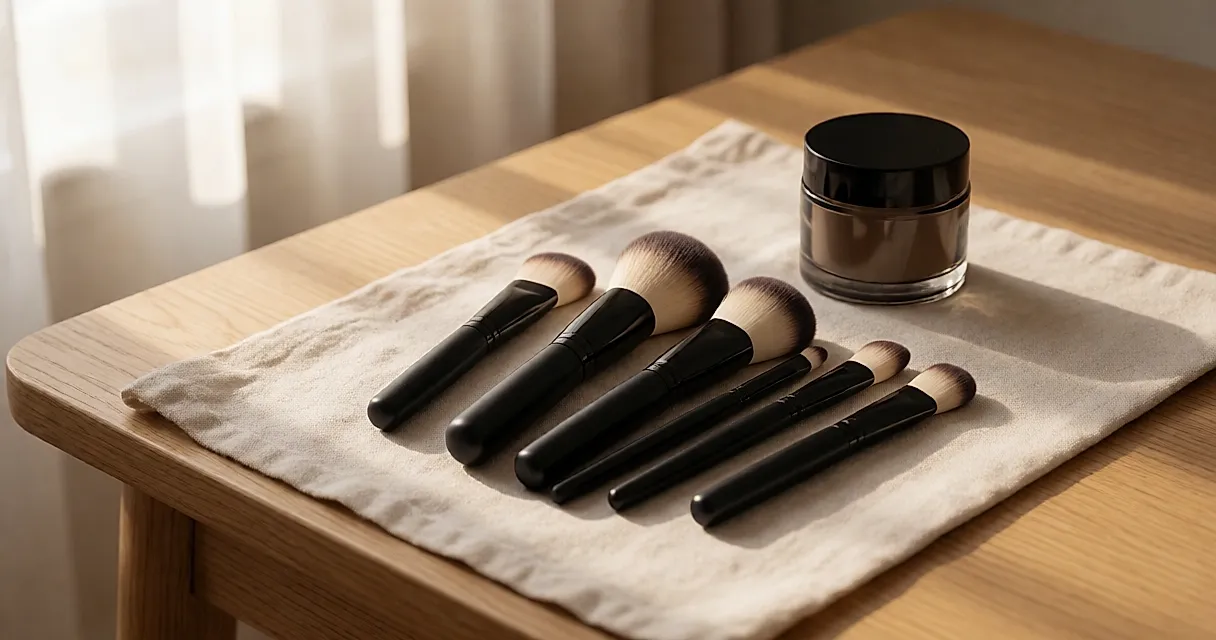
A good make-up look starts with the right kit: decent products and suitable brushes make the right techniques possible. But make-up brushes come in every shape and size — fine, fluffy, angled, flat, round — and it is not always obvious which one to use for what. Here is a focused guide to the essentials and what each brush is actually for. Good-quality brushes are the surest route to a polished finish, and they last for a very long time, because they keep their shape with use — provided, of course, that you look after them.
Powder and foundation
For foundation, you can use your fingers, a sponge or a brush; a brush gives a more meticulous, natural application.
If you prefer applying foundation with a brush, choose one that is fairly long and flat or round, depending on preference, for a made-to-measure application that is easy to control.
Some prefer a flat brush: it is easy to handle, and it is simpler to get the finish you want — fuller coverage with a second layer, or a natural look by sweeping it gently over the face and using very little product.
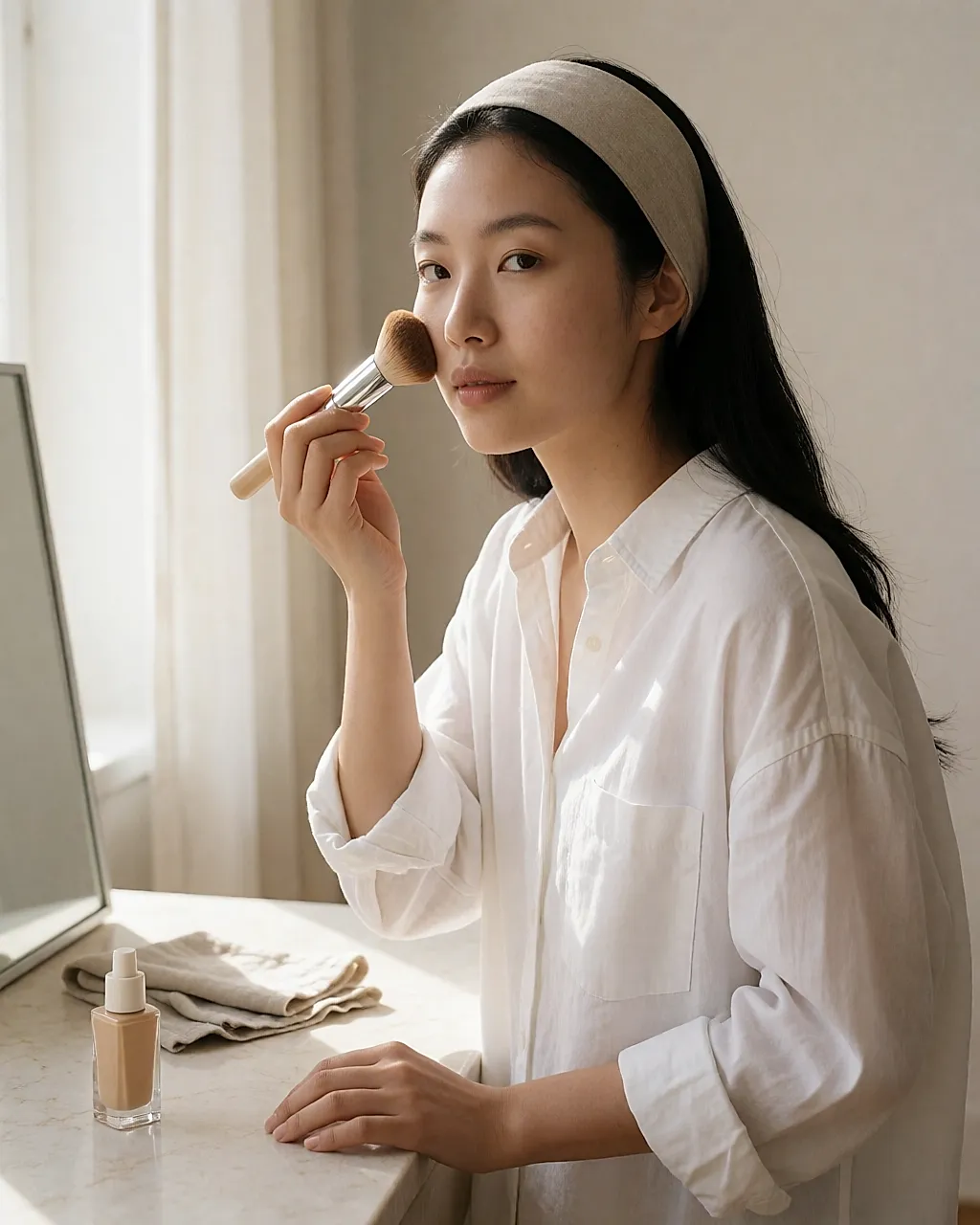
That said, a round brush is also very effective and often used by pros: it gives an extra-smooth finish, easy control of the amount and meticulous make-up. Note, too, that many people find a brush helps them gauge how much product they are using and gives a fine application; others prefer their fingers — here, a flat brush (top) by Shu Uemura and a round brush (bottom) by MAC, no. 188.
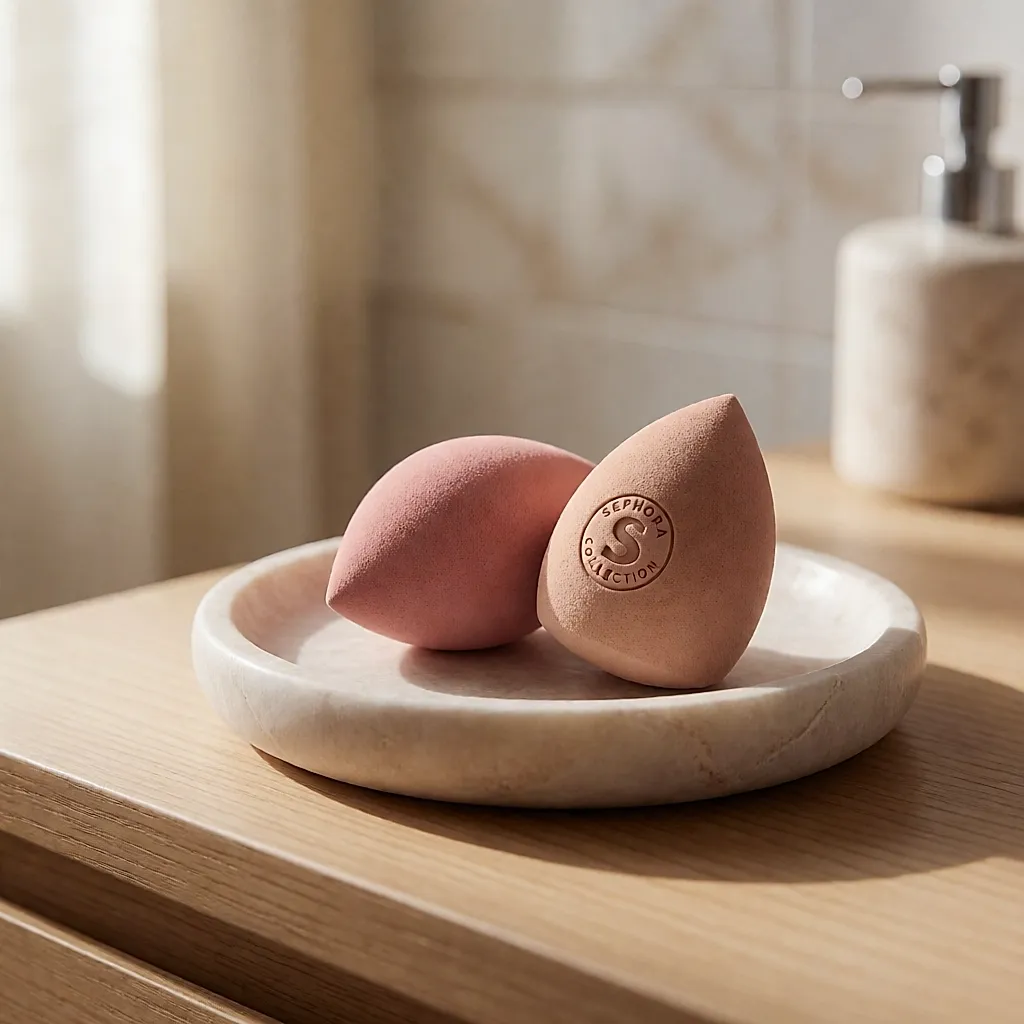
Sponges are cheap and perfect for cream foundation: they can be washed several times but will eventually break down and lose their softness, so they need replacing regularly.
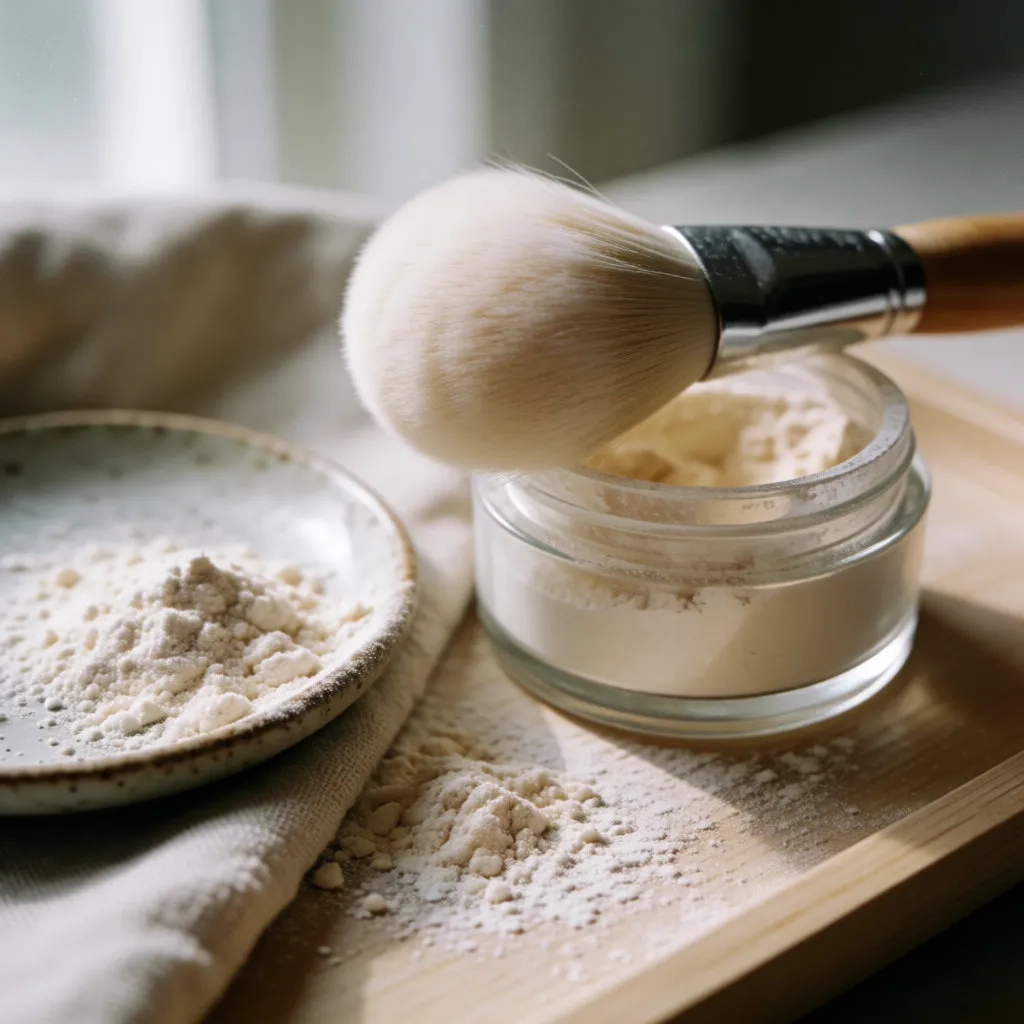
For loose powder, the ideal is a large, fluffy, round brush. Choose one that is soft, with slightly longer, flatter bristles for a pleasant, gentle application; or a firmer one with fairly short bristles and a thicker, rounder head — here, the round, thick brush that is perfect for applying loose powder at Sephora.
Blusher
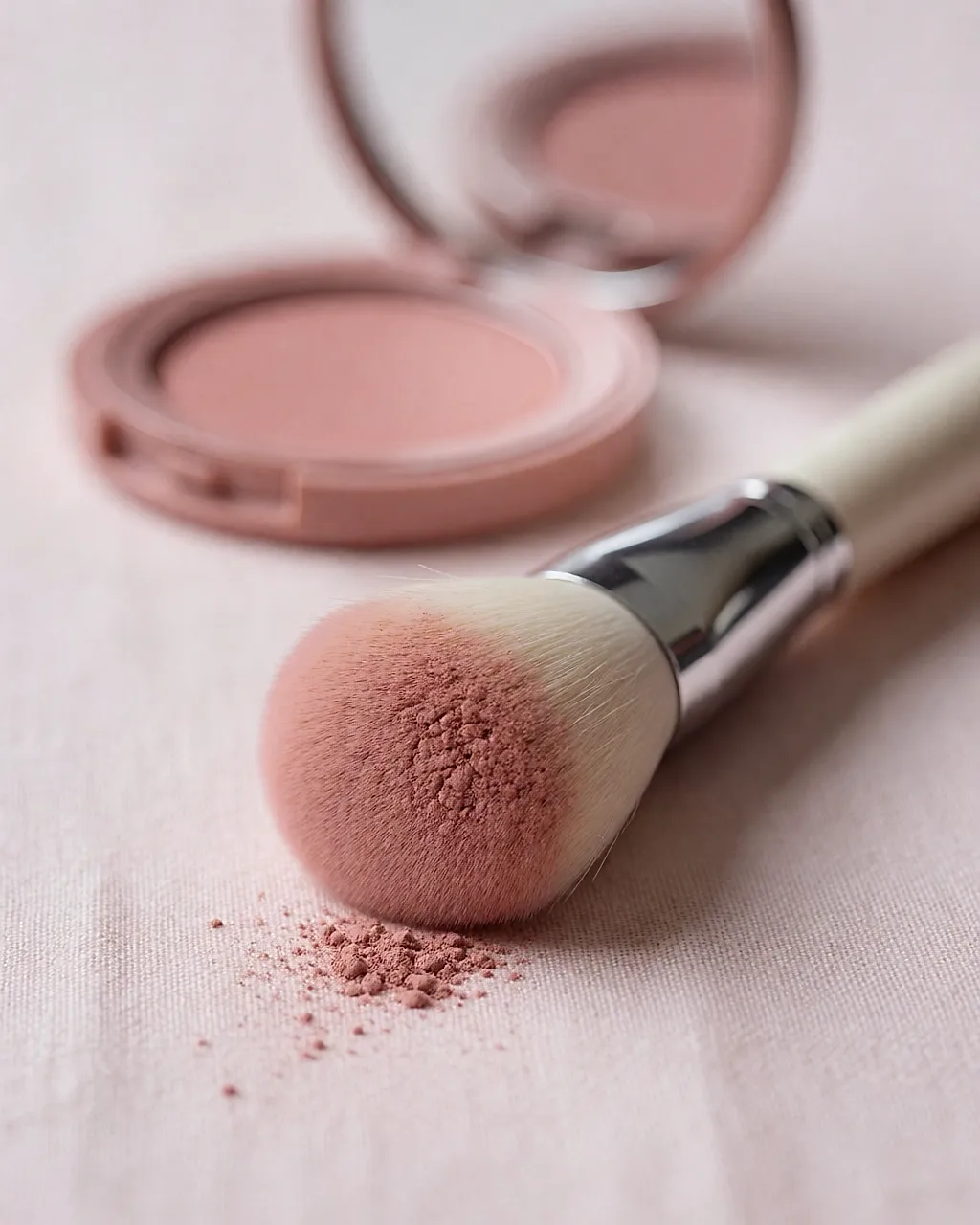
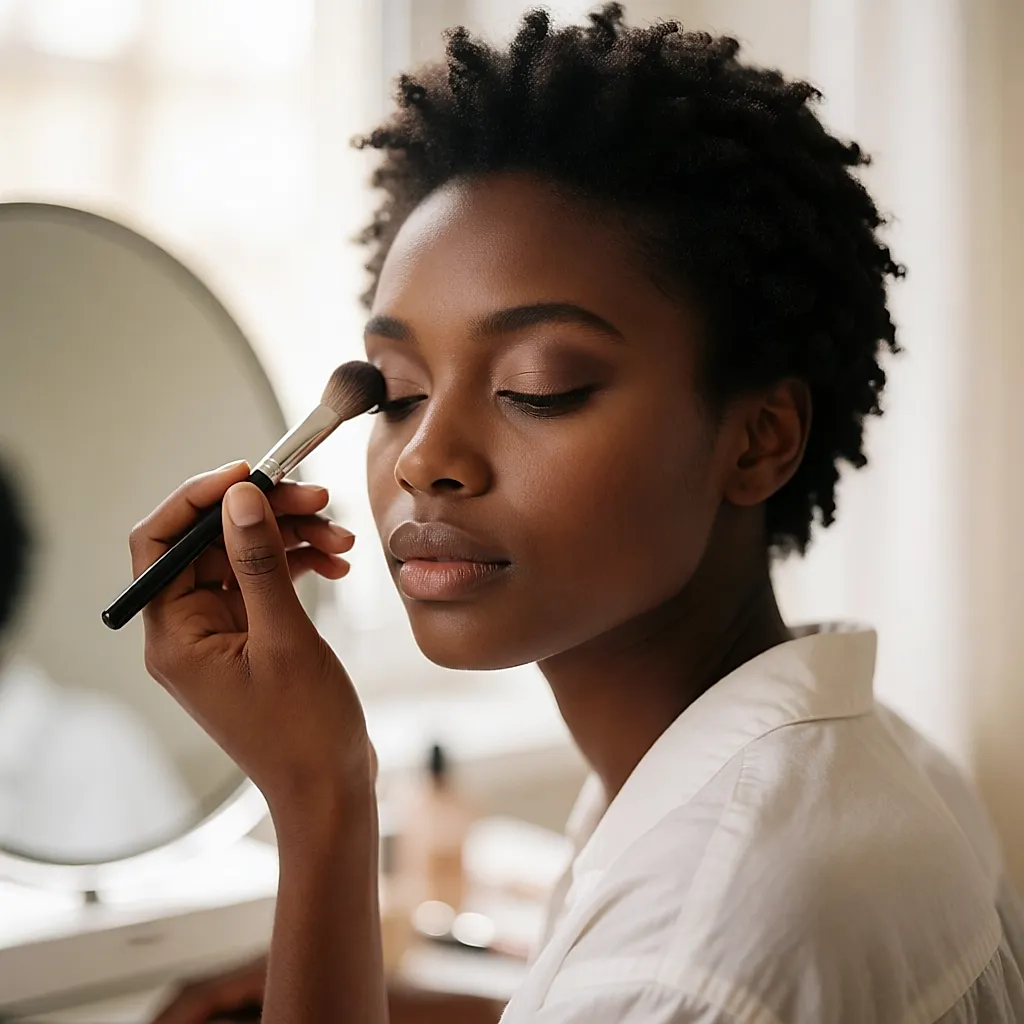
Again, it comes down to taste. Some prefer a basic brush with fairly soft, long, rounded bristles to apply blusher gently, working across the cheekbones and temples — Sephora's classic blusher brush.
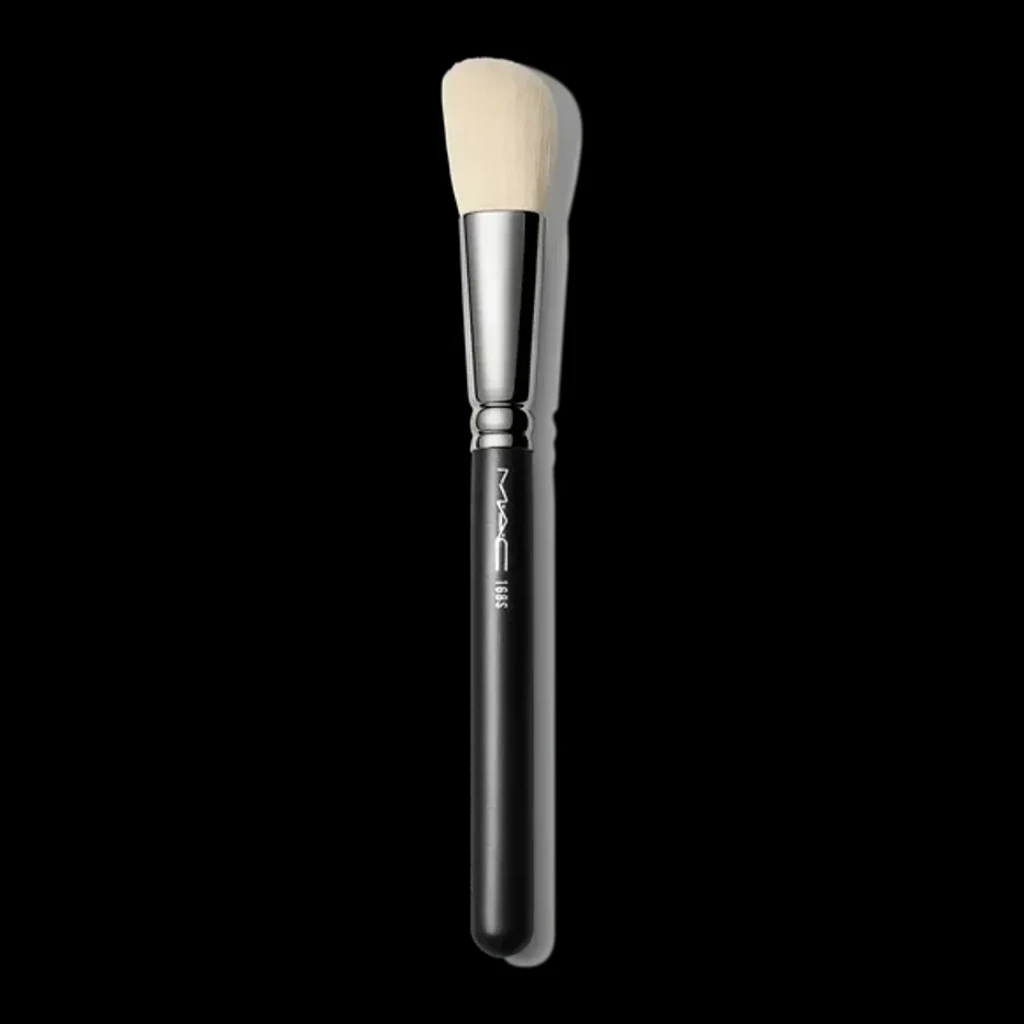
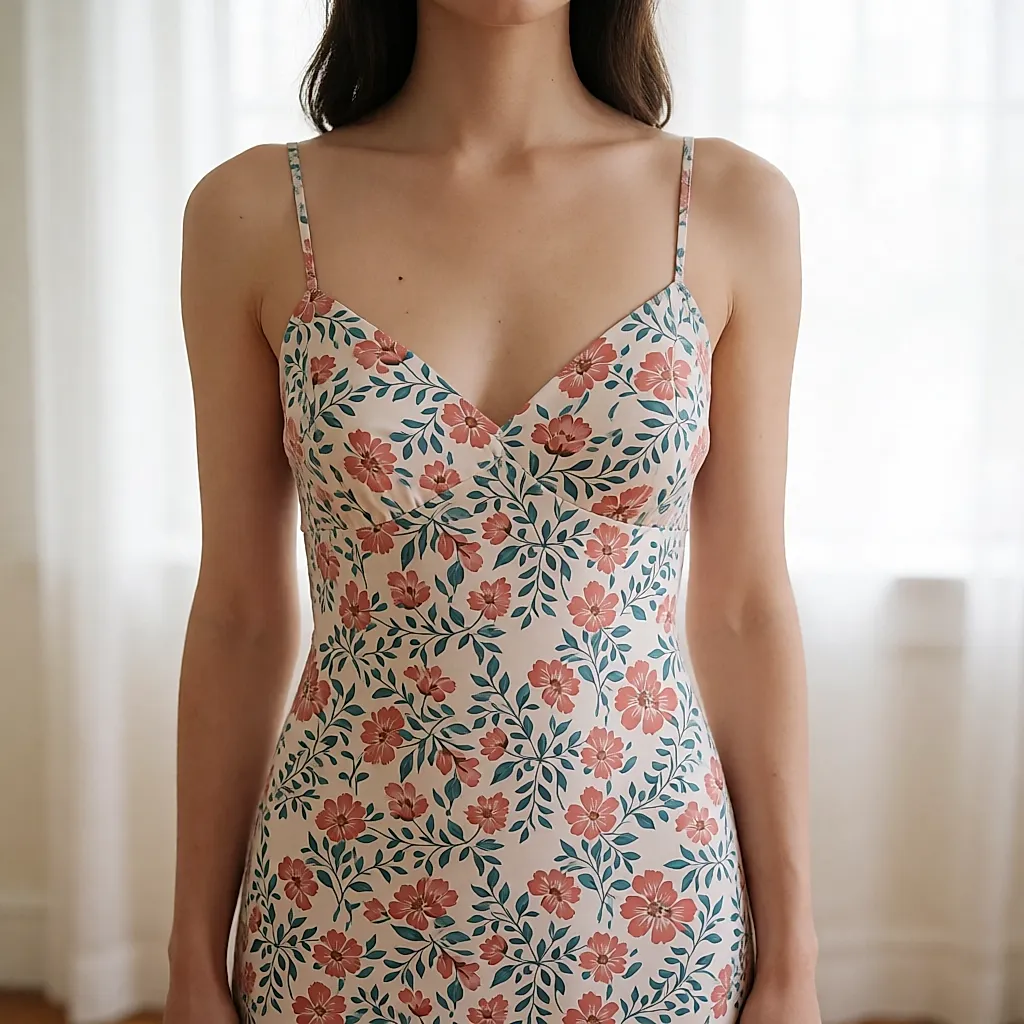
Others prefer brushes that can sculpt the areas of the face you want to bring forward: in that case, the brush is no longer rounded but slightly angled, so you can use the 'blade' or angle of the brush flat against the skin and work the areas you want — MAC's large angled brush no. 168.
Bronzer
For applying terracotta and bronzing powders, the best of the best is a thick, flat-cut brush, which gives the make-up a certain dimension and a more natural sun-kissed effect.
That said, beware the 'too much make-up' trap, especially with this brush: remember to blend well and pick up only a little powder. Good news: this brush is not essential; bronzer can perfectly well be applied with a blusher brush — this one is for perfectionists after a professional finish. Bronzing powder brush, Sephora.
Concealer can easily be applied with a finger, but a brush still gives a certain precision by placing product, for example, right under the lashes and, above all, avoiding putting it everywhere or spreading it too far: a finger is a bit too big for this precision work.
The ideal concealer brush has a long, fine handle, a flattened head rounded at the tip, and is firmer than blusher brushes so you can control the product and apply it in a smooth but well-covering layer. It also allows you to camouflage any imperfections, redness, spots and so on, again discreetly but effectively — Sephora again.
Eyeshadow
This is where things get complicated: there are many eyeshadow brushes, but rest assured, for classic make-up you do not need the whole kit. For optimal application of different textures and still being able to vary effects, we would recommend three types of brush.
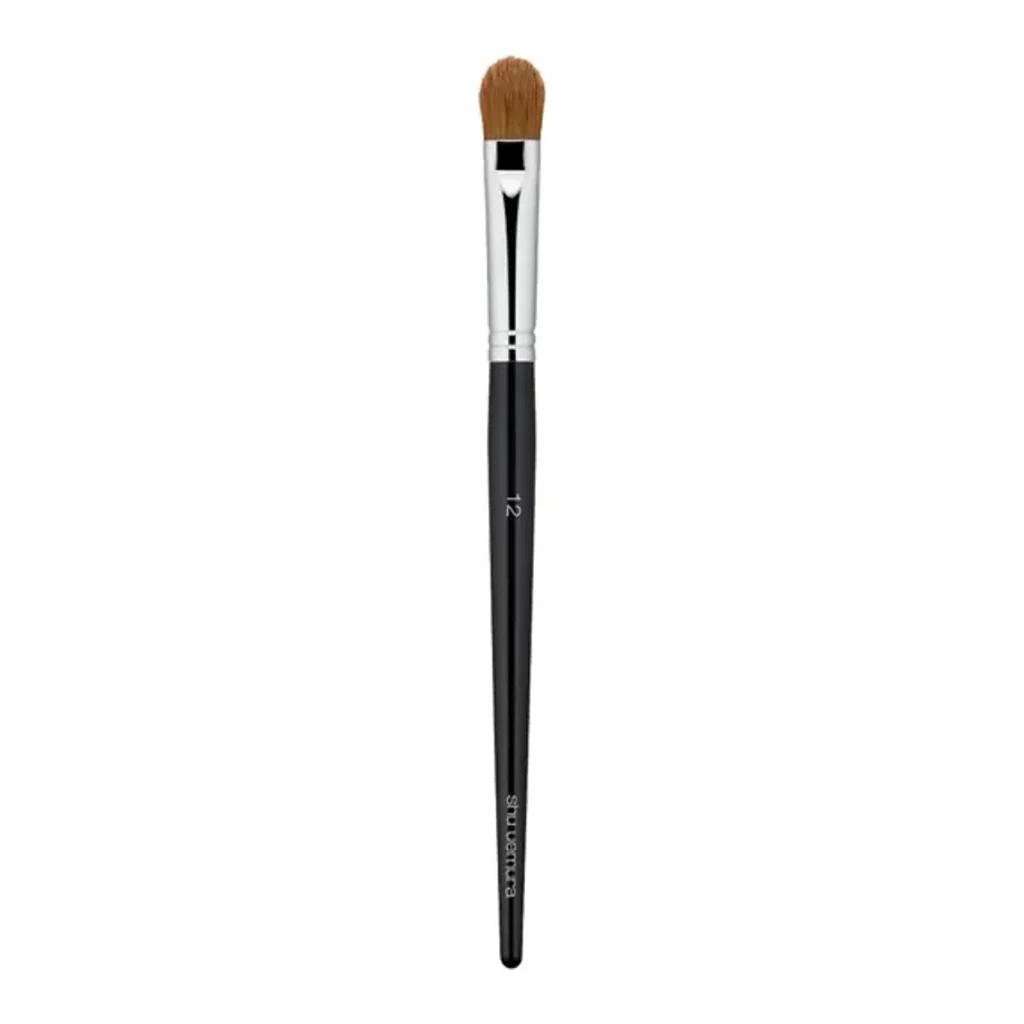
The 'classic' first: a brush with short but fluffy bristles, rounded at the tip. It allows basic eyeshadow application: it presses the product into the lid and gives an opaque, highly pigmented effect if you want colour, all the more so if you dampen it slightly before application. It is ideal for shimmer or iridescent shadows, which reveal all their nuances when applied this way — MAC fluffy brush no. 213.
But having a blending brush to hand can help fine-tune the make-up: this one has slightly softer bristles, a rounded tip or, as here, a slightly angled but fluffed-out shape. It softens or blurs the shadow to create a halo effect and a soft make-up look — perfect, for example, for the transition shade on the part of the lid above the crease. Shu Uemura angled blending brush.
Finally, an angled eyeshadow brush is ideal for drawing a line of eyeshadow right at the lash line (upper or lower), defining the eye and its contour, and even the eyebrows, since its 'blade' allows you to press the powder into place with a strong, precise application — Sephora.
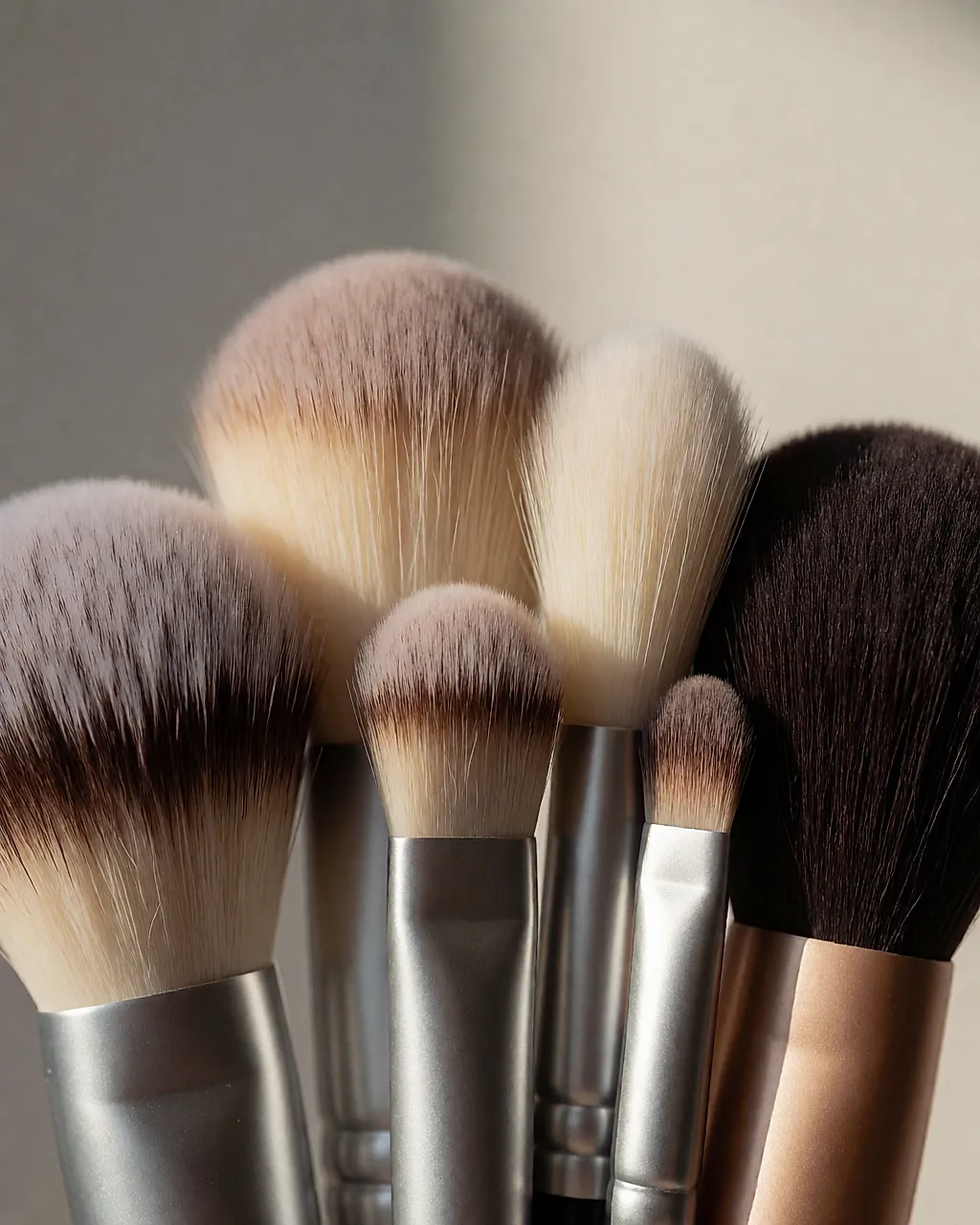
Worth knowing: this flat fan brush is very handy, on the one hand for removing excess loose powder or eyeshadow pigments that fall under the eye and leave marks if you wipe them away with your fingers, and on the other because it allows all kinds of powders to be applied sparingly and discreetly — Shu Uemura brush.
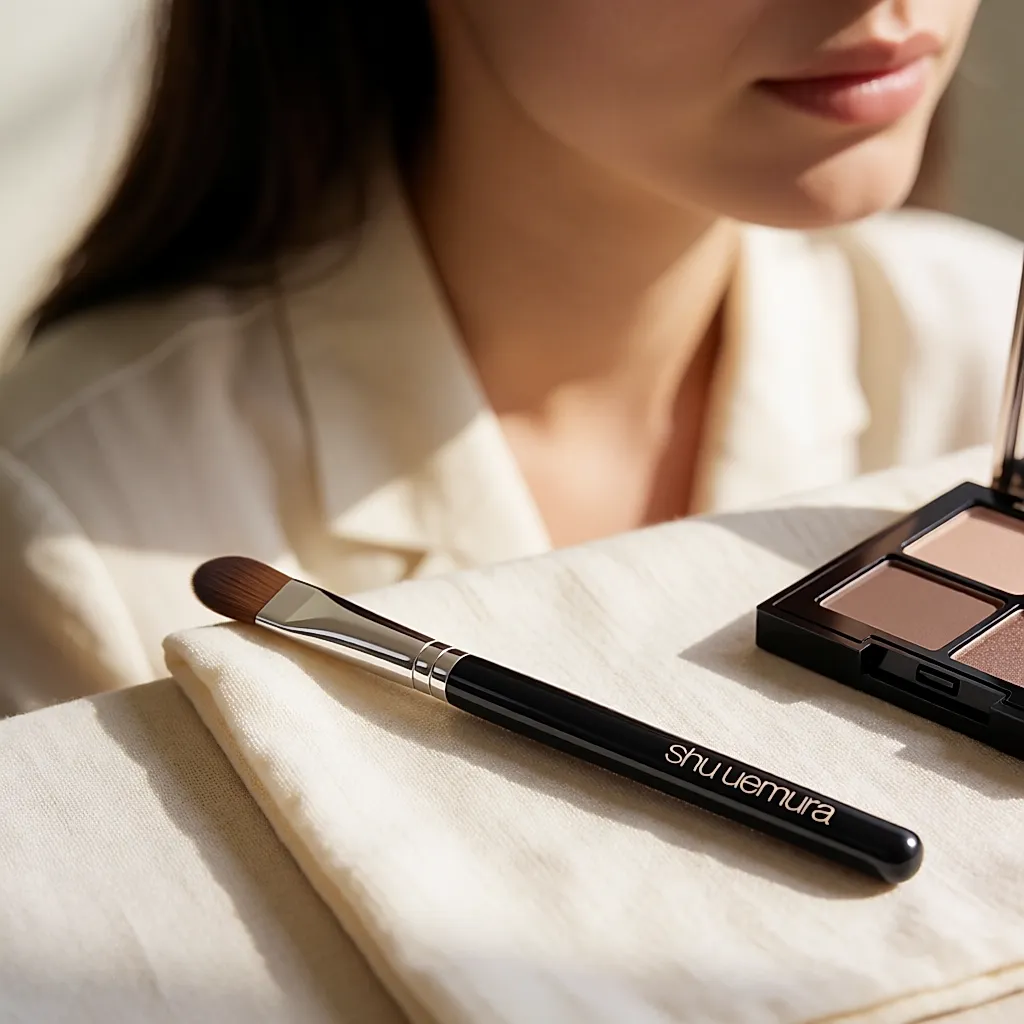
Do you really need to buy all of it? No.
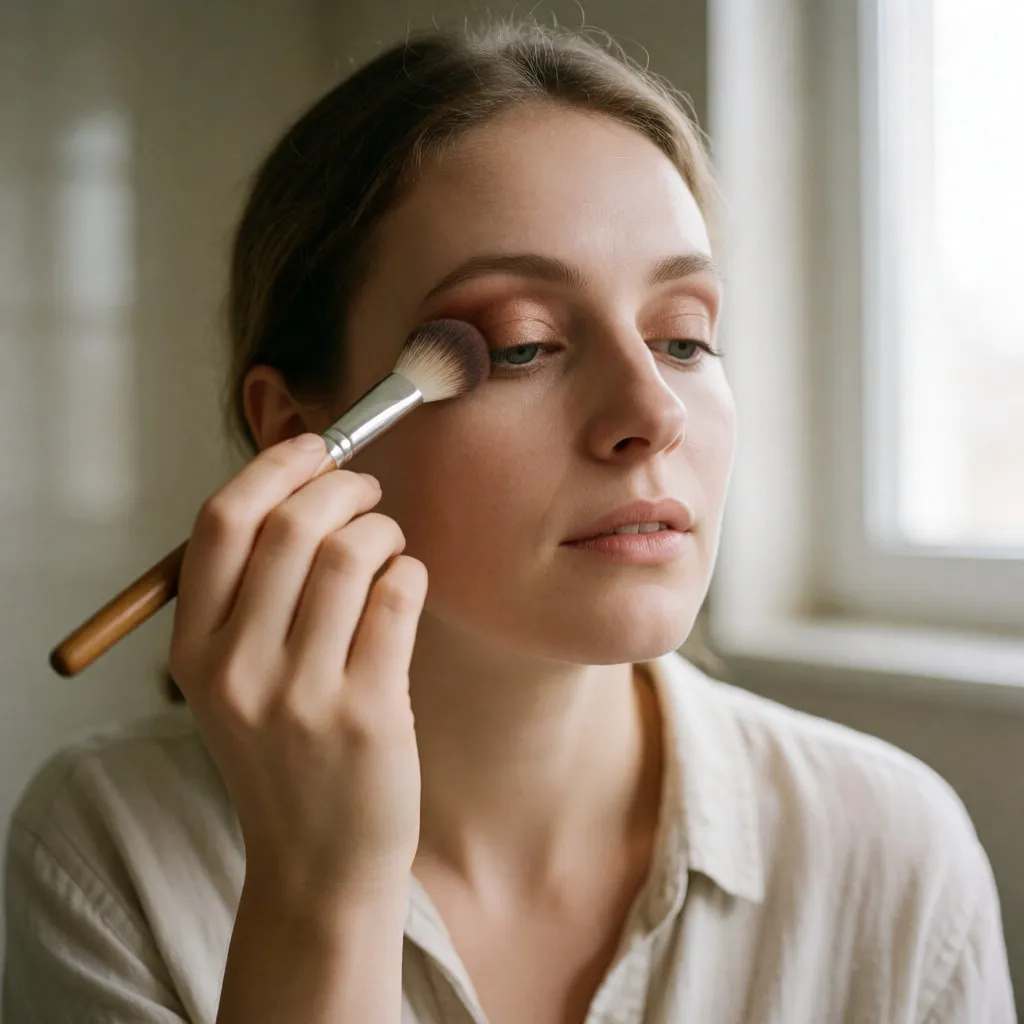
Finally, brush care: it is essential to clean them regularly to stop them becoming breeding grounds for bacteria and to help them get their softness back. Some make-up artists recommend washing with warm water and soap, then leaving the brush to dry flat on a piece of kitchen paper, in the open air. Others recommend avoiding water and soap and cleaning brushes with a product made specifically for the job, such as MAC's. It's your choice...
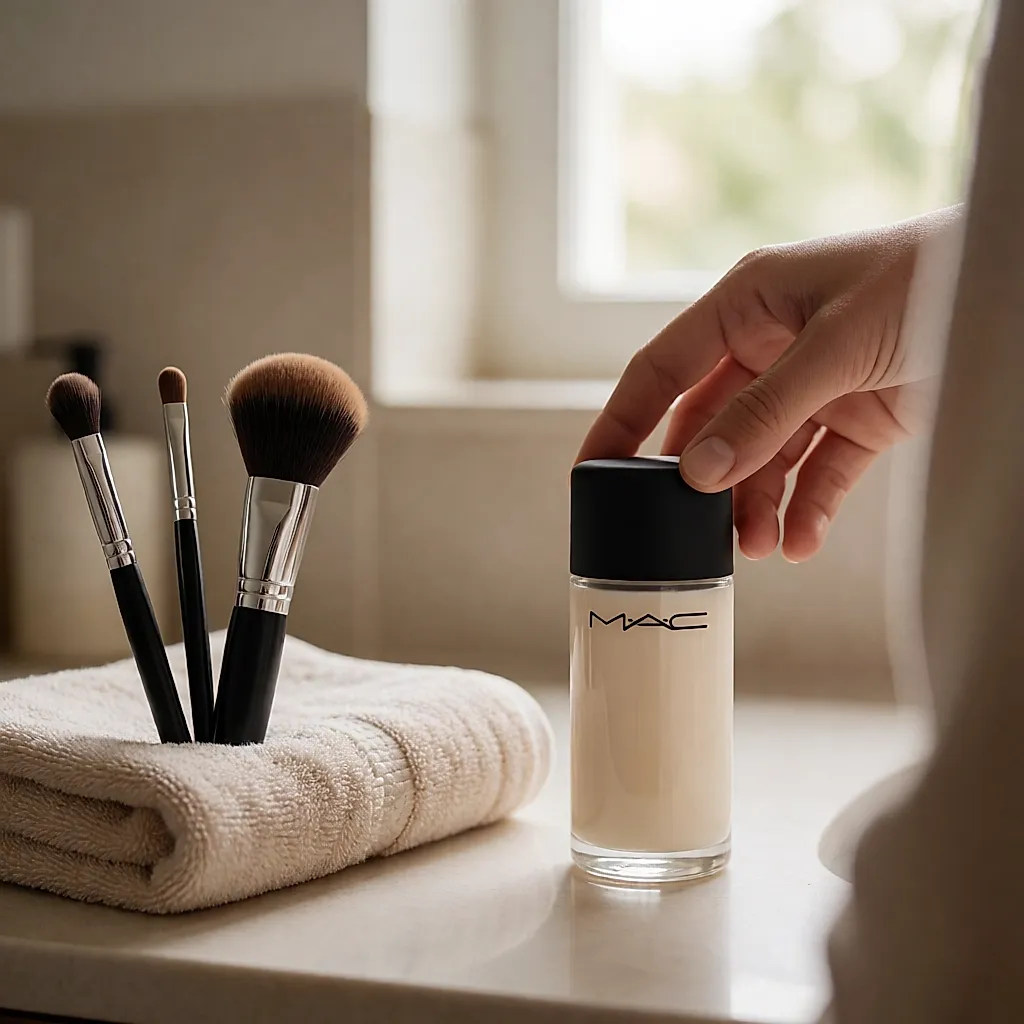
Well chosen and properly washed, these few tools turn a rushed routine into something polished. There's a brush for every step and every style.
Budget
A decent brush doesn't have to cost a fortune. As a rough UK guide, expect around £8–15 for an entry-level powder or blusher brush (Sephora, pharmacy brands), £15–30 for a more worked shape — angled contour, flat bronzer — and more like £25–45 from professional make-up brands such as MAC or Shu Uemura. Foundation sponges remain the cheapest option: a few pounds for three, but they need replacing often. What really changes the price is the quality of the bristles (synthetic or natural), the density and precision of the cut — and the number of shapes you decide to accumulate. Since a well-cared-for brush lasts for years, it's better to buy two or three good ones than ten mediocre ones.
Sources
- Sephora UK — make-up brushes and accessories, consulted in 2026.
- MAC Cosmetics UK — professional brushes, consulted in 2026.
- Shu Uemura — brushes, consulted in 2026.
Comments
Your opinion matters: rate the article, react and reply to comments.
Comments are moderated; AI-assisted comments are flagged. Text emoticons (8-), :-), <3…) are automatically shown as images.