
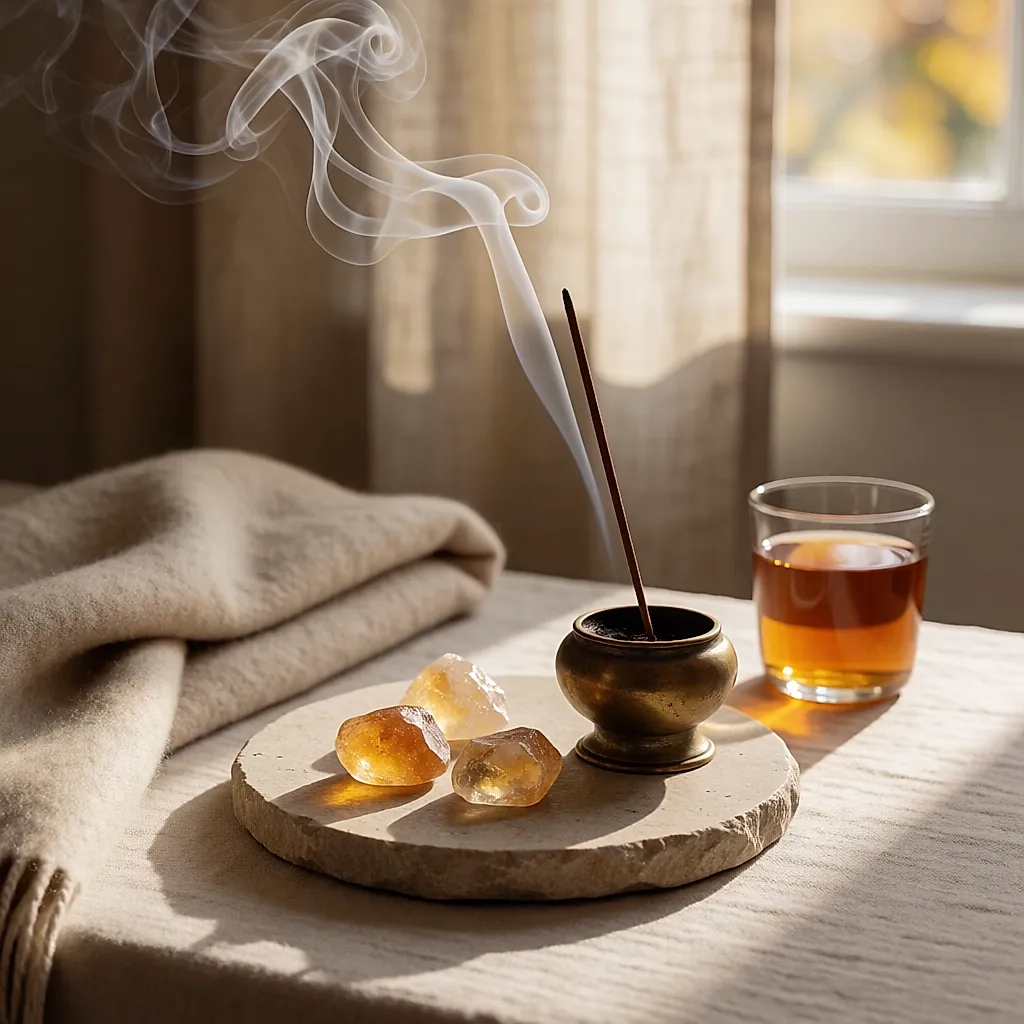
On a Sunday evening in November, your living room smells of wet dog, soup and cooling laundry. One match, one stick — and the air changes the subject. American magazines have spent the past few seasons turning that small gesture into a proper beauty category: something to blend, to layer, to wear. Time, then, to take incense out of the vestry and treat it as what it actually is — a family of resins.
First, a tree's tears
Before incense is smoke, it's sap that hardens. You score the bark, the tree weeps, the tear dries in the sun and turns into a resin tear — hard, translucent, tacky in warm weather. Three of them make up most of the repertoire: frankincense (olibanum in perfumery), tapped from Boswellia; myrrh, darker and more bitter, from Commiphora; and benzoin, the least familiar of the three — powdery, vanilla-ish, almost good enough to eat. Three trees, three characters, one thing in common: none of them gives much away until it's heated.
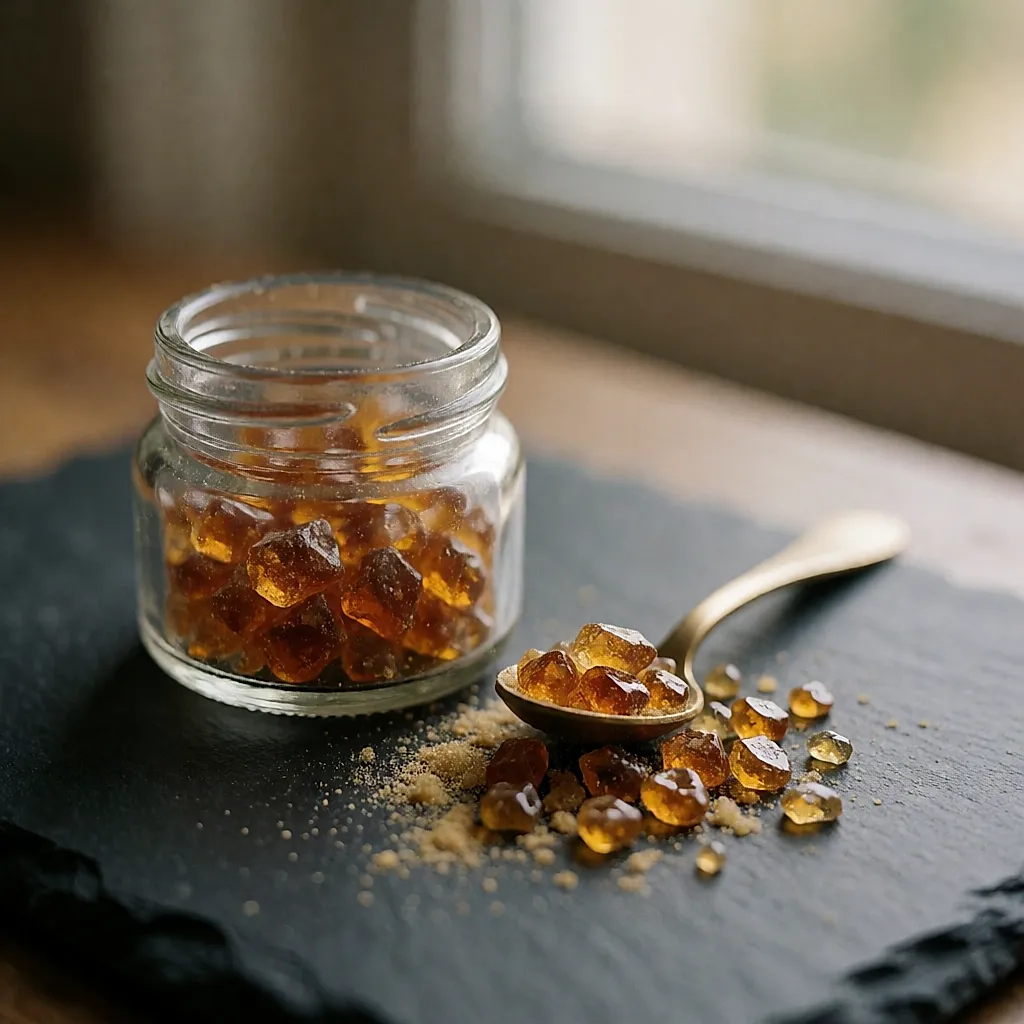
This is where it gets interesting. Frankincense opens with something lemony and dry, almost luminous — morning, a warm stone, washing drying outside. Myrrh drops a register: root, earth, a faintly medicinal base that won't win everyone over, and there's no point pretending otherwise. Benzoin rounds everything off, with its whisper of vanilla and almond warming the room in no time. If you only start with one, make it benzoin: it forgives almost anything, including the stick you forgot to put out.
A morning accord, an evening accord
The real find in this trend isn't the resin — it's the logic of blending. Just as with a fragrance, you don't burn any old thing at any old hour. In the morning you're after clarity: frankincense alongside bergamot, neroli or a hit of lemon zest — as a floral water, a mist, or in a ready-made incense blend. The result doesn't smell of church; it smells of a window thrown open in the middle of winter. Try it on a Monday at 7.40am: coffee and coat go down a great deal better.
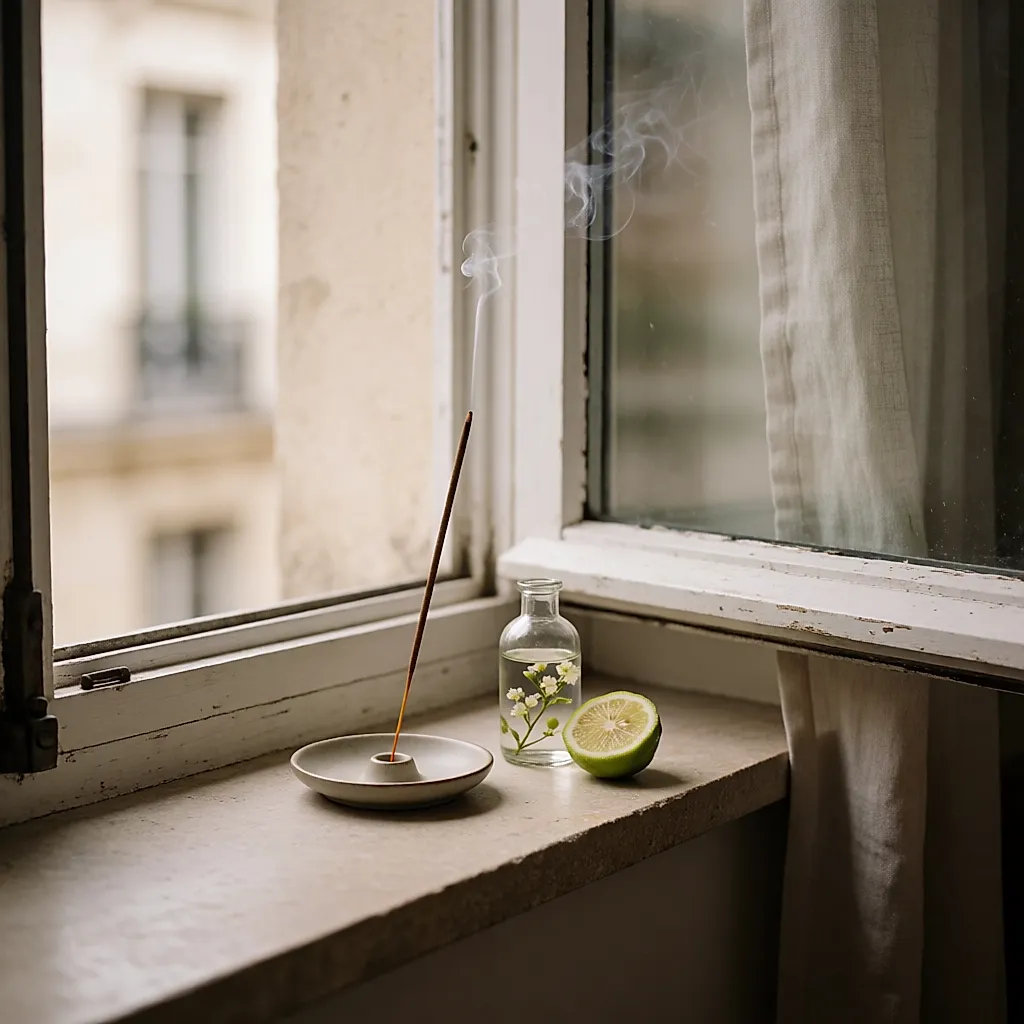
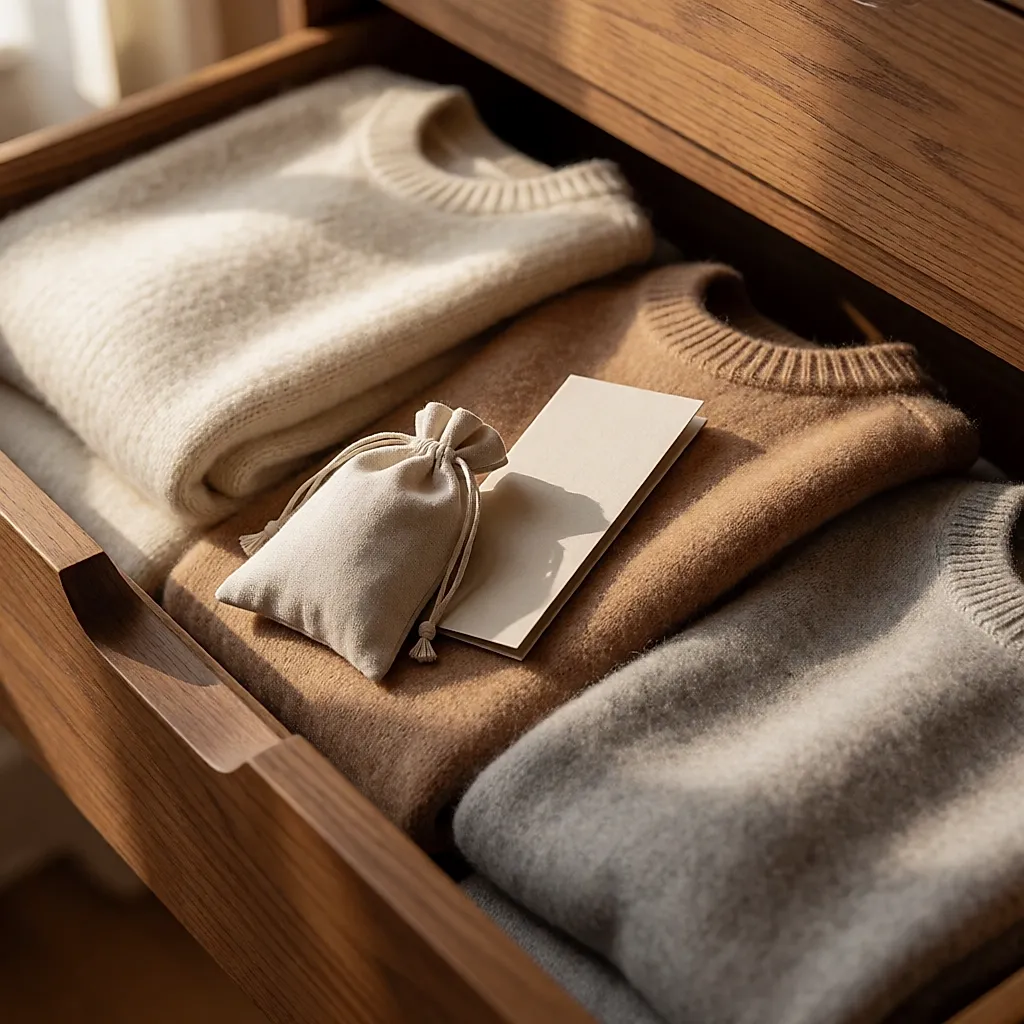
At night, reverse it. Cedar, sandalwood, vetiver, a discreet myrrh: woods that hold the room without filling it. And then there's the use everyone forgets — clothing. A benzoin sachet slipped into the wardrobe, a book of scented paper tucked between two jumpers, and your woollens come back out for a season smelling of something no fabric conditioner can imitate. It's the best-value move in the whole story: it burns nothing, it smokes nothing, and it works away while you sleep.
Smoke without the fug
Here's the crux: incense smokes. Smoke is not harmless indoors, so you don't want to turn your studio flat into a blazing chapel. One room, one stick, the time it takes to drink a coffee — and then open the windows, even in November, even in the rain. If you've got a small child, a cat or a twitchy smoke alarm, go for the no-burn options (pillow mist, floral water spritzed onto curtains, a low-heat diffuser) or low-smoke Japanese incense.
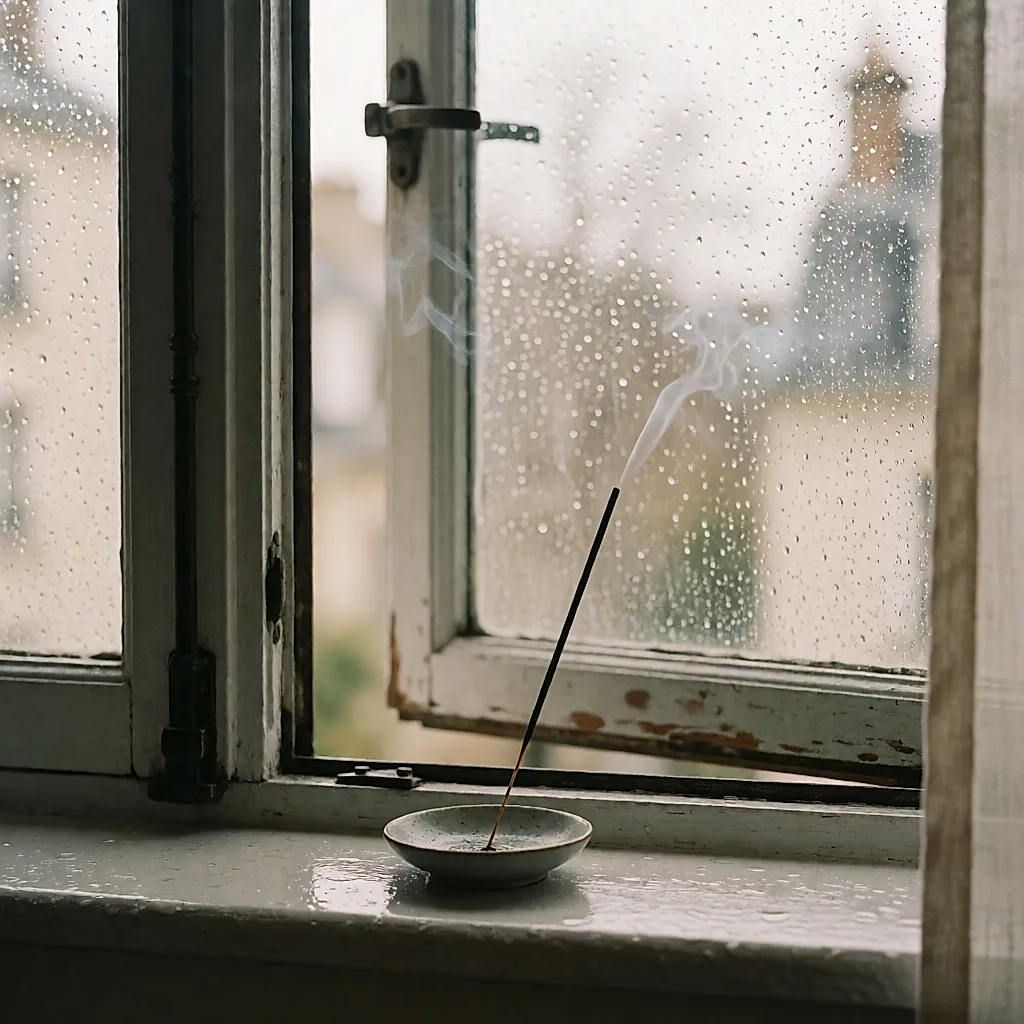
When it comes to texture, not everything behaves the same way. Sticks are the easiest to find, but often the sweetest and the most overpowering. Cones flare up faster and go out sooner. Raw resin on charcoal needs a burner, a bit of skill and a healthy dose of humility: the first time, you always use too much. An electric burner heats without a flame — the priciest and least dramatic option, but the one that gives the fine notes the most room.
Three rules to dodge a headache: in practice, one stick is often enough in a room; put it out before you leave the house or go to sleep; and keep your resin in a closed glass jar, away from light — it loses its scent far faster than you'd think. Give the wardrobe sachet a stir from time to time, too: resin needs waking up.
Budget
Expect to pay roughly £5–20 for a box of sticks from a supermarket or health food shop, and £15–35 for a Japanese incense set from a beauty retailer or online. Loose resin — frankincense, myrrh, benzoin — tends to run £8–22 for 50g depending on origin and grade, enough to last a whole season. A ceramic or cast-iron burner starts at around £10–25; an electric low-heat model is more like £30–70. As for scented paper to slip into drawers, that's the gentlest way in: around £10 a book, from a homeware shop or online.
Then there's the sensible route: one format, one blend, and see whether the urge returns the following month. Autumn is long — there's plenty of time to change your mind.
The scent trail, not the smoke
What makes this material so appealing is that you never see it. No bottle on the shelf, no promises, no retouched complexion. Just air that changes, a wardrobe that smells good in February, and a quick gesture that's entirely yours. Incense has never asked anyone to believe in anything: it only asks that you listen. So tonight, instead of a third scented candle, try a single resin tear. You can thank me later.


Comments
Your opinion matters: rate the article, react and reply to comments.
Comments are moderated; AI-assisted comments are flagged. Text emoticons (8-), :-), <3…) are automatically shown as images.