
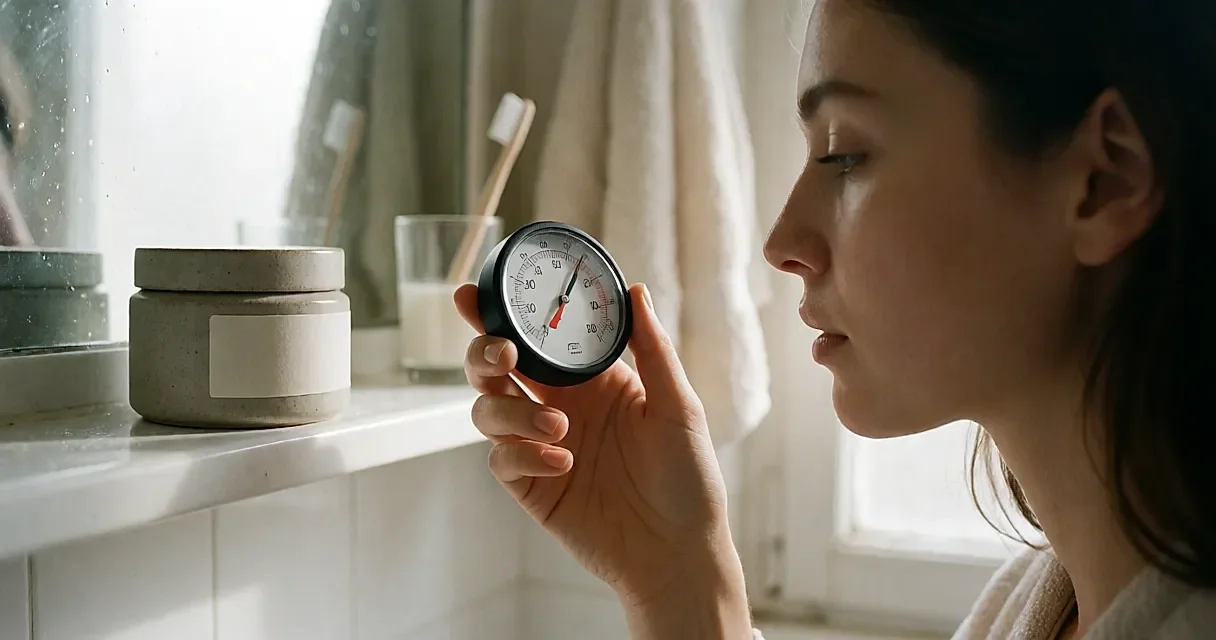
A hygrometer is a small, inexpensive device, and it answers a question your cream never asks: what is the air in your home actually like? The little dial turns up in the DIY aisle between the thermometers and the extension leads, and it displays a percentage. One number, one needle — and your evening routine stops being a reflex and becomes a decision.
What the dial actually measures
Relative humidity is the water vapour in the air, expressed as a percentage of what that air could hold at its current temperature. Hence “relative”: the figure never means anything on its own. The same air, heated by a couple of degrees, will read a lower percentage while holding exactly the same amount of water. Which is how you end up living in an indoor desert in mid-November, radiators on full, without having opened a single window.
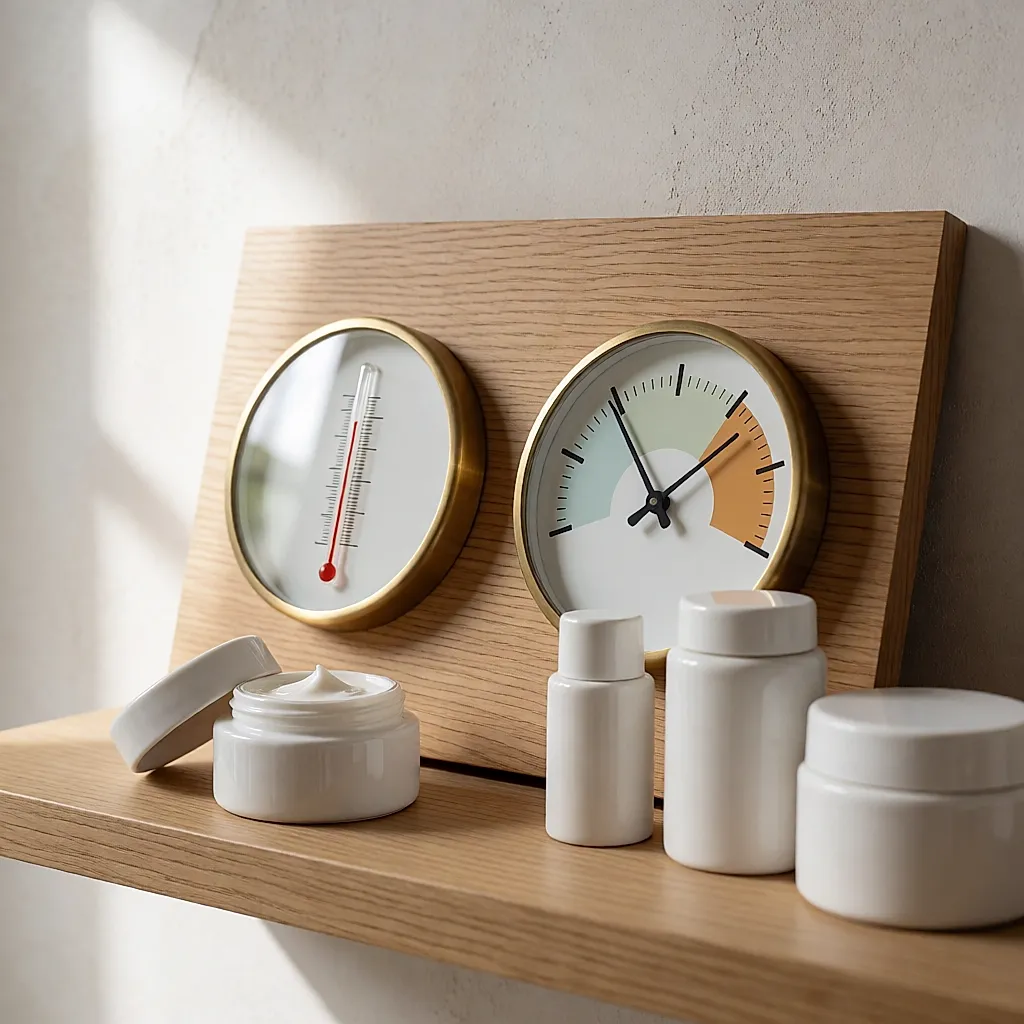
On price, a basic analogue hygrometer is usually inexpensive and easy to find in a DIY store or online; connected models climb higher, for a service many of us tire of before the end of winter. A pot of rich face cream, by contrast, belongs to a different budget. The sums are easy — which says nothing about the quality of the cream, only about the scale of things.
One caution: cheap devices drift, and two hygrometers sitting side by side can differ by several points without either of them being wrong. Go by the trend — dry, very dry, fine — rather than the decimal. This isn’t a lab instrument; it’s a direction indicator.
Heating dries the air out
In winter, the air outside is cold and holds little water. You let it in, heat it to 20°C, and suddenly it’s very dry — even though it came from outside and “smells fresh”. A radiator doesn’t remove water from the air: it changes how much water that air can hold, and therefore its percentage. So is the radiator to blame? Not exactly, but it doesn’t help.
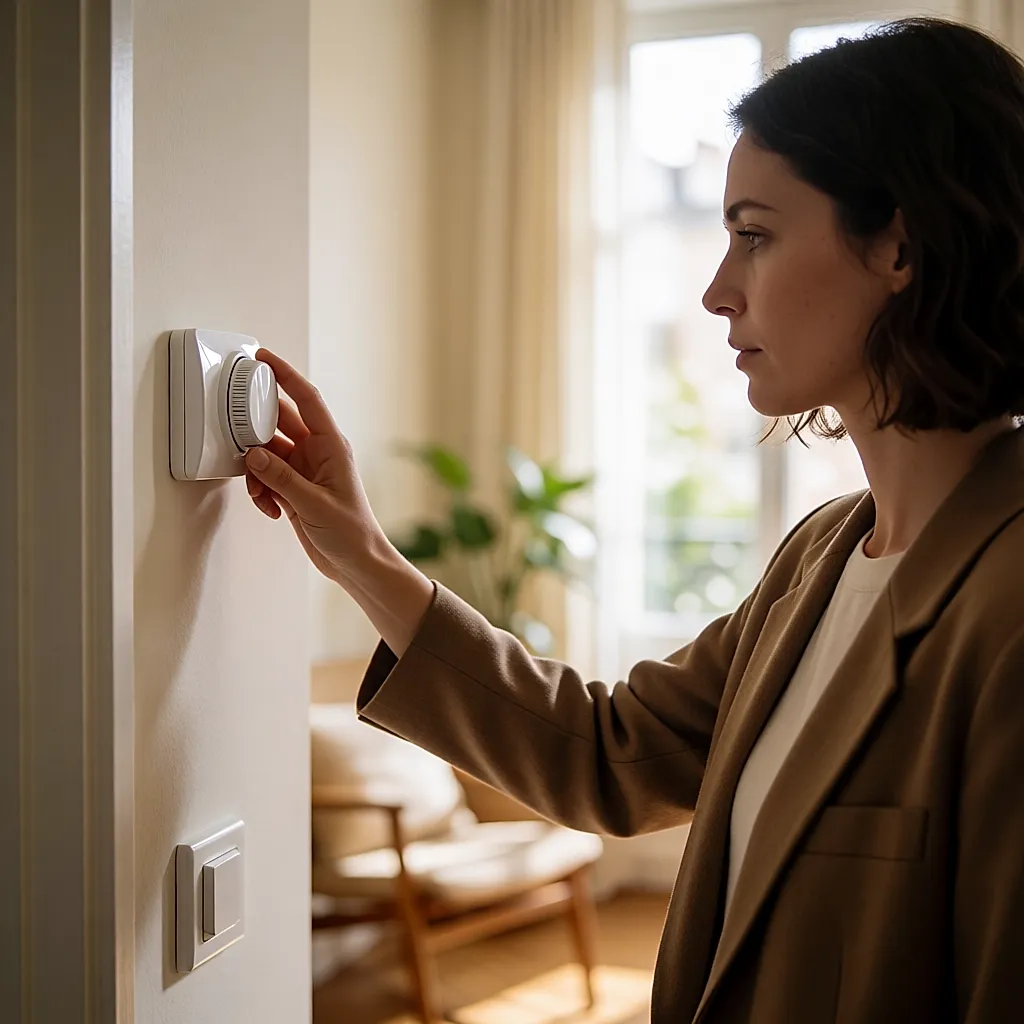
The first lever, and the simplest: turn the heating down a degree. Two, even. This isn’t about living in a fleece, just about not aiming for 23°C in a living room where you’re wearing a jumper. Every degree less means slightly less parched air and a slightly smaller bill — in November, no bad thing.
What your skin feels — and what it doesn’t
Beware the shortcut. Skin that feels tight isn’t necessarily skin under attack from the air: the skin barrier, the cold, wind, hot showers and repeated washing all play a big part. Dry air can intensify that feeling; that’s not the same as creating it. No one is going to sell you a neat cause-and-effect here: the conclusions remain cautious on this point.
The logic of the ingredients is more solid. A rich cream mainly delivers lipids — emollients — which limit water loss and soften the skin. Useful, yes. But if the problem is very dry air and heating that never goes off, you’re piling fat onto a water problem. And the same texture, the same gesture, will feel comforting one day and suffocating the next.
Which is the point of the dial: measure, look, and stop guessing.
Three things to try before buying anything thicker
Throw the windows wide open first. In practice, plenty of people air their homes for a few minutes morning and evening, windows wide open — even when it’s cold. Why is it the first step we forget? Because you can’t buy it.
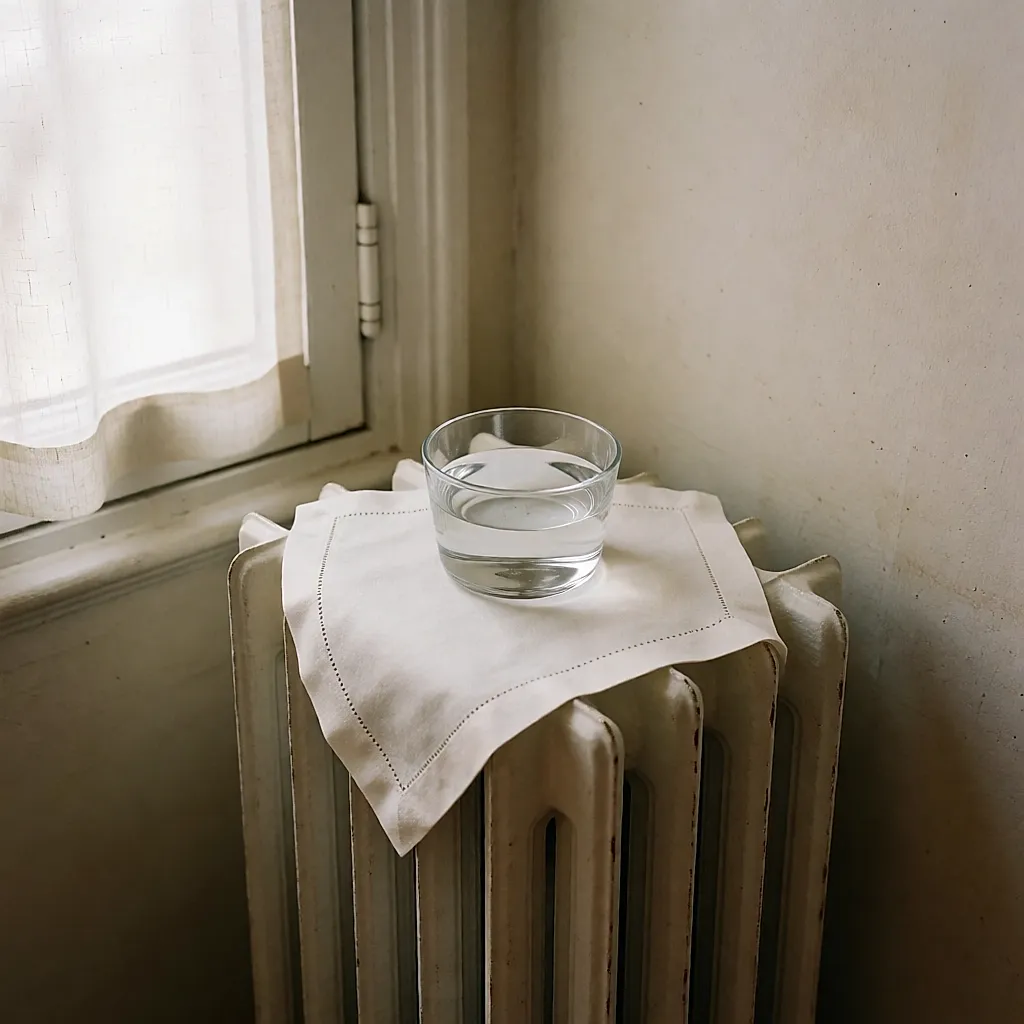
A damp towel, next: a thick towel draped over a radiator, or a bowl of water nearby, adds a little moisture to a small room. A little, genuinely. It’s a stopgap, not a building project — and there’s no need to turn the bedroom into a greenhouse.
General guidance treats very low indoor humidity as uncomfortable, without a single figure that suits every home. When the air gets very dry, it can sting your eyes and tighten your skin; when it feels damp, you air the place out more. These are practical rules of thumb, not a prescription: your flat, its insulation and your heating all have a say.
How to use the dial. Put the hygrometer away from the radiator and the window, in the middle of a living room, at table height. Let the device settle before reading. Note the figure over a few days: it’s the variation that tells you something, not a single reading.
So what about the cream?
It keeps its place, don’t worry. If your skin still feels tight despite airing your home and less dry air, if you wash frequently or the cold is rough on you, a richer texture makes sense. It’s simply no longer the default answer — the one you reach for because the jar is pretty and November is endless.
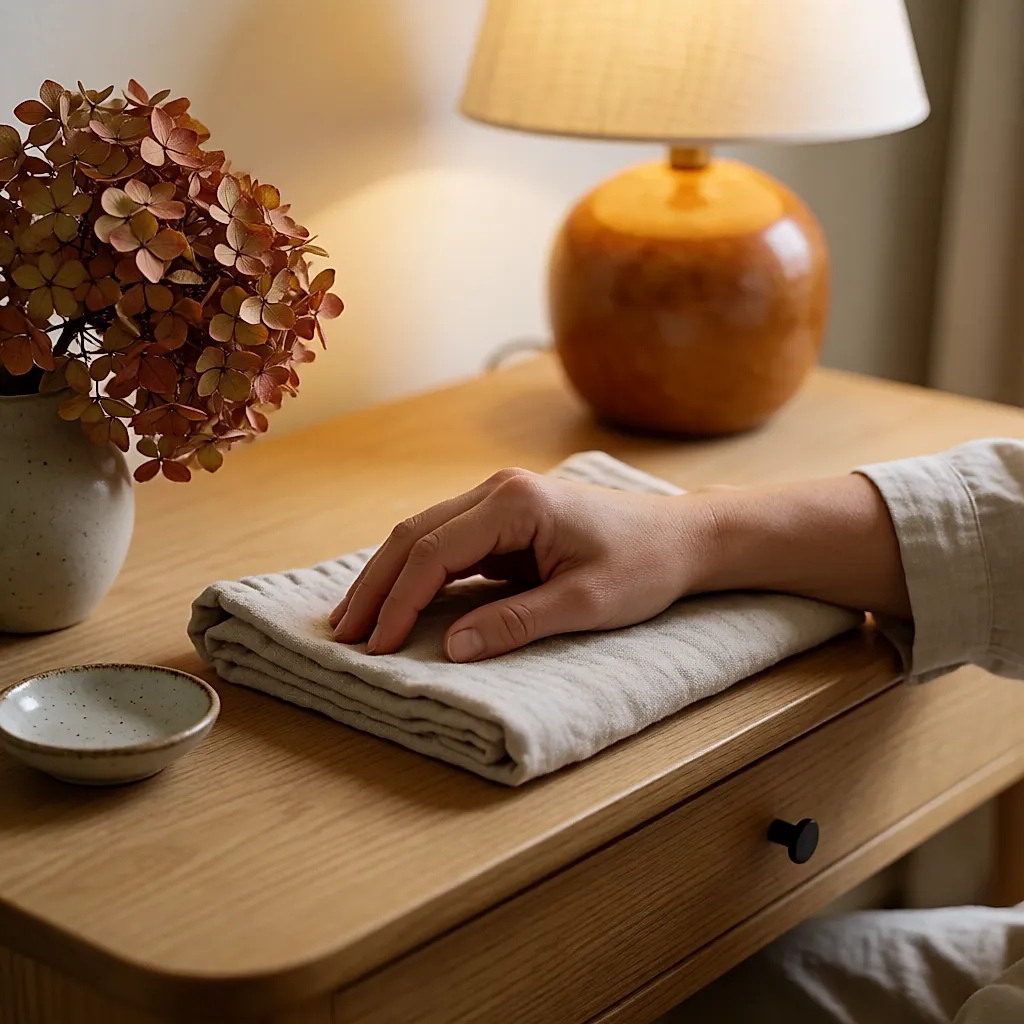
The compromise fits in one line: adjust the air before you thicken the cream. And if the tightness persists, or comes with redness or patches, speak to a pharmacist or your GP rather than layering on more product.
That’s the whole advantage of the little dial: it moves the question from grease to water. It doesn’t promise you beautiful skin — it tells you what you’re living in. Which is already quite a lot.
Budget
In France, count on roughly €5–20 for a basic analogue hygrometer, and €15–40 for a richer face cream; connected hygrometers and premium creams climb higher. Prices vary with the brand, the format, where you buy — DIY store, supermarket, pharmacy or online — and how rich the formula is. That gives you a practical bracket before you decide whether to adjust the air first or change cream.

Comments
Your opinion matters: rate the article, react and reply to comments.
Comments are moderated; AI-assisted comments are flagged. Text emoticons (8-), :-), <3…) are automatically shown as images.