

A thick cotton sock and a sock that actually stays put: the first looks more protective, the second does the real work. Inside a closed boot, it isn't thickness that protects your skin — it's staying still. A foot that slides a millimetre with every step will build hard skin exactly where it rubs. And winter hands it three undisturbed months to settle in.
By February you've got a heel that snags on the sock, a rough edge along the big toe, and that gritty feeling of walking on sandpaper. Out comes the file, on goes the cream, and back it comes. Which makes sense: you've dealt with the surface, not with what's rubbing.
Hard skin forms where things rub
It doesn't appear at random. Look at your feet: the thick patches map out the friction. The heel sliding inside the sock, the edge of the big toe, the tops of the toes where the boot presses, the little-toe side squeezed by the width. Those four almost always tell the same story — something is moving in there.
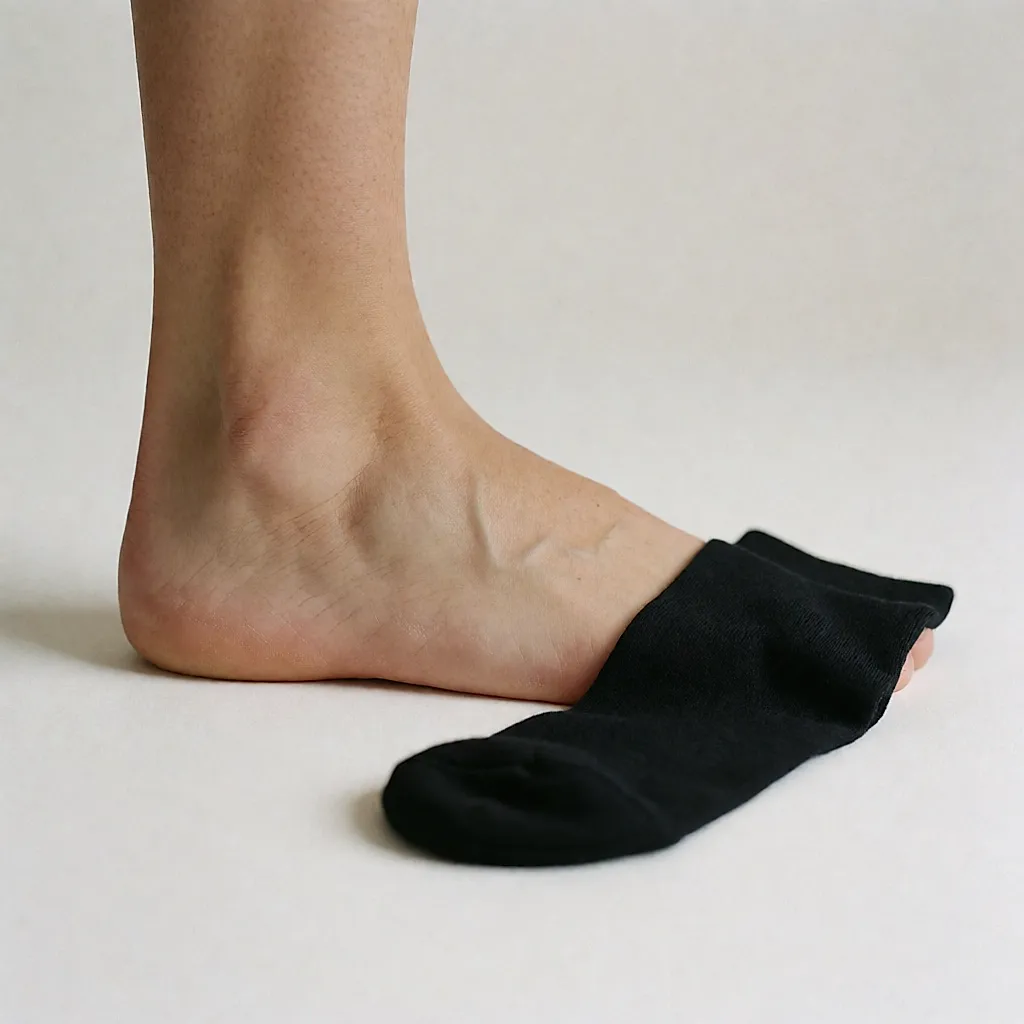
In a closed boot your foot works harder than you'd think: the upper holds the ankle, so the foot shifts around inside instead of following your stride. A sock that's lost its stretch, a size that's 'just about right', a badly placed seam: skin defends itself by thickening.
Before the file, check the sock
A sock that gapes, an elastic that has given up, a knit that went slack on the third wash: that's a cause of friction which costs almost nothing to fix. The most worthwhile move in this whole piece takes three seconds — pull the sock up before you put the boot on, check it hasn't rolled under your toes, look at where the seam sits. In short: before you blame your feet, blame the sock.
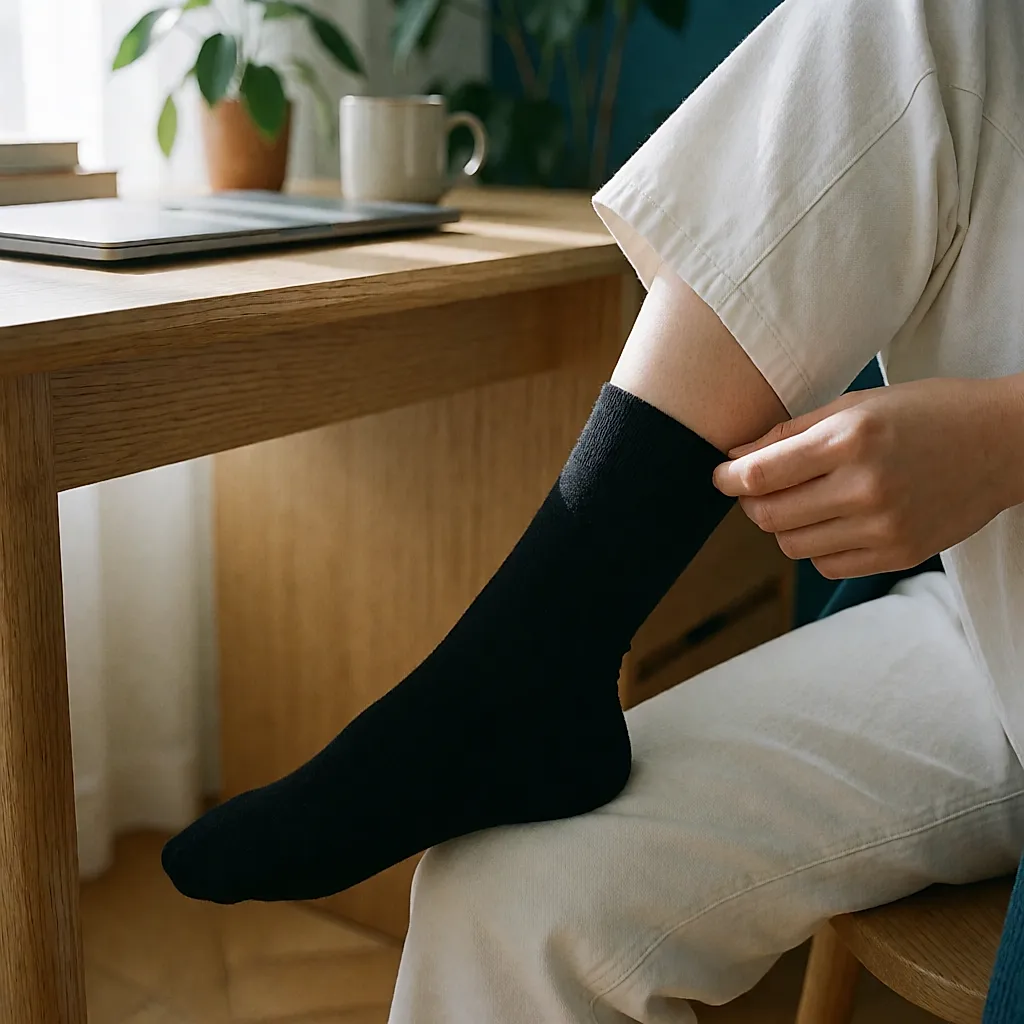
Then the fabric. A fine, well-fitted knit bunches up less than a thick cotton, which looks protective and ends up floating around the foot. Look for a natural fibre that breathes, plus a little elastane to hold the ankle. Feet that spend the day in a boot will thank you for not layering two thicknesses.
The three-minute test — Put on your usual socks, then your boots, and walk up and down the hallway. If you can feel the seam on your toes or a fold under the sole, the sock is the problem. If your heel lifts with every step, look at the fit or the lacing.
The upper: neither too snug nor too roomy
The classic trap is the boot that feels 'about right' in the shop, tried on in the morning with a foot that hasn't had time to swell. Go back late in the day, in the socks you'll actually wear: that's when your foot tells the truth. One rule of thumb from shoe fitters is roughly a centimetre in front of your big toe — judge for yourself whether it works for you.
The opposite happens too. A boot that's too roomy lets the foot swim; with every step it slides forward, back and rubs more. A thin insole or a slightly thicker sock sometimes takes up the slack. If the foot still slides, the boot isn't your size. Full stop.
Filing in the evening, gently
In the evening, once everything is off, is the right moment. A fine-grit file, short even strokes, no pressing as if you were sanding a shelf: smooth what stands proud, don't dig in. In practice you can space out filing sessions and adjust to how your skin reacts; if the hard skin is well established, start gently and watch how it responds.

And blades, scissors and coarse rasps? Leave them at the back of the drawer. Cutting hard skin back can leave the skin underneath more sensitive, and it may grow back faster. A file is less dramatic — which is also what makes it sustainable.
Cream afterwards, not instead
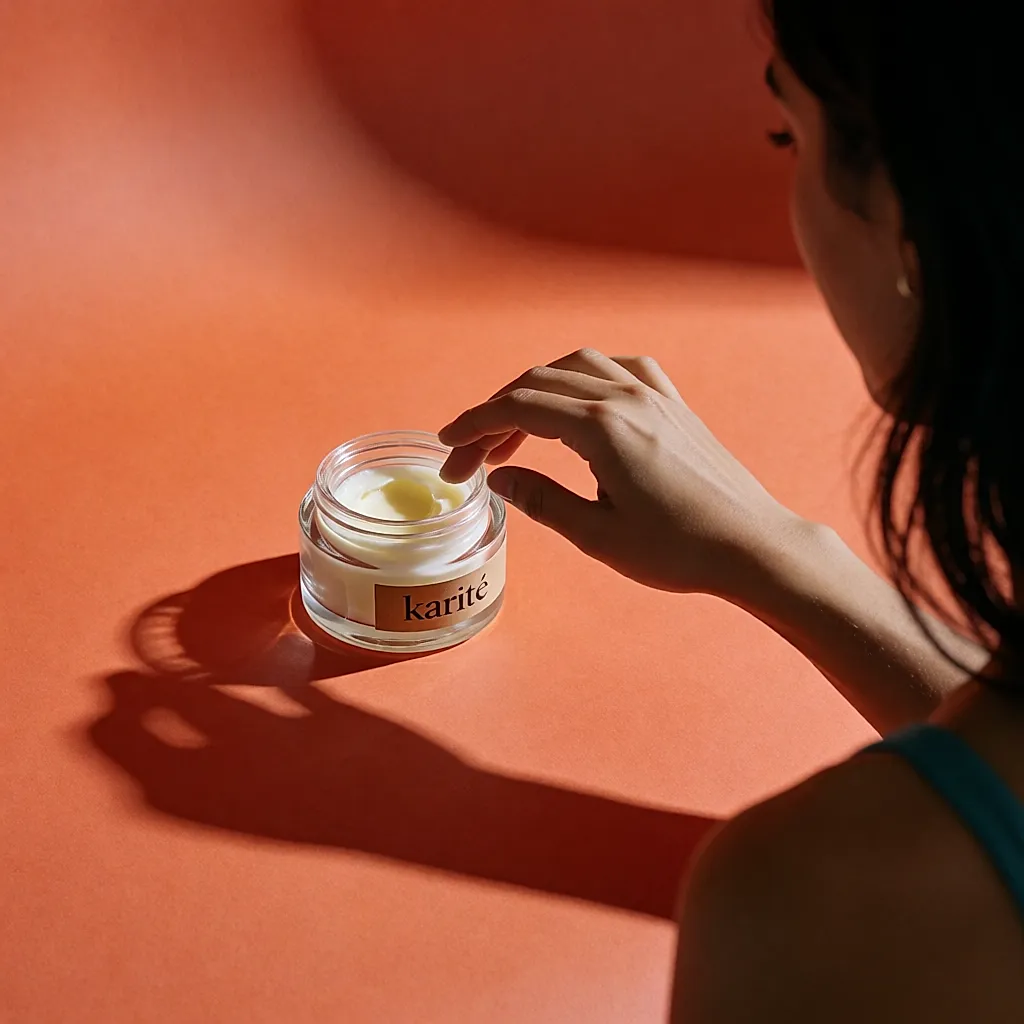
A rich cream at the end of the routine is the finishing touch. Shea butter, a plant oil, a short ingredient list: a glass jar or a refill will do. But cream doesn't replace filing, and on thick hard skin it just polishes what you should be thinning down.
I'm not going to promise you baby-soft heels in ten days: I don't know how your skin behaves, and nobody can know that for you. If the hard skin is painful or cracked, or if you have diabetes, don't improvise — see a podiatrist. In the UK, your GP can also advise on local NHS podiatry services.
Budget
Expect to pay roughly £8 to £20 a pair for fine merino wool or organic cotton socks, and more for British-made. A fine-grit foot file is around £5 to £12 from a pharmacy or health-and-beauty retailer, a foot cream £6 to £18. A podiatry appointment, if your feet ask for one, usually comes in at around £30 to £60 privately depending on where you live.
The move that survives a five-minute day? A sock pulled up, a quick pass with the file, and the will to stop treating the consequence. Your feet aren't asking for more products: they're asking for less unnecessary movement.



Comments
Your opinion matters: rate the article, react and reply to comments.
Comments are moderated; AI-assisted comments are flagged. Text emoticons (8-), :-), <3…) are automatically shown as images.