

You leave the salon with an immaculate bob, take a selfie in the lift mirror… and by next morning it no longer looks like much. Sound familiar? The bob does not forgive guesswork: it calls for the right technique, regular upkeep and a cut designed around your hair type. Good news: winter 2026 is giving it a real modern update — and honestly, we never tire of it.
A season that puts the bob centre stage
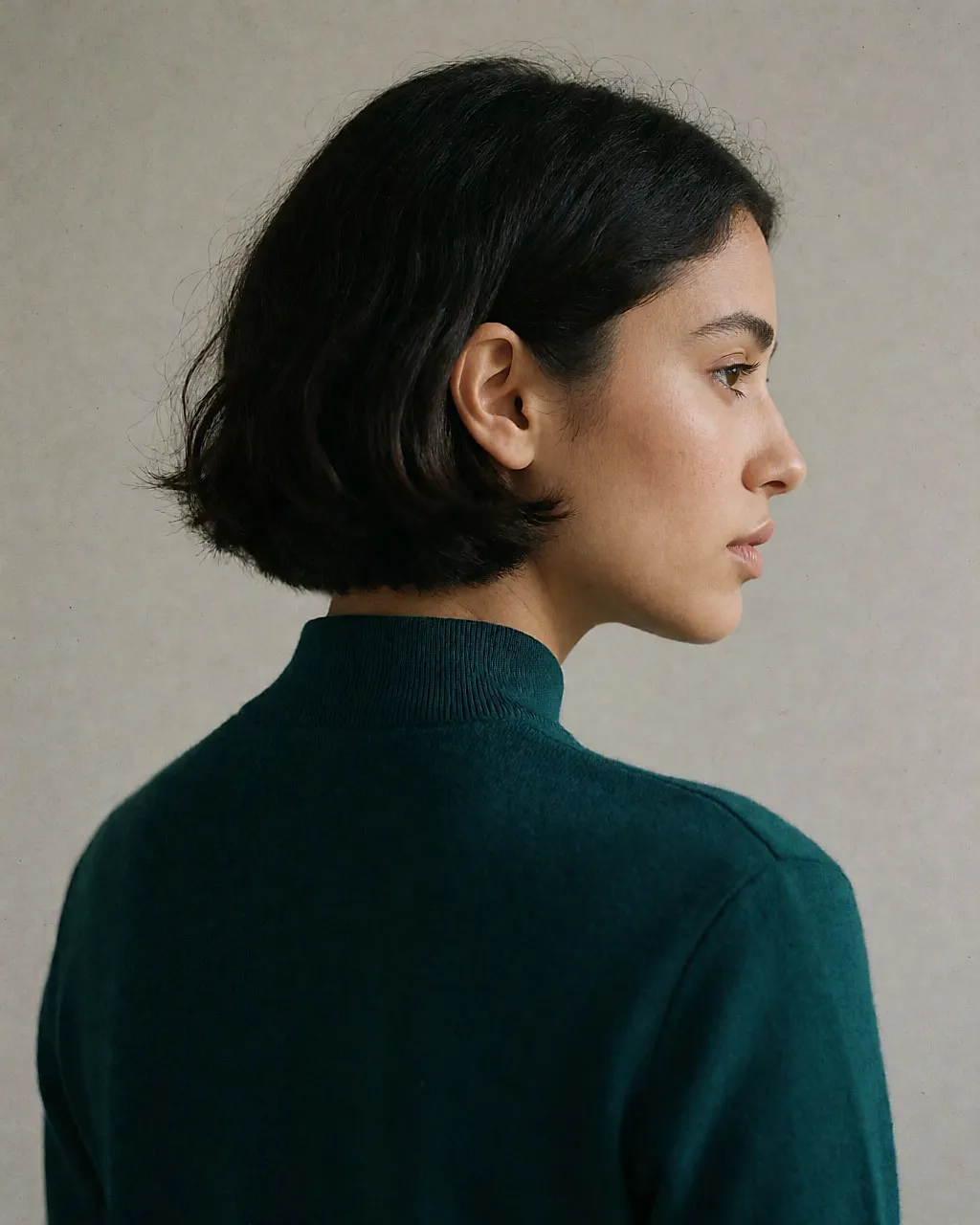
The shift is nothing new: the angled bob — short at the nape, longer towards the face — has taken hold in salons and shows no sign of moving. The silhouette it creates is deceptively simple: a clean nape, a defined jawline, lengths that fall just below the collarbone. Worn very short, glossy and with a full fringe, the same bob becomes both polished and assertive: a seriously effective compromise. And the slightly grown-out version, worn a few weeks later, has its fans too.
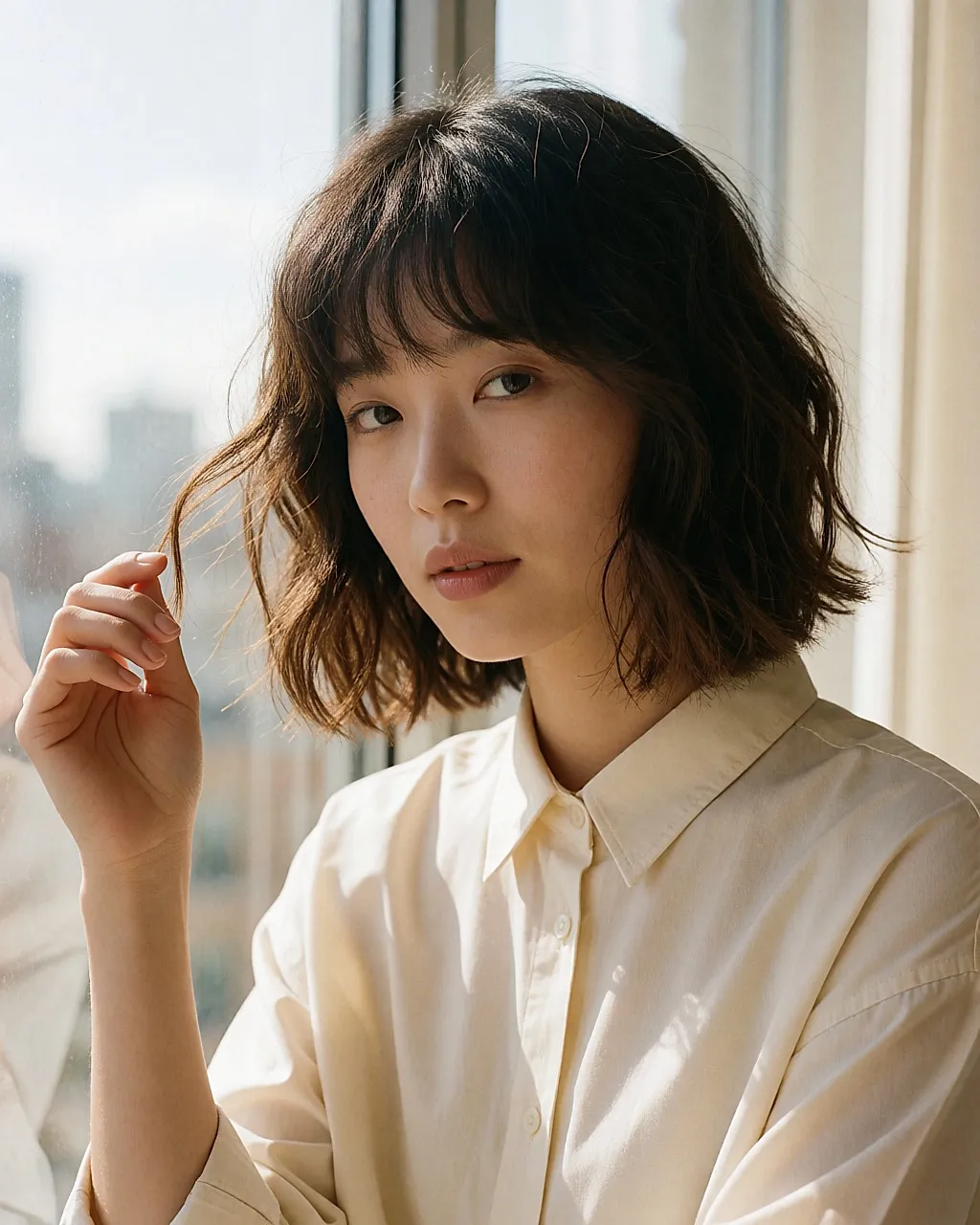
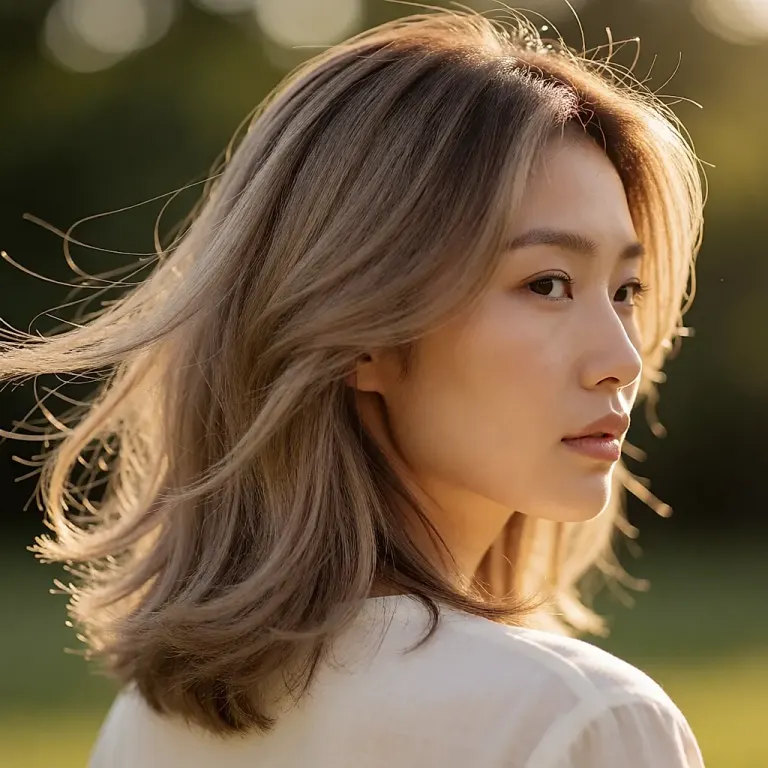
Then more generous lengths gain ground: a thick fringe that grazes the brows, soft curls, a textured finish. The bob then stops being a transitional cut and becomes a real style choice, from honey blonde to deep brunette. And at that point, we are completely won over.
The salon formulas this season
The version that comes up most often is anything but prim: a fringe, a slightly blurred texture, roots and lengths worked to create movement rather than an overly smooth line. A little undone, never unkempt — that is the whole secret.
Others bet on geometry: a clean line, a blunt fringe, intense brown, glossy finish. Even if that means committing to a bold colour — copper or platinum — with pronounced volume. A word of warning, though: without regular blow-drying, that volume soon drops and the cut loses its shape.
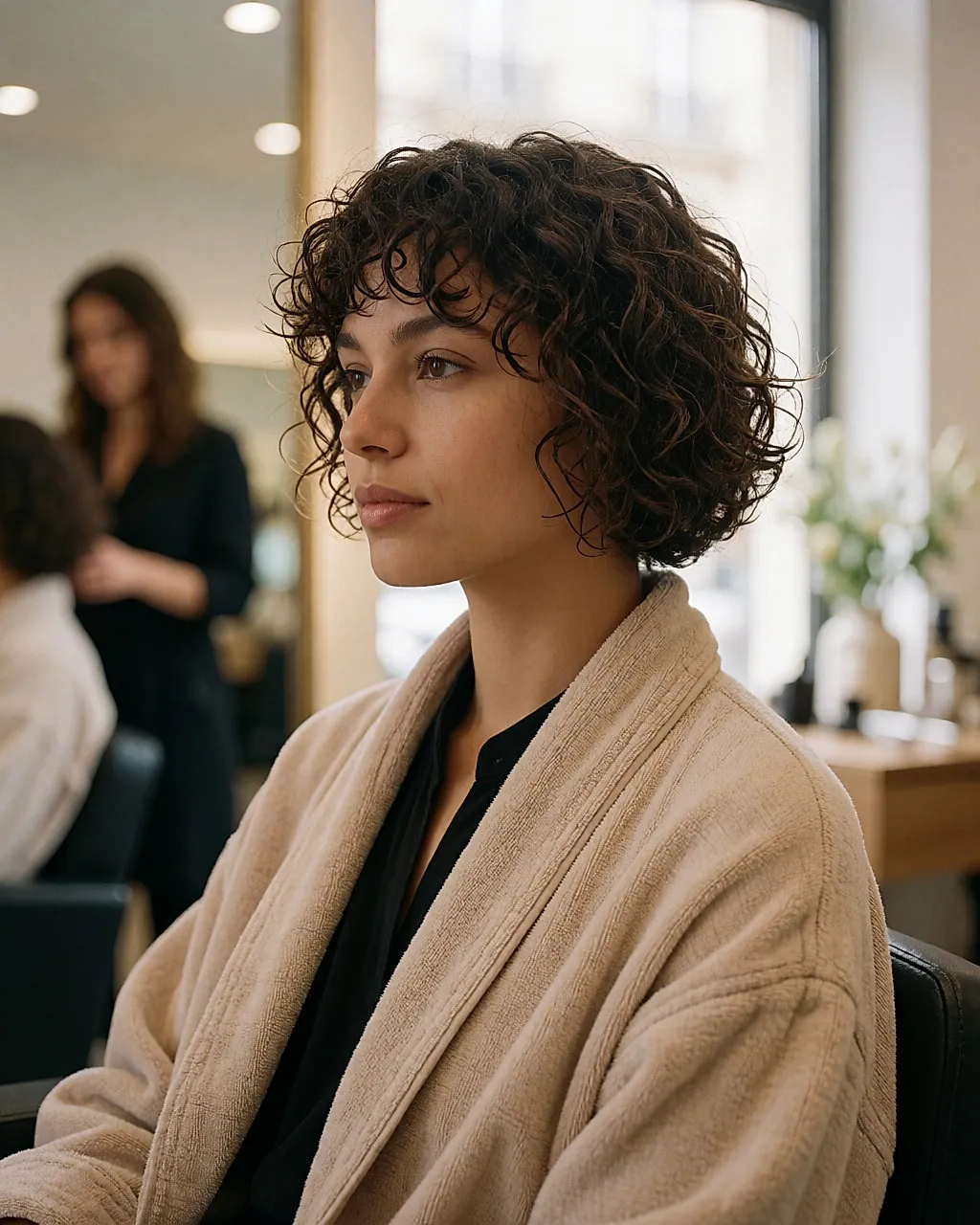
Others finally tackle curls: the face framed by spirals, airy texture, movement channelled without being stifled. Two interpretations coexist — a deconstructed version smoothed flat, and a disciplined version with a slight graduation at the front and a strand tucked to the side. On colour, copper tones and luminous browns dominate, with one constant: the bob has to have character.
Three personalities, one cut
The bob has lost none of its splendour. The full bob, slightly rounded, frames the face: a clean mass, a low line. The micro bob cuts higher, often at jaw level. The clean bob, known as blunt, goes for a sharp line. Three moods — choose the one that feels like you.
On the tools front, you're well served: concentrator nozzles, diffusers, hot brushes and texturising sprays have replaced the blow-dry that did all the work. Dry shampoo at the roots and a volumising powder are a better stand-in for the cloud of hairspray of old — and frankly, we don't miss it.
Adapting the bob to your hair type
- Fine hair: a clean line rather than a strong graduation, because it creates an illusion of density.
- Thick hair: ask for thinning at the ends and a light graduation to reduce the weight.
- Curly hair: dry cutting, curls defined with a diffuser, avoid strict lines.
- Round face: an angled bob, short at the nape and longer around the face.
- Upkeep: a cut every four to six weeks is enough to keep the line clean.
The step that changes everything
When it comes to products, there's no need to pile up five bottles. Three good products are enough to last the day: a powder dry shampoo — rice or corn based — in a cardboard or glass container, or a refillable format, a volumising powder with mineral silica, and a light texturising mist.
What really makes the difference is not the claim on the label but the formula: a majority of naturally derived ingredients, a credible certification such as COSMOS or Cosmébio — which covers the formula, not how well the product performs —, a refillable, solid or waterless format, and French or European manufacturing when that information is given. If you prefer the classic aerosol to save time in the morning, that's a conscious compromise: practical, but with a container to throw away and a formula that is often higher in solvents.
A thick fringe on fine hair? Ask for light point-cutting at the ends, then blow-dry it with a round brush starting at the roots, section by section: movement without weighing down the forehead. Depending on your hair type, the fringe is also easier or harder to put back in place in the morning — and that is often where the difference lies between a bob that holds its shape and one you end up tying back.
The strand test: before you cut, have a section worked on dry hair, without over-smoothing it. You'll see whether you like the texture once you're at home with a hairdryer in hand. A bob is chosen in the morning, not in the salon chair.
Budget
On the budget side, everything depends on the city, the length and the salon's price bracket. Expect around £30 to £70 in a salon for a cut alone; the price rises with length and the work involved, and you'll pay a little more for a crafted graduation or point-cutting. A simple blow-dry is around £20 to £40, and colour is around £45 to £110 depending on the technique — roots only, balayage, toning. At an independent stylist, out of town or at a training salon, prices drop noticeably; in city centres and premium chains, it's the opposite. For products, budget £5 to £15 for a powder dry shampoo, £8 to £20 for a volumising powder, £10 to £25 for a texturising mist and £25 to £80 for a hot brush. You'll find them in supermarkets, beauty retailers, health-food shops or online — refillable or solid formats cost a little more up front but last longer.
Sources
- COSMOS-standard, the standard for natural and organic cosmetics: cosmos-standard.org
- Cosmébio, the French organic cosmetics association: cosmebio.org

Comments
Your opinion matters: rate the article, react and reply to comments.
Comments are moderated; AI-assisted comments are flagged. Text emoticons (8-), :-), <3…) are automatically shown as images.