

Extensions are attached to your own hair with a keratin bond — a small bead of keratin applied at the root of each strand. Heat softens it, and it sets again as it cools, locking the extension in place.
In practice
First things first: extensions can be synthetic, but real human hair is the better bet. Synthetic fibres tangle badly, whereas human hair can be styled, coloured and straightened — within reason, depending on its quality, how it has been treated and its natural type. Ask your professional before any colouring or lightening. Larger salons tend to favour human hair for the quality and the natural-looking finish. Hair is sourced from all over the world, so its characteristics vary; quality comes down mainly to how it was collected and prepared.
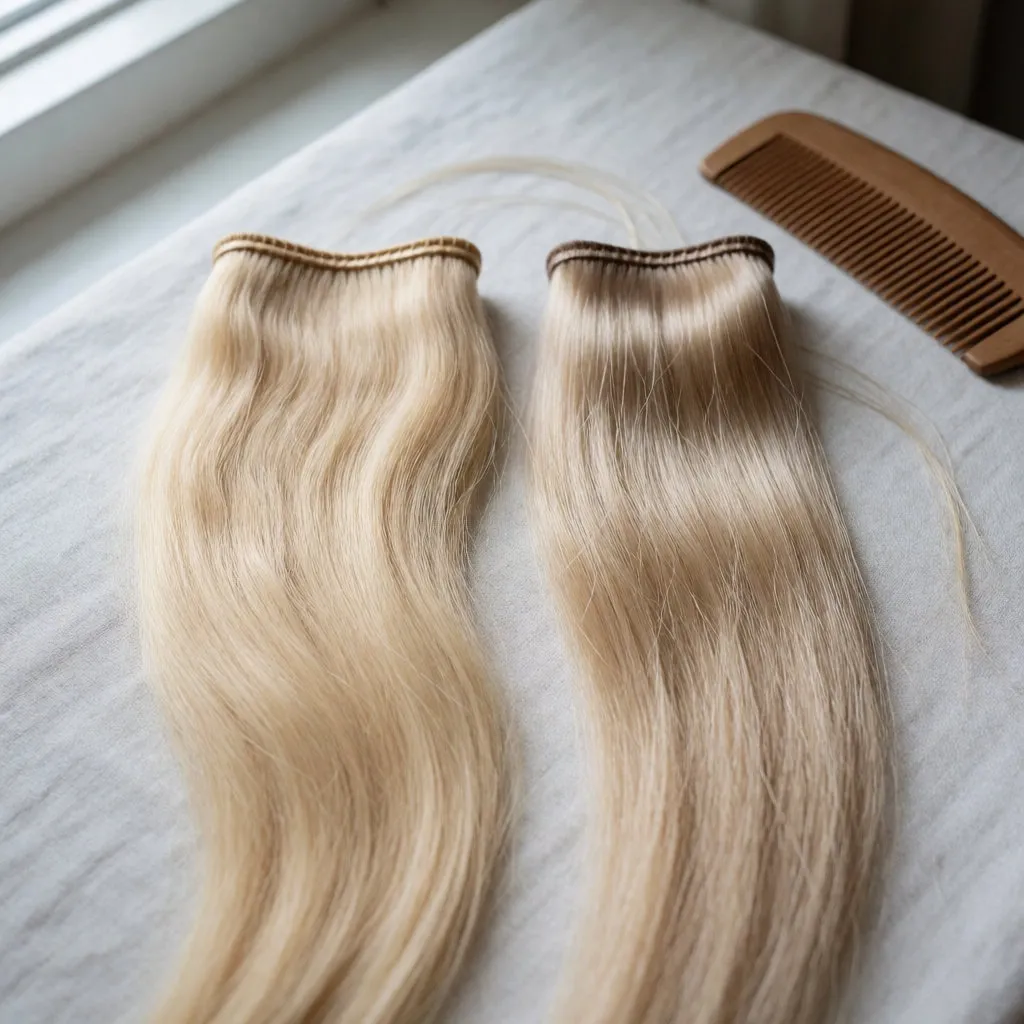
Forget the idea that there's one single technique. There are several, and the right one depends on your hair type, your budget and how much styling you're willing to live with. Fitting extensions is painstaking, precise work, which is why it needs to be done by a professional.
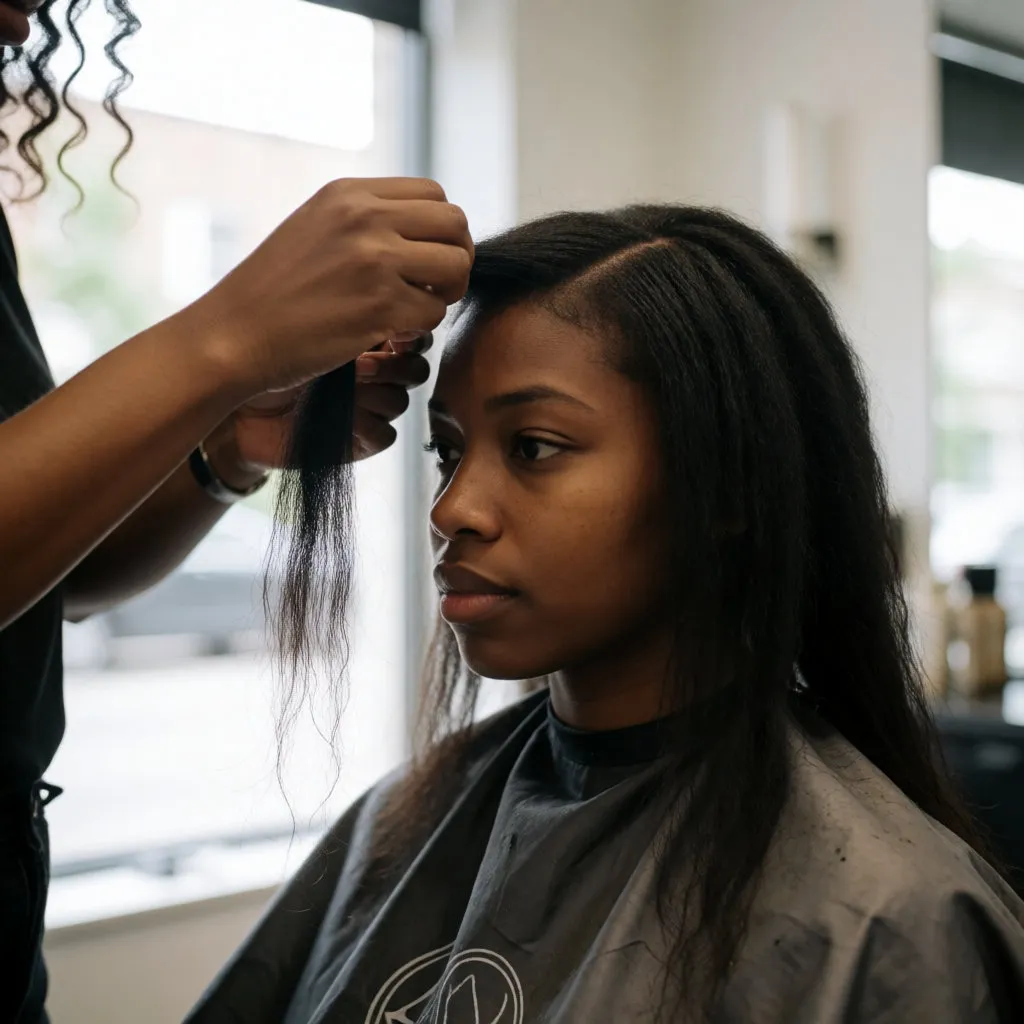
How long a fitting takes depends on how many strands are going in and the result you want — extra thickness rather than extra length — but allow several hours, depending on the technique and the number of strands.
Let's be clear on one thing: extensions should always be fitted by an experienced stylist. Badly applied, they won't last long — and then comes the painful part, the removal, which, when the bonds have been poorly placed or rushed out, can literally pull out your natural hair. So it's in your own interest to put this delicate job in the hands of a specialist salon. Add to that the fact that extension scams are everywhere, and the advice is simple: extensions cost money.
When it comes to choosing them, the length, the cut you want to wear and the colour are all up to you. Strands come in a huge range of shades, varying by supplier and salon, from the natural hair colour range through to doll pink and even full-on orange.
Looking after them
Once they're in, treat extensions gently. How long they last depends largely on the care you give them. Brush them regularly and gently with a soft brush rather than a comb, especially near the attachment points, to keep knots at bay without disturbing the keratin bonds. Always detangle from the ends up towards the roots, never the other way round. It's also worth tying them up at night, for the same reason.

Blow-drying, straightening and curling are all fine, as long as you carefully avoid the keratin bonds. Swimming pools and the sea are fine too — though it's worth knowing that keen swimmers will keep their extensions for less time than people who never get their hair wet.
Either way, extensions usually last several months, depending on the client's own hair, the quality of the fitting and the care they get.
What you'll pay
Extensions don't come cheap. In larger salons the price depends on the technique, the length, the density and the salon itself. For a full head, expect a figure somewhere in the region of £300 to £1,500, and treat that as a starting point rather than a quote — prices vary from one provider to the next. Virgin human hair remains the most expensive option; clip-in or synthetic strands cost a great deal less, but they don't last anything like as long.
Before you give the go-ahead, ask about the aftercare. Make sure your stylist will reattach a strand free of charge if it comes loose sooner than it should. And remember that your stylist is the one who'll take your extensions out — and some charge for that. Ask before the fitting. A salon that only mentions a removal fee after the event is being dishonest, and that's a red flag.
Before you choose who fits them, shop around. Visit a few salons to compare terms and prices, and ask for a written quote; it's often free, but check first in case there's a charge.



Comments
Your opinion matters: rate the article, react and reply to comments.
Comments are moderated; AI-assisted comments are flagged. Text emoticons (8-), :-), <3…) are automatically shown as images.