
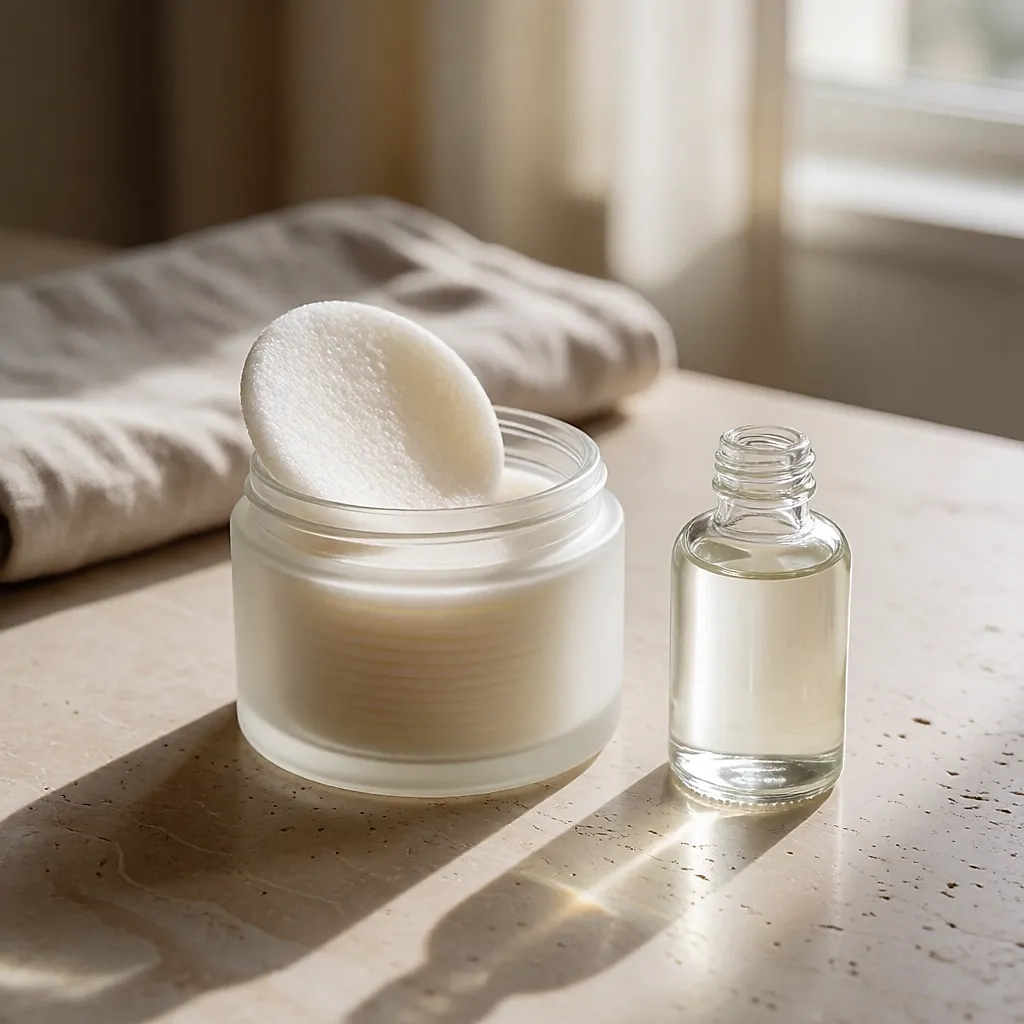
One pad, one swipe, job done. The bottle asks you to dose by hand — and that's exactly where things get interesting. So: happily lazy, or a control freak? In this duel there's no definitive winner, just a compromise to choose with your eyes open.
What's at stake isn't the active ingredient: both formats often contain the same acids. What changes is the gesture, the dose, the space the jar takes up in your wash bag — and what's left on the counter at the end of the month.
Thirty seconds on one side, two drops on the other
The biggest selling point of a pre-soaked pad is speed. You open the jar, take out a pad that's already saturated, swipe it over your face — forehead, cheeks, chin, avoiding the eye area — and close it again. No bottle dripping between your fingers, no cotton pad soaked more or less at random, no 'should I add another layer?'. The dose has been decided in advance. Single-dose formatting is a framework that enforces moderation: it's hard to do two passes when the format was designed for one.
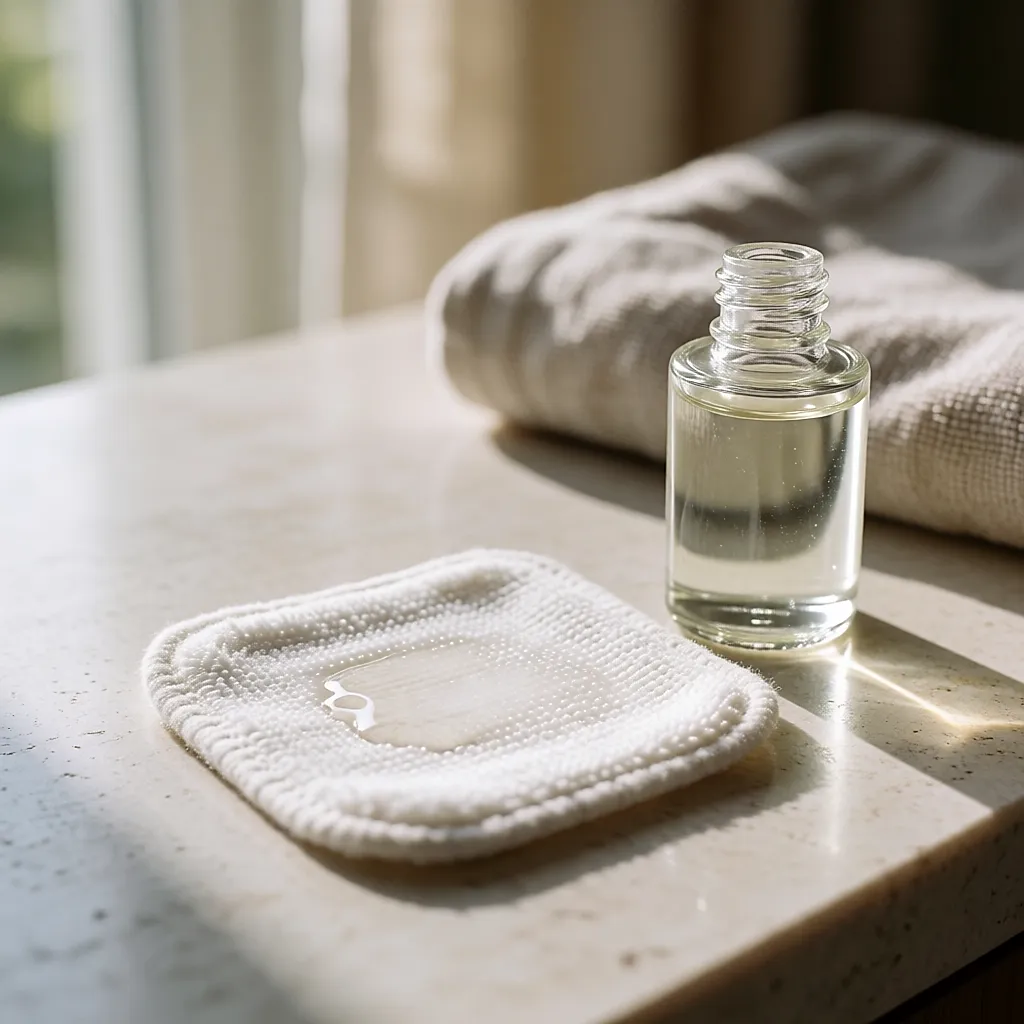
A bottle offers the exact opposite: flexibility. One drop on evenings when your skin is tired, two the following week, and a lifespan that runs into months where a 60-pad jar can empty without warning. But it opens the door to a universal slippery slope: 'if two drops are good, three must be better'. No. That's tight skin the next day and an empty bottle in six weeks.
Then there's transport, rarely considered but often decisive. A jar of pads is heavy, bulky and prone to leaking in a badly closed weekend bag. A 30 ml bottle slips into a wash bag. In exchange, you have to remember the cotton pad you didn't pack. And with pads, a jar that's been open for months will dry out: close it tightly and keep it away from a hot shower and the windowsill.
Meet the acid family
Behind the word 'exfoliant' lies a big family. AHAs — glycolic, lactic or mandelic acid — work on the surface of the skin. BHA, aka salicylic acid, is usually chosen for combination to oily skin and shiny areas. PHAs, such as gluconolactone, are considered gentler, which makes them an entry point for skin that reddens quickly. A pad may also combine them with niacinamide or a soothing extract.
The format itself makes a big difference, too. On the jar, look for two things: where alcohol and fragrance sit in the INCI list, and whether a refill exists — a pouch or a reusable jar. As a general rule, especially among the first ingredients (above 1%), alcohol or fragrance high up may be something to consider if your skin is reactive; ingredients below 1% can be listed in any order. With pads, organic or certified cotton is a real plus; the disposable part, however, is still disposable.
Start once a week, then listen to your skin
This is our editorial rule of thumb, not a dogma: in practice, people often start once a week and adjust over several weeks. Some brands promote daily use on their pads — that's their formula, not a requirement. A chemical exfoliant is still a treatment, not a toothbrushing habit; using it every night alongside retinol or another acid on the same evening is not a good idea.
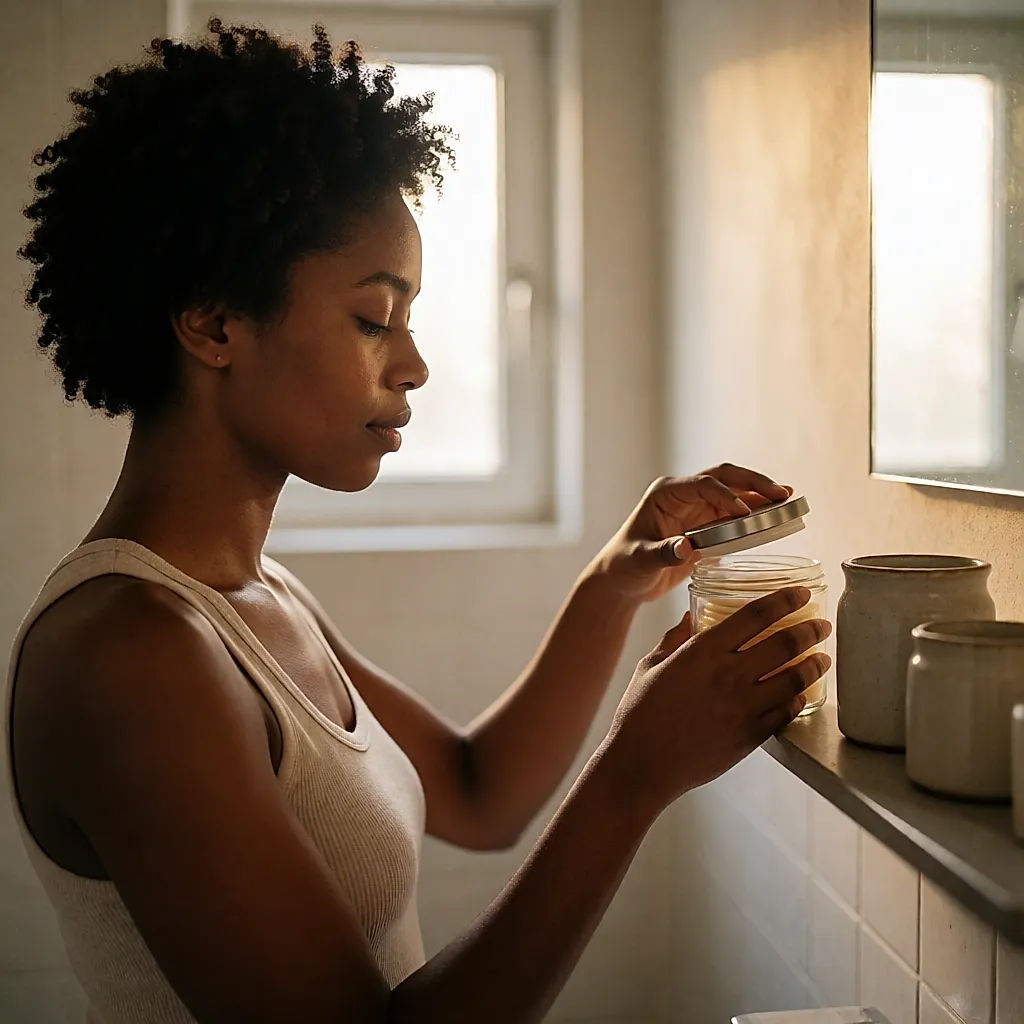
And the next day, don't skip sunscreen: freshly exfoliated skin doesn't like the harsh light of an October afternoon, let alone July. If your skin stings, reddens or peels, put the jar aside for a few days and focus on hydration and soothing. If you have thread veins, rosacea, very reactive skin or are pregnant, it's best to ask a pharmacist or dermatologist before choosing your acid.
Three questions before you reach for your card. Does the jar have a refill? Where do alcohol and fragrance sit in the INCI list? And how many pads does the brand count on for a month of real use — at what frequency? The answer to that last question is often enough to decide.
Budget
Expect to pay around £15 to £35 for 30 to 60 pads, and more for premium formulas or refillable jars. That's more per use than a bottle: around £10 to £30 for 30 ml, which should easily last the season if you don't go overboard. Some brands offer refills for their jar or reusable glass bottles — a refill pouch often costs less than the full container and saves one more plastic jar.
Where to buy them? In pharmacies and health-and-beauty retailers such as Boots and Superdrug, where advice is part of the service; at specialist beauty retailers such as Space NK or Cult Beauty for more sensorial ranges; online, on brand websites or at familiar retailers, where discovery sizes let you try before investing in a big jar. One last point: used on a reusable cotton pad, a bottle does exactly the same job, without throwing away a single white square. Sometimes that small switch is the whole story.

Comments
Your opinion matters: rate the article, react and reply to comments.
Comments are moderated; AI-assisted comments are flagged. Text emoticons (8-), :-), <3…) are automatically shown as images.