

Ten bare nails that look as though they've just come back from a week's hiking with no sun cream — that's the state your hands are in when the gel comes off. The edge is white, the surface feels rough, and the bathroom light does you no favours. It's the moment you want to hide the lot under a fresh coat — when you'd be far better off looking at what your nails are trying to tell you.
What bare nails are telling you
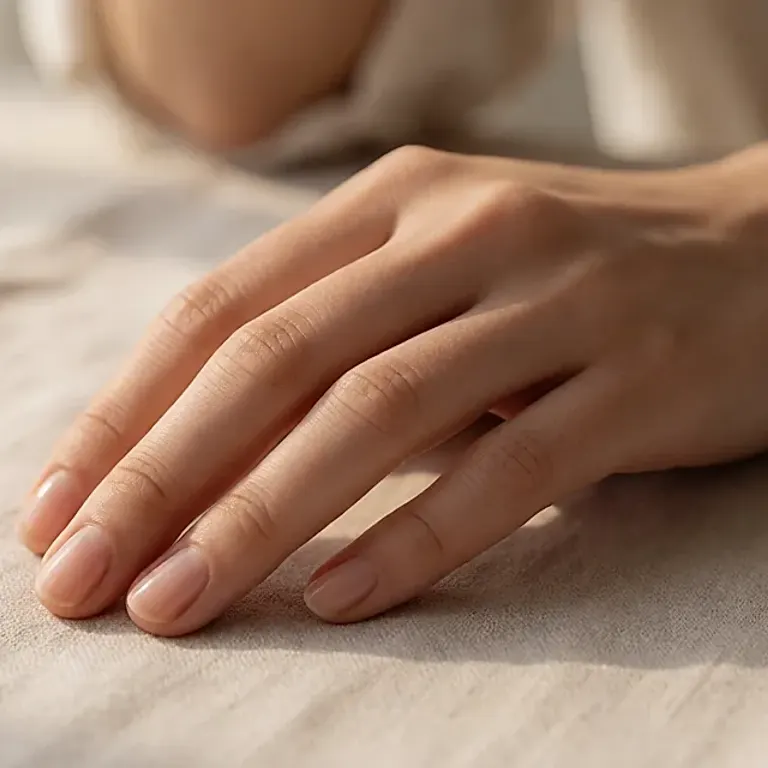
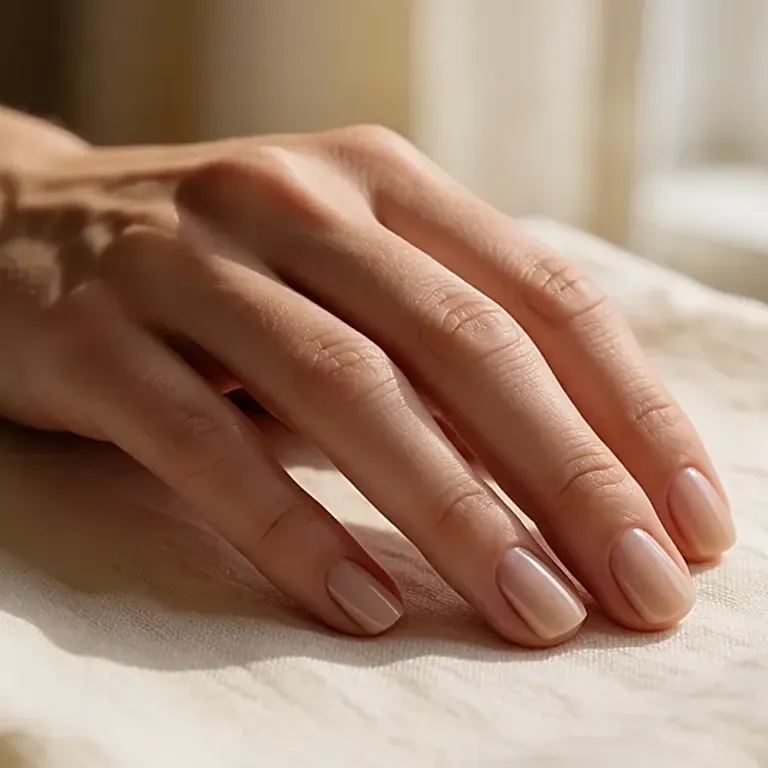
After several sets, a bare nail is no blank page. Look at its colour, its ridges, any little white spots, whether the edge is splitting or not, the state of your cuticles and, above all, how it feels under your fingertip. A nail that catches, feels hot or tight isn't a cosmetic detail: it's a signal you shouldn't smother under opaque gel.

Not everything is a red flag, though. An isolated white spot, a faint ridge, a nail that looks a little thinner after removal: note it, keep an eye on it, give it time. Pain, a lifting nail, a persistent yellow tinge or a nail that snaps at the slightest knock, on the other hand, are worth a word with your GP or a pharmacist. And no, your nail isn't a plant: it doesn't "breathe". The break isn't about letting it breathe, but about interrupting the cycle of filing, solvent and handling that can otherwise run and run with no let-up.
Decide the break at booking time
That's the whole point: plan the break when the gel goes on, not when a corner starts to lift. In the salon, you can simply ask: "Shall we pencil in the next removal and a date to come back?" Same if you apply it yourself: put the appointment in your diary before you pack the kit away. A break you've chosen calmly is a very different thing from one snatched in a rush.

How long should you leave it? There's no universal answer, and be wary of anyone who sells you a figure set in stone. In practice, it's often one to two weeks between sets, sometimes longer when the nail is marked or sensitive. This is an editorial rule of thumb, not a prescription: the right length is whatever leaves you with a comfortable nail, not whatever fills a calendar.
What a nail strengthener can't replace
A strengthener can smooth the appearance, give a sense of resilience, see you through regrowth. It does not replace a removal: if the product has been ripped off, if the nail plate has been over-filed, or if pain sets in, a coat of product won't fix the cause. I've no scientific protocol to sell you here — just a bit of common sense: you don't hide a damaged nail under hope.
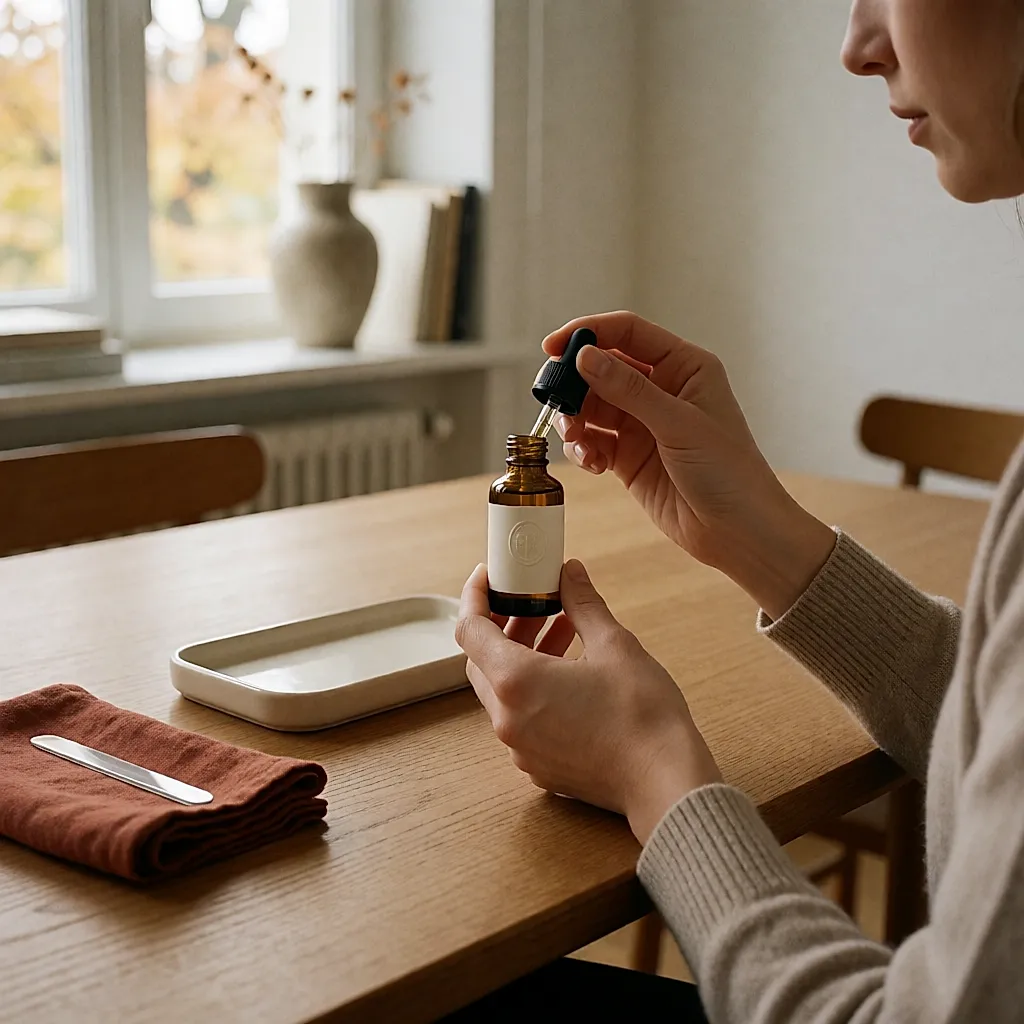
During the break, keep it simple. Don't rip anything off — have it removed, let the professional do the work, resist the urge to pick at the corner that's lifting. Then moisturise cuticles and hands with a simple plant oil, go easy on harsh washing, wear gloves for household products, and file gently in one direction if an edge catches. It's less dramatic than a bottle of strengthener, but it's what holds up through a real week.
Budget
There's a cost to the break, especially when it's a choice. Expect to pay somewhere in the region of £30 to £55 for a salon gel manicure, and £10 to £20 for a removal on its own, sometimes included in the appointment. In a big city, at a spa or nail bar, or for a very elaborate set, the range can climb. Rates depend on the city, the length, the brand and that removal we so often forget to budget for. Removal is not the forgotten line in the budget!
If you do it yourself at home, a basic kit often costs £25 to £60, but the real investment is the learning time and the patience. You'll find these kits at beauty retailers such as Boots and Superdrug, and online; for a first application, a salon is still the safer bet if you haven't yet got to grips with filing and removal. And if money is tight, better to space out your sets than to cut corners on the removal: that's the part most worth paying for.
The break reflex, in three steps
- Before your next set, fix the removal date and a week — or more — with no gel.
- On the day, don't pick or peel — get it removed.
- Afterwards, plant oil on the cuticles, gloves for housework, gentle filing.
The break isn't a punishment for your nails, nor a trend to keep up at all costs. It's an appointment you make with yourself, like a screen-free evening: sometimes less comfortable at the time, often more restful afterwards. And the day you have that gel manicure redone, you may feel less as though you're repairing damage — and more as though you're choosing your own rhythm.

Comments
Your opinion matters: rate the article, react and reply to comments.
Comments are moderated; AI-assisted comments are flagged. Text emoticons (8-), :-), <3…) are automatically shown as images.