
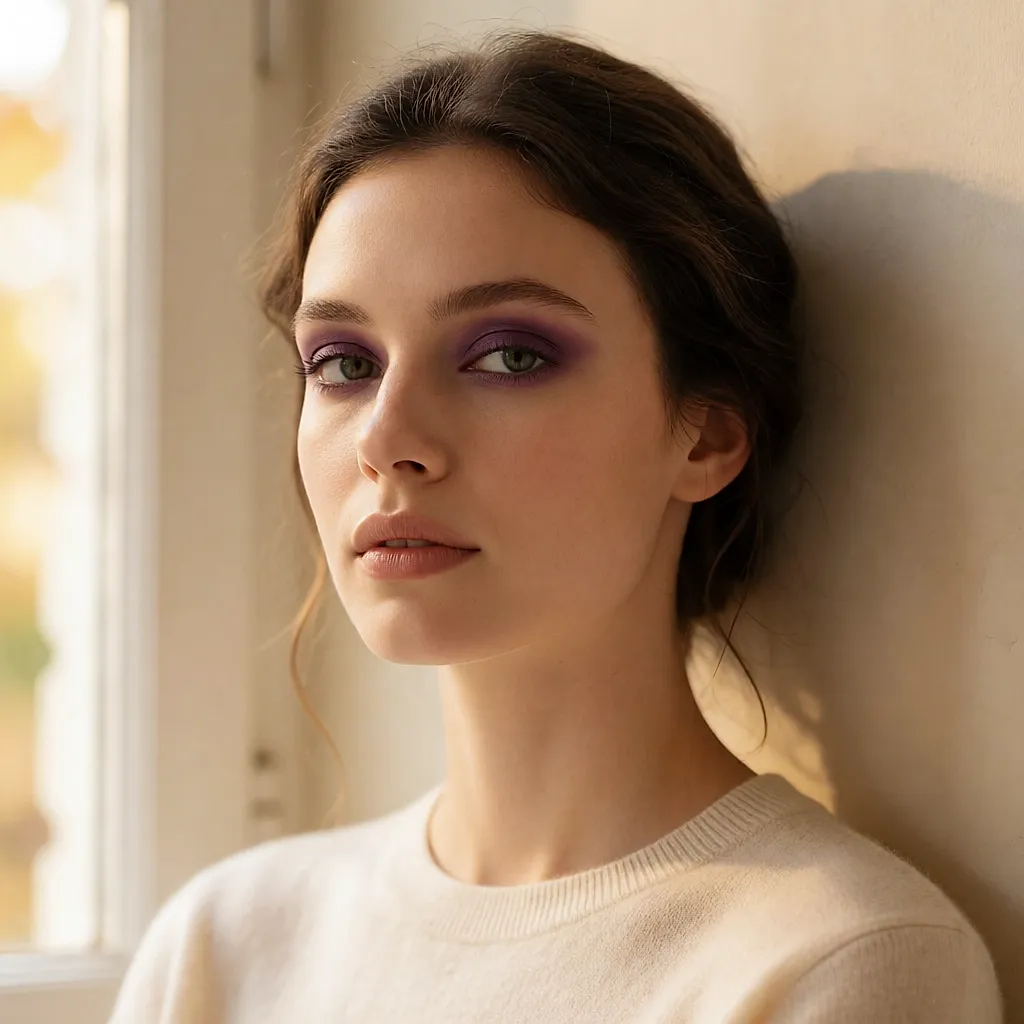
We had purple filed under "evenings". A dot in the inner corner, a thin line along the lashes, and the palette snapped shut again — like closing a subject we weren't quite ready to own. This autumn it changes sides. It spreads, it layers, it takes the whole lid — and nobody reads it as overkill.
The look has scaled up
Cast your mind back. For the past few seasons, eye make-up was written very small: a dot of light at the centre, a whisper of shadow at the lash line, a flick of liner. Charming, a little shy, never risky. The eye was lifted at the edges, the way a hairpin finishes a bun — you notice the finishing touch, not the hairstyle.
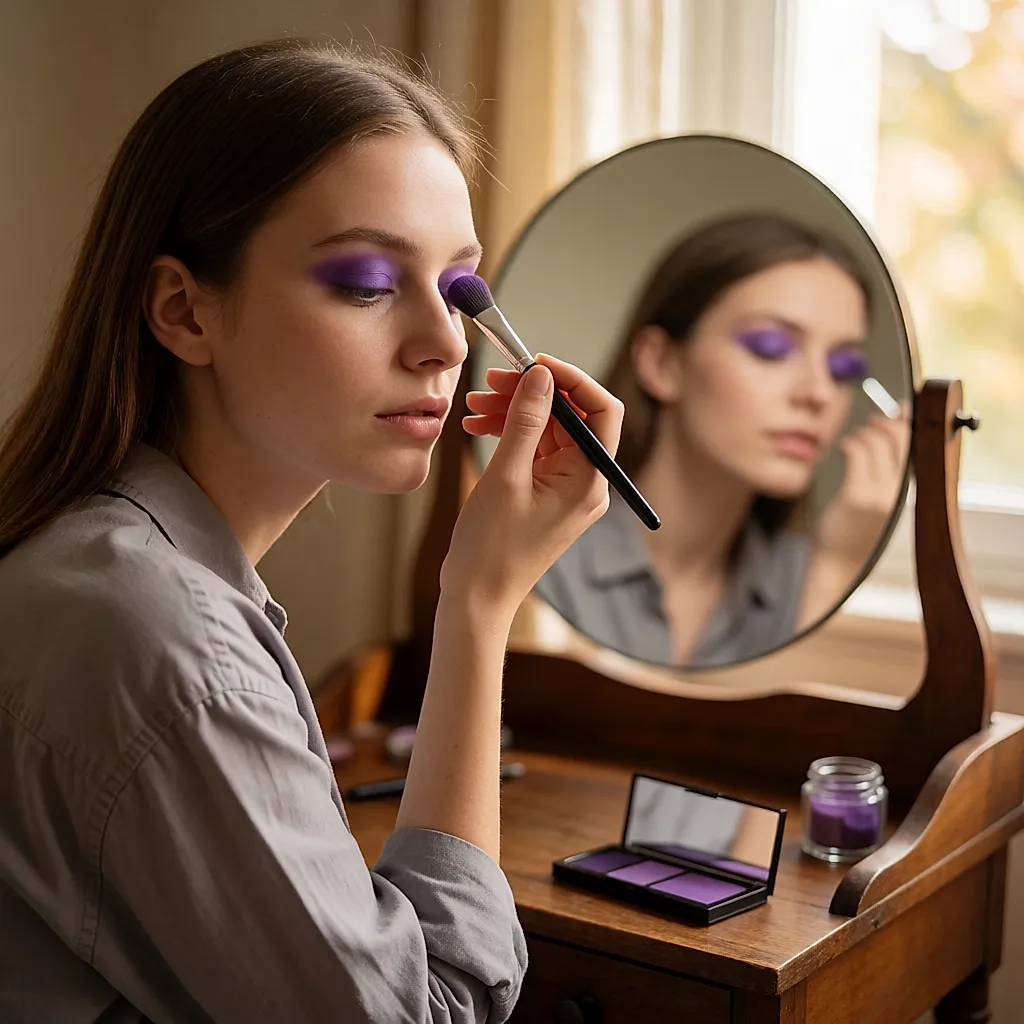
Now the register has changed. Colour becomes the statement piece of the face, the thing that decides everything else. Clean base, almost bare lips, all the space handed to the lid. It follows the logic of a silhouette: one strong volume, everything else kept plain. A real appetite for purple is taking shape.
Why now? Because purple has become easier to wear. Formulas are finer, brushes are more precise, and — above all — we've worked out that a purple that goes wrong isn't a purple that's too bright. It's a purple that's badly blended. The difference is in the blending.
Which purple for which eyes
Not all purples are equal, and that's the good news. On brown eyes, plum, aubergine and deep violet create a warm, almost velvety contrast with no effort at all. On blue eyes, go for cool, slightly greyed lilacs: anything too warm pulls out redness nobody asked for. On green eyes, rosy mauves and purples with a peach undertone are the most flattering — they switch the iris on instead of dulling it.
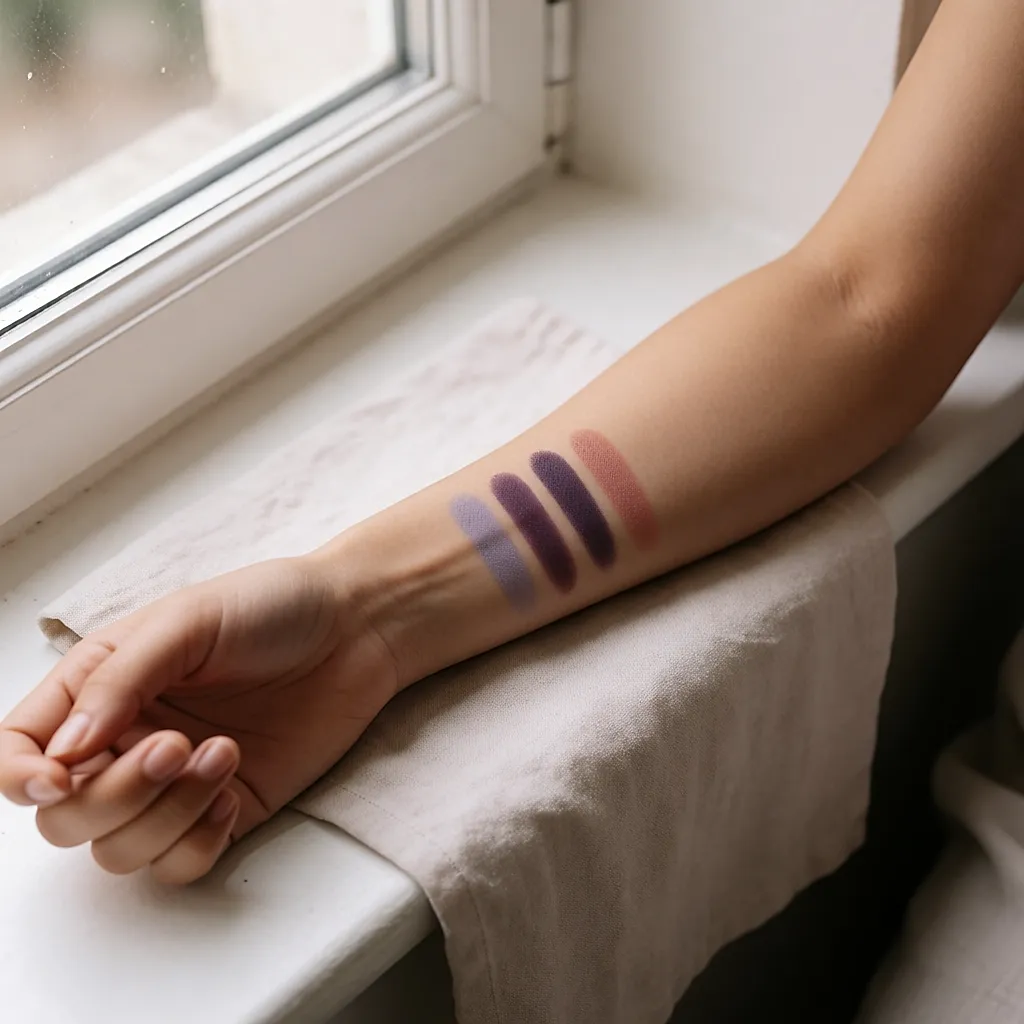
Léna's shortcut: test a shade with your fingertip on the mobile lid, in daylight, never under shop lighting. The one you fall for on the back of your hand isn't always the one that suits you. Hands are very generous with regret.
Textures, technique, staying power
A powder shadow is worked with a brush, back and forth through the crease; a cream shadow goes on with a finger, faster and more boldly. To help a purple stay put without migrating into the crease, a neutral base is the best investment you'll make — and a touch of light shadow in the inner corner wakes up the whole look without weighing it down.
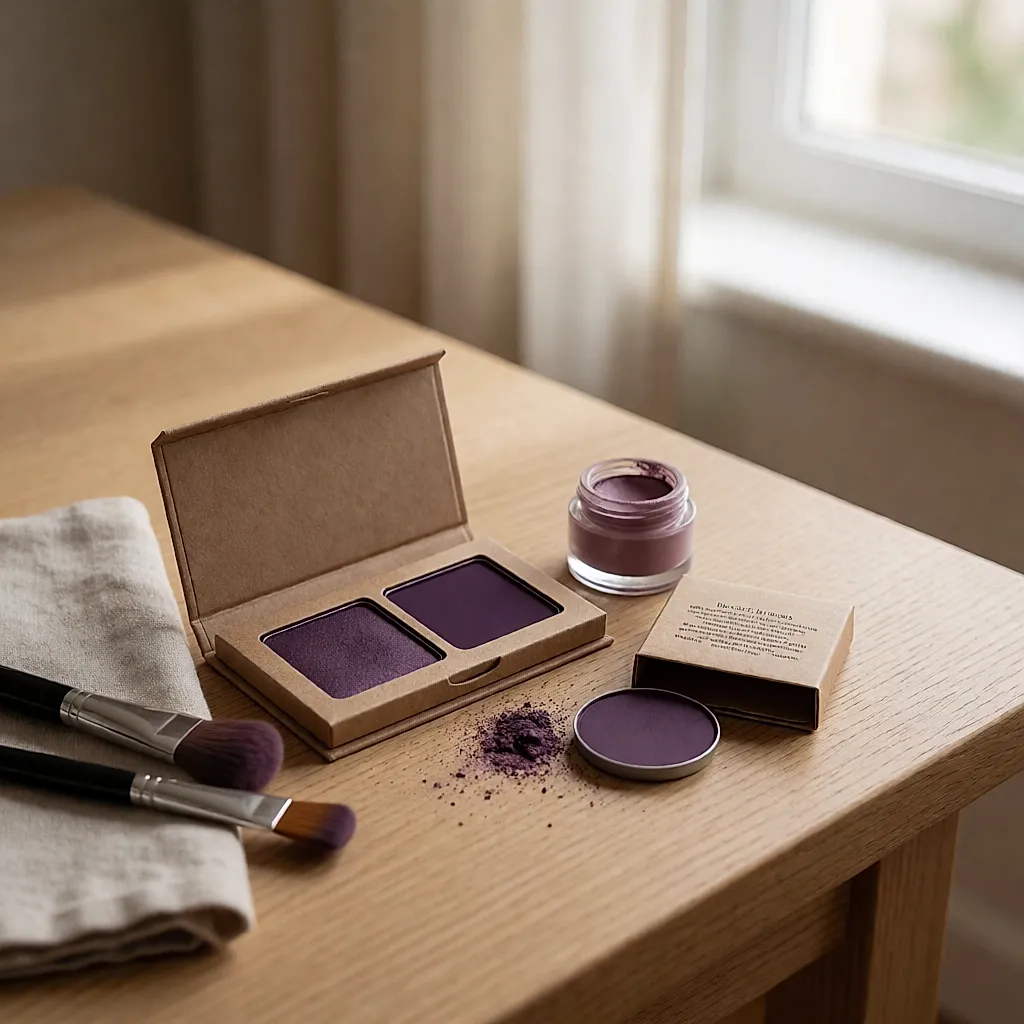
On ingredients, mineral pigments (mica, iron oxides) usually give a clean colour that's easy to build up. Single shadows in solid format, refillable palettes and glass or cardboard packaging all help cut down on waste — just check that a refill actually exists for the shade you're after, because not all of them do. A palette you keep for years beats a novelty you forget by November.
For a purple that can handle a Monday morning, start at the lash roots and blend upwards with a clean brush, never going back over what you've already done. The move that matters: load a little, work it a long time.
Budget
A single shadow usually comes in at around £8 to £20 from a chemist, beauty retailer or supermarket; a palette of three or four shades, from £25 to £50 depending on the brand and how many finishes it holds. Online you'll pay a few pounds less, but factor in delivery — and the shade you can't test first.
The sensible compromise: start with one well-chosen purple, in a texture you like the feel of, and see whether it gets adopted before you invest in a full palette. We've all bought a big palette for two shades. We know how that ends.
The idea to take away isn't to put it everywhere, but to put it on with conviction. Purple doesn't forgive hesitation: applied half-heartedly it greys the eye; applied with conviction it lights it up. So this weekend, pick your side — and your shade.
Comments
Your opinion matters: rate the article, react and reply to comments.
Comments are moderated; AI-assisted comments are flagged. Text emoticons (8-), :-), <3…) are automatically shown as images.