

'A French manicure, then — and the smile, where does that go?' Asked over an outstretched hand, that question would have raised an eyebrow a few years ago. Today it is entirely serious: the little white line has packed its bags. It no longer camps out at the edge of the nail — it wanders.
The smile was never a straight line
There's an irony in that. The famous 'smile' of a French manicure, the one we picture sitting at the tip, has never been straight: it follows the curve of the free edge, the arc the nail draws where it lifts away from the skin. A horizontal line cuts that curve in two — and the eye catches it instantly, without always being able to say what's off.
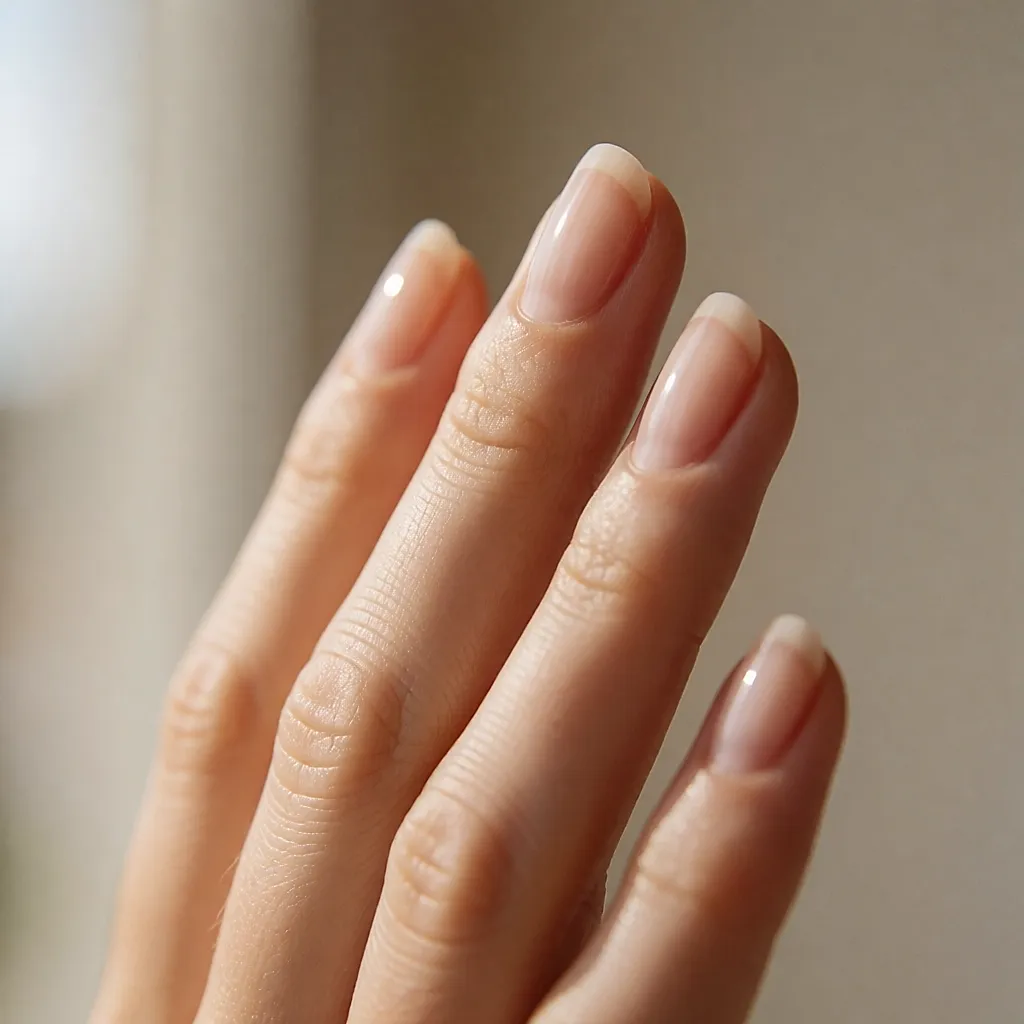
Hence the failed Sunday-night Frenchies: a line dragged along the edge, a sticker badly applied, ten minutes of patience wasted. So the gesture changed axis. Since the line can't always copy the natural curve, give it another reason to be there: a base, a thread, a diagonal, a colour. The French manicure no longer pretends to imitate a pretty hand; it draws a shape.
Where the line lands
The most radical version is the line at the base, just above the cuticle, where the pale nail already draws a little moon — sometimes called the reverse French. Then come the finer variations: a thread at the edge of the nail, so thin it barely eats into the length; a diagonal across the plate; a coloured line — deep red, black, olive — in place of the regulation white. White itself is shifting too: nude on nude, for a finish you only see from thirty centimetres away.
Everything changes in how a nail reads. A white band at the tip is an expected classic, very soft, a bit of a 2008 wedding. A line placed elsewhere turns the nail into a graphic object: you're no longer looking at a well-kept hand, you're looking at a drawing. The flip side is that it pulls the eye exactly where you put it — a ridged nail or an uneven cuticle stands out more under a marked moon than under a nude polish.
Who it actually suits
Hold on to one reading rule: the finer the line, the less space it takes up. On short nails, a thick smile at the edge shortens the hand; a discreet thread, far less. The diagonal stretches the nail visually: it flatters medium to long lengths, almond or rounded square, and forgives a slightly uneven free edge. The base line, meanwhile, enlarges the pale zone — best kept for slim fingers, or for anyone happy to wear a very visible design.
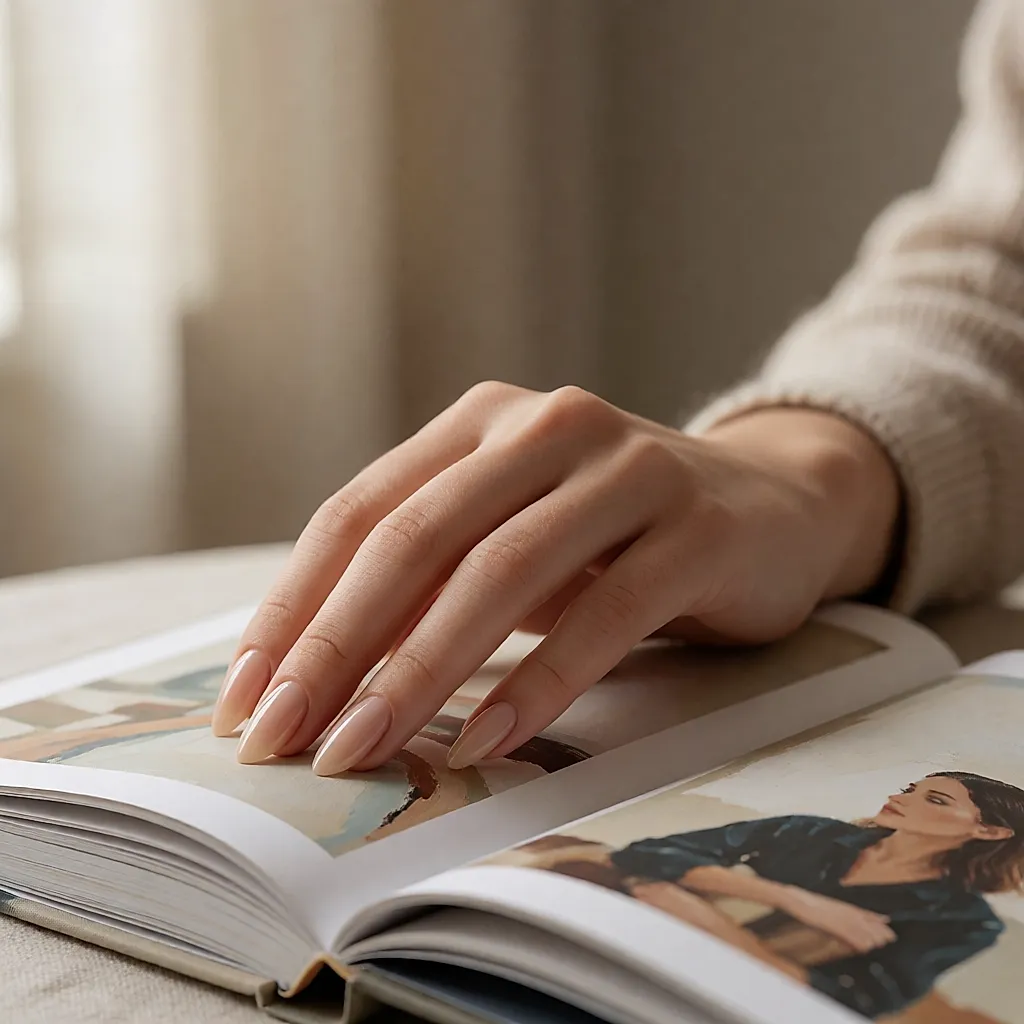
Then there's real life. If you type eight hours a day, do the washing up and open parcels with your teeth — no judgement — it's the edge of the nail that takes the hit first. A thin line right at the tip therefore lasts less long than a design placed at the base, a zone less knocked about. In exchange, that same design forces you to face your regrowth head-on. We get there.
Between appointments, the rhythm changes
Fingernails grow slowly, at a rate that varies from person to person; that's a practical marker, not a promise — every hand has its own tempo. With a classic French, it's a few natural millimetres appearing near the cuticle: visible, but seen as normal regrowth. With a base line, it's another story. After a few weeks, the line visibly moves away from the cuticle. In practice, you often come back sooner than for a classic French.

Two ways to work with that. Choose a base very close to the nail colour, which makes regrowth almost invisible, and keep the contrast for the line. Or accept a home touch-up: a stroke of a fine brush on the moon, five minutes on a Sunday, until the next appointment. And if you're going to the salon regularly anyway, nothing changes for you — it's even the most comfortable option.
The technique, plainly. A liner brush rather than the brush in the bottle, hand flat, wrist braced on the table, and one continuous pass: don't try to correct a line midway, it always shows. Let each layer dry before the next. For a clean line at the base, a strip of thin tape cut with scissors works wonders — even shaky hands manage it.
Budget
In a salon, expect around £30–45 for a classic French manicure with polish, £40–60 in gel or semi-permanent polish, more in big cities and on very long nails; an infill usually sits between £30 and £50. At home, a decent polish costs £8–15 and a liner brush £6–12 — the initial outlay pays off quickly, provided you accept two or three rough attempts.
On the product side, look for polishes with plant-derived solvents, in glass bottles, and refills where the brand offers them — without expecting miracles of wear, though; it's often the compromise. And the most economical move is still to finish a bottle before opening another, rather than lining up twelve nudes you can't tell apart.
The French manicure didn't switch sides by chance: it stopped being one single thing. A base line for the days you want character, a thread at the edge for rushed weeks, a diagonal when you'd rather people looked at your hands than at your phone. The only rule that holds: choose your line by your patience, not by the photo you fell for.



Comments
Your opinion matters: rate the article, react and reply to comments.
Comments are moderated; AI-assisted comments are flagged. Text emoticons (8-), :-), <3…) are automatically shown as images.